
Type SHD Three-Conductor Flat Portable Power Cable 2kV - Industrial Mining Solution
Type SHD Three-Conductor Flat Portable Power Cable 2kV for continuous miners. EPR insulation, CPE jacket, metallic shielding, grounding conductors. ICEA/NEMA compliant.
hongjing.Wang@Feichun
11/17/20259 min read
Introduction to SHD Flat Portable Power Cables
The Type SHD three-conductor flat portable power cable 2kV represents a specialized engineering solution designed specifically for demanding mining applications, particularly continuous miner operations. This heavy-duty power cable incorporates a flat parallel cable configuration that offers distinct advantages over traditional round cable designs, including improved space utilization, enhanced flexibility, and superior handling characteristics in confined mining environments.
Rated at 2000 volts, this industrial mining cable delivers reliable power transmission under extreme conditions where equipment safety and operational continuity are paramount. The SHD designation indicates "Super Heavy Duty" construction, reflecting the cable's reinforced design philosophy that prioritizes durability, protection, and extended service life in abrasive underground mining environments.
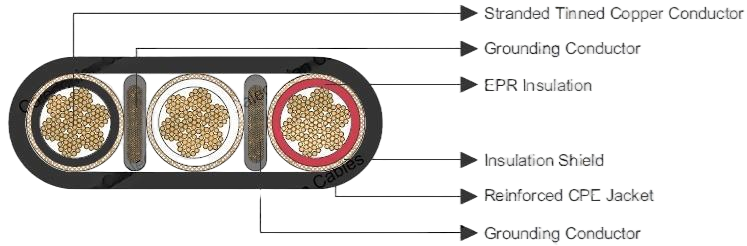
The flat portable power cable architecture integrates three primary power conductors with dedicated grounding conductors, metallic shielding, and an extra-heavy-duty jacket system. This comprehensive protective approach addresses the unique electrical, mechanical, and environmental challenges encountered in modern mining operations, where equipment operates continuously under high loads, exposure to moisture, rock dust, and mechanical stress.
Primary Applications and Use Cases
Continuous Miner Power Supply Systems
The primary application for Type SHD three-conductor flat portable power cable is powering continuous miners—the essential machinery used in underground coal and mineral extraction. These massive machines require reliable, high-capacity electrical connections that can withstand constant movement, flexing, and harsh environmental exposure. The cable's flat configuration allows for easier routing through low-profile mine passages and around equipment, while the integrated grounding conductor ensures worker safety and equipment protection.
Continuous miners operate in environments characterized by rock dust, moisture, mechanical abrasion, and limited space. The SHD flat portable power cable for continuous miners addresses these challenges through its robust construction, featuring multiple protective layers that prevent insulation degradation, conductor damage, and premature cable failure.
Mining Equipment Electrical Requirements
Beyond continuous miners, this 2kV mining power cable with metallic shielding serves various heavy-duty equipment including shuttle cars, conveyor systems, ventilation fans, and auxiliary mining machinery. The three-conductor configuration simplifies power distribution while the metallic shielding prevents electromagnetic interference that could disrupt sensitive control systems or communication equipment.
The grounding conductor integration benefits mining operations by providing a dedicated low-resistance path for fault currents, ensuring rapid protective device operation and minimizing the risk of electrical shock to personnel. This integrated grounding approach eliminates the need for separate grounding cables, reducing installation complexity and improving reliability.
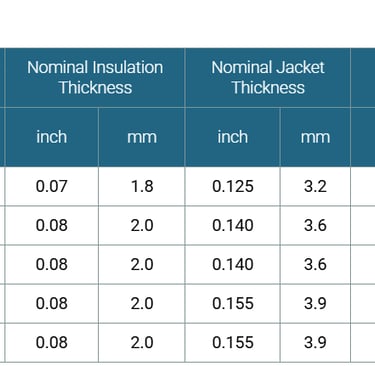
Technical Specifications and Construction
Conductor System
The foundation of any portable power cable is its conductor system. The Type SHD cable utilizes stranded annealed tinned copper conductors engineered for maximum flexibility and conductivity. The stranding pattern allows the cable to flex repeatedly without conductor fatigue or breakage—a critical requirement for portable mining applications where cables undergo constant movement and repositioning.
Tinned copper three-conductor cable construction offers significant advantages over bare copper alternatives. The tin coating provides superior corrosion resistance, particularly important in humid underground mining environments where moisture exposure is constant. Additionally, tinned copper facilitates better connections at terminations, as the tin coating prevents oxidation that can increase contact resistance over time.
The three-conductor configuration delivers balanced three-phase power with optimal current-carrying capacity. Each conductor is individually insulated before assembly, ensuring electrical isolation and reducing the risk of phase-to-phase faults. The grounding conductor features a conducting extrusion layer that provides continuous contact with the metallic shield, creating an effective low-impedance ground path throughout the cable length.
Insulation and Shielding
Ethylene Propylene Rubber (EPR) insulation surrounds each conductor, providing exceptional dielectric strength and resistance to electrical stress. EPR insulated flat portable cable mining applications benefit from this material's outstanding thermal stability, maintaining insulation integrity at continuous operating temperatures up to 90°C. Unlike PVC or other thermoplastic insulations, EPR remains flexible at low temperatures and resists degradation from ozone, ultraviolet exposure, and chemical contaminants commonly encountered in mining environments.
The insulation shield consists of a tinned copper textile braid that provides multiple functions. This metallic shielding protects cables from electromagnetic interference, contains electrical fields within the cable structure, and provides an additional ground path. The braid construction allows flexibility while maintaining continuous coverage, ensuring consistent shielding effectiveness even during cable movement.
Jacket and Outer Protection
The cable's exterior features a reinforced extra-heavy-duty Chlorinated Polyethylene (CPE) jacket in black color. This heavy-duty CPE jacket power cable design incorporates significantly thicker jacket walls than standard portable cables, providing superior abrasion resistance, cut-through protection, and impact resistance. CPE material offers excellent resistance to oils, chemicals, flames, and ozone—all critical properties for mining cable applications.
The jacket's black color contains carbon black additives that enhance ultraviolet resistance and provide additional mechanical strength. For applications requiring enhanced protection, a two-layer jacket with reinforcing fiber design is available, incorporating aramid or fiberglass reinforcement between jacket layers for exceptional cut and tear resistance.
Alternative jacket materials including CSP (Chlorosulfonated Polyethylene), PCP (Polychloroprene), NBR (Nitrile Butadiene Rubber), and PVC options accommodate specific environmental conditions or customer preferences, allowing customization for specialized mining applications.


Mechanical Properties and Flexibility
The Type SHD flat portable power cable specifications include a minimum bending radius of 6 times the overall cable diameter (6×OD). This relatively tight bending radius enables installation in confined spaces and around equipment without risking conductor damage or insulation stress. The flat configuration naturally resists twisting and maintains orientation during handling, simplifying installation and reducing the likelihood of installation errors.
Long-service-life advantages result from the cable's robust construction and quality materials. Properly installed and maintained SHD cables regularly achieve service lives exceeding 5-7 years in continuous mining operations—significantly longer than standard portable cables that may require replacement every 2-3 years under similar conditions.
Thermal Performance
The maximum conductor operating temperature of +90°C enables continuous duty rating capability even under high-load conditions. This thermal rating reflects the cable's ability to carry rated current continuously without degradation, a critical requirement for mining equipment that operates 24/7 with minimal downtime.
Thermal stability under extreme mining conditions results from the synergistic properties of EPR insulation and CPE jacket materials. EPR maintains dielectric strength at elevated temperatures while the CPE jacket resists softening and deformation. This combination ensures consistent performance in high-temperature environments, whether from ambient conditions, equipment proximity, or high current loads.
Performance Characteristics and Operating Parameters
Standards and Compliance Certifications
International and National Standards
The Type SHD three-conductor flat portable power cable 2kV complies with multiple industry standards, ensuring quality, safety, and performance consistency. ICEA NEMA compliant portable power cable certification demonstrates adherence to ICEA S-75-381 and NEMA WC 58 standards, which specify construction requirements, testing protocols, and performance criteria for portable power cables used in mining applications.
ASTM B 172 governs the copper alloy specifications, ensuring conductor materials meet stringent purity and conductivity requirements. ASTM B 33 specifies tinning process standards, guaranteeing consistent tin coating thickness and adhesion. These standards ensure that tinned copper components resist corrosion effectively and provide reliable long-term performance.
CAN/CSA C22.2 No. 96 Canadian safety certification enables the cable's use in Canadian mining operations, facilitating cross-border equipment compatibility and regulatory compliance. This comprehensive standards compliance provides mining operators with confidence in product quality and regulatory acceptance.
Advantages of Type SHD Flat Portable Power Cable
Design Benefits
The flat cable with integrated grounding conductor offers multiple design advantages over conventional round cables. Space efficiency improves dramatically—flat cables occupy less vertical height, allowing routing through low-clearance areas impossible for round cables of equivalent ampacity. The three-conductor system simplifies installation by consolidating phase conductors and grounding in a single assembly, reducing installation time and labor costs.
Metallic shielding prevents electromagnetic interference from affecting sensitive electronic control systems commonly integrated into modern mining equipment. This shielding also contains electromagnetic emissions from the power cable itself, reducing the potential for interference with communication systems or monitoring equipment.
Reliability Features and Cost Effectiveness
Tinned copper components resist corrosion throughout the cable's service life, maintaining low contact resistance at terminations and ensuring consistent electrical performance. The EPR insulation withstands mining environment stressors including mechanical flexing, temperature cycling, moisture exposure, and chemical contamination without significant degradation.
The extra-heavy-duty reinforced power cable construction reduces replacement frequency, delivering substantial cost savings over the cable's lifetime. While initial purchase costs may exceed standard portable cables, the extended service life, reduced downtime, and lower replacement labor costs result in significantly lower total cost of ownership. Mining operations report cost reductions of 30-40% when switching from standard to SHD-grade portable power cables.


Common Challenges and Solutions
Problem: Premature Cable Jacket Damage
Challenge: Mining operations frequently experience premature jacket damage from dragging cables over rough surfaces, contact with sharp rock edges, and impact from falling debris.
Solution: The Type SHD cable's extra-heavy-duty CPE jacket provides exceptional abrasion and cut resistance. The reinforced construction withstands mechanical abuse that would quickly damage standard cables. For extreme applications, the two-layer jacket with reinforcing fiber option offers even greater protection. Proper cable handling practices, including avoiding excessive dragging and using cable reels or guides, further extend jacket life.
Problem: Grounding System Failures
Challenge: Separate grounding cables in mining installations can become disconnected, corroded, or damaged, creating serious safety hazards including electric shock risks and improper protective device operation.
Solution: The integrated grounding conductor with conducting extrusion layer eliminates separate grounding cable requirements. The conducting extrusion maintains continuous contact with the metallic shield throughout the cable length, ensuring reliable grounding even if individual ground conductor strands break. This integrated approach significantly improves grounding system reliability and worker safety.
Problem: Cable Flexibility Loss in Cold Environments
Challenge: Some mining operations experience seasonal or continuous cold temperatures where conventional cable jackets become stiff, making handling difficult and increasing the risk of jacket cracking.
Solution: EPR insulation and CPE jacket materials maintain flexibility at temperatures well below freezing. The cable remains handleable and installable in cold conditions without special heating or preparation. For extreme cold applications, NBR jacket options provide even better low-temperature flexibility.
Problem: Electromagnetic Interference with Control Systems
Challenge: Modern mining equipment incorporates sophisticated electronic control systems sensitive to electromagnetic interference from high-current power cables.
Solution: The metallic shielding in Type SHD cables effectively contains electromagnetic fields, preventing interference with nearby control circuits. The continuous tinned copper textile braid provides consistent shielding effectiveness even during cable flexing and movement.
Problem: Moisture Ingress and Insulation Degradation
Challenge: Underground mining environments expose cables to constant moisture, potentially causing insulation degradation and eventual electrical failures.
Solution: EPR insulation exhibits excellent moisture resistance, maintaining dielectric strength even when wet. The CPE jacket provides a moisture-resistant barrier, while the metallic shield offers an additional protective layer. Proper termination practices using appropriate sealing methods prevent moisture ingress at cable ends—the most vulnerable points for water entry.
Installation and Handling Guidelines
Proper Installation Practices
Professional grade portable power cable mining installations require adherence to specific guidelines for optimal performance and longevity. Always observe the minimum bending radius of 6×OD during installation and operation. Tighter bends stress conductors and insulation, potentially causing premature failures.
Temperature considerations during installation are critical. Avoid installing cables when temperatures fall below -10°C, as jacket materials become less flexible and more susceptible to damage. If cold-weather installation is unavoidable, allow cables to warm gradually before uncoiling or flexing.
Connection best practices include proper termination techniques using appropriate connectors rated for mining service. Ensure all connections are mechanically secure and provide adequate strain relief. Apply proper torque to termination hardware according to manufacturer specifications—under-tightening leads to high-resistance connections and overheating, while over-tightening can damage conductors.
Maintenance and Longevity
Regular inspection protocols extend cable service life. Visually inspect cables daily for jacket damage, cuts, abrasions, or deformation. Immediately remove from service any cables showing conductor exposure, severe jacket damage, or signs of overheating. Monthly detailed inspections should include megger testing to verify insulation resistance and ensure no degradation has occurred.
Storage recommendations include keeping spare cables coiled loosely (respecting minimum bend radius), stored in dry locations away from chemicals, oils, and direct sunlight. Avoid storing cables near heat sources or in areas subject to extreme temperature fluctuations. Proper storage maintains cable condition during periods between use, ensuring reliability when placed back in service.


Customization and Available Options
Industrial flat portable power cable specifications can be customized to meet specific application requirements. Custom jacket material selections accommodate unique environmental conditions—for instance, NBR jackets for exceptional oil resistance, or CSP jackets for superior chemical resistance.
The two-layer reinforced jacket availability provides maximum protection for applications involving severe mechanical abuse. This construction incorporates aramid fiber reinforcement between inner and outer jacket layers, delivering cut and tear resistance exceeding standard heavy-duty constructions.
Application-specific configurations may include variations in conductor sizes, conductor counts, or voltage ratings. The request process for specialized solutions involves consulting with cable engineering specialists to define specific requirements, environmental conditions, and performance expectations.
Conclusion
The Type SHD three-conductor flat portable power cable 2kV represents a comprehensive solution for demanding mining applications where reliability, safety, and longevity are non-negotiable requirements. Through the integration of tinned copper conductors, EPR insulation, metallic shielding, integrated grounding, and extra-heavy-duty jacket construction, this continuous duty mining cable solution delivers consistent performance in the harshest operating environments.
Mining operations investing in SHD-grade portable power cables benefit from reduced downtime, lower maintenance costs, improved safety, and substantially reduced total cost of ownership compared to standard portable cable alternatives. The cable's comprehensive standards compliance ensures regulatory acceptance and provides confidence in product quality and performance.
For mining operations seeking to optimize power distribution reliability, enhance worker safety, and reduce long-term cable costs, the Type SHD flat portable power cable represents an engineered solution backed by proven performance in demanding underground mining applications worldwide.
How to Reach Us
Get in Touch
SiteMap
Product Catalogue
Festoon Cable
Shore Power Cable


Scan to add us on WeChat