
Understanding Cable Standards: IEC vs. DIN VDE vs. BS EN – A Complete Guide to International Cable Regulations and Compliance
Learn the key differences between IEC, DIN VDE, and BS EN cable standards. Understand testing, certification, and compliance for industrial and power cables.
hongjing.Wang@Feichun
10/30/20258 min read
Introduction: Why Cable Standards Matter
In the complex world of electrical infrastructure, cable standards serve as the universal language that ensures safety, reliability, and compatibility across borders. Whether you're specifying cables for a port crane installation in Hamburg, a mining operation in Australia, or a marine vessel crossing international waters, understanding the regulatory frameworks governing cable manufacturing is essential.
The importance of cable standards in electrical and industrial applications cannot be overstated. These technical specifications define everything from conductor sizing and insulation materials to fire performance and electromagnetic compatibility. By establishing consistent benchmarks, standards protect both people and equipment while facilitating global trade and ensuring that a cable manufactured in one country will perform safely and predictably when installed in another.
Three major frameworks dominate the landscape of international cable regulation: IEC (International Electrotechnical Commission), DIN VDE (German Institute for Standardization and Association for Electrical, Electronic & Information Technologies), and BS EN (British Standards incorporating European Norms). Each system has evolved from distinct industrial traditions, yet they increasingly converge to meet the demands of our interconnected world. This guide explores how these standards differ, where they overlap, and how to navigate their requirements for optimal cable compliance.
What Are Cable Standards?
Cable standards are comprehensive technical documents that specify the design, construction, materials, and performance criteria for electrical cables. Their purpose extends far beyond simple manufacturing guidelines—they establish the foundation for electrical safety across industries worldwide. When a standard designates specific conductor classes, insulation thickness, or voltage ratings, it creates a reproducible framework that manufacturers, installers, and inspectors can all reference.
These standards profoundly affect cable design, materials, and testing protocols. For instance, a standard might mandate the use of flame-retardant compounds in insulation, specify minimum bend radius requirements, or define the exact testing procedures for determining short-circuit performance. The chemical composition of PVC or XLPE insulation, the configuration of armoring layers, and even the color coding of conductors all flow from standardized requirements.
The relationship between electrical safety and standardization is direct and vital. Standards reduce the risk of electrical fires, shock hazards, and system failures by ensuring cables can withstand their intended operating conditions. They account for environmental stressors like temperature extremes, mechanical stress, chemical exposure, and electromagnetic interference—variables that could otherwise lead to catastrophic failures in real-world installations.

IEC Cable Standards (International Electrotechnical Commission)
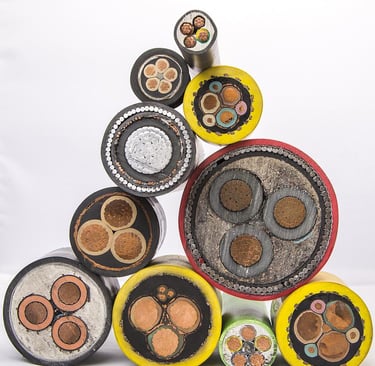
The IEC cable standardization system represents the most internationally recognized framework for electrical cable specifications. As a global organization comprising national committees from over 80 countries, the IEC develops standards that serve as the baseline for cable manufacturing worldwide. This universality makes IEC standards particularly valuable for projects spanning multiple jurisdictions or for manufacturers seeking broad market access.
Common IEC cable standards include IEC 60228, which defines conductor classes and resistance requirements; IEC 60332, covering fire propagation testing for cables; and IEC 60502, specifying power cables with extruded insulation for voltages from 1 kV to 30 kV. Each standard addresses specific technical aspects while interlocking with others to create a comprehensive regulatory system. For example, IEC 60754 defines test methods for halogen acid gas content, while IEC 61034 measures smoke density—both critical for cables installed in enclosed spaces.
IEC compliance requirements for industrial and power cables typically involve rigorous testing protocols. Manufacturers must demonstrate that their products meet specified electrical, mechanical, and environmental performance criteria through type testing at accredited laboratories. This process verifies characteristics such as conductor resistance, insulation resistance, voltage withstand capability, and flame resistance.
Typical applications benefiting from IEC standardization include marine cables for shipboard installations, mining cables exposed to harsh underground conditions, and port crane cables subjected to continuous flexing and environmental exposure. The international recognition of IEC standards simplifies specification and procurement for multinational projects where equipment and materials cross borders regularly.


DIN VDE Cable Standards (Germany)
The origin and meaning of DIN VDE cable designations reflect Germany's engineering precision and its historical leadership in electrical manufacturing. DIN (Deutsches Institut für Normung) establishes national standards, while VDE (Verband der Elektrotechnik) focuses specifically on electrical and electronic technologies. Together, they create a rigorous certification framework trusted throughout European industry.
The VDE certification process involves comprehensive evaluation of cable design, manufacturing processes, and quality management systems. Beyond simple product testing, VDE examines whether manufacturers maintain consistent production quality and can reliably reproduce certified designs. This holistic approach explains why VDE marks carry significant weight in industrial procurement decisions.
Understanding cable type codes reveals the logic behind German cable nomenclature. For example, H07RN-F designates a harmonized flexible cable with rubber insulation rated for 450/750V, while NSHTÖU indicates a flexible cable with special features: oil-resistant (Ö), suitable for outdoor use (U), and incorporating specific conductor constructions. The complex designation R-(N)TSCGEWOEU breaks down into detailed specifications: R indicates radial field design, (N) suggests potential variations, TSC specifies shielded twisted pairs, G denotes flexible construction, E indicates earthing conductor, W means weather-resistant, O signifies oil resistance, and EU confirms outdoor suitability.
The relevance of DIN VDE standards in heavy-duty and reeling cable production stems from Germany's industrial heritage in cranes, material handling, and automation. These demanding applications require cables that withstand millions of flex cycles, resist oils and chemicals, and maintain electrical integrity under mechanical stress—precisely the conditions VDE standards address through stringent testing requirements.


BS EN Cable Standards (British & European)
The background of British cable standards reveals an evolution from purely national specifications to harmonized European requirements. Originally, BS (British Standards) governed UK cable manufacturing independently. However, the transition from BS to BS EN (European Norm) reflected the European Union's drive toward unified technical standards, facilitating free movement of goods while maintaining high safety benchmarks. Today, BS EN standards incorporate both British expertise and pan-European consensus.
Common BS EN standards for power and control cables include BS EN 50525 for low-voltage flexible cables and BS 5467 for armored cables with thermosetting insulation. These specifications address diverse installation environments from domestic wiring to industrial power distribution, with particular attention to British installation practices and regulatory requirements.
A distinctive focus of BS EN cable classification involves flame-retardant, low-smoke, and halogen-free cables—critical for applications where fire safety is paramount. Standards like BS EN 50200 define survival requirements for cables maintaining circuit integrity during fires, while BS EN 60754 and BS EN 61034 establish halogen content and smoke density limits. This emphasis reflects lessons learned from catastrophic fires where toxic smoke and corrosive gases proved as deadly as flames themselves.
Compliance testing under BS EN 50525 and BS 5467 involves demonstrating conformity through type tests conducted at notified bodies. These tests verify electrical characteristics, mechanical properties, fire performance, and environmental resistance. The testing regime ensures cables perform reliably throughout their design life, from initial installation through decades of service in demanding conditions.


IEC vs. DIN VDE vs. BS EN: Key Differences
Comparing these frameworks reveals both convergence and meaningful distinctions. In voltage rating classifications, IEC and BS EN largely align, designating cables by rated voltage (U₀/U) such as 0.6/1 kV or 6/10 kV. DIN VDE uses similar designations but may incorporate different test voltages and duration requirements. Insulation testing protocols show subtle variations: while all three systems require withstand voltage tests, the specific test voltages, durations, and acceptance criteria can differ slightly.
Testing scope varies significantly across standards. IEC standards tend toward broadly applicable requirements suitable for diverse global conditions. DIN VDE standards often specify more stringent mechanical and environmental tests, reflecting German industry's emphasis on durability and reliability. BS EN standards incorporate specific fire performance requirements particularly relevant to European building regulations, including detailed smoke and toxicity testing not always emphasized in base IEC standards.
Differences in marking, certification, and material requirements create practical implications for international cable standards comparison. Cable markings must display different information depending on the applicable standard—DIN VDE cables typically show more detailed type designations, while BS EN cables emphasize harmonization codes. Material requirements for compounds and conductor constructions show variations that can affect both performance and cost.
The impact on import/export of industrial and marine cables is substantial. A cable certified only to DIN VDE standards might require additional testing to meet BS EN requirements for UK projects, while IEC-compliant cables may need supplementary documentation for German installations. Choosing the right standard for specific markets becomes strategic: IEC provides the broadest acceptance across Asia and the Middle East, DIN VDE remains preferred for German and Central European projects, and BS EN dominates UK and EU applications.
How to Ensure Cable Compliance and Certification
Cable testing and certification procedures involve multiple stages, beginning with design validation and continuing through production monitoring. Type testing establishes that a cable design meets all relevant standard requirements through comprehensive laboratory evaluation. Routine tests on every production length verify ongoing manufacturing quality. Sample testing provides periodic verification that production remains consistent with the certified design.
Certification bodies play crucial roles in this process. Organizations like VDE Testing and Certification Institute, BSI (British Standards Institution), and various notified bodies accredited under ISO/IEC 17065 provide independent verification that cables meet stated standards. The importance of third-party testing for export-quality cables cannot be overstated—it provides objective evidence that cables will perform as specified, protecting both manufacturers' reputations and end-users' safety.
Essential documentation includes type test reports detailing all performance tests and results, factory acceptance test (FAT) records confirming specific production batches meet requirements, and regulatory markings like CE (Conformité Européenne) or UKCA (UK Conformity Assessed). These documents form the audit trail proving cable testing and certification requirements have been fulfilled, enabling cables to legally enter markets and providing invaluable reference for troubleshooting should issues arise.


Case Example: Port Crane Cable Compliance Across Standards
Consider a practical example: R-(N)TSCGEWOEU reeling cable used in automated port container handling equipment. These cables face extraordinary demands—continuous flexing as the crane trolley moves, exposure to salt air and weather, resistance to oils and lubricants, and reliable signal transmission for control and monitoring systems. Meeting these challenges requires careful consideration of industrial cable standard compliance.
For a port project spanning multiple European locations, this cable might need compliance under both IEC and VDE standards. IEC 60228 would govern conductor construction, ensuring flexibility and mechanical strength. IEC 60332-3 would verify flame propagation resistance—critical when cables run in bundles. DIN VDE 0250 would specify additional mechanical and environmental tests, while VDE's oil resistance testing would confirm the cable can withstand hydraulic fluid exposure common in crane environments.
Why meeting multiple standards improves reliability and market acceptance becomes clear in this scenario. A cable certified to both IEC and DIN VDE standards can be specified with confidence across diverse European ports, simplifying procurement and ensuring spare parts compatibility. The rigorous testing required for dual compliance typically produces a more robust product than single-standard certification alone, as the cable must satisfy the most stringent requirements from each framework.
Conclusion: Choosing the Right Standard for Your Application
Understanding the IEC vs. DIN VDE differences and how they relate to BS EN cable classification empowers informed decision-making in cable selection. IEC standards offer broad international acceptance and comprehensive technical requirements suitable for most applications. DIN VDE standards provide additional assurance for heavy-duty industrial applications where German engineering rigor is valued. BS EN standards are essential for UK and EU projects, particularly where fire safety regulations demand specific performance characteristics.
Recommendations for buyers and engineers selecting cables begin with identifying the installation location and applicable regulations. For projects in multiple jurisdictions, seek cables certified to multiple standards—the initial cost premium is typically offset by simplified logistics and enhanced reliability. When evaluating suppliers, verify their testing capabilities and certification documentation rather than relying solely on claims of compliance.
The importance of verifying supplier certifications and quality documentation cannot be overstressed. Request complete type test reports, inspect factory quality management certificates, and confirm that testing was performed at accredited laboratories. In the world of electrical cable standards, documentation provides assurance that cables will perform safely throughout their service life—and that investment in quality will be repaid through reliability, safety, and peace of mind.
How to Reach Us
Get in Touch
SiteMap
Product Catalogue
Festoon Cable
Shore Power Cable


Scan to add us on WeChat