
VO-YMVK-AS vs VG-YMVK-AS Cable Comparison: Braided vs Armored Underground Cable Protection Guide
Discover the key differences between VO-YMVK-AS braided cables and VG-YMVK-AS armored cables. Learn which heavy-duty electrical cable offers better mechanical protection, flexibility, and cost-effectiveness for your underground installation project.
hongjing.Wang@Feichun
11/28/202510 min read
Introduction: Understanding Cable Protection Standards
In underground electrical installations, selecting the appropriate cable protection system is critical for ensuring long-term reliability, safety, and cost-effectiveness. The choice between different cable protection methods can significantly impact installation costs, maintenance requirements, and system longevity. Among the various options available for heavy-duty electrical cable installations, two prominent solutions stand out: VO-YMVK-AS braided cables and VG-YMVK-AS armored cables.
Why Cable Protection Matters in Underground Installations
Underground power distribution systems face numerous challenges that surface installations never encounter. Soil movement, moisture infiltration, chemical exposure, and most critically, mechanical damage from excavation equipment or heavy surface loads pose constant threats to cable integrity. A single cable failure in an underground installation can result in extended downtime, costly excavation for repairs, and potential safety hazards. Therefore, understanding the protective capabilities of different cable types becomes essential for anyone involved in specifying or installing electrical infrastructure.
The consequences of inadequate cable protection extend beyond immediate repair costs. Unexpected failures disrupt operations, damage equipment due to power quality issues, and in severe cases, create safety risks including electrical fires or electrocution hazards. For industrial facilities, commercial developments, and infrastructure projects, the stakes are particularly high, making informed cable selection a crucial decision point in project planning.
What Do the Cable Codes Mean?
Breaking Down VO-YMVK-AS Cable Designation
The designation VO-YMVK-AS contains specific information about the cable's construction and capabilities. The "YMVK" portion indicates a PVC-insulated, PVC-sheathed power cable suitable for fixed installations. The "A&S" suffix denotes the presence of an additional concentric earth/screen configuration, which provides enhanced protective conductor capabilities beyond standard cable designs.
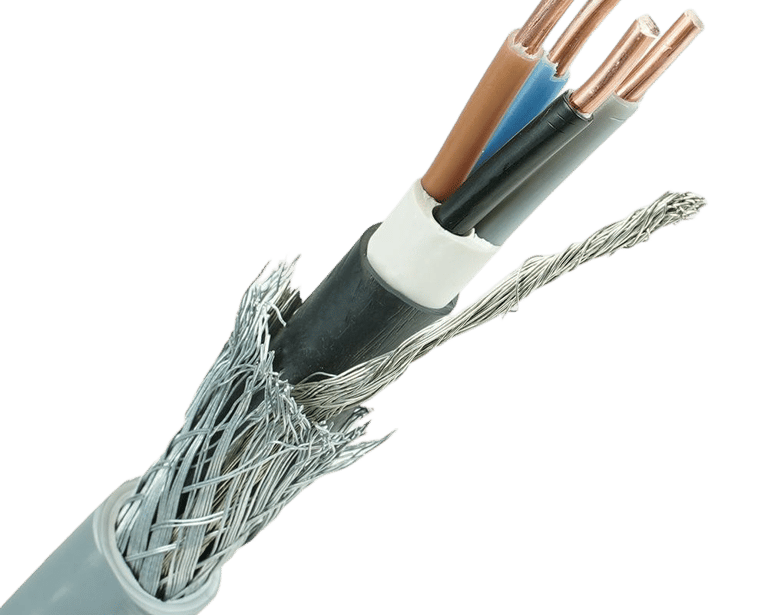
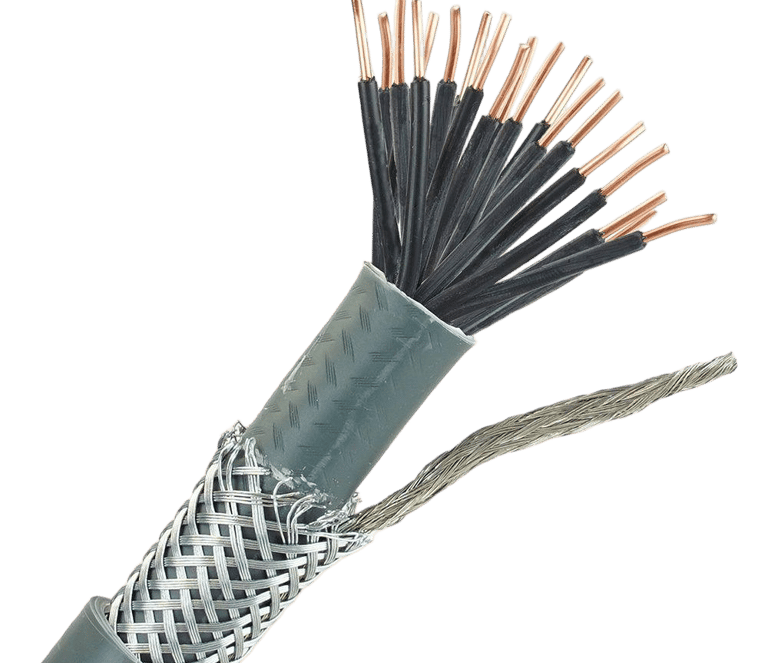
The critical distinguishing feature is the "O" designation, which specifies galvanized steel braid meaning the cable incorporates an overall braided shield constructed from multiple thin galvanized steel wires. This braiding technique creates a flexible yet protective outer layer that can accommodate cable movement and bending while maintaining mechanical integrity. The galvanization process applies a zinc coating to the steel wires, providing corrosion resistance essential for underground environments where moisture exposure is inevitable.
Understanding VG-YMVK-AS Armored Cable Codes
The VG-YMVK-AS designation shares the same YMVK base construction and A&S concentric earth/screen technology, but differs fundamentally in its protective outer layer. The "G" designation indicates flat steel and copper wire armour, representing a more robust mechanical protection system than braided alternatives.
This armored construction typically consists of one or two layers of flat wire strips laid helically around the cable core. The flat wire configuration, when properly tensioned and overlapped, creates a near-impenetrable barrier against external mechanical forces. This design philosophy prioritizes maximum protection over flexibility, making these armored underground power cables the preferred choice for high-risk environments.
Common Cable Terminology for Installation Professionals
Understanding earth/screen technology in both cable types is essential for proper application. The A&S concentric earth/screen consists of copper wires laid concentrically around the cable cores, providing both electromagnetic screening and a low-impedance fault current path. This dual function enables rapid protective device operation during fault conditions while also minimizing electromagnetic interference in sensitive installations.
Construction Differences: Braided vs Armored Protection
How Braided Cable (VO) is Manufactured
The braided electrical cable protection system employed in VO-YMVK-AS cables represents a sophisticated manufacturing process. Multiple thin galvanized steel wires are woven together using specialized braiding machines that interlace the wires in a consistent pattern around the cable assembly. This thin galvanized steel wire braiding process creates a flexible mesh that conforms to the cable's natural curvature while providing omnidirectional protection against external impacts.
The resulting structure maintains remarkable flexibility compared to rigid armor systems. Braided cables handle bending and twisting with minimal stress concentration, making them ideal for installations requiring frequent directional changes or routing through confined spaces. The smooth surface characteristics of braided construction also facilitate cable pulling through conduits and reduce the likelihood of snagging during installation.
How Armored Cable (VG) is Constructed
In contrast, VG-YMVK-AS employs a flat wire helical laying method that fundamentally differs from braided construction. Flat steel or copper wire strips are wound around the cable in a helical pattern, with each successive layer potentially wound in the opposite direction to enhance structural integrity. This configuration provides superior mechanical resistance explained by the substantial cross-sectional area and inherent rigidity of the flat wire strips.
The heavy machinery protection capabilities of armored cables derive from this robust construction. When excavation equipment strikes an armored cable, the flat wire strips distribute the impact force across a larger area and resist penetration through their superior thickness and hardness compared to braided wire mesh. This makes VG-YMVK-AS the definitive choice for cable for excavation protection in high-risk scenarios.
Performance Comparison: Key Criteria
Mechanical Protection Capabilities
When comparing light excavation damage resistance, VO-YMVK-AS braided cables provide adequate protection against hand tools, light pneumatic equipment, and incidental impacts during trenching operations. The braided mesh deflects and absorbs moderate impact forces, preventing damage to the inner cable cores in typical installation and maintenance scenarios.
However, heavy load and machinery impact resistance clearly favors VG-YMVK-AS armored cables. In real-world scenario applications involving bulldozers, backhoes, or heavy vehicular traffic above underground cable runs, the armored construction significantly improves survival probability. Independent testing has demonstrated that armored cables can withstand impact forces several times greater than braided alternatives before experiencing insulation damage or conductor compromise.
Flexibility vs Durability Trade-offs
The VO-YMVK-AS flexibility advantages cannot be overstated for certain applications. With minimum bend radii typically 6-8 times the cable diameter compared to 12-15 times for armored variants, braided cables navigate tight spaces and complex routing configurations more easily. This flexibility translates directly into reduced installation time and lower labor costs for projects with challenging cable paths.
Conversely, VG-YMVK-AS rigidity and installation considerations require careful planning. The armored cable durability comparison reveals that while these cables resist external damage superbly, their inflexibility demands larger installation spaces, specialized bending tools, and potentially more manpower for handling and positioning. Installation crews must account for these factors when scheduling and budgeting projects.
Cost Analysis: Braided vs Armored Cables
Initial purchase price differences typically favor braided cables by 20-40%, depending on cable size and market conditions. This cost advantage stems from simpler manufacturing processes and less material consumption in braided construction. For budget-conscious projects where mechanical risk assessment indicates moderate threat levels, this cost differential can significantly impact overall project economics.
However, long-term value and replacement costs must factor into total cost of ownership calculations. An armored cable that prevents a single catastrophic failure may justify its premium cost many times over through avoided downtime, repair expenses, and consequential losses. For critical infrastructure or industrial applications where cable failure consequences are severe, the additional investment in armored protection represents prudent risk management.
When to Choose VO-YMVK-AS Braided Cable
Ideal Use Cases for Braided Cable Protection
Installation scenarios requiring flexibility represent the primary domain for VO-YMVK-AS cables. Commercial building installations with multiple directional changes, cable routing through building structural elements, and connections to equipment subject to minor vibration or thermal movement all benefit from braided cable flexibility.
Limited space constraints frequently dictate braided cable selection. In congested underground utility corridors, retrofits into existing conduit systems, or installations within building walls where routing space is premium, the smaller bend radii and more compact installation envelope of braided cables prove invaluable. Additionally, manual handling and pulling operations proceed more efficiently with lighter, more flexible braided cables, reducing crew fatigue and improving productivity.
Moderate Mechanical Risk Environments
For environments where excavation risk assessment indicates low probability of heavy equipment contact, braided cable protection provides adequate safeguarding. Residential developments, landscaped areas with documented underground utility locations, and dedicated electrical utility corridors with controlled access all represent appropriate applications for VO-YMVK-AS cables.
When to Choose VG-YMVK-AS Armored Cable
High-Risk Mechanical Environments
Underground installations with excavation risk demand armored cable protection. Industrial plant floor installations, particularly in manufacturing facilities with frequent ground-level modifications, equipment relocations, or process expansions, face ongoing excavation threats. Similarly, heavy vehicle traffic areas including loading docks, warehouse floors, and transportation corridors subject underground cables to substantial dynamic loading that only armored construction can reliably withstand.
Protection Against Heavy Equipment Damage
For areas with risk of heavy impact from construction equipment, forklifts, or industrial machinery, VG-YMVK-AS provides essential protection. The flat steel or copper wire armour creates a mechanical barrier capable of surviving impacts that would instantly compromise braided alternatives. This durability proves especially valuable in temporary installations where above-ground protection systems may be impractical or in permanent installations where future excavation activities cannot be entirely prevented.
Long-Term Durability Requirements
Critical infrastructure projects, primary power distribution feeders, and applications where cable replacement would involve extraordinary expense or disruption warrant armored cable investment. The superior longevity and durability ratings of VG-YMVK-AS cables ensure decades of reliable service even in challenging environments, providing peace of mind and reducing lifecycle costs.
Technical Specifications and Safety Features
A&S Concentric Earth/Screen Technology
Both VO-YMVK-AS and VG-YMVK-AS cables incorporate YMVK-AS concentric earth/screen cable technology, distinguishing them from standard YMVK cables. This concentric screen consists of copper wires applied over the cable cores, providing a low-impedance return path for fault currents. The fault current carrying capabilities of this design enable faster protective device operation, reducing fault duration and minimizing equipment damage during short-circuit conditions.
The concentric screen also provides electromagnetic screening, reducing both emitted interference from the power conductors and susceptibility to external electromagnetic fields. This makes both cable types suitable for installations near sensitive electronic equipment or in environments with high electromagnetic noise levels.
Installation Guide: Best Practices for Each Cable Type
Preparing for VO-YMVK-AS Installation
Successful braided cable installation requires attention to routing and bending techniques that leverage the cable's flexibility while avoiding overstressing. Recommended bend radii should be observed consistently, typically requiring a minimum radius of 6-8 times the overall cable diameter for installations under no mechanical load.
During cable pulling operations, distributed pulling grips that engage the entire cable circumference prevent localized stress on the braided shield. Excessive pulling tension can distort the braid pattern, creating weak points susceptible to future mechanical damage. Installation crews should use appropriate lubricants and limit pulling distances to manufacturer specifications.
Preparing for VG-YMVK-AS Installation
Handling heavier armored cables demands appropriate equipment and planning. Cable drums for armored cables require more robust rotation mechanisms, and installation crews may need mechanical assistance for positioning and handling large cable sections. Recommended installation equipment includes cable rollers with adequate load ratings, mechanical benders for larger cable sizes, and pulling equipment capable of managing the higher pulling forces associated with armored cable friction characteristics.
Trenching and routing considerations for armored cables must account for larger bend radii, typically 12-15 times cable diameter. This requirement affects trench layout, manhole sizing, and transition point design. Adequate space must be provided for cable positioning without forcing bends below minimum radius specifications.
Decision-Making Guide: Cable Selection Checklist
Assessing Your Site Risk Factors
Ground conditions and soil type influence both installation methodology and long-term cable survival. Rocky soils with sharp stones may gradually abrade cable surfaces, while highly corrosive soils challenge protective metallic layers. Expected traffic and load patterns above underground cable routes directly impact required protection levels.
Quick Reference Selection Checklist
Before choosing between braided and armored cables, consider these questions:
Choose VG-YMVK-AS Armored Cable if:
Cable routes traverse areas with heavy vehicle traffic or industrial equipment operation
Future excavation activities near the cable route are likely or unavoidable
The installation represents critical infrastructure where failure consequences are severe
Soil conditions include sharp rocks or aggressive mechanical environments
Long-term durability with minimal maintenance is prioritized
Choose VO-YMVK-AS Braided Cable if:
Installation requires frequent directional changes or tight bend radii
Limited installation space constrains cable size and flexibility requirements
Mechanical risk assessment indicates low to moderate threat levels
Manual handling and installation efficiency are priorities
Project budget constraints favor lower initial cable costs
The installation environment provides inherent mechanical protection
Common Cable Problems and Solutions
Problem: Cable Damage During Installation
Question: How can I prevent damaging the protective layer during cable pulling operations?
Solution: For braided cables, avoid excessive pulling tension that distorts the braid pattern. Use distributed cable grips rather than conventional pulling eyes that stress a single point. With armored cables, ensure cable rollers are properly aligned to prevent side-loading forces that can deform the armor layers. Always apply appropriate cable pulling lubricant to reduce friction and mechanical stress.
Problem: Corrosion of Protective Layers
Question: Will the steel braid or armor corrode in underground environments?
Solution: Galvanized steel provides substantial corrosion resistance, but extremely aggressive soil conditions may eventually compromise the protective coating. For highly corrosive environments, consider specifying cables with additional polymer oversheathing or copper wire armor options. Proper installation depth and backfill material selection also significantly influence corrosion rates.
Problem: Insufficient Bend Radius During Installation
Question: What happens if I exceed the cable's bending capacity during installation?
Solution: Violating minimum bend radius specifications can permanently damage both types of cables. In braided cables, excessive bending distorts the braid geometry, creating stress concentrations and potential failure points. In armored cables, tight bending can kink the armor strips, compromising mechanical protection and potentially damaging inner insulation layers. Always use properly sized bending tools and verify bend radii before securing cables in final position.
Problem: Selecting Between Cable Types for Mixed-Risk Routes
Question: My cable route has both low-risk and high-risk sections. Which cable should I use?
Solution: For routes with varying risk levels, base selection on the highest-risk section characteristics. Installing armored cable throughout provides consistent protection, eliminates transition points that could become weak links, and simplifies installation logistics. Alternatively, if the high-risk section is relatively short, consider installing armored cable in protective conduit for that segment while using more economical braided cable elsewhere.
Conclusion: Making the Right Cable Choice
The VO-YMVK-AS vs VG-YMVK-AS comparison ultimately centers on matching cable capabilities to specific installation requirements and risk profiles. Braided electrical cable protection offers flexibility, ease of installation, and cost advantages for moderate-risk applications. Armored cables provide superior mechanical protection, longevity, and peace of mind for high-risk environments where cable failure consequences justify premium cable investment.
Both cable types incorporate advanced A&S concentric earth/screen technology that enhances electrical safety and system protection capabilities. This common feature ensures that regardless of mechanical protection choice, both cables meet stringent electrical performance and safety standards.
Risk-Based Selection Recommendations
Successful cable selection requires comprehensive risk assessment considering mechanical threats, environmental conditions, installation constraints, and lifecycle cost analysis. For industrial applications, plant floors, and excavation-prone areas, VG-YMVK-AS armored cables represent the prudent choice despite higher initial costs. For commercial installations, controlled environments, and budget-sensitive projects with adequate mechanical protection, VO-YMVK-AS braided cables deliver excellent performance and value.
Importance of Professional Consultation
Given the complexity of modern electrical installations and the long-term implications of cable selection decisions, consulting with qualified electrical engineers and experienced cable suppliers provides valuable guidance. Professional assessment ensures cable specifications align with applicable codes, standards, and site-specific requirements, optimizing both safety and cost-effectiveness for your specific application.
Choosing the right heavy-duty cable for excavation protection or any underground installation represents a critical decision that impacts project success for decades. By understanding the fundamental differences between braided and armored cable systems and carefully evaluating your specific requirements, you can make informed decisions that ensure reliable, safe, and cost-effective electrical infrastructure.
How to Reach Us
Get in Touch
SiteMap
Product Catalogue
Festoon Cable
Shore Power Cable



Scan to add us on WeChat