

What is Bulk Cable? Complete Guide to Unterminated Electrical & Network Cables
Learn what bulk cable is, its types, advantages, and key considerations. Complete guide to unterminated electrical, network, and communication cables for professional installers.
hongjing.Wang@Feichun
12/23/20257 min read
In the world of electrical and network installations, understanding the fundamentals of bulk cable can make the difference between a cost-effective, professional installation and an expensive, problematic one. Whether you're a facility manager planning a data center upgrade, an IT professional overseeing network infrastructure, or a technician working on commercial installations, bulk cable represents a versatile solution that continues to dominate large-scale cabling projects.


Understanding Bulk Cable: Definition and Core Concept
What is bulk cable? At its core, bulk cable refers to electrical or communication cable sold in large, continuous lengths—typically on spools or in boxes—without pre-attached connectors. Unlike patch cables or pre-terminated cables that come ready to plug in, bulk cable arrives in raw, unterminated form. This fundamental characteristic allows installers to cut precise lengths and attach specific connectors based on project requirements.
The difference between bulk and terminated cable is significant. Pre-terminated cables come with factory-installed connectors like RJ45 plugs for Ethernet or power connectors for electrical applications. While convenient for small-scale projects, they lack the flexibility needed for custom installations. Bulk cable, conversely, provides complete control over cable length and connector selection, making it the preferred choice for commercial buildings, data centers, and industrial facilities where standardized lengths simply won't suffice.
Essential Characteristics: What Makes Bulk Cable Different
Understanding bulk cable characteristics helps explain why professionals consistently choose this option for large installations. First, bulk cables are commonly available in substantial quantities—100-meter, 305-meter (1000-foot), or even larger rolls. This packaging reduces the per-meter cost significantly compared to purchasing multiple short cables.
The unterminated nature of bulk cable offers remarkable advantages in customization. When running cables through walls, ceilings, or conduits, the absence of connectors allows cables to pass through smaller openings. Installers can thread bulk cable through tight spaces, then terminate both ends after the cable is in position—something impossible with pre-terminated alternatives.
Bulk cable types span numerous applications. Networking cables include Cat5e, Cat6, Cat6a, and Cat7 specifications. Electrical power cables range from low-voltage options to high-voltage industrial applications. Audio/video installations utilize bulk coaxial cable, while control and instrumentation systems require specialized shielding configurations. This diversity makes bulk cable suitable for virtually any professional installation scenario.
Types of Bulk Cable: Networking, Electrical, Audio & Video
Networking Cables
The networking category represents one of the most common bulk cable applications. Bulk Cat5e cable remains popular for residential and light commercial installations, supporting speeds up to 1 Gbps over distances up to 100 meters. Bulk Cat6 cable has become the standard for modern office buildings, offering enhanced performance with speeds up to 10 Gbps over shorter distances and better resistance to crosstalk.
For high-performance networking environments, bulk Cat6a cable provides 10 Gbps speeds over the full 100-meter distance with superior shielding. Data centers and server rooms frequently specify Cat6a for future-proofing their infrastructure. Bulk Cat7 cable represents the advanced specification tier, though its adoption remains limited to specialized applications requiring maximum performance.
Electrical Power Cables
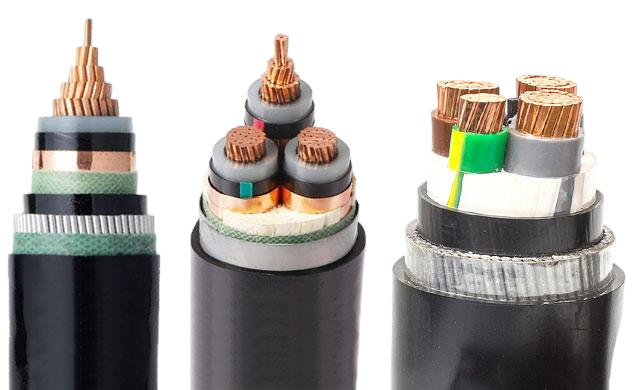
Bulk power cable serves diverse electrical applications. Low-voltage options power security systems, access control, and building automation. High-voltage bulk electrical power cable handles distribution in commercial and industrial settings. Insulation ratings vary based on application requirements, with options for plenum spaces, outdoor environments, and high-temperature zones.
Audio/Video and Control Cables
Professional AV installations rely heavily on bulk coaxial cable for video distribution and RF applications. Control systems in industrial facilities use bulk cable with specialized shielding to prevent electromagnetic interference. These applications demand precise cable specifications to ensure reliable signal transmission.


Why Choose Bulk Cable? Key Benefits for Cost-Effective Installation
The bulk cable advantages extend far beyond simple cost savings, though the financial benefits are substantial. When comparing cost per meter, bulk cable typically costs 40-60% less than equivalent pre-terminated cables. For a large office building requiring hundreds of network drops, this translates to thousands in material savings.
Flexibility represents another critical advantage. Custom length cutting eliminates the common problem of cables that are either too short or excessively long. Reduced waste follows naturally—instead of having leftover cable from pre-cut lengths, installers use exactly what's needed, with minimal excess.
Fewer connection points is a technical advantage often overlooked. Each connector introduces potential signal loss and represents a failure point. By running continuous bulk cable from switch to wall jack, installers eliminate intermediate connections, improving reliability and performance. This becomes particularly important in industrial environments where vibration or environmental factors could compromise connection integrity.
The bulk cable benefits for large-scale projects include better quality control. Specifying bulk cable from reputable manufacturers ensures consistent quality throughout the installation, whereas purchasing pre-terminated cables from various sources might introduce quality variations.
Real-World Applications: Where Bulk Cable Excels
Bulk cable applications span virtually every sector requiring structured cabling. Data centers represent perhaps the most demanding environment, where thousands of connections require precise cable management and performance specifications. Here, bulk cable for data centers allows technicians to create exact-length runs that minimize cable clutter while maintaining signal integrity.
Commercial office buildings utilize bulk cable extensively during construction and renovation. Network infrastructure, phone systems, and access control all rely on properly terminated bulk cable. Bulk cable for commercial buildings enables designers to adapt to changing floor plans and tenant requirements without being constrained by pre-determined cable lengths.
Industrial facilities face unique challenges including electromagnetic interference, temperature extremes, and physical stress. Bulk cable for industrial use with appropriate shielding and insulation ratings addresses these concerns while providing the flexibility to route cables around machinery and through harsh environments.
Healthcare facilities require reliable, code-compliant cabling for critical systems. Educational institutions benefit from scalable infrastructure that can adapt to evolving technology needs. Even bulk cable for home installation makes sense during construction or major renovations, where custom lengths provide professional results and long-term reliability.
Bulk Cable Considerations: Tools, Skills, and Standards Compliance
Before committing to bulk cable, understanding the requirements is essential. Bulk cable termination demands specific tools and skills that casual users might lack. A complete bulk cable termination tools kit includes wire strippers, crimping tools, cable testers, and appropriate connectors.
How to terminate bulk cable properly requires training and practice. For Ethernet cables, maintaining proper twist rates, avoiding untwisting conductors excessively, and ensuring correct wire order in connectors all affect performance. Poor termination can result in reduced speeds, intermittent connections, or complete failure.
Cable compliance standards vary by application. Networking installations must meet TIA/EIA category specifications. Electrical work requires adherence to National Electrical Code (NEC), UL, CSA, and IEC standards. Local building codes may impose additional requirements, particularly for plenum spaces or fire-rated assemblies. Proper cable termination includes testing to verify compliance with applicable standards.
Environmental factors influence cable selection significantly. Temperature ratings ensure cables function reliably in their installed environment. Outdoor applications require UV-resistant jacketing. Moisture and humidity considerations affect insulation choices, particularly in industrial or outdoor settings.
Common Problems and Solutions
Bulk cable problems typically stem from improper installation or specification errors. Understanding these helps prevent issues before they occur.
Problem: Inconsistent Network Performance Solution: This often results from improper termination. Ensure conductors maintain their twist rate up to the connector, strip only the minimum necessary insulation, and verify wire order matches T568A or T568B standards. Use a cable tester to verify all four pairs achieve acceptable performance parameters.
Problem: Cable Damage During Installation Solution: Excessive pulling force damages internal conductors. Follow manufacturer specifications for maximum pulling tension. Use proper cable lubricants in conduits and avoid sharp bends that exceed the cable's minimum bend radius—typically four times the cable diameter for network cables.
Problem: Electromagnetic Interference Solution: In industrial environments, interference from motors, fluorescent lighting, or radio equipment can disrupt signals. Use shielded cable (F/UTP or S/FTP) and ensure proper grounding. Maintain separation between data cables and power lines per code requirements—typically 12 inches for unshielded cables.
Problem: Environmental Degradation Solution: Standard PVC jackets degrade under UV exposure or extreme temperatures. Specify UV-rated cable for outdoor runs and temperature-rated insulation for environments exceeding standard ranges (typically -20°C to 60°C). Plenum-rated cable is mandatory for air-handling spaces.
Problem: Failed Testing After Installation Solution: When cables fail certification testing, systematic troubleshooting identifies the issue. Check termination quality at both ends, verify cable hasn't been kinked or crushed during installation, and ensure appropriate cable category was used. Replace damaged sections rather than attempting repairs.
Bulk Cable vs. Pre-Terminated Cables: Which is Right for Your Project?
The bulk cable vs pre-terminated decision depends on project scope, available expertise, and timeline constraints. Bulk cable vs patch cable comparisons reveal distinct advantages for each approach.
For projects requiring fewer than 20 connections, pre-terminated cables offer convenience and speed. Installation requires no special tools, and factory terminations guarantee quality. However, advantages of bulk cable over pre-terminated become clear in larger installations. Cost savings multiply with scale, custom lengths eliminate cable clutter, and professional results are achievable with proper technique.
When to use bulk cable: Large-scale installations, situations requiring custom lengths, projects where cables must route through tight spaces, or when budget optimization is critical. Bulk cable vs ready-made cables analysis consistently favors bulk cable for commercial and industrial projects exceeding moderate size.
Conclusion: Why Bulk Cable Remains the Industry Standard
Understanding what is bulk cable and its applications empowers informed decision-making for cabling projects. The combination of cost efficiency, flexibility, and professional results explains why bulk cable dominates large-scale installations across industries.
Should I use bulk cable? For commercial buildings, data centers, industrial facilities, or substantial residential projects, bulk cable delivers superior value. The investment in proper tools and training pays dividends through material savings, reduced waste, and professional-grade results. Is bulk cable worth it? Absolutely—when projects scale beyond simple point-to-point connections, bulk cable's advantages become undeniable.
Success with bulk cable requires respecting best practices for bulk cable installation: proper tool selection, adherence to standards, appropriate environmental specifications, and thorough testing. Whether terminating Ethernet cables for office networks or running power distribution in industrial settings, these principles ensure reliable, code-compliant installations that serve facilities effectively for decades.
As technology evolves and infrastructure demands increase, bulk cable continues adapting through improved materials, higher performance specifications, and enhanced environmental resistance. For professionals committed to quality installations and clients seeking long-term value, bulk cable remains the intelligent choice for structured cabling systems.
How to Reach Us
Get in Touch
SiteMap
Product Catalogue
Festoon Cable
Shore Power Cable




Scan to add us on WeChat