What is Cabtire Cable? Name Origin, History, and SOOW vs. SJOOW Differences
Discover the true history of Cabtire Cable and the origin of its unique name (hint: it’s not made of recycled tires!). This guide explains the "Hansom Cab" connection and breaks down the technical differences between SOOW and SJOOW cables, including voltage ratings, durability, and ideal applications for industrial use.
hongjing.Wang@Feichun
12/17/20259 min read
When you walk through an industrial facility, construction site, or commercial workshop, you'll inevitably encounter thick, black, flexible cables powering everything from welding equipment to portable generators. These rugged workhorses of the electrical world are commonly known as Cabtire cables, a term that has puzzled electricians and engineers for over a century. Where did the name Cabtire come from? More importantly, how do you choose between SOOW and SJOOW cables for your specific application? This comprehensive guide unravels the fascinating history behind the Cabtire name and provides the technical clarity you need to select the right portable cord for your industrial needs.
Understanding Cabtire Cable: A Foundation in Flexibility
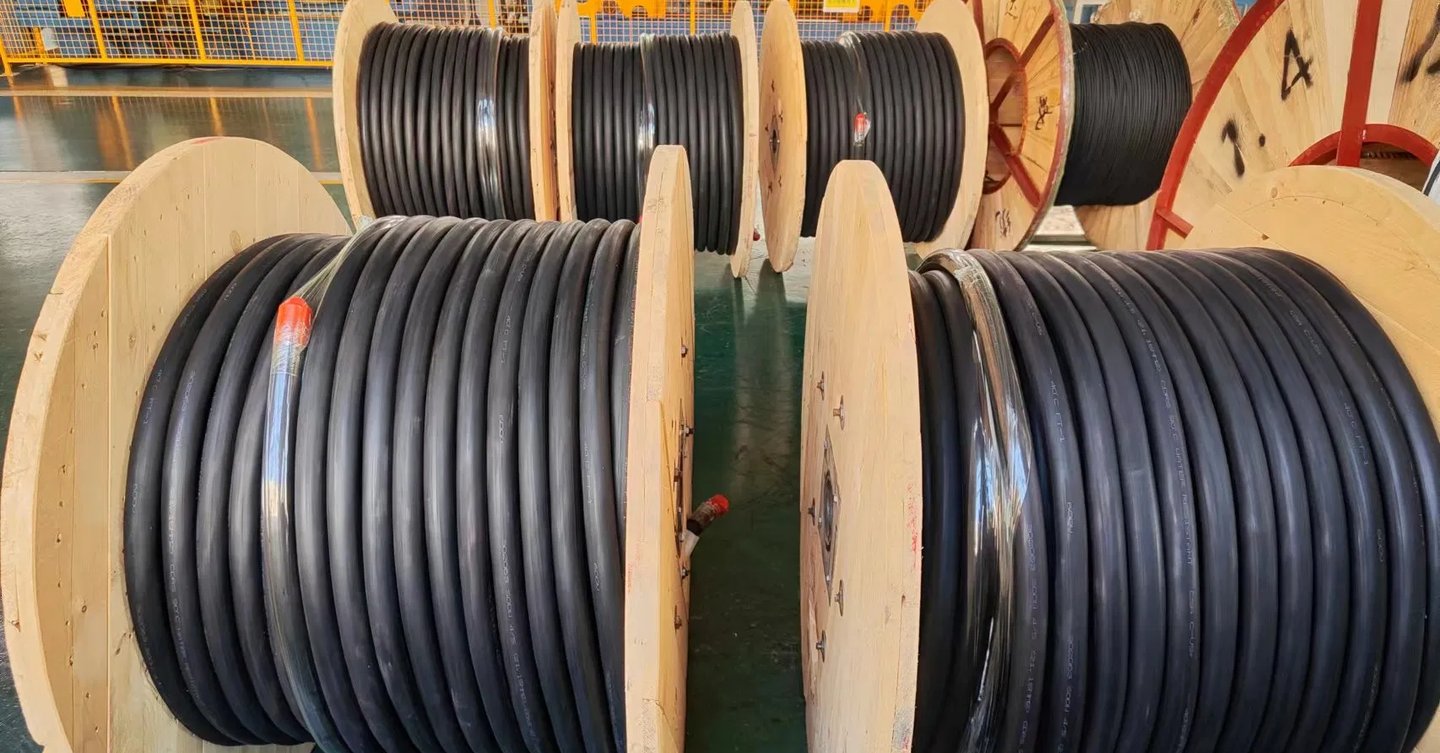
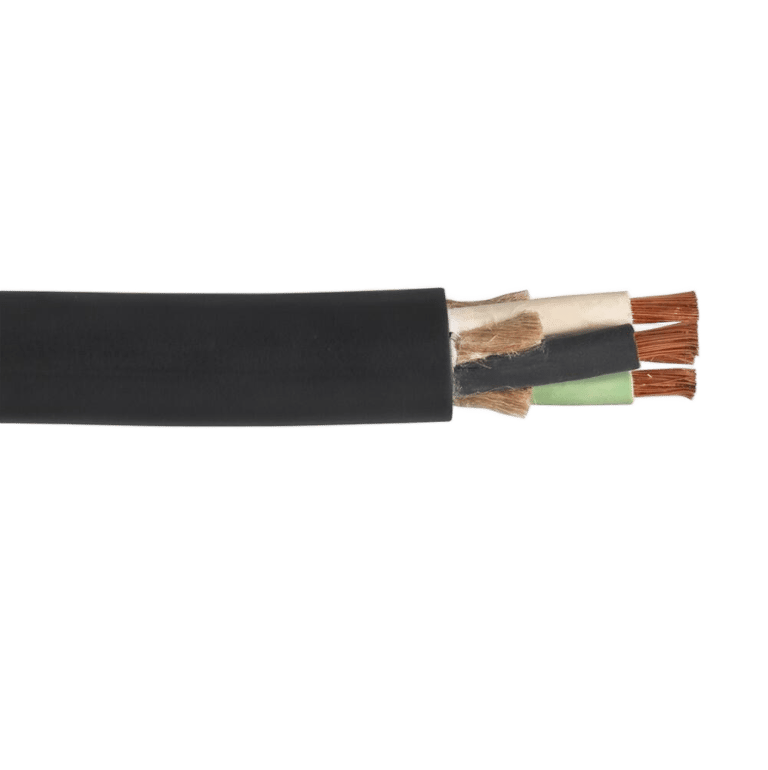
Cabtire cable represents a class of portable, extra-hard-usage electrical cables designed to withstand the punishing conditions of industrial environments. These cables feature multiple stranded copper conductors wrapped in oil-resistant insulation and protected by a durable outer jacket that resists abrasion, chemicals, weather, and mechanical stress. Unlike fixed building wire, Cabtire cable must flex repeatedly, drag across rough surfaces, and endure temperature extremes while maintaining electrical integrity.
The term "Cabtire" encompasses various cable types, but today's most common variants carry designations like SOOW, SJOOW, and other letter-coded specifications that define their construction, voltage rating, and environmental resistance. Understanding the history behind this peculiar name provides insight into the engineering challenges these cables were designed to solve.
The History and Origin of the Name "Cabtire"
The Common Myth: Recycled Tires in Cable Jackets?
Ask most people where the name Cabtire comes from, and you'll often hear that these cables contain recycled car or taxi-cab tires in their outer sheathing. This widespread misconception seems logical at first—after all, the cable jackets do have that characteristic black rubber appearance and exceptional toughness reminiscent of tire compounds. However, this explanation is impossible from a materials science perspective.
The reason is simple: tire rubber undergoes vulcanization, a chemical curing process that creates permanent cross-links between polymer chains. This thermoset material cannot be melted down and reformed like thermoplastics. While modern recycling technologies can grind vulcanized rubber into crumb for specific applications, you cannot process old tires into the continuous, homogeneous extrusions required for cable jacketing. Is Cabtire made from recycled tires? Definitively not—the manufacturing process and material properties make this technically unfeasible.
The Real Story: Horse-Drawn Carriages and 1911 Innovation
The true origin of the Cabtire name takes us back to 1911 and the St. Helens Cable and Rubber Company in Warrington, England. During this era, electricity was rapidly expanding from fixed installations into portable applications, creating demand for flexible power cables that could withstand rough handling in industrial settings.
The engineers at St. Helens Cable faced a challenge: developing a rubber compound durable enough to protect electrical conductors in demanding mobile applications. Their solution came from an unexpected source—Hansom cabs. These iconic two-wheeled, horse-drawn carriages were the taxis of Victorian and Edwardian Britain, and they required exceptionally tough rubber "tyres" (the British spelling) to endure cobblestone streets and constant use.
St. Helens Cable adapted the resilient rubber formulation used for Hansom cab wheels to create Cabtyre sheathing for their new flexible electrical cables. This revolutionary compound provided the abrasion resistance, flexibility, and durability that portable power applications demanded. The original British spelling "Cabtyre" (combining "cab" and "tyre") eventually evolved into the Americanized "Cabtire" we use today.
This naming convention represents a fascinating example of cross-industry innovation. Just as carriage wheels needed protection from the harsh realities of Victorian-era transportation, electrical cables required similar resilience for the emerging industrial age. The connection to Hansom cabs wasn't about recycling materials—it was about applying proven engineering solutions to new challenges.
Deciphering the Codes: What Do SOOW and SJOOW Mean?
Modern Cabtire cables follow standardized naming conventions established by organizations like the National Electrical Manufacturers Association (NEMA) and Underwriters Laboratories (UL). These letter codes aren't arbitrary—each character provides specific information about the cable's construction and capabilities. Understanding the meaning of SOOW and SJOOW codes is essential for proper cable selection.
Breaking Down SOOW Cable
The SOOW designation breaks down as follows:
S - Service (Extra Hard Usage): The "S" indicates this cable meets the highest durability standard for portable cords. Extra hard usage cables are engineered for the most demanding industrial applications where the cable faces continuous flexing, dragging, impact, and environmental exposure.
O - Oil-Resistant Jacket: The first "O" specifies that the outer jacket resists petroleum-based oils, cutting fluids, and many industrial chemicals that would degrade standard rubber compounds.
O - Oil-Resistant Insulation: The second "O" indicates that the insulation surrounding each conductor also resists oil penetration, providing a critical secondary layer of protection if the jacket becomes damaged.
W - Weather and Water Resistant: The "W" designation means the cable can operate in wet locations, withstand direct sunlight, and resist the degradation caused by ozone and weather exposure. This rating makes SOOW suitable for both indoor and outdoor applications.
Breaking Down SJOOW Cable
The SJOOW cable designation follows a similar pattern with one critical difference:
S - Service: Like SOOW, this indicates a service cord designed for portable applications.
J - Junior (Hard Usage): This is the key differentiator. The "J" designation means the cable meets hard usage standards rather than extra hard usage. This distinction affects both voltage rating and physical construction.
O - Oil-Resistant Jacket: Identical to SOOW, the outer jacket resists oil and chemical damage.
O - Oil-Resistant Insulation: The conductor insulation also provides oil resistance.
W - Weather and Water Resistant: SJOOW cables can also operate in wet locations and outdoor environments.
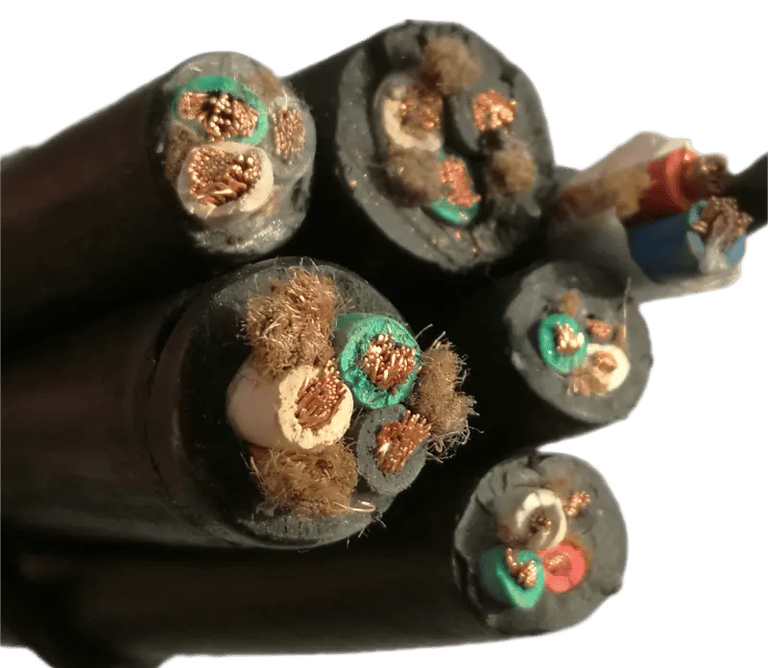
SOOW vs. SJOOW: Key Differences Explained
While both cable types share similar letter designations and applications, the difference between SOOW and SJOOW cables significantly impacts where and how each should be used.
1. Voltage Rating: The Primary Distinction
The most critical difference lies in voltage capacity:
SOOW Cable: Rated for 600 Volts, SOOW cable handles the full range of industrial three-phase power systems common in North American facilities. This voltage rating makes it suitable for heavy machinery, large motors, and high-power equipment that operates on 480V three-phase circuits.
SJOOW Cable: Rated for 300 Volts, SJOOW is the "Junior" version designed for lower-voltage applications. The SOOW vs SJOOW voltage rating distinction determines which cable you can legally and safely use for specific equipment.
This voltage difference stems from insulation thickness and construction standards. The "J" in SJOOW directly reflects its 300V limitation—it's the "junior" or lower-voltage version of the service cord family.
2. Insulation Thickness and Physical Durability
Beyond voltage, the construction differences affect handling characteristics:
SOOW Cable: Features thicker conductor insulation and a more robust outer jacket to meet extra hard usage standards. This results in a stiffer, heavier cable with greater resistance to crushing, abrasion, and penetration. While less flexible than SJOOW, this construction provides superior longevity in harsh environments.
SJOOW Cable: Uses thinner insulation and jacketing that meets hard usage (but not extra hard usage) requirements. This creates a lighter, more flexible cable that's easier to handle and route through tight spaces. The reduced bulk makes SJOOW ideal when flexibility matters more than maximum durability.
The jacket thickness difference typically ranges from 0.015 to 0.030 inches, which may seem minor but significantly impacts flexibility and weight, especially in larger conductor sizes.
3. Applications and Use Cases: Choosing the Right Cable
Understanding when to use each cable type prevents both over-specification (wasting money on unnecessary durability) and under-specification (risking safety and premature failure).
When to Use SOOW Cable:
SOOW cable excels in heavy-duty industrial cable types applications including:
Manufacturing Facilities: Powering welding equipment, industrial mixers, large grinders, and other 480V three-phase machinery that requires portable power connections.
Construction Sites: Temporary power distribution for concrete saws, large compressors, site lighting towers, and heavy equipment that operates in extreme conditions with exposure to mud, debris, and vehicle traffic.
Mining Operations: Portable power for drilling equipment, conveyors, and other machinery in environments with sharp rocks, abrasive dust, and severe mechanical stress.
Event Production: Feeding power distribution systems for concerts, festivals, and large events where cables may be driven over by forklifts and equipment trucks.
Marine and Offshore Applications: Dockside power connections and shipboard equipment where saltwater exposure, UV radiation, and mechanical abuse are constant concerns.
Agricultural Operations: Powering irrigation pumps, grain handling equipment, and barn machinery exposed to fertilizers, pesticides, and extreme weather.
The 600V rating and extra hard usage construction make SOOW the default choice for critical infrastructure where cable failure would cause expensive downtime or safety hazards.
When to Use SJOOW Cable:
SJOOW cable serves applications where flexibility and lighter weight provide advantages:
Power Tools: Extension cords for handheld grinders, drills, circular saws, and other 120V portable tools used in workshops and construction environments.
Commercial Kitchens: Flexible leads for food processors, mixers, and other appliances that require frequent repositioning and cleaning around the cable.
Indoor Manufacturing Workstations: Powering 240V single-phase equipment like tabletop machinery, testing equipment, and assembly line tools where the cable experiences frequent but not extreme flexing.
Entertainment and Audio-Visual: Powering stage lighting, sound equipment, and display systems that require flexible, lightweight cables for frequent setup and breakdown.
Maintenance and Repair Operations: Temporary power connections for equipment being serviced, where the lighter cable is easier for technicians to handle and route through cramped spaces.
Office and Retail Environments: Heavy-duty extension cords for commercial equipment, temporary power during renovations, and applications requiring oil resistance but not maximum voltage capacity.
The key principle: use SOOW when voltage requirements, extreme conditions, or critical applications demand maximum protection; choose SJOOW when 300V capacity suffices and flexibility provides practical advantages.
Common Cable Problems and Solutions
Even the most durable portable cord faces challenges in real-world applications. Understanding potential issues helps you prevent failures and extend cable life.
Problem 1: Jacket Cracking and Dry Rot
Despite weather resistance, prolonged UV exposure and extreme temperature cycling can cause jacket hardening and surface cracking, especially in cables that remain deployed outdoors year-round.
Solution: Inspect cables regularly for surface cracking. Store unused cable indoors when possible. For permanent outdoor installations, consider cables specifically rated for continuous outdoor use or install protective conduit in areas with intense sun exposure. Apply cable protection spray or jacket rejuvenation compounds annually for cables that must remain outside.
Problem 2: Conductor Damage from Repeated Flexing
While stranded copper provides flexibility, constant bending at the same point (particularly near terminations) can cause conductor fatigue and eventual breakage.
Solution: Implement strain relief at all connection points. Use cable management systems that distribute flex across a larger cable section rather than concentrating movement at one spot. Install flexible cable support boots at equipment connections. Replace cables showing unusual stiffness at specific points—this often indicates internal conductor damage before complete failure occurs.
Problem 3: Oil and Chemical Degradation
Although SOOW and SJOOW cables resist petroleum oils, some industrial chemicals (particularly aromatic hydrocarbons, ketones, and certain solvents) can attack the jacket over time.
Solution: Identify specific chemicals present in your environment and verify compatibility with the cable jacket compound. If aggressive chemicals are present, consider upgraded cable types with specialized chemical-resistant jackets. Clean chemical spills from cables promptly—prolonged contact increases degradation risk even with resistant compounds. Keep spare cables available in environments with particularly aggressive chemical exposure.
Problem 4: Inadequate Voltage Rating
Using SJOOW cable for 480V applications violates electrical codes and creates serious safety hazards, yet this mistake occurs surprisingly often when workers grab the nearest available cable.
Solution: Implement a color-coding or labeling system that clearly identifies voltage ratings. Train personnel on the difference between SOOW and SJOOW cables. Store cables of different voltage ratings in separate locations to prevent mix-ups. During safety inspections, verify that cable ratings match equipment voltage requirements.
Problem 5: Improper Repair Attempts
When cables develop jacket cuts or damage, workers sometimes attempt repairs with electrical tape, which doesn't provide adequate moisture or chemical protection.
Solution: Retired damaged cables from service immediately. Use proper cable repair kits designed for portable cords, which include heat-shrink tubing and compound that matches the cable's oil and water resistance. For damage beyond simple jacket repair, replace the cable—the cost of cable replacement is minimal compared to the risk of electrical shock or equipment damage from improper repairs.
Frequently Asked Questions
Is Cabtire cable waterproof?
The "W" designation means Cabtire cable is water-resistant and suitable for wet locations, but no electrical cable is truly "waterproof" in the sense of being submersible. SOOW and SJOOW cables can handle rain, puddles, temporary water exposure, and outdoor environments, but they're not rated for continuous submersion. For underwater applications, you need specialized submersible cable types with sealed conductors and watertight construction.
Can I use SJOOW cable outdoors?
Yes, the "W" designation indicates SJOOW cable is rated for outdoor use and wet locations. However, its 300V rating and hard usage (rather than extra hard usage) construction mean it's better suited for applications with moderate mechanical stress. For permanent outdoor installations or areas with vehicle traffic, SOOW provides superior durability.
Why is it called Cabtire if it's not made of tires?
The name references the rubber compound used for Hansom cab wheels in 1911, not recycled tire material. St. Helens Cable adapted the durable "tyre" rubber formulation from carriage wheels for their cable sheathing, creating the "Cabtyre" designation that evolved into "Cabtire."
Conclusion: From Victorian Carriages to Modern Industry
The journey from 1911 Hansom cabs to today's industrial standards reveals how engineering innovation builds on proven solutions. What began as an adaptation of carriage wheel rubber has evolved into sophisticated polymer compounds that protect electrical infrastructure in the world's most demanding environments.
When choosing between SOOW and SJOOW, remember these key principles: select SOOW for maximum power capacity (600V) and durability in harsh conditions; choose SJOOW for flexibility and lighter weight in 300V applications. Both cables deliver the oil resistance, weather protection, and portability that define heavy-duty industrial cable types, but the voltage and durability differences make each suited to distinct applications.
Before purchasing your next Cabtire cable, verify your equipment's voltage requirements, assess the physical environment and mechanical stresses the cable will face, and consider whether maximum durability or enhanced flexibility serves your application better. Taking time to select the right cable prevents safety hazards, reduces downtime from premature cable failure, and ensures your portable power systems perform reliably for years to come.
The story of Cabtire cable reminds us that great engineering solutions often emerge from unexpected connections—in this case, between horse-drawn carriages and electrical power distribution. The next time you plug in industrial equipment with that familiar black rubber cable, you're using technology that links Victorian transportation innovation to modern electrical engineering.
How to Reach Us
Get in Touch
SiteMap
Product Catalogue
Festoon Cable
Shore Power Cable


Scan to add us on WeChat