
What is Reeling Cable? Types, Structure & Real Applications in Australian Mining & Ports
Discover what reeling cables are, how they work, and why they're essential for mining, ports, and heavy machinery. Complete guide with Australian examples.
hongjing.Wang@Feichun
4/27/202612 min read
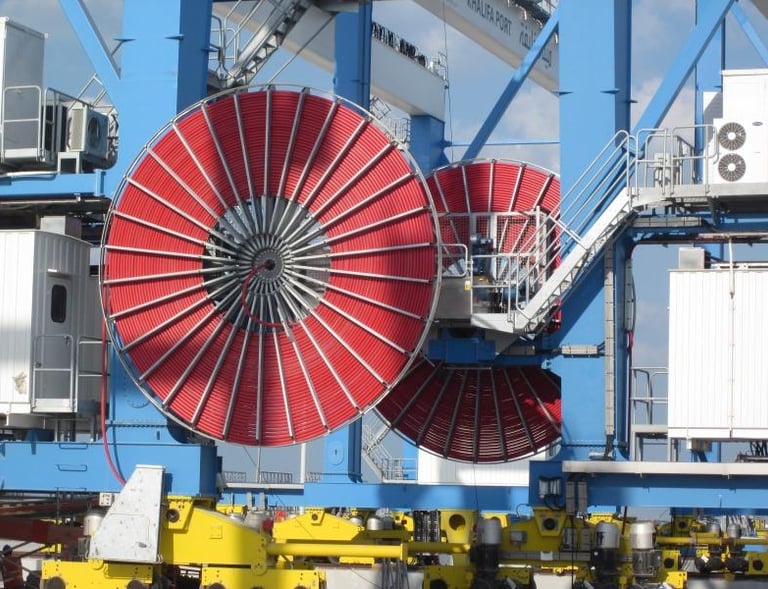
What is a Reeling Cable?
If you've ever wondered what keeps the power flowing to massive excavators in Australia's open-pit mines or the cable systems in port cargo handlers, the answer often comes down to a specialised piece of engineering: the reeling cable.
A reeling cable is a flexible electrical cable specifically designed to be wound and unwound repeatedly from a drum or reel. Unlike your standard residential electrical wire that stays in one place, reeling cables are built to withstand the constant mechanical stress of being reeled in and out—sometimes dozens of times per day in industrial operations.
The key difference between a reeling cable and a standard flexible cable lies in its construction. Standard cables might crack or develop weak points after a few bends. Reeling cables are engineered with reinforced insulation, flexible conductors, and protective outer sheaths that maintain their integrity through thousands of reeling cycles.
Think of it this way: an ordinary electrical cable is like a rope you'd use once or twice. A reeling cable is more like a high-performance climbing rope that's engineered to be used repeatedly under extreme conditions.

How Does a Cable Reeling System Work?
To understand reeling cables properly, you need to understand the system they operate within. A cable reeling system is a straightforward but clever piece of equipment:
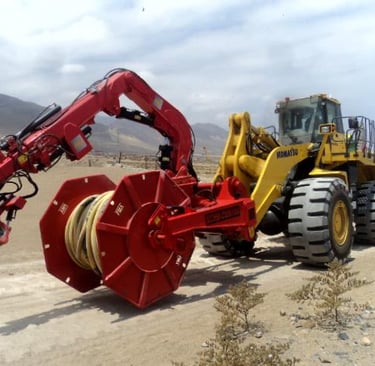
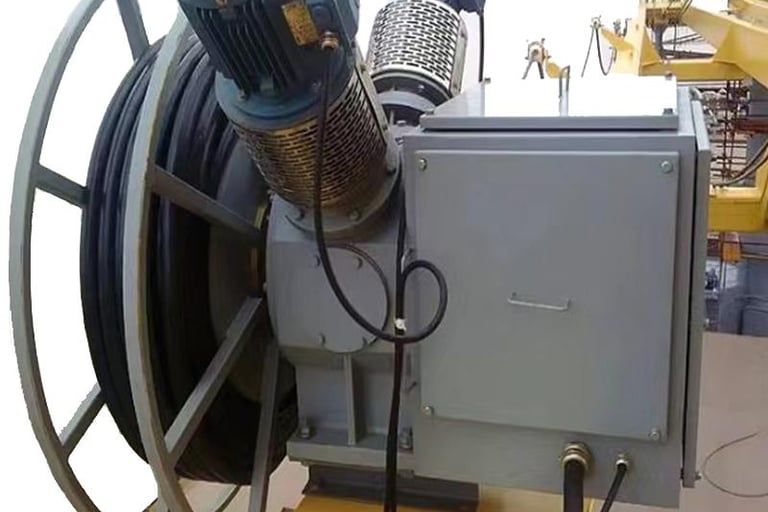
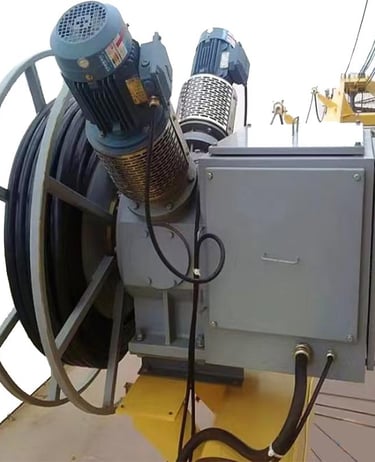
The Drum: At the heart of the system sits a rotating drum, much like a massive spool. As it turns, the cable winds tightly onto its surface, layer upon layer. Think of winding thread onto a bobbin, but on an industrial scale.
The Cable Path: From the drum, the cable travels to the equipment being powered. Whether it's an excavator bucket, a stacker in a coal terminal, or a reclaimer machine, the cable delivers both power and, sometimes, control signals.
The Tension: Here's where things get interesting. As the cable unwinds, the system must maintain proper tension. Too loose, and the cable develops slack that can get pinched or damaged. Too tight, and excessive stress can damage the cable itself. Professional reeling systems use tensioning devices to maintain the sweet spot.
The Movement: When working in open-pit mines or quarries, equipment often moves in multiple directions—forward, backward, and rotating. The cable must flex smoothly in all directions without kinking or developing weak points. Australian mining sites like those in the Pilbara region, which operate some of the world's largest iron ore operations, rely on reeling cables that can handle this multi-directional stress.
Structure of a Reeling Cable: What Makes It Different?
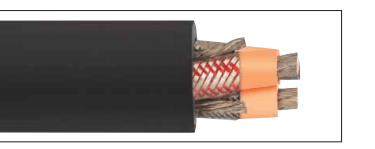
If you were to cut open a reeling cable and examine the cross-section, you'd see a sophisticated layered structure, each component serving a specific purpose:
The Conductor: At the core sits the conductor, typically made of fine-stranded copper. The key here is that it's not solid copper—it's composed of many thin wires twisted together. This construction makes the cable flexible while maintaining excellent electrical conductivity. The finer the strands (what engineers call Class 5 or even higher flexibility classes), the more the cable can bend without the copper work-hardening and cracking.
Insulation Layer: Surrounding each conductor is the insulation, typically made of ethylene propylene rubber (EPR) or similar synthetic rubber compounds. This isn't just any rubber—it's engineered to resist heat, moisture, oils, and ozone, which are all present in harsh industrial environments. In Australian mining operations, where temperatures can soar and equipment sits exposed to the elements, this insulation quality is crucial.
Bedding and Fillers: Between the individual conductor insulation and the outer layers, you'll find bedding materials and filler compounds. These serve to protect the insulation, maintain cable shape, and allow the cable to flex uniformly. Think of it as the cable's internal support structure.
Protective Braiding: For cables designed to handle extreme mechanical stress—such as those used in mining operations—you'll often find a protective braid woven over the insulation. This can be made of polyester, aramid fibres, or other tough materials. The braid acts like armour, protecting against cuts, abrasion, and impact damage.
Outer Sheath: The final layer is the outer jacket, typically made of rubber or chlorinated polyethylene (CPE). In heavy-duty mining cables, this sheath is often reinforced and applied in multiple layers to provide maximum protection from mechanical damage, which is ironically the number one cause of portable cable failures in mining operations.
Typical Types of Reeling Cables for Australian Industries
Not all reeling cables are created equal. Different applications demand different specifications. Let's look at the main categories you'll encounter:
Heavy-Duty Mining Reeling Cables
The Application: When you need a cable that can handle extreme mechanical stress in open-pit mining operations, you're looking at a heavy-duty mining reeling cable.
Real-World Example: Consider a typical operation at an Australian iron ore mine. A large bucket excavator needs power for its electric motor while the operator moves the bucket in and out repeatedly. The cable must endure:
Constant tensile stress as the equipment pulls
Torsional forces (twisting) from the rotating equipment
Temperature extremes in the Australian outback—from near freezing at night to over 50°C during the day
Oil and moisture exposure from the mining equipment itself
Frequent reeling cycles
These cables typically have voltage ratings around 6 to 20 kilovolts, making them suitable for medium voltage distribution in industrial settings. The conductors are exceptionally fine-stranded (what engineers term "FS" or "exceptionally fine stranded"), allowing them to flex repeatedly without fatigue.
Construction Features: Heavy-duty mining cables incorporate:
Inner and outer semiconducting rubber layers for electrical field control
Aramid braiding for torsion protection—this is critical for equipment that rotates
Torsion ratings of plus or minus 100 degrees per meter, meaning they can handle significant twisting without damage
Maximum conductor temperatures of around 90°C, with permitted outer cable temperatures ranging from -40°C to +80°C for fixed installations and -25°C to +60°C for moving applications
The torsion protection is particularly important in Australian mining. Equipment like mobile crushers, which rotate while operating, would destroy a standard cable within weeks. A proper mining-grade reeling cable with aramid torsion protection can handle this punishment for years.
Medium Voltage Reeling Cables for Industrial Distribution
The Application: These cables step down from the extreme specifications of full mining equipment power but still handle significant voltage and current.
Real-World Example: Imagine the cable systems at Port Hedland or another major Australian port. Stacker-reclaimers—massive machines that move coal or other bulk materials—need flexible medium voltage distribution cables. These cables need to:
Handle voltage ratings of 3.6 to 12 kilovolts
Deliver hundreds of amps of current
Flex and move as the equipment reels in and out
Resist the salt-air environment of a coastal port
Maintain safety standards with proper grounding and shielding
Construction Features: Medium voltage industrial cables feature:
Flexible copper conductors rated to carry significant amperage (150 to 500+ amps depending on size)
EPR insulation with semiconducting inner and outer layers for stress control
Copper braid shields to protect against electromagnetic interference
Grounding conductors in contact with the shield for safety
Operating speeds up to 60 metres per minute—fast enough for dynamic industrial operations
Flame-retardant properties and oil resistance for safety in industrial environments
The shielding is critical here. In a busy port or industrial facility, you'll have dozens of electrical systems operating simultaneously. The shielding prevents the reeling cable from picking up interference that could damage sensitive equipment controls.
Light to Medium Duty Reeling Cables
The Application: For less demanding applications—hoists, transporting machines, conveyors, and equipment with lower voltage requirements—lighter duty reeling cables provide a cost-effective solution.
Real-World Example: Consider a modern warehouse or logistics facility in Australia. A hoist system needs to lift pallets repeatedly while the cable winds and unwinds from a drum. Or think of a conveyor belt system in a processing plant where the cable needs to flex through rollers as the system runs.
Specifications: These cables typically operate at:
Voltage ratings around 600/1000V, making them suitable for standard industrial power
Flexible Class 5 copper conductors
Rubber compound insulation rated for temperatures from -40°C to +60°C
Minimum bending radius of 4 times the overall diameter for fixed installations and 5 times for flexed applications
Construction Features: Lighter duty cables use:
Simpler insulation systems based on rubber compounds
Polyester braiding rather than aramid (adequate for lower stress applications)
Single-layer outer sheaths of rubber compound
Polyester support for filler materials
Multiple core options (4, 5, 7, 12, 18, 24, 30, 42, or 45 cores) depending on whether you need separate circuits for power, control, and grounding
The flexibility is remarkable. These cables come in cross-sectional areas ranging from 1.5 square millimetres up to 2.5 square millimetres for light-duty versions, yet they maintain the flexibility needed for constant reeling operations.
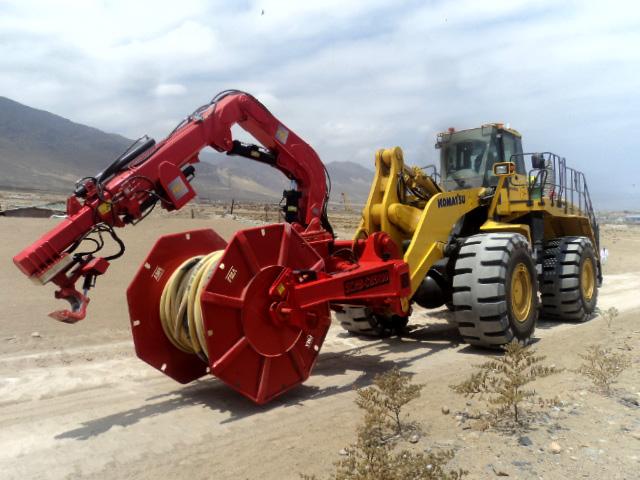
Real-World Cable Selection in Australian Operations
So how do you choose the right reeling cable? Let's walk through a practical decision-making process using Australian examples:
Step 1: Understand Your Voltage and Current Needs
A small hoist in a warehouse might need 400 volts and draw 50 amps. A medium-sized mining excavator might need 6,000 volts and draw 150 amps. A massive electric shovel at a major mining operation might require 10,000 volts and hundreds of amps. Your electrical system specs will determine which cable category you need.
Step 2: Assess the Environmental Stress
Will the cable operate in a temperate climate or the harsh Australian outback? Is it in a clean indoor facility or an oily, dusty mining environment? Will it face salt spray in a coastal port? Will it experience extreme temperature swings? These factors determine what level of insulation durability you need.
Step 3: Calculate the Mechanical Stress
Does the equipment rotate (torsion)? How tight are the bending radiuses? How many reeling cycles per day? Heavy-duty mining cables with aramid braiding and semiconductor layers cost more but handle extreme stress. Lighter cables work fine for gentler applications but will fail prematurely if overstressed.
Step 4: Check Safety and Compliance Requirements
In Australia, cables used in mining operations must meet specific standards. Cables for equipment used in potentially hazardous environments need flame-retardant properties. Cables in certain installations need grounding check conductors for safety.
Common Cable Problems and Why They Occur
Understanding what goes wrong with reeling cables helps you choose and maintain them properly:
Insulation Cracking: When a cable is bent repeatedly at a radius smaller than its minimum bending radius, the insulation can crack. This typically happens when equipment is improperly designed or when cables are manually forced into smaller curves than specifications allow. Once cracking starts, moisture seeps into the insulation, and the cable quickly deteriorates.
Conductor Fatigue: If the conductor strands aren't fine enough (Class 5 or higher flexibility), repeated bending work-hardens the copper. The copper becomes brittle and eventually fractures. This is why "exceptionally fine stranded" conductors matter—they can bend thousands of times without fatigue.
Torsion Damage: Equipment that rotates but isn't protected by proper torsion-rated cables will see the cable twisting and untwisting repeatedly. Without aramid braiding or proper torsion protection, the internal structure of the cable can separate, leading to failures.
Environmental Degradation: Oils seeping into insulation, ozone cracking the rubber compounds, UV damage to the outer sheath—these all reduce cable lifespan. Proper material selection (CPE sheaths instead of standard rubber, EPR insulation instead of basic rubber) dramatically extends cable life in harsh environments.
Mechanical Damage: This is the most common failure mode in mining operations. Impact from equipment, cuts from sharp edges, pinching between moving parts—a damaged outer sheath exposes the insulation, which then fails. Heavy-duty cables with reinforced jackets resist this better.
The Economics of Reeling Cable Selection
It's tempting to choose the cheapest cable available. However, the true cost of reeling cables extends beyond the purchase price:
The Cost of Failure: When a cable fails in the middle of an operation, the consequences are expensive. Mining equipment shuts down, port operations halt, production stops. A reeling cable failure that costs $5,000 to replace might have cost $50,000 in lost production if the equipment sits idle for hours or days while replacements are sourced and installed.
Lifespan Considerations: A heavy-duty mining cable rated for extreme stress might cost 30% more than a lighter-duty alternative. But if it lasts 5 years instead of 2 years, the per-year cost is actually lower. In Australian mining operations where equipment availability is critical, the reliability premium is often worth it.
Environmental Longevity: A cable with superior oil and ozone resistance might cost more upfront, but in harsh environments, it might last three times longer than a cheaper alternative that degrades quickly in those conditions.
Safety and Compliance: Using an undersized or improperly specified cable isn't just unreliable—it's unsafe. A cable that overheats and fails under load can create electrical hazards. Meeting Australian electrical safety standards isn't optional; it's required for any professional installation.
How to Choose the Right Reeling Cable for Your Application
Here's a practical checklist for selecting a reeling cable:
Electrical Requirements
Determine the voltage rating you need. Industrial equipment typically uses 600/1000V for light duty, 3.6/6kV or 6/10kV for medium voltage, or higher for heavy mining applications. Calculate the amperage your equipment draws and select a cable with sufficient current carrying capacity. Remember that current-carrying capacity varies significantly depending on whether the cable is installed in air, in conduit, or reeled on a drum—reeled cables run hotter because the layers of cable insulate each other from the air.
Mechanical Stress Assessment
Identify the minimum bending radius your installation requires. Always choose a cable with a minimum bending radius specification well above your actual requirements. Remember that reeled cables typically have tighter radius specifications than fixed cables. Account for torsional forces if your equipment rotates. If twisting is involved, ensure the cable has adequate torsion protection specifications.
Environmental Conditions
Assess the temperature range your cable will experience. Australian mining sites might see -5°C at night and 55°C during the day—ensure your cable is rated for this span. Identify chemical exposure risks: oils, solvents, ozone, UV. If coastal environments are involved, specify oil and ozone resistance. Check for moisture or steam exposure that might require moisture-resistant insulation.
Flexibility and Handling Requirements
Consider whether the cable needs to be exceptionally flexible for complex routing. Some applications benefit from lower overall diameter even if it means slightly higher cost. Assess whether your installation team has equipment to properly handle very large cables, or whether smaller diameter options would be more practical.
Safety and Standards Compliance
Verify that your chosen cable meets Australian electrical standards for your application. For mining applications, ensure compliance with mining-specific requirements. For equipment in hazardous areas, specify flame-retardant cables. Determine whether grounding check conductors are required for safety.
Realistic Cost Analysis
Compare not just the cable price but the total cost of ownership. Include installation labour, potential downtime costs, and expected replacement cycles. A more expensive, higher-quality cable might have a lower total cost of ownership.
Selecting a Supplier and Getting Technical Support
Choosing the right reeling cable matters, but so does choosing the right supplier. A good supplier can:
Provide Technical Guidance: They should ask detailed questions about your application, not just take an order. They should help you size cables correctly, account for temperature de-rating, and ensure compliance with relevant standards.
Offer Multiple Options: Different cable types and specifications exist for good reasons. A supplier should present options appropriate to your situation and explain the trade-offs between them.
Ensure Quality and Compliance: Reputable cable suppliers ensure their products meet stated specifications and relevant standards. They maintain testing documentation and can provide compliance certificates.
Provide Responsive Support: When you need technical advice or have installation questions, your supplier should be accessible. This is particularly important in Australian remote locations where finding a replacement cable quickly might be challenging.
Deliver Reliably: For industrial operations, delivery reliability is critical. You need confidence that when you order a cable, it will arrive as specified and on schedule.
Maintaining Your Reeling Cables for Longer Life
Once you've selected and installed proper reeling cables, maintenance matters:
Regular Visual Inspection: Periodically inspect cables for external damage, cuts, or signs of wear. Catching damage early prevents catastrophic failures.
Monitor Bending Radius: Ensure that in use, the cable isn't being bent tighter than its specifications allow. Equipment modifications or use pattern changes can unintentionally cause overstressing.
Keep Clean and Protected: Remove oils and contaminants regularly. Protect cables from unnecessary UV exposure when stored.
Replace When Necessary: Don't keep cables in service beyond their useful life. As cables age, their insulation becomes brittle. It's better to replace a cable preventatively than to deal with a failure during critical operation.
Follow Manufacturer Guidelines: The technical specifications provided with your cable include valuable information about maximum temperatures, bending radiuses, and other operational parameters. These aren't arbitrary—they're based on engineering testing. Following them extends cable life.
The Bottom Line: Reeling Cables Are Specialized Engineering
Reeling cables aren't just industrial commodities—they're sophisticated engineering products designed for a specific, demanding purpose: to deliver power reliably while flexing and bending repeatedly, sometimes under extreme mechanical and environmental stress.
Whether you're operating mining equipment in the Pilbara, managing port facilities at Port Hedland, running logistics operations in a modern warehouse, or managing hoists in a manufacturing facility, the right reeling cable is fundamental to reliable operation.
Understanding what makes a reeling cable different from a standard electrical cable, recognizing the different types available for different applications, and selecting properly based on your actual needs will save you money, prevent downtime, and keep your operations running safely and reliably.
When it's time to select a reeling cable for your operation, take the time to assess your needs carefully, consult with experienced suppliers, and invest in the appropriate specification for your application. Your operation will thank you with years of trouble-free service.
Need Technical Guidance on Reeling Cables?
If you're uncertain about which cable specification is right for your equipment or operation, consulting with a cable specialist who understands your specific application will help ensure you get the right solution. Technical specifications matter, and the right choice can make the difference between equipment that operates reliably for years and systems that experience unexpected failures.
Take the time to understand your requirements, and you'll invest in cables that deliver reliable performance when you need it most.
How to Reach Us
Get in Touch
SiteMap
Product Catalogue
Festoon Cable
Shore Power Cable




Scan to add us on WeChat