
What Is SWA Cable? A Complete Guide to Steel Wire Armoured Cables and Their Applications
Discover what SWA cable is, how steel wire armoured cables are constructed, where they are used, and why they are widely specified for industrial and underground power installations.
hongjing.Wang@Feichun
6/2/202621 min read
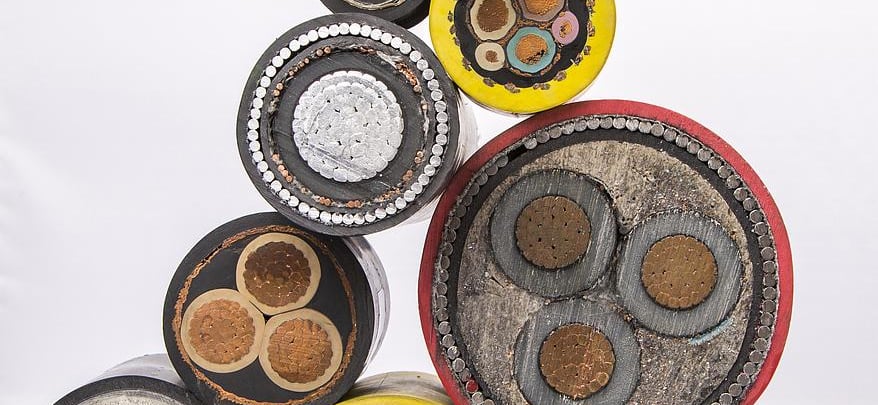
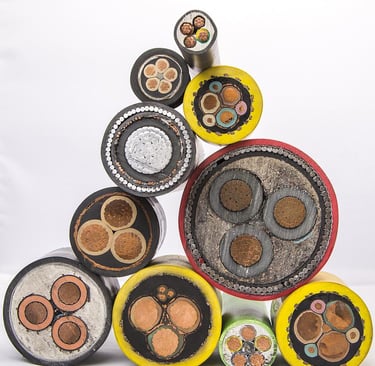
Walk through the cable basement of any major Australian industrial facility — a mineral processing plant in the Goldfields, a bulk handling terminal on the Hunter Valley coal chain, a water treatment facility on the outskirts of a capital city — and you will find it. Hundreds of metres of it, sometimes thousands, running along cable ladders, ducted through floors and walls, disappearing into the ground toward remote substations and switchrooms. Steel wire armoured cable. It is one of the most widely specified and most reliably performing cable designs in fixed power distribution, and for good reason.
Yet for engineers and project teams encountering armoured cable specification for the first time — or for those more familiar with flexible industrial cable than with fixed power distribution — the what, why and where of SWA cable is not always intuitive. Why is the steel armour there? What does it actually protect against, and in what circumstances is that protection necessary? When does SWA make sense, and when is a different cable design the better choice?
This guide answers all of those questions, working through SWA cable construction, the standards that govern it, its real-world applications across Australian industrial and infrastructure sectors, and the situations where its limitations mean a different solution is needed.
What Does SWA Stand For?
SWA stands for Steel Wire Armoured. The abbreviation describes the defining feature of these cables: a layer of galvanised steel wires applied around the cable core, between the inner bedding and the outer protective sheath, to provide mechanical protection against physical damage.
The steel wire armour layer is not there to carry electrical current in normal operation. Its purpose is purely mechanical — to resist crushing forces, impact loads and abrasion that would damage or destroy an unarmoured cable in the same installation environment. It also provides tensile strength during cable pulling, which matters on long installation runs where the cable must be pulled through conduit or duct over significant distances.
The "wire" in steel wire armoured distinguishes this construction from steel tape armoured (STA) cables, which use a different armour geometry. In SWA cable, individual galvanised steel wires are applied helically around the cable, producing an armour layer that resists crushing from any direction and provides good tensile strength. This makes SWA the preferred armour construction for most power cable applications, particularly underground and outdoor installations.
How Is an SWA Cable Constructed?
Understanding the construction of an SWA cable — layer by layer from the centre outward — helps to understand both what the cable is designed to do and where its capabilities and limitations lie.
Conductors
At the centre of an SWA cable are the current-carrying conductors. These may be copper or aluminium, depending on the specification. Copper conductors offer higher conductivity in a smaller cross-section and superior termination reliability, making them the default choice for most industrial and commercial SWA cable applications in Australia. Aluminium conductors are used in larger cross-sections where weight and cost are significant considerations — long feeder runs for large substations and utility distribution applications, for instance.
Conductors in SWA cables are typically either Class 1 solid — a single solid wire, used for smaller cross-sections — or Class 2 stranded, where multiple wires are twisted together to form each conductor. Class 2 stranded conductors offer better flexibility than solid conductors, which is relevant during installation and termination, though SWA cables as a whole are not designed for flexible or dynamic service regardless of conductor class.
For three-phase power distribution, SWA cables typically have three phase conductors. A neutral conductor is included where required. A separate earth conductor may be included, or earthing may be achieved through the steel wire armour itself in appropriate circumstances — a point we will return to in the FAQ section.
Insulation Layer
Each conductor is individually insulated to separate it from adjacent conductors and from the cable structure. Two insulation materials dominate in SWA cable construction: XLPE (cross-linked polyethylene) and PVC (polyvinyl chloride).
XLPE has become the preferred insulation material in most modern SWA cable specifications. It operates at a higher maximum conductor temperature than PVC — 90°C continuous for XLPE compared to 70°C for PVC — which translates directly into higher current-carrying capacity for a given conductor cross-section. XLPE also has better resistance to moisture and chemical exposure, and it performs better in fire conditions, producing less smoke and toxic gas than PVC when exposed to heat. For industrial and infrastructure applications where cable ratings and fire performance are engineering priorities, XLPE insulation is the standard choice.
PVC insulation remains in use in lower-specification and lower-cost SWA cable constructions, and it is adequate for many general-purpose fixed installation applications. However, for most Australian industrial and infrastructure project specifications today, XLPE is the insulation type that engineers are likely to encounter and specify.
Bedding Layer
Between the insulation of the individual conductors and the steel wire armour is the bedding layer — a layer of extruded or wrapped material that serves two functions. It protects the conductor insulation from being damaged by the steel wires of the armour layer during cable bending and during service. And it provides a degree of cushioning and dimensional stability that helps maintain the cable's circular cross-section under mechanical load.
The bedding material is typically PVC or LSZH compound, matching the outer sheath material to maintain consistency in the cable's environmental and fire performance characteristics.
Steel Wire Armour
This is the defining element of SWA cable construction. Galvanised steel wires — individually coated with zinc to resist corrosion — are applied helically around the bedding layer, covering it completely to form a continuous armour layer. The wire diameter and the number of wires in the layer are determined by the cable's overall dimensions, with the armour geometry calculated to provide the required mechanical protection while maintaining the cable's ability to bend around the minimum bend radius specified for installation.
The galvanised steel wire armour provides resistance to crushing forces applied from any direction, protection against impact loads from falling objects or excavation equipment, and tensile strength that assists cable pulling during installation. For underground cables, the armour provides protection against the point loads that can occur from sharp stones or other objects in the cable's immediate environment, and it resists the damage that can result from incidental contact with excavation machinery during future ground works in the vicinity of the cable route.
The armour also provides some degree of rodent protection — in Australian bush and rural settings, rodent damage to cables is a genuine operational risk, and the steel wire armour presents a physical barrier that deters gnawing. This is a practical consideration for SWA cables installed at remote mining sites, rural substations and agricultural processing facilities.
Outer Sheath
The outermost layer of an SWA cable is the protective sheath, which provides environmental protection for the entire cable assembly against moisture, UV radiation, soil chemicals, and physical abrasion. Two sheath materials are in common use: PVC and LSZH (Low Smoke Zero Halogen).
PVC sheaths are the standard for general-purpose SWA cable applications in outdoor and underground environments. PVC provides good moisture resistance and reasonable UV stability, and is the sheath material used on standard BS 5467 SWA cables that are the most commonly specified armoured power cables in Australian industrial and infrastructure projects.
LSZH sheaths are used where fire performance is a priority — in buildings, tunnels, enclosed public spaces and rail infrastructure, where the smoke and toxic gas produced by burning PVC sheaths in a fire would create additional hazards for occupants and emergency responders. LSZH compound, when exposed to fire, produces significantly less smoke and no halogen acid gases, improving visibility and reducing toxicity in the fire environment. BS 6724 SWA cables use LSZH sheathing and are specified wherever LSZH fire performance is required.
Common SWA Cable Standards and Types
SWA cables are manufactured and specified to several British Standards that are widely used in Australian industrial and infrastructure projects. Understanding these standards and what they specify is important for procurement and project specification.
BS 5467 SWA Cable
BS 5467 is the most widely recognised armoured power cable standard, specifying XLPE-insulated, PVC-sheathed SWA cables for voltages up to and including 0.6/1 kV. It is the standard most engineers are referring to when they specify "SWA cable" without further qualification. BS 5467 cables combine XLPE insulation — with its superior current-carrying capacity and moisture resistance — with galvanised steel wire armour and a PVC outer sheath, producing a cable that is suitable for a very wide range of fixed industrial, commercial and utility power distribution applications.
BS 5467 SWA cables are produced in single-core, two-core, three-core, four-core and five-core configurations, in a wide range of conductor cross-sections from 1.5 mm² to 400 mm² and larger. This range covers everything from small lighting and power circuits in buildings to large feeder cables for industrial motor loads and substation connections. In Australian projects, BS 5467 SWA cable is commonly encountered as the specified cable type for underground power distribution, building main power supplies, and fixed power distribution within industrial facilities.
BS 6724 SWA Cable
BS 6724 is the LSZH counterpart to BS 5467 — the same XLPE-insulated, steel wire armoured construction but with an LSZH outer sheath rather than PVC. BS 6724 is specified wherever the fire performance requirements of the installation demand LSZH sheathing: public buildings, rail infrastructure including stations and tunnels, airports, hospitals, and enclosed industrial facilities where fire egress is a concern.
In Australian practice, LSZH cable specifications are increasingly common in public infrastructure projects, where fire safety standards for enclosed spaces require consideration of smoke and toxic gas production from burning cables. The relevant fire performance characteristics of BS 6724 align with the LSZH requirements that appear in Australian building and infrastructure specifications for these applications.
BS 6622 Medium Voltage SWA Cable
For power distribution at medium voltage — above 1 kV and up to 33 kV — BS 6622 specifies the construction and performance requirements for XLPE-insulated, steel wire armoured cables at voltage ratings including 3.8/6.6 kV, 6.35/11 kV, 12.7/22 kV and 19/33 kV. These are the voltage levels used in industrial distribution networks, mining site power systems, utility networks and the grid connections for renewable energy projects.
BS 6622 medium-voltage SWA cables are the cables that connect mine site substations to the processing plant distribution boards, that feed the high-voltage switchgear in port terminal electrical rooms, and that carry power from the grid connection point across a solar farm to the inverter stations. The steel wire armour on these cables provides the same mechanical protection as on low-voltage SWA cables, while the XLPE insulation is designed and tested to handle the higher electrical stress of medium-voltage operation.
Why Is Steel Wire Armour Used? The Engineering Case
The steel wire armour on an SWA cable is not a manufacturer's premium feature or a conservative overspecification. It addresses real, practical risks that arise in the environments where these cables are installed, and understanding those risks makes clear when armoured cable is necessary and when it is not.
Protection Against Mechanical Damage
The most immediate purpose of steel wire armour is to protect the cable against physical damage from external mechanical forces. Underground cables are at risk from excavation equipment — both planned excavation during future ground works in the vicinity of the cable route, and accidental strikes during unrelated groundworks. A mechanical excavator bucket or a pneumatic drill that contacts an unarmoured underground cable will typically sever it. The same contact with a BS 5467 SWA cable may cause visible damage to the outer sheath and deform the armour, but the cable is likely to survive the impact with its electrical integrity intact.
Above ground, cables in industrial environments are at risk from falling objects, vehicle impacts, and the general physical hazards of busy industrial sites. SWA cables installed on exposed cable ladders, across gantries, or along the ground in areas of vehicle or machinery movement benefit from the mechanical protection of the armour layer against these incidental contact risks.
Direct Burial Capability
SWA cable's resistance to mechanical damage makes it one of the preferred cable types for direct burial underground — installation without conduit or duct protection. For most fixed power distribution applications, direct burial of SWA cables with appropriate sand or fine soil bedding, suitable burial depth, and marker tape or tiles above the cable route is a cost-effective and reliable installation method.
The steel wire armour provides the mechanical protection that allows direct-buried SWA cables to survive the point loads from stones and other objects in the cable's environment, and to resist incidental contact with excavation equipment during future ground works. The XLPE insulation and PVC or LSZH sheath provide moisture resistance and chemical resistance appropriate for soil burial over long service periods.
For Australian infrastructure projects — road crossings, substation feeder cables, power distribution across industrial sites — direct-buried SWA cable to BS 5467 or equivalent is a standard and well-proven installation method that reduces the civil works cost of conduit installation while maintaining reliable long-term cable performance.
Improved Pulling Strength
During cable installation, particularly on long underground routes, the cable must often be pulled through conduit, duct or directly through the ground over distances of hundreds of metres. The tensile loads applied to the cable during pulling must be borne by the cable's strength members without causing damage to the conductors or insulation.
The steel wire armour of an SWA cable provides significant tensile strength that assists cable pulling on long installation runs. The galvanised steel wires, individually strong and working collectively across the full armour layer, allow SWA cables to withstand the pulling tensions that arise on long cable routes without risk of conductor elongation or insulation damage. Cable pulling grip attachments engage with the armour and outer sheath to distribute pulling loads appropriately. This mechanical capability is one of the practical advantages of SWA cable in underground installation applications, and it is why armoured cables are commonly specified on long underground feeder runs even in cases where the mechanical protection of the armour in service might be achievable with alternative measures.
Rodent Protection
In Australian bush, rural and remote settings, rodent damage to unprotected cables is a documented operational risk. Rats, possums and other animals with gnawing behaviour can damage cable sheaths and insulation, creating faults that are difficult to locate and costly to repair — particularly on underground cables where fault location and excavation are required. The galvanised steel wire armour of SWA cable presents a physical barrier that deters gnawing and provides meaningful protection against rodent damage that a PVC or LSZH sheath alone cannot provide.
Where Are SWA Cables Commonly Used? Australian Applications
SWA cable's combination of mechanical robustness, underground installation capability and wide availability in both low-voltage and medium-voltage configurations makes it one of the most versatile fixed power distribution cable types across Australian industrial and infrastructure sectors.
Industrial Facilities
In manufacturing plants, mineral processing facilities, food and beverage plants and industrial warehouses, SWA cables provide the fixed power distribution backbone. Main feeders from the site substation to motor control centres, distribution boards and large drive equipment; sub-feeders from MCCs to individual motor loads and process equipment; external cables running between buildings and process areas — these are all typical SWA cable applications in industrial facility power distribution.
The mechanical robustness of SWA cable is particularly valuable in industrial environments where cables share space with operating machinery, overhead cranes and heavy vehicle movements. An SWA cable on an industrial cable ladder provides a level of resistance to incidental physical contact that an unarmoured cable cannot match.
Mining Operations
Western Australian and Queensland mining operations — from iron ore and gold mines in the Goldfields to coal operations in the Bowen Basin and copper-gold deposits in North Queensland — use SWA cables extensively for fixed power distribution across their sites.
Surface infrastructure at a large open-cut mine involves substantial cable runs: from the site substation to the process plant, from the process plant distribution room to conveyors, crushers, mills and screens across the plant layout, from the surface electrical room to the collar of underground workings. These cable runs often cover significant distances across terrain that is dusty, rocky and subject to heavy vehicle movements. BS 5467 SWA cables for low-voltage distribution and BS 6622 SWA cables for medium-voltage distribution handle these conditions reliably and provide the mechanical protection appropriate for an active mining environment.
At medium voltage specifically — 6.6 kV and 11 kV are the most common distribution voltages at Australian mine sites — BS 6622 SWA cables are the standard product for fixed feeder and distribution cables throughout the site power network. From the incoming supply transformer through the high-voltage switchgear to the various distribution points across the site, medium-voltage SWA cables carry the mine's power with the reliability and mechanical durability that continuous industrial operation demands.
Port and Terminal Infrastructure
Port facilities present a demanding fixed cable environment: outdoor exposure to salt air and humidity, heavy vehicle and machinery movements across the facility, and the need for reliable power distribution to a diverse range of loads — crane electrical rooms, lighting systems, CCTV and communications infrastructure, weighbridges, and port services buildings.
SWA cables are widely used for the fixed power distribution infrastructure at Australian port terminals — from the grid connection substation through the facility's medium-voltage ring main to the crane electrical rooms and distribution centres that supply each section of the terminal. Underground SWA cable routes across the container yard and along the waterfront carry power to crane supply points and terminal infrastructure without exposure to the vehicle traffic and crane movements above ground.
It is important to note, however, that SWA cable plays a different role in port infrastructure from the specialised flexible cables used on the cranes themselves. The SWA cable network supplies power to fixed points on the wharf and in the terminal — the junction boxes and cable reels from which crane power is drawn. The dynamic power supply to the crane, from the fixed supply point through a reeling or festoon system to the crane structure, requires completely different cable technology, which we will address in a dedicated section below.
Renewable Energy Projects
Australia's rapidly expanding renewable energy sector — utility-scale solar farms, wind farms and battery storage projects across Queensland, New South Wales, Victoria, South Australia and Western Australia — relies on SWA cables for both low-voltage and medium-voltage fixed power distribution across large site footprints.
At a utility-scale solar farm, SWA cables connect inverter stations to the medium-voltage collector network, run between weather monitoring stations and the control building, and distribute auxiliary power across the site. Medium-voltage SWA cables to BS 6622 form the collector network backbone, aggregating the output of multiple inverter stations and transmitting it to the on-site substation for grid connection.
The outdoor environment of a solar farm — UV exposure, temperature extremes, occasional contact with maintenance vehicles and agricultural equipment on sites that continue grazing operations — makes the mechanical protection and outdoor durability of SWA cable directly relevant to its performance and longevity in these applications.
Commercial and Infrastructure Projects
Beyond heavy industrial applications, SWA cable is the standard specification for main power supplies in commercial buildings, external cable routes between buildings in campus developments, and utility power distribution in public infrastructure — data centres, hospitals, airports, and the underground networks that power urban infrastructure. In these applications, BS 5467 for general external and underground use and BS 6724 for enclosed public buildings and tunnels cover the majority of specification requirements.
SWA Cable vs Unarmoured Cable: Understanding the Difference
The decision between SWA cable and unarmoured cable is fundamentally a question of installation environment and the level of mechanical protection that environment demands.
Unarmoured cables — multicore power cables without a steel wire armour layer — are entirely appropriate for installations where the cable is protected by its installation method: enclosed in metallic conduit, installed in a cable tray with mechanical protection, or routed in areas where accidental physical contact is not a realistic risk. In these circumstances, the armour layer of an SWA cable provides no additional benefit, and the unarmoured cable's lower cost, lighter weight and easier installation — it is more flexible and termination does not require armour cutting and appropriate gland management — makes it the better choice.
For underground installation without conduit, for cable routes that cross areas of vehicle or machinery movement, for installations in environments where physical hazards are present and the cable cannot be adequately protected by its installation method alone, and for long cable pulls where the tensile strength of the armour assists installation, SWA cable is the appropriate specification. The steel wire armour's protection comes at a cost — higher material cost, greater weight, more complex termination requiring appropriate SWA cable glands — and these costs are justified when the application genuinely demands the protection the armour provides.
In terms of service life, a correctly specified and installed SWA cable in an appropriate environment will typically outlast an unarmoured cable in the same environment, because the armour protects against the physical damage and moisture ingress that are the most common causes of premature cable failure in industrial and outdoor installations. The higher initial cost of SWA cable is therefore often recovered through longer service life and reduced maintenance and replacement costs over the project lifecycle.
SWA Cables and Fixed vs Dynamic Applications
One of the most important things to understand about SWA cable — and a point that has significant practical consequences when specifying cables for industrial applications — is that SWA cable is designed exclusively for fixed installations. It is not suitable for any application involving cable movement, and specifying SWA cable in a dynamic application is one of the most consequential cable specification errors that can be made.
The steel wire armour construction that makes SWA cable so effective in fixed applications is precisely what makes it unsuitable for dynamic service. The individual steel wires of the armour layer are designed to resist crushing and tensile loads in a cable that does not move. When subjected to repeated bending, flexing or torsion — the kind of movement that occurs in a cable reeling system, a festoon cable installation, or a drag chain — the steel wires fatigue and fracture progressively. The fractured wire ends can penetrate the bedding and insulation, causing faults in the cable it was supposed to protect. The rigid armour also resists the flexing that dynamic cable applications require, generating stress concentrations in the cable that accelerate failure.
SWA cable must not be used in crane reeling systems, cable festoon applications, drag chain installations, or as a trailing cable for mobile equipment. These applications require purpose-built flexible cable designs that are engineered to survive the mechanical demands of dynamic service — demands that SWA cable is fundamentally unable to meet.
SWA Cable vs Flexible Crane Cable: Choosing the Right Design for the Application
The distinction between SWA cable and flexible crane cable is worth addressing explicitly, because it is an area where specification errors can have serious operational consequences.
At a container terminal or bulk handling port, the fixed power distribution network — the medium-voltage SWA cables running underground from the substation to the crane berths, and the low-voltage SWA cables feeding the terminal's fixed infrastructure — is appropriate territory for SWA cable. These cables do not move. They are fixed in place for the life of the installation, and the mechanical protection of the steel wire armour is relevant and valuable in the outdoor port environment.
The cable that connects the fixed power supply point to the crane itself is an entirely different matter. Container cranes, rubber-tyred gantries, ship unloaders and stacker reclaimers all require power cables that move continuously as the crane operates. Whether the power is supplied through a cable reeling drum — where the cable extends and retracts as the crane travels along its rail path — or through a festoon system where the cable hangs in a series of loops that travel with the crane, the cable is subject to high-cycle mechanical stress that SWA cable cannot survive.
For reeling cable applications, purpose-built designs such as the R-(N)TSCGEWOEU — a rubber-insulated, steel-wire-braided flexible crane cable with fine-stranded copper conductors engineered specifically for high-cycle reeling service — are the appropriate choice. The (N)SHTÖU flat travelling cable is the standard design for overhead crane festoon systems. For medium-voltage crane and stacker-reclaimer applications, purpose-built MV reeling cables with fine-stranded copper conductors, designed and tested for dynamic duty, handle the combination of voltage stress and mechanical cycling that these applications demand.
For underground mining equipment — electric rope shovels, draglines, continuous miners — purpose-built mining trailing cables to AS/NZS 2802 provide the flexible, mechanically robust cable design that mobile mining equipment requires. These cables are engineered to be dragged across the ground, to accommodate the cable management systems of mobile mining equipment, and to survive the physical punishment of the mining environment while maintaining reliable electrical performance through high cycle counts.
The fundamental principle is straightforward: SWA cable for fixed installations, flexible purpose-built cable for dynamic applications. These are not interchangeable categories, and the right specification decision depends on understanding which category the application falls into.
Australian Considerations for Armoured Cable Selection
Australian engineers specifying SWA cables for industrial and infrastructure projects need to navigate a specification landscape that combines British Standards — which dominate the global market for armoured power cables — with Australian Standards installation requirements and, in mining applications, state-based mining regulations.
AS/NZS 3000, the Wiring Rules, governs electrical installation practice across Australia and sets out requirements for cable installation methods, burial depths, mechanical protection and conductor sizing that apply regardless of the cable standard to which the cable itself is manufactured. SWA cables manufactured to BS 5467 or BS 6622 are widely accepted on Australian projects when specified correctly and installed in accordance with AS/NZS 3000 requirements.
For Western Australian mining projects, the relevant state mining regulations and the requirements of the Department of Mines, Industry Regulation and Safety add a layer of compliance requirements that affect cable specification and installation. Medium-voltage cable specifications in particular — the voltage class, insulation type, armour construction and testing requirements — need to align with the regulatory framework applicable to the project. In practice, BS 6622 medium-voltage SWA cables are commonly accepted on Western Australian and Queensland mining projects when they meet the technical requirements of the applicable regulations and project specifications.
For infrastructure projects in Queensland, New South Wales and Victoria, state-based electrical safety legislation and the relevant network operator's technical requirements for grid connections add project-specific compliance requirements. Engineers working on grid-connected renewable energy projects need to ensure that their cable specifications align with both the standard's requirements and the network operator's connection conditions — including cable testing and certification requirements that go beyond the standard's minimum production test specifications.
Common Mistakes When Specifying SWA Cable
Specification and installation errors with SWA cable follow recognisable patterns, and being aware of them is part of getting SWA cable applications right.
Specifying SWA cable for moving equipment is the most consequential error, and it has been addressed at length above. If the cable moves in normal service, SWA is the wrong design. This point cannot be overstated, because the failure mode — progressive armour wire fatigue leading to internal faults — is not immediately apparent and may only become evident after months of service when the cable has accumulated enough fatigue damage to cause a fault.
Ignoring earthing requirements is another common issue. The steel wire armour of an SWA cable is a conductor, and it must be appropriately earthed at both ends of the cable run to prevent it from becoming a source of electric shock hazard or interference. The armour earthing connections at cable glands must be correctly made, and the armour earth connection must be included in the circuit's earth continuity provisions. Whether the armour alone is adequate as the earth conductor, or whether a separate earth conductor within the cable is required, depends on the installation's earthing requirements and the applicable standard — and this decision should be made explicitly during specification rather than left to the installation team to resolve on site.
Using incorrect cable glands is a failure mode that leads to water ingress and armour corrosion at termination points, both of which undermine the cable's long-term performance. SWA cable glands must be correctly sized for the cable's outer diameter and armour wire size, must include appropriate armour clamping to achieve the required IP rating and mechanical retention, and must be made from a material appropriate for the installation environment — brass for general indoor use, stainless steel for outdoor and marine environments, and appropriate grades for chemically aggressive environments.
Choosing PVC sheathing where LSZH is required by the fire safety specification is a compliance failure that can affect project certification and require costly cable replacement. The distinction between BS 5467 (PVC) and BS 6724 (LSZH) is not merely a material preference — it reflects a fire performance requirement that arises from the installation environment, and the specification must match the requirement.
Undersizing conductors is a perennial issue in cable specification, driven by the temptation to reduce cable cost by reducing conductor cross-section. The consequences — voltage drop that affects equipment performance, overheating under load that reduces cable life, and potential overload conditions if loads grow beyond the original design — are real and recurring. Current-carrying capacity calculations should be performed correctly, including appropriate derating for grouping, burial depth and ambient temperature, and future load growth should be considered in the design cross-section.
Frequently Asked Questions
What does SWA cable stand for?
SWA stands for Steel Wire Armoured — a cable construction in which galvanised steel wires are applied around the cable core to provide mechanical protection against physical damage, crushing and impact forces.
Can SWA cable be buried directly in the ground?
Yes. Direct burial is one of the primary applications of SWA cable. The steel wire armour provides the mechanical protection required for underground installation, and the XLPE insulation and PVC or LSZH outer sheath provide moisture and chemical resistance appropriate for soil burial. Correct installation practice requires appropriate bedding material, adequate burial depth and marker tape or tiles above the cable route.
Is SWA cable waterproof?
SWA cable is water resistant rather than waterproof in an absolute sense. The XLPE insulation provides excellent moisture resistance, and the PVC or LSZH outer sheath provides good environmental protection. For applications involving continuous submersion, cables with additional water-blocking features or specifically rated for submersible installation should be considered. For normal underground burial and outdoor installation, the water resistance of a correctly specified SWA cable is adequate for long-term reliable service.
Can the SWA armour be used as the earth conductor?
In some circumstances, yes. The steel wire armour of an SWA cable has sufficient conductance to serve as the earth conductor for the cable circuit, provided that the armour cross-sectional area meets the earth fault current requirements of the installation and that the armour is correctly earthed at both ends. However, whether armour-only earthing is appropriate depends on the installation's earthing system design, the applicable standard requirements and the fault current levels involved. In many Australian industrial installations, a separate earth conductor within the cable is specified to ensure reliable earth fault protection regardless of armour condition.
What is the difference between BS 5467 and BS 6724?
Both are XLPE-insulated, steel wire armoured power cables for 0.6/1 kV applications. The difference is in the outer sheath material: BS 5467 uses a PVC outer sheath, while BS 6724 uses an LSZH outer sheath. BS 6724 is specified where fire performance — specifically reduced smoke emission and the absence of halogen acid gases during a fire — is a requirement of the installation environment.
Is SWA cable suitable for crane applications?
SWA cable is not suitable for the dynamic cable elements of crane systems — the cables that travel with the crane through reeling or festoon systems. SWA cable is appropriate for the fixed power distribution infrastructure that supplies power to the crane's fixed supply point, but the cable from the supply point to the crane must be a purpose-built flexible cable design such as the R-(N)TSCGEWOEU for reeling applications or the (N)SHTÖU for festoon systems.
Final Thoughts: SWA Cable's Place in the Electrical Specification Toolkit
Steel wire armoured cable has earned its place as one of the most trusted and widely specified cable designs for fixed power distribution across Australian industrial and infrastructure projects. The combination of mechanical protection, direct burial capability, long service life and availability across a wide range of voltage ratings and conductor configurations makes SWA cable a versatile and reliable solution for a broad spectrum of fixed installation applications.
For underground power distribution at mine sites, across port facilities, through renewable energy projects and into commercial and industrial buildings, SWA cable — principally BS 5467 at low voltage and BS 6622 at medium voltage — delivers the reliability and durability that these applications require. Its limitations are equally clear: it is a fixed installation cable, and any application involving cable movement requires a fundamentally different design approach.
Getting the specification right starts with understanding where SWA cable belongs and where it does not — and ensuring that the dynamic cable applications that exist alongside fixed infrastructure at every crane-served port terminal, every mining operation with mobile equipment, and every industrial facility with conveyor and materials handling systems are addressed with the purpose-built flexible cable designs that those applications demand.
Looking for Industrial Power and Special Application Cables?
Whether your project requires BS 5467 SWA power cables for underground distribution, BS 6622 medium-voltage armoured cables for mine site or port power networks, flexible crane cables for reeling and festoon systems, mining trailing cables for mobile equipment, or custom cable solutions for specialised industrial applications, selecting the correct cable design for each part of the installation is fundamental to achieving the operational reliability and service life the project requires.
How to Reach Us
Get in Touch
SiteMap
Product Catalogue
Festoon Cable
Shore Power Cable




Scan to add us on WeChat