
What Is Type 209 Mining Cable? Best Trailing Cable for Flexible Equipment in Australia
Type 209 mining cable is Australia's standard for flexible trailing applications. Discover why Pilbara and Queensland mining operations choose this durable 1.1-11kV cable for mobile equipment.
hongjing.Wang@Feichun
4/30/202612 min read
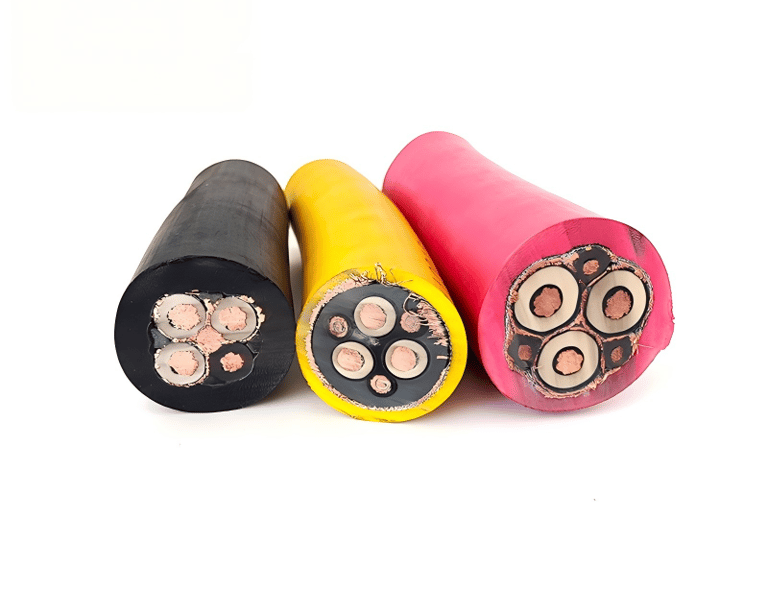
Introduction: Why Mining Cable Selection Matters in Australia
Australia's mining industry operates in some of the world's harshest environments. From the scorching heat of Western Australia's Pilbara region to the rugged terrain of Queensland's coal fields, mining operations demand equipment that can withstand extreme mechanical stress, temperature fluctuations, and relentless abrasion.
Cable failure isn't just an operational inconvenience—it's a safety risk and a financial drain. A single equipment downtime can cost thousands of dollars per hour, whilst faulty electrical connections pose serious hazards to personnel on site.
This is where Type 209 mining cables step in as a proven solution for Australian mining operators managing mobile and flexible equipment. Whether you're running open-pit mining operations, managing mobile crushers, or powering portable drill rigs across remote locations, understanding the right cable specification is critical to operational efficiency and worker safety.
In this guide, we'll break down exactly what Type 209 cables are, why they're the preferred choice for trailing applications in Australia, and how to select the right specification for your mining operation.
What Is Type 209 Cable? Understanding the Standard
Type 209 is a composite screened cable engineered specifically for general-purpose power distribution in mining environments. Approved under Australian and New Zealand standards (AS/NZS 1802, AS/NZS 1972, and AS/NZS 5000.1), this cable type has become the industry standard for flexible feeder and trailing applications across Australian mining operations.
Cable Design and Construction
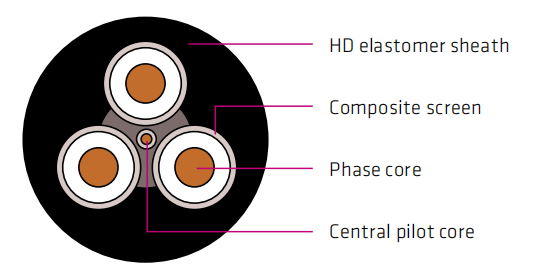
The Type 209 cable features a sophisticated multi-layer construction designed to handle the demanding conditions of mobile mining equipment:
Power Conductors: At the heart of the cable are tinned copper cores—available in configurations ranging from 10mm² to 300mm². The tinned copper provides superior corrosion resistance, particularly important in wet and chemically aggressive mining environments common in Queensland and Western Australia's tropical regions.
Insulation System: The cable utilises EPR (ethylene propylene rubber) insulation rated at 90°C, ensuring stable electrical performance even under high ambient temperatures. This thermal rating is crucial for cables dragged across sun-exposed mining sites where surface temperatures can exceed 60°C.
Composite Screening: Instead of traditional copper braid alone, Type 209 employs a composite screen made from tinned annealed copper wire combined with polyester yarn. This dual-layer approach provides excellent earthing while maintaining flexibility and reducing overall cable weight—a significant practical advantage when deploying cables across rough terrain.
Central Pilot Core: Every Type 209 cable includes a single central pilot conductor positioned at the cable core. This pilot serves as a monitoring point for cable condition and continuity, allowing operators to detect faults before they become critical failures.
Heavy-Duty Sheath: The outer sheath is constructed from HD-85-PCP (heavy-duty elastomer material), offering exceptional resistance to oils, chemicals, UV radiation, and mechanical abrasion. Sheath reinforcement is available upon request for particularly demanding applications.
Key Features That Make Type 209 the Preferred Choice for Australian Mining
1. Exceptional Flexibility for Trailing Applications
Unlike rigid underground cables, Type 209 is explicitly designed for flexibility. This means the cable can be dragged repeatedly across rough ground, wound around equipment, and deployed in challenging site configurations without compromising conductor integrity. For mining operations using mobile equipment—crushers, conveyors, and portable processing units—this flexibility is non-negotiable.
2. Superior Chemical and Environmental Resistance
Australia's mining regions expose cables to diverse chemical environments: mineral processing chemicals, diesel spills, explosive atmospheres, and corrosive dust. Type 209's HD elastomer sheath provides very good chemical resistance with frequent exposure tolerance. The composite screening and tinned copper conductors resist corrosion far better than standard cables, extending operational life in harsh conditions.
3. Outstanding Mechanical Impact Protection
Mining sites are inherently rough environments. Cable damage from dropped equipment, vehicle movements, and rough handling is common. Type 209 is rated for heavy mechanical impact resistance, meaning it can withstand the physical stresses of a dynamic mining operation without insulation breakdown or conductor exposure.
4. Water and Immersion Tolerance
From tropical Queensland mines experiencing seasonal flooding to coastal Western Australian operations with salt spray, water exposure is a constant challenge. Type 209 is rated for immersion and temporary coverage, making it suitable for installations near water sources or in areas prone to flooding. The composite screen and outer sheath work together to prevent water ingress and maintain electrical integrity.
5. Solar Radiation Resistance for Above-Ground Installations
Type 209 is explicitly approved for direct outdoor exposure to sunlight and weather. This is critical for Australian mining operations where cables often run above ground between transformer stations, gate-end boxes, and mobile equipment. The UV-resistant PCP sheath prevents degradation from intense Australian sunlight—a factor that degrades inferior cables within months rather than years.
6. Wide Voltage Range (1.1kV to 11kV)
Type 209 flexibility across voltage ratings allows a single cable specification to serve multiple mining applications. Whether powering low-voltage secondary circuits or high-voltage primary feeders, the same cable family maintains consistent quality and performance characteristics. This standardisation simplifies inventory management and reduces procurement complexity for large mining operations.
7. Temperature Performance for Extreme Australian Conditions
Rated for operation from -25°C to +90°C, Type 209 handles Australia's temperature extremes. Whether deployed in high-altitude mining regions experiencing sub-zero nights or in low-altitude areas with intense heat, the EPR insulation system maintains electrical properties across this full range.
Typical Applications: Where Type 209 Dominates in Australian Mining
Open-Pit Mining Equipment in Western Australia
The Pilbara region's iron ore operations rely heavily on Type 209 cables for connecting mobile crushers, screeners, and conveyors to central power distribution. The cable's flexibility allows smooth deployment as equipment repositions across the pit, whilst the durability withstands months of dust exposure and mechanical stress.
Mobile Drill Rigs and Blasting Equipment
Portable drill rigs operating across Queensland and New South Wales mining sites require cables that flex constantly as drilling positions change. Type 209's high flexibility and impact resistance make it ideal for these applications, where traditional rigid feeder cables would fail rapidly.
Portable Mineral Processing Units
Mobile crushing and grinding operations require substantial power delivery with maximum flexibility. Type 209 supports these demanding applications, delivering stable electrical performance whether equipment is stationary or relocated across site.
Water Pumping and Dewatering Systems
Mining dewatering operations across Australia frequently expose cables to water spray, immersion, and corrosive discharge water. Type 209's water immersion tolerance makes it the default choice for these applications.
Conveyor System Feeders
Mobile and semi-permanent conveyor systems moving ore, overburden, and mineral products rely on Type 209 for feeder connections. The cable's flexibility accommodates conveyor repositioning whilst the mechanical strength resists impact from falling ore.
Type 209 vs. Reeling Cable: Understanding the Difference
A common question from mining operators: When do I use Type 209 trailing cable versus reeling cable?
The distinction centres on deployment method and duty cycle.
Type 209: The Trailing Cable Specialist
Type 209 cables are designed to be dragged continuously across rough ground. The cable lies flat on the surface, moving alongside mobile equipment. This application demands maximum flexibility but also requires durability to withstand thousands of metres of ground contact over the cable's lifetime.
Ideal for:
Mobile crushers repositioning across a site
Portable drill rigs moving between drilling locations
Equipment requiring frequent relocation
Surface installations where cable remains exposed
Performance characteristics:
Optimised for horizontal dragging with minimal coiling
High flexibility for equipment-following applications
Heavy sheath protection against ground contact abrasion
Integrated pilot for ground-contact damage detection
Reeling Cable: The Alternative Standard
Reeling cables are engineered for repeated spooling and unspooling on cable drums. These cables prioritise drum compatibility and reeling efficiency over extreme flexibility.
Ideal for:
Equipment using cable reels for deployment
Temporary site installations requiring frequent rewinding
Applications where cable is stored on drums between uses
Underground or protected installations
Performance characteristics:
Moderate flexibility optimised for drum stability
Lighter construction for easier handling on reels
Design accommodates repeated stress from spooling
Better for cyclical deployment patterns
The Key Difference in Australian Mining Context
Australian mining operations increasingly favour Type 209 trailing deployment because modern equipment tends to be:
More mobile (repositioning equipment across sprawling pit sites)
Requiring cable drag over extended distances
Operating in outdoor, exposed conditions (maximising UV resistance value)
Managed by operators expecting minimal cable maintenance (Type 209's durability reduces inspection requirements)
If your operation moves equipment frequently across open ground—typical of Australian open-pit mining—Type 209 trailing cable is almost certainly the correct choice.
How to Select the Right Type 209 Cable Specification
Choosing the correct Type 209 variant requires evaluating four critical factors:
1. Determine Your Voltage Requirement
Type 209 comes in four voltage variants:
Type 209.1 – 1.1/1.1kV (low-voltage secondary circuits)
Type 209.3 – 3.3/3.3kV (mid-voltage feeders)
Type 209.6 – 6/6kV (high-voltage primary distribution)
Type 209.11 – 11/11kV (heavy-duty feeder applications)
Match your cable to your existing switchboard and transformer secondary voltage. Oversizing voltage rating unnecessarily increases cable cost and diameter without performance benefit.
2. Calculate Your Current Requirement
Conductor size selection depends on the electrical load your equipment draws:
For 50mm² conductors (typical of moderate-duty mobile crushers):
Current capacity approximately 127A at 90°C ambient
Suitable for equipment drawing 80-120kW at 11kV
AC resistance 0.523 Ω/km
For 95mm² conductors (heavy-duty applications):
Current capacity approximately 195A at 90°C
Suitable for equipment drawing 150-200kW at 11kV
AC resistance 0.271 Ω/km
For 150mm² conductors (maximum-duty operations):
Current capacity approximately 305A at 90°C
Suitable for equipment drawing 250-350kW at 11kV
AC resistance 0.166 Ω/km
Contact a cable engineer or your equipment manufacturer to confirm current requirements—oversizing is common and expensive; undersizing creates thermal and safety risks.
3. Assess Your Cable Routing and Drag Distance
The distance cables are dragged across open ground influences both sizing and sheath protection decisions:
Short drag distances (under 500m): Standard Type 209 with standard sheath suffices.
Long drag distances (500m to 2km): Consider reinforced sheath options (available on request) to resist extended ground abrasion.
Extremely demanding environments (multiple relocations, very rough terrain): Discuss reinforced sheath variants with your cable supplier to prevent premature sheath degradation.
4. Consider Environmental Factors
Tropical regions (Queensland coastal areas): Salt spray exposure suggests higher copper grade preference (tinned copper is standard but verify with your supplier).
Arid regions (Western Australia): Extreme temperature swings (from -10°C at night to +55°C during day) occur even in summer. Confirm EPR insulation performance across your full operating range.
Chemically aggressive sites (mineral processing areas): The HD-85-PCP sheath is specifically selected for chemical resistance. Confirm no site-specific chemicals exceed the "very good" tolerance rating.
Type 209 Performance Data: What the Numbers Mean
Understanding Type 209's electrical characteristics helps confirm suitability for your specific application:
AC Resistance Specifications
The resistance figures are critical for voltage drop calculation—a primary reason for oversizing in long cable runs:
At 35mm², the AC resistance @ 90°C is approximately 0.70 Ω/km. This means a 500-metre run adds about 0.35Ω to your circuit resistance, potentially causing voltage drop of 1-2% on a moderately loaded circuit.
For distance-critical applications (long cable runs from transformer to equipment), stepping up one conductor size reduces resistance significantly. A 50mm² conductor @ 90°C offers 0.52 Ω/km—roughly 25% reduction over 35mm², meaningfully reducing voltage drop on extended runs.
3-Phase Voltage Drop
Type 209 cables list voltage drop per ampere per metre:
A 25mm² cable at 11kV exhibits 1.67 mV/A.m voltage drop. For equipment drawing 100A at 500m distance, expect approximately 0.8% voltage drop—acceptable for most mining equipment.
Type 209.11 (11kV variant) at the same 25mm² shows 1.67 mV/A.m—essentially identical because voltage drop depends on physical conductor sizing, not voltage class. The voltage class difference is insulation thickness, not resistance.
Capacitance and Reactance
For long cable runs (over 1km) or high-frequency switching applications, capacitance (typically 0.15–0.73 μF/phase/km depending on voltage class) becomes relevant. Most Australian mining applications ignore this parameter, but electrical engineers should account for it in complex site-wide power analysis.
Installation Best Practices for Type 209 in Australian Mining
Surface Installation (Above Ground)
Type 209 is explicitly approved for above-ground installation. When deploying cables across open mining sites:
Run cables away from hot surfaces and direct sunlight where possible (despite UV resistance, shaded routing extends cable life)
Avoid routing directly over sharp rocks or equipment corners; use cable protection clips or conduit at transition points
Ensure adequate drainage around cables in low areas to prevent water pooling during heavy rain
In coastal areas, rinse cables periodically to remove salt deposits that can accumulate on sheaths
Ducted Installation
Type 209 also performs excellently in underground or ducted installations:
Duct sizing should allow easy cable installation without forcing (cables shouldn't be compressed or twisted during installation)
Ensure adequate ventilation in ducts—Type 209 generates heat during operation, and poor ventilation reduces current carrying capacity
Support cables at intervals to prevent sagging in long vertical runs (particularly in multi-level underground installations common in deep mining operations)
Mobile Equipment Installation
When cables serve mobile equipment requiring frequent repositioning:
Secure cables to equipment with cable ties at regular intervals (approximately every 2-3 metres) to prevent whipping and snagging
Route cables to avoid contact with hot surfaces on equipment
Install cable protection at the equipment entry point to prevent pinching when equipment moves
Schedule visual cable inspections after each relocation to identify damage before electrical failure occurs
Pilot Core Monitoring
The integrated pilot core should be monitored regularly:
Use a continuity tester monthly to verify pilot integrity
A failed pilot suggests potential insulation compromise—investigate before continued operation
Pilot failure is often an early warning sign of impending phase conductor failure
Why Australian Mining Operations Choose Type 209: A Practical Perspective
Walk onto any major Australian mining site and you'll find Type 209 cables deployed extensively. This isn't coincidence—it reflects accumulated operational experience:
Proven reliability in harsh conditions: Type 209 has been the Australian mining standard under AS/NZS 1802 for decades. This longevity reflects real-world performance in Australian dust, heat, and mechanical stress.
Minimal downtime: Equipment failures from cable degradation become increasingly expensive as mining operations scale. Type 209's durability reduces unplanned maintenance, keeping equipment operational.
Cost efficiency across lifetime: Whilst Type 209 cables cost more initially than general-purpose alternatives, the extended service life and reduced maintenance requirements deliver superior total cost of ownership over 5-10 year operational periods typical of mining equipment.
Regulatory compliance: Australian mining regulations and industry standards increasingly specify compliance with AS/NZS 1802. Type 209 automatically satisfies these requirements without additional certification or documentation.
Supply chain reliability: Australian mining suppliers stock Type 209 extensively, ensuring rapid replacement cables availability when needed. Obscure cable types may require weeks of international shipping—unacceptable in time-critical mining operations.
Troubleshooting: Common Type 209 Cable Issues and Solutions
Issue 1: Unexpected Voltage Drop on Long Runs
Symptom: Equipment operates but at reduced capacity; motor overheating occurs before load is reached.
Likely cause: Undersized conductor for cable run distance.
Solution: Calculate voltage drop using published resistance figures. If voltage drop exceeds 3% (acceptable limit for most equipment), upgrade to next conductor size. A 35mm² upgrade to 50mm² reduces resistance by ~25%, often solving the problem.
Issue 2: Intermittent Faults / Pilot Core Failure
Symptom: Equipment shuts down unexpectedly; continuity test shows pilot core resistance exceeding 5Ω.
Likely cause: Water ingress or mechanical damage to pilot core.
Solution: Inspect cable visually for crush damage or sheath cracks. If found, cease operation and replace cable. If cable appears undamaged, the fault likely originates at termination points (switchboard or equipment ends); inspect connectors for moisture ingress.
Issue 3: Sheath Degradation / Visible Cracking
Symptom: Outer sheath shows visible cracks or loss of surface material; copper strands becoming visible.
Likely cause: Excessive UV exposure (if cable runs exposed for extended period), chemical attack (if deployed through mineral processing area), or mechanical abrasion from ground dragging.
Solution: Assess remaining cable life by measuring insulation resistance (an insulation tester will show dramatic readings drop if insulation is compromised). If insulation resistance remains above 1MΩ, cable is still safe for continued operation. If below 1MΩ or showing signs of active deterioration, replace before failure occurs.
Expert Summary: Type 209 Cable Selection for Australian Mining Operations
What is Type 209 cable? A composite screened, flexible mining cable engineered under Australian standards (AS/NZS 1802) for trailing and feeder applications across 1.1kV to 11kV voltage range. Built from tinned copper conductors, EPR insulation, composite screening, and heavy-duty elastomer sheath, Type 209 delivers durability and reliability in harsh mining environments.
Why choose Type 209 for Australian mining? The cable excels in Australia's demanding conditions: high-temperature deserts, humid tropical regions, chemically aggressive processing sites, and mechanically demanding open-pit operations. Its flexibility, environmental resistance, and proven track record make it the industry standard across Queensland, Western Australia, and New South Wales mining operations.
How do I select the right specification? Start with voltage requirement (match your switchboard secondary voltage), then calculate current requirement from equipment nameplate data. For long cable runs exceeding 500 metres, step up one conductor size to manage voltage drop. Account for environmental factors—coastal operations benefit from tinned copper, tropical regions require confirmed -25°C to +90°C performance, and chemically aggressive sites should verify chemical compatibility.
What performance should I expect? Type 209 cables operate at full electrical capacity across their entire temperature range (-25°C to +90°C) and deliver stable performance through repeated mechanical flexing and environmental exposure. AC resistance varies by conductor size (0.685 Ω/km for 35mm² to 0.085 Ω/km for 300mm² at 90°C). Voltage drop on typical runs ranges from 0.6% to 2% depending on conductor size and distance.
What's the lifetime value? Properly specified and installed Type 209 cables deliver 10-15 years operational life in typical Australian mining environments, with minimal maintenance beyond visual inspection and pilot core continuity testing. This longevity, combined with near-universal availability through Australian suppliers, delivers superior total cost of ownership compared to cheaper alternatives that require premature replacement.
Next steps: Contact a qualified electrical supplier experienced in mining cable selection. Provide equipment voltage, power requirement, cable routing distance, and site environmental characteristics. Request a formal cable specification quote for Type 209 variants meeting your requirements, including any reinforced sheath options for particularly demanding installations.
Ready to Upgrade Your Mining Cable Infrastructure?
Whether you're managing a single piece of mobile equipment or operating a fleet of crushers, conveyors, and processing units across a major mining site, the right cable specification ensures operational reliability and worker safety.
Type 209 mining cable has delivered proven performance across Australia's harshest mining environments for decades. When durability, flexibility, and regulatory compliance matter—Type 209 is the standard Australian mining operations depend on.
Get a free cable specification review from experienced mining cable engineers. Contact your local Prysmian representative or approved mining cable supplier to discuss Type 209 options tailored to your specific operation and environmental conditions.
How to Reach Us
Get in Touch
SiteMap
Product Catalogue
Festoon Cable
Shore Power Cable




Scan to add us on WeChat