Why AS/NZS 1125 Conductor Compliance Is Critical for Marine Crane Cable Safety
Discover why AS/NZS 1125 Class 5 and Class 6 flexible copper conductors are essential for marine crane safety, repeated bending resistance, and long cable life in harsh port environments.
hongjing.Wang@Feichun
7/2/202624 min read


1. Introduction: The Mechanical Reality of Marine Crane Cables
1.1 The Crucial Role of Cable Conductors in Dynamic Port Operations
In modern seaport logistics and maritime industrial infrastructure, the continuous movement of heavy materials relies on the absolute reliability of specialized cargo-handling machinery. Ship-to-Shore (STS) container cranes, Rail Mounted Gantry (RMG) cranes, Rubber Tyred Gantry (RTG) cranes, ship loaders, massive harbor grab cranes, and shipboard deck cranes form the backbone of global supply chains. At the heart of each of these giant machines lies a complex web of electrical infrastructure designed to transfer high-voltage power, motor control signals, and real-time operational data.
For many electrical procurement managers, project engineers, and port maintenance teams, the evaluation of a cable's suitability often stops at electrical parameters. They focus heavily on voltage ratings, nominal current-carrying capacities, insulation dielectric strength, and the chemical composition of the outer protective jacket. While these parameters are vital for preventing electrical arc-overs, dielectric failure, and environmental degradation, they address only half of the challenges that a cable faces in the field.
The most critical point of failure in dynamic marine applications is not electrical burnout, but mechanical fatigue within the core of the cable itself. Marine crane cables do not operate in a static environment; they are subjected to continuous, complex mechanical stresses that repeat hundreds of thousands of times over their operational life. They are wound onto motorized cable reels at high speeds, pulled through heavy-duty drag chains, twisted across multiple axes during boom rotation, and exposed to severe tensile loads.
Under these conditions, a marine crane cable can fail mechanically long before its electrical insulation breaks down or its jacket wears through. If the internal copper conductor is not specifically engineered to withstand this persistent dynamic movement, individual copper strands will develop microscopic cracks, undergo work-hardening, and suffer sudden brittle failure. This structural deterioration can happen silently within an intact outer jacket, leading to intermittent power losses, sudden open circuits, and catastrophic operational downtime that costs port operators thousands of dollars per hour. Therefore, selecting a conductor based strictly on its mechanical compliance with recognized standards is a core safety requirement, not merely an optional product feature.
1.2 The Regulatory Framework: AS/NZS 1125 and IEC 60228
To safeguard industrial operations and ensure structural safety across hazardous work environments, joint regulatory bodies have established definitive engineering criteria for electrical conductors. Within the Australian and New Zealand industrial sectors, AS/NZS 1125 stands as the primary standard governing conductors in insulated electrical cables and flexible cords. This standard dictates the geometric configurations, physical properties, material purity, and maximum permissible electrical resistance for all cable conductors deployed across domestic industries, including marine port facilities and coastal installations.
Crucially, AS/NZS 1125 is structurally aligned with the international standard IEC 60228. This alignment provides a globally recognized framework that classifies copper and aluminum conductors into distinct categories based on their mechanical flexibility and intended installation environment. By adopting this unified classification scheme, AS/NZS 1125 differentiates between rigid conductors intended for permanent, stationary power distribution and flexible conductors engineered for continuous, dynamic displacement.
For engineering teams specifying cables for port machinery, understanding this classification framework is essential. The standards divide copper conductors into four primary classes: Class 1 solid conductors, Class 2 stranded conductors, Class 5 flexible conductors, and Class 6 highly flexible conductors. Within this regulatory hierarchy, Class 5 and Class 6 are designated as the flexible copper conductor categories suitable for dynamic cable applications. Relying on ordinary Class 2 conductors for heavy-duty, repeated motion applications represents a direct violation of the engineering principles established by both AS/NZS 1125 and IEC 60228, exposing port equipment to avoidable risks of structural failure.
1.3 The Physics of Copper Fatigue in Reeling and Torsion Applications
To appreciate why conductor compliance is so important, it is necessary to examine the underlying physics of copper behavior under continuous cyclical loading. Pure copper is a highly ductile metal with an excellent crystal lattice structure for conducting electricity. However, like all metals, when it is subjected to repetitive mechanical stress—such as bending, pulling, and twisting—it undergoes a physical phenomenon known as fatigue.
When a marine crane cable is wound onto a drum or bent around a sheave, the individual copper wires within the conductor bundle experience two distinct forces simultaneously. The strands on the outer radius of the bend are subjected to tensile elongation (stretching), while the strands on the inner radius experience compressive forces. As the cable straightens and rewinds in the opposite direction, these stress vectors invert. This constant cycling back and forth between tension and compression induces localized plastic deformation at the crystalline level of the copper.
Over time, this repetitive cycling causes a buildup of structural defects within the copper's crystal lattice, a process known as work-hardening or strain-hardening. As the copper work-hardens, it loses its natural ductility and becomes increasingly brittle. Microscopic cracks begin to form at grain boundaries along the surface of the finest strands. As the crane continues to operate, these micro-cracks propagate inward across the cross-section of the strand under the influence of continuous torsion and bending stresses. Eventually, the remaining intact cross-section can no longer sustain the mechanical load, and the individual wire strand snaps.
This failure mode is particularly dangerous because it is progressive and hard to detect. In a large conductor bundle, hundreds of individual fine wires may break sequentially over several months. As more strands snap, the effective electrical cross-section of the conductor shrinks. This localized reduction in conductive area causes a sharp spike in DC resistance, generating intense localized thermal energy (hotspots). The resulting extreme heat accelerates the thermal degradation of the surrounding Ethylene Propylene Rubber (EPR) insulation, eventually causing a short-circuit or total phase-to-phase insulation breakdown. By insisting on strict adherence to AS/NZS 1125 Class 5 and Class 6 parameters, engineering teams ensure that the cable is built to withstand these physical forces, preventing brittle failure and safeguarding heavy-duty port operations.



2. Deconstructing the AS/NZS 1125 Standard
2.1 Scope, Mandate, and Statutory Authority
AS/NZS 1125 is not a mere set of loose recommendations; it is a rigorous regulatory document that carries clear statutory authority within the Australian and New Zealand regulatory frameworks. The formal scope of the standard encompasses all conductors utilized within insulated electrical cables, flexible cords, and specialized industrial wiring systems. This includes high-voltage power transmission lines, residential fixed wiring, underground mining trailing cables, and specialized marine shipboard and port crane electrical supplies.
The primary mandate of AS/NZS 1125 is to standardize the physical characteristics of electrical conductors to ensure long-term electrical safety and operational predictability. The standard specifies the exact material requirements, requiring the use of high-purity, refined copper or aluminum. For flexible and highly flexible applications, the standard focuses heavily on plain or tinned annealed copper wires. Annealing is a critical thermal treatment process where the copper is heated to a high temperature and slowly cooled, relieving internal stresses and maximizing the metal's ductility and elongation properties.
Furthermore, the standard establishes strict legal benchmarks for compliance. Any cable marketed, sold, or installed for industrial use within Australia or New Zealand must explicitly demonstrate compliance with AS/NZS 1125 if it falls within the standard's scope. For critical applications like port infrastructure and marine crane engineering, third-party certification verifying adherence to AS/NZS 1125 is a non-negotiable requirement during the procurement process. This ensures that the cable can safely handle the legal current ratings and environmental conditions typical of Australian coastal operations.
2.2 Material Composition: Plain Copper vs. Tinned Annealed Copper Conductors
One of the most important technical distinctions made within AS/NZS 1125 relates to the material treatment and surface coatings applied to copper strands. The standard explicitly outlines criteria for both plain (uncoated) copper and tinned copper conductors. While plain copper offers excellent electrical conductivity, tinned annealed copper provides critical advantages for dynamic cables operating in harsh marine environments.
Tinning is the process of coating each individual annealed copper strand with a micro-layer of pure tin. This tin barrier provides vital chemical protection for the underlying copper. When bare copper is exposed to atmospheric oxygen, humidity, and chemical pollutants, it undergoes oxidation, forming copper oxide on its surface. In coastal and marine environments, this oxidation is accelerated by the presence of airborne salt crystals (sodium chloride). The resulting corrosion layer degrades the surface quality of the strands, increasing contact resistance and accelerating mechanical wear as the wires rub against each other during flexing.
By utilizing tinned annealed copper conductors as specified under AS/NZS 1125, manufacturers can significantly extend the lifespan of dynamic cables. The tin layer resists oxidation and salt-spray corrosion, ensuring that the individual strands retain their smooth surface finish and low contact resistance. This is particularly important for Class 5 and Class 6 flexible conductors, where thousands of fine wires must slide smoothly against one another to maintain the cable's overall flexibility. If oxidation occurs, the strands bind together, causing the conductor bundle to stiffen and dramatically increasing the risk of mechanical fatigue and brittle failure.
2.3 Structural Parameters: Wire Count, Maximum Wire Diameter, and Geometric Tolerances
AS/NZS 1125 eliminates manufacturing guesswork by prescribing precise geometric and structural parameters for each conductor class. The standard does not simply state that a flexible cable must be "bendy"; it specifies the exact mathematical framework that dictates flexibility. The core criteria are the minimum number of individual wires within a conductor bundle, the maximum permissible diameter of any single wire strand, and strict geometric tolerances for the final assembled conductor.
For a given nominal cross-sectional area (such as 50 square millimeters or 95 square millimeters), as you move from Class 1 up to Class 6, the number of individual wires increases, while the diameter of each wire shrinks. For example, a Class 2 conductor of a specific size might consist of only 7 or 19 relatively thick strands twisted together. In contrast, an AS/NZS 1125 Class 5 flexible conductor of the same nominal cross-section will incorporate hundreds of much finer wires. Moving further to a Class 6 highly flexible conductor increases the strand count even higher, utilizing thousands of extremely thin wires to achieve maximum flexibility.
The maximum wire diameter is a critical engineering limit defined by the standard. By capping the allowable diameter of individual strands, AS/NZS 1125 ensures that the bending stresses induced within each wire remain well below the fatigue limit of annealed copper. Smaller wire diameters experience significantly lower internal strain when bent around a given radius, which directly enhances the cable's fatigue resistance. Additionally, the standard enforces strict tolerances on the overall outer diameter of the completed conductor core, ensuring compatibility with standard insulation extrusion processes and commercial cable glands.
2.4 Electrical Performance Benchmarks: Maximum DC Resistance at 20°C
While flexibility is a key requirement for dynamic marine crane cables, a cable must also function effectively as an electrical conductor. AS/NZS 1125 balances mechanical flexibility with electrical efficiency by establishing mandatory limits for maximum DC resistance, calibrated at a standardized reference temperature of 20 degrees Celsius. This parameter ensures that regardless of how fine the stranding is, the conductor must deliver predictable electrical performance without excessive power loss or thermal generation.
The electrical resistance of a conductor is determined by the cross-sectional area of high-purity copper available to carry the current. When a manufacturer constructs a Class 5 or Class 6 conductor using hundreds of fine strands, the total cross-section of copper must equal or exceed the nominal rating. Because fine strands cannot be packed perfectly tightly—there will always be tiny air gaps between the circular wires—the physical outer diameter of a flexible conductor bundle is typically slightly larger than that of a solid or compact rigid conductor of the same electrical capacity.
AS/NZS 1125 accounts for this by specifying the maximum allowable ohms per kilometer ($\Omega/\text{km}$) for each nominal size and conductor class. To achieve compliance, the copper used must possess exceptional purity (typically 99.9% or higher), and the manufacturing process must prevent over-stretching or thinning of the fine wires during drawing. If a cable fails to meet these DC resistance benchmarks, it will run hot during standard operation. In a dynamic port environment, this internal heat combines with external ambient temperatures to rapidly break down insulation materials, causing premature cable failure and posing a major safety hazard.
3. Comprehensive Conductor Class Comparison
3.1 Class 1 Solid Conductors: Engineering Characteristics and Statutory Restrictions
Class 1 solid conductors represent the base tier of the AS/NZS 1125 classification framework. As the name implies, a Class 1 conductor is made of a single, solid core of copper wire for the entire cross-section. This geometric design provides the maximum packing density of copper within a given outer diameter, minimizing air gaps and ensuring highly predictable electrical performance.
Mechanically, Class 1 solid conductors are incredibly rigid and offer virtually zero flexibility. They are highly susceptible to work-hardening and will experience immediate fatigue failure if subjected to repeated bending or vibration. For this reason, regulatory standards impose strict statutory restrictions on where Class 1 conductors can be used. They are limited to permanent, fixed electrical installations where the cable is securely fastened within walls, conduits, or underground trenches, completely isolated from any mechanical movement. Utilizing a Class 1 solid conductor in any dynamic marine crane application is entirely unfeasible and dangerous, as it would snap almost immediately under the mechanical stresses of crane operation.
3.2 Class 2 Stranded Conductors: The Pitfalls of "Fixed Installation" Cables in Dynamic Environments
Class 2 stranded conductors consist of several relatively thick copper wires twisted together in a helical pattern. Common configurations include 7-strand, 19-strand, or 37-strand bundles, depending on the nominal cross-sectional area of the cable. The twisting of these thick strands provides a small degree of handling flexibility, allowing the cable to be pulled around wide corners during installation.
However, Class 2 stranded conductors are fundamentally designed for fixed installations, such as wiring systems inside buildings, industrial factories, and static shore-to-ship power links. They are not engineered to handle repeated, continuous dynamic movement. When a Class 2 conductor is subjected to the intense cyclical bending and high-velocity reeling found in port cranes, the thick individual strands experience rapid work-hardening.
Because the wire diameters are large, the internal mechanical strain during bending is high, leading to rapid copper fatigue. The thick strands quickly crack and break, resulting in brittle structural failure. Unfortunately, some port facilities try to save on initial procurement costs by installing cheaper Class 2 cables on cranes or auxiliary port machinery. This approach inevitably leads to premature cable failure, severe internal arcing, localized overheating, and expensive operational downtime. Class 2 conductors lack the mechanical properties required to survive the demanding lifecycle of a marine crane cable.
3.3 Class 5 Flexible Copper Conductors: Structural Mechanics for Dynamic Systems
Class 5 flexible copper conductors represent a major upgrade in mechanical performance, specifically engineered for flexible cables and cords under AS/NZS 1125. Instead of relying on a few thick strands, Class 5 conductors utilize a dense bundle of fine, high-purity annealed copper wires. For instance, a typical 50 mm² Class 5 conductor will contain hundreds of individual wires, with each strand drawn down to a precise maximum diameter, such as 0.40 mm.
The structural mechanics of a Class 5 conductor are optimized to handle repeated bending and dynamic flexing. When the cable bends, these fine individual strands can slide and shift slightly relative to one another, redistributing the mechanical load throughout the bundle. This ability to slide significantly reduces the internal tensile and compressive stresses acting on any single copper wire, keeping the structural strain well below the fatigue limit of annealed copper.
Class 5 conductors are the industry standard for a wide range of flexible industrial applications, including heavy-duty trailing cables, mobile machinery power feeds, and port crane installations with moderate mechanical movement. They provide an ideal balance of mechanical flexibility, high fatigue resistance, and excellent electrical performance, ensuring long-term reliability in demanding industrial environments.
3.4 Class 6 Highly Flexible Conductors: Peak Flex Endurance for Extreme Motion
Class 6 highly flexible conductors represent the highest tier of flexibility and fatigue life within the AS/NZS 1125 and IEC 60228 standards. To achieve this extreme level of flexibility, Class 6 conductors use an even higher number of individual wires than Class 5, with each strand drawn to an exceptionally fine maximum diameter, often between 0.20 mm and 0.30 mm.
The manufacturing process for a Class 6 conductor requires advanced wire-drawing technology and strict quality control. Thousands of these micro-fine strands are precisely braided or bunched into sub-bundles, which are then helically twisted together to form the complete conductor core. This complex, multi-layered geometric structure allows the conductor to handle extreme multi-axis motion, tight bending radii, high acceleration rates, and intense continuous torsional twisting.
Class 6 conductors are specifically engineered for the most demanding high-movement flexible applications. In the port sector, they are essential for high-speed festive systems, continuous container crane drag chains, and motorized reeling systems that experience constant acceleration and deceleration. By utilizing Class 6 conductors, operators ensure peak flex endurance, allowing the cable to survive millions of operating cycles without experiencing copper fatigue or structural degradation.


4. Technical Analysis of Fine Stranding and Mechanical Endurance
4.1 The Mathematics of Flex Life: Bend Radius and Wire Diameter Ratios
The mechanical endurance of a flexible conductor is governed by clear mathematical relationships between the cable's structural geometry and its operating conditions. One of the most critical metrics in cable engineering is the ratio between the minimum bending radius of the complete cable assembly (R) and the diameter of the individual copper strands (d). This ratio (R/d) directly determines the magnitude of the mechanical strain experienced by the outermost copper fibers during a bending cycle.
The maximum mechanical strain (ϵ) induced in a wire during bending can be calculated using the simplified engineering formula:
ϵ=d/2R
This formula highlights a key principle of conductor design: for a fixed cable bending radius (R), reducing the individual strand diameter (d) decreases the internal mechanical strain exponentially.
By utilizing fine-stranded Class 5 or Class 6 conductors, the value of d is reduced to a fraction of a millimeter. Consequently, the internal strain experienced by each individual wire remains well within the elastic deformation zone of annealed copper. This prevents plastic deformation and structural work-hardening, allowing the conductor to withstand hundreds of thousands of bending cycles. Conversely, if a cheaper Class 2 conductor with large strand diameters is used, the strain value exceeds the elastic limit, causing rapid micro-cracking and early brittle failure.
4.2 Inter-Strand Friction and Lubrication inside the Conductor Core
The internal mechanics of a high-purity, fine-stranded conductor involve thousands of moving parts. When a marine crane cable bends or twists, the individual fine copper wires must slide against one another to maintain flexibility and redistribute mechanical stresses. This continuous sliding action generates localized inter-strand friction within the conductor bundle.
If this internal friction is not managed, it can lead to fretting corrosion and abrasive wear between the copper strands. Over time, the constant rubbing can shave down the fine wires, reducing their cross-sectional area and causing early fatigue failure. To prevent this, premium manufacturers apply specialized synthetic lubricants or separators during the bunching and stranding process.
Additionally, using tinned annealed copper strands provides an inherent mechanical benefit. Tin is a relatively soft metal that acts as a solid-state lubricant, lowering the coefficient of friction between the sliding wires. This reduced internal friction allows the strands to shift smoothly, minimizing abrasive wear and significantly extending the overall flex life of the cable in high-velocity reeling and drag chain applications.
4.3 Torsion Mechanics: Neutral Axis Realignment and Tensile Stress Distribution
In addition to simple bending, marine crane cables are frequently subjected to severe torsional twisting. For example, when a harbor grab crane or ship loader rotates its boom, the suspended vertical cables undergo considerable angular twisting. This torsion introduces a complex set of shear and tensile stresses that can quickly destroy a standard conductor bundle.
When a cable is twisted, the strands located furthest from the geometric center (the neutral axis) experience the highest tensile loads. In a rigid Class 2 conductor, these thick outer strands cannot move easily, causing them to absorb the full force of the twisting motion and quickly break. In a compliant Class 5 or Class 6 conductor, the fine strands are arranged in a multi-layered, helical structure optimized for torsion.
As torsional stress is applied, the fine strands slide and realign themselves, redistributing the tensile loads evenly across the entire cross-section of the conductor bundle. This ability to shift prevents individual wires from absorbing excessive stress, preserving the structural integrity of the cable core. This advanced stress distribution is essential for preventing structural deformation, ensuring the cable can handle multi-axis motion without failure.
4.4 Balancing Electrical Conductivity and Mechanical Integrity
Designing a high-performance marine crane cable requires a careful balance between electrical efficiency and mechanical endurance. From a purely electrical standpoint, a solid copper bar provides the lowest possible DC resistance and maximum current capacity. However, such a design has zero mechanical flexibility. Conversely, while micro-fine wires offer exceptional flexibility, they introduce extensive surface boundaries and air gaps that complicate the cable's physical construction.
AS/NZS 1125 provides the engineering framework needed to balance these competing requirements. Compliance with the standard ensures that the copper strands are manufactured to strict tolerances for both chemical purity and geometric accuracy. This guarantees that the fine-stranded conductor meets the required electrical conductivity benchmarks while delivering the mechanical flexibility needed for dynamic duty. This balance ensures that the cable performs reliably under high electrical currents while enduring continuous mechanical movement in heavy-duty port operations.
5. Marine Cranes: The Ultimate Dynamic Stress Environment
5.1 Ship-to-Shore (STS) Cranes and Rail Mounted Gantry (RMG) Cranes
Ship-to-Shore (STS) cranes and Rail Mounted Gantry (RMG) cranes are among the largest and most dynamic pieces of equipment operating in modern port terminals. These massive structures are designed to load and unload thousands of containers from mega-vessels daily, operating at high speeds and under relentless duty cycles. The electrical cables supplying power to the main trolley and spreader travel long distances at velocities often exceeding several meters per second, with rapid acceleration and deceleration rates.
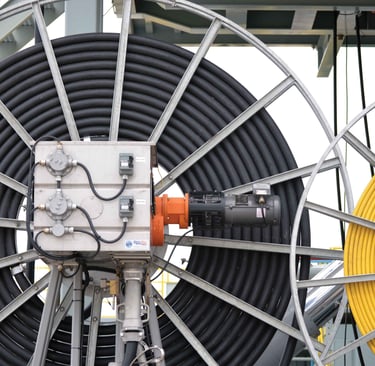
On an STS crane, the cables are typically housed within heavy-duty, long-travel drag chains or managed by high-speed motorized reeling drums. As the crane trolley travels back and forth along the boom, the cables are subjected to continuous bending, high tensile loads, and intense vibration. Every acceleration spike transfers high kinetic energy into the internal copper conductors. If the cable is not equipped with compliant, fine-stranded Class 5 or Class 6 conductors, these repetitive forces will quickly cause work-hardening and catastrophic structural failure, bringing port operations to a complete standstill.
5.2 Rubber Tyred Gantry (RTG) Cranes and Motorized Reeling Systems
Rubber Tyred Gantry (RTG) cranes are widely used in container storage yards to stack and organize containers. Unlike rail-mounted systems, RTG cranes travel on rubber tires, allowing them to change lanes and move flexibly across different sections of the yard. This operational flexibility requires highly advanced motorized cable reeling systems to manage the main power supply cables.
The cable reels on an RTG crane operate under high torsional tension, winding and unwinding the cable as the crane moves along the stacks. This continuous reeling puts immense mechanical pressure on the cable core. The internal copper conductors must withstand constant bending as they wrap around the reel drum, combined with continuous axial tension from the motor drive. Under these demanding conditions, using a rigid Class 2 conductor is a recipe for early failure. Only compliant Class 5 or Class 6 fine-stranded conductors can handle this combination of bending and tensile stress over a long operational lifespan.
5.3 Ship Loaders, Harbour Grab Cranes, and Deck Cranes
For bulk material handling—such as coal, iron ore, grain, and minerals—ports rely on massive ship loaders, continuous bulk conveyors, and heavy-duty harbor grab cranes. These machines operate in extremely dusty, high-vibration environments, handling massive structural loads. The cables deployed here face a combination of multi-axis bending, heavy swinging motion, and severe torsional twisting during rotation.
Similarly, shipboard deck cranes must operate reliably while isolated at sea, far from easy repair facilities. The cables on these cranes are exposed to constant movement from waves and wind, along with the mechanical stresses of lifting cargo. In these applications, conductor fatigue is a silent and dangerous threat. The continuous twisting and swinging can snap internal copper strands even when the outer jacket looks completely healthy. Ensuring strict compliance with AS/NZS 1125 flexible conductor criteria is essential for preventing sudden cable failure and maintaining safe cargo operations.
6. The Catalyst: How Australian Coastal Conditions Accelerate Failure
6.1 The Solar Loading Phenomenon: Extreme UV Exposure and Thermal Expansion
The coastal environments of Australia present some of the harshest operating conditions in the world for industrial electrical infrastructure. Port facilities in regions like Western Australia, Queensland, and New South Wales are exposed to intense solar radiation, resulting in high ultraviolet (UV) exposure and severe thermal loading. When a marine crane cable operates under the open sun, its outer jacket absorbs solar energy, causing internal temperatures to skyrocket—a phenomenon known as solar loading.
This extreme heat triggers significant thermal expansion within the cable's components. The copper conductor, the rubber insulation, and the outer protective jacket all expand and contract at different rates based on their individual thermal coefficients. This differential thermal movement creates internal mechanical stress within the cable structure.
Over time, continuous exposure to high UV radiation and extreme heat can dry out and harden the chemical polymers in standard insulation and jacketing materials, such as Polyvinyl Chloride (PVC) or standard rubbers. As these outer layers lose their elasticity and stiffen, they can no longer absorb the mechanical forces generated during crane movement. Instead, these stresses are transferred directly into the internal copper conductor core, placing a much higher mechanical load on the copper strands and significantly accelerating the onset of fatigue failure.
6.2 Salt Spray, Coastal Corrosion, and Electro-Chemical Degradation
In addition to intense solar radiation, Australian port infrastructure operates in an atmosphere saturated with highly corrosive salt spray. This airborne moisture carries high concentrations of sodium chloride, which quickly penetrates deep into industrial equipment. For electrical cables, this corrosive environment presents a severe threat of electro-chemical degradation.
As a cable flexes and undergoes thermal expansion, ambient air and moisture can be drawn into the cable core through micro-gaps or damaged seals—a process known as "breathing." Once salt-laden moisture enters the internal structure of a plain copper conductor, it triggers rapid oxidation. The copper surface quickly develops a brittle layer of copper oxide and chloride corrosion, which destroys the smooth surface of the strands.
This corrosion significantly increases inter-strand friction, preventing the wires from sliding smoothly against one another during bending. Instead of shifting to relieve stress, the corroded strands bind together, dramatically increasing internal mechanical strain and causing rapid structural fatigue. This is why using high-purity, tinned annealed copper conductors as specified under AS/NZS 1125 is so critical for marine applications. The tin coating provides essential protection against salt-spray corrosion, ensuring long-term flexibility and preventing early brittle failure.
6.3 Polymer Embrittlement: The Link Between Outer Sheath Degradation and Conductor Stress
The performance of a marine crane cable relies on the close structural relationship between its outer protective sheath and the internal conductor core. In the harsh Australian climate, standard cable jacketing materials are prone to polymer embrittlement—a condition where long-term exposure to UV radiation, salt water, ozone, and thermal cycling breaks down the molecular chains of the polymer, causing it to lose its flexibility.
When an outer sheath becomes brittle, it hardens and resists bending. As the crane continues to force the cable through tight bend radiuses or around reeling drums, the stiffened jacket can no longer distribute the mechanical loads evenly. Instead, it acts as a rigid constraint, creating concentrated stress points along the cable.
Every movement transfers high localized force directly into the underlying copper conductor bundle. If the conductor core consists of rigid Class 2 stranded wires, this sudden spike in localized mechanical stress will cause immediate micro-cracking and rapid brittle failure. To survive this harsh environment, a cable must combine a highly advanced, UV-resistant outer jacket with a compliant, fine-stranded Class 5 or Class 6 copper conductor, ensuring the entire assembly remains flexible and safe.
7. Feichun Cable Engineering: Superior Design Solutions
7.1 Advanced Wire Drawing and Annealing Capabilities
As an industry-leading manufacturer of high-performance industrial cables, Anhui Feichun Special Cable Co., Ltd. (Feichun Cable) has invested heavily in state-of-the-art wire drawing and thermal annealing infrastructure. Feichun's advanced manufacturing facilities utilize multi-wire drawing machines capable of transforming raw, high-purity copper rods into micro-fine strands with absolute geometric consistency. This precise control ensures that every wire meets the exact diameter requirements specified for AS/NZS 1125 Class 5 and Class 6 conductors.
Crucially, Feichun's production line incorporates continuous inline induction annealing systems. This process subjects the drawn copper strands to precise, computer-controlled thermal cycles, relieving the internal mechanical stresses induced during the drawing phase. This optimization maximizes the copper's grain structure, resulting in exceptional ductility and high elongation properties. By delivering a conductor with superior elasticity, Feichun Cable ensures that its products can handle millions of dynamic bending cycles without experiencing premature work-hardening or brittle failure.
7.2 High-Purity Tinned Annealed Copper Technology
To combat the severe corrosion challenges found in Australian port environments, Feichun Cable uses high-purity tinned annealed copper technology across all its dynamic cable lines. Feichun's advanced electroplating process applies an exceptionally uniform, micro-thin layer of pure tin to each individual copper strand. This pristine coating provides a highly durable chemical barrier that isolates the underlying copper from moisture, oxygen, and corrosive salt crystals.
This uniform tin coating is essential for maintaining long-term cable flexibility. By preventing oxidation, the tin ensures that the fine strands maintain their smooth surface and low contact resistance throughout their operational life. This allows the individual wires to slide smoothly against one another during high-velocity reeling and heavy-duty drag chain operations, minimizing internal friction and eliminating the risk of binding. This advanced corrosion protection ensures long-term reliability and safe operation in the most demanding marine environments.
7.3 Custom Motion Profiles: Matching Conductor Classes to Operational Stresses
Feichun Cable understands that every piece of port machinery has a unique mechanical footprint and operational profile. A cable installed on a high-speed STS crane drag chain faces different mechanical forces than one wrapped around a vertical harbor grab crane reel. Therefore, Feichun does not offer a single, generic solution. Instead, its engineering team matches specific conductor classes to the exact motion profile of the application.
For applications involving continuous linear movement and tight bending radiuses, such as container crane drag chains, Feichun specifies its Type 241 Superflex series or custom Class 6 highly flexible configurations. For heavy-duty trailing and moderate reeling duties, Feichun utilizes its robust Class 5 conductor cores, found in its Type 209 and Type 240 cable series. By analyzing acceleration rates, tensile loads, bending radiuses, and torsional angles, Feichun ensures that the internal conductor geometry is perfectly optimized for the real-world physical forces it will face in the field.
7.4 Premium Outer Sheathing: Heavy-Duty PCP, CPE, and Polyurethane (PU) Systems
To provide complete protection for its high-purity conductor cores, Feichun Cable utilizes an advanced line of premium outer sheathing materials. Depending on the operational requirements, Feichun cables can be equipped with heavy-duty Polychloroprene (PCP), Chlorinated Polyethylene (CPE), or advanced Polyurethane (PU) jacket systems. These compounds are engineered to resist intense UV radiation, ozone exposure, chemical oil spills, and continuous mechanical abrasion.
For extreme environments like Australian ports, Feichun's specialized heavy-duty PCP and PU jackets provide a tough outer shell that maintains its elasticity across wide temperature fluctuations. These materials resist the polymer embrittlement caused by long-term solar loading and salt-spray exposure, ensuring the cable assembly remains highly flexible. By preventing the outer jacket from hardening, Feichun's sheathing systems minimize the mechanical stresses transferred to the internal copper core, protecting the fine-stranded Class 5 or Class 6 conductors and maximizing the service life of the cable.
8. Case Studies and Field Reliability Metrics
8.1 Brittle Failure Analysis: The Real Costs of Non-Compliant Class 2 Cables
To understand the financial impact of cable selection, it is helpful to look at real-world examples from the field. In a recent brittle failure analysis at a major bulk commodity port, a logistics operator attempted to reduce initial project costs by installing non-compliant, standard Class 2 stranded copper cables on a heavy-duty ship loader. This loader operated continuously under intense coastal sun and high salt-spray conditions, handling heavy bulk materials.
Within less than twelve months of operation, the non-compliant cables began experiencing sudden, intermittent power disruptions, causing the ship loader's safety systems to trigger emergency shutdowns. A detailed forensic engineering analysis of the failed cable revealed severe work-hardening and extensive cracking across the thick Class 2 copper strands. The large strand diameters had experienced high internal strain during bending, which was further aggravated by severe salt-spray corrosion inside the core.
The resulting brittle failure caused multiple broken phases within an intact outer jacket. This single avoidable failure cost the port operator thousands of dollars in direct cable replacement expenses, combined with massive financial penalties due to delayed vessel loading schedules. This case highlights the high risks of using non-compliant cables and demonstrates why prioritizing upfront conductor compliance is essential for long-term operational safety.
8.2 Field Performance of Feichun Cables in Severe Coastal Environments
In contrast to the risks of non-compliant cables, the field performance of Feichun Cable's specialized marine crane lines demonstrates exceptional reliability. In an expansion project at a major container terminal located in a high-UV, tropical coastal region, the engineering team selected Feichun's compliant Type 241 Superflex and Type 209 trailing cables for their new fleet of high-speed Ship-to-Shore (STS) cranes.
These cables were equipped with high-purity, tinned annealed Class 5 and Class 6 flexible conductors, protected by Feichun's premium heavy-duty PCP outer sheathing. After years of continuous, high-velocity operation under intense sun and constant salt spray, regular maintenance inspections showed that the Feichun cables remained in excellent condition.
Electrical testing confirmed that the conductors maintained their low DC resistance, with no evidence of localized hotspots or internal copper fatigue. The fine-stranded wires continued to slide smoothly, and the tinned coating successfully prevented any salt-spray corrosion within the core. This successful field performance demonstrates how strict adherence to AS/NZS 1125 parameters translates directly into exceptional operational reliability and long-term safety for port infrastructure.
8.3 Long-Term TCO Optimization: Reducing Maintenance and Maximizing Crane Uptime
When evaluating the procurement of marine crane cables, forward-thinking port operators look beyond the initial purchase price and focus on the Total Cost of Ownership (TCO). While cheaper, non-compliant Class 2 cables or standard plain-copper wires might seem like a cost-effective choice upfront, their high failure rates and short operational life make them far more expensive over time.
By investing in premium Feichun cables compliant with AS/NZS 1125 Class 5 and Class 6 standards, port facilities achieve long-term TCO optimization. The superior fatigue life of fine-stranded copper, combined with the excellent corrosion resistance of uniform tin plating, extends the cable's service life by several times compared to standard alternatives. This exceptional durability reduces the frequency of cable replacements, minimizes preventative maintenance costs, and maximizes crane uptime. Preventing a single unscheduled breakdown can cover the cost premium of a high-quality cable, proving that selecting compliant, engineered conductors is the smartest financial and operational choice for modern port terminals.
9. Conclusion: Securing the Future of Maritime Logistics
9.1 Summary of Core Technical Imperatives
In conclusion, the mechanical and electrical integrity of marine crane cables is a critical foundation for safe, efficient, and reliable port operations. As detailed throughout this technical whitepaper, ensuring compliance with AS/NZS 1125 and IEC 60228 conductor parameters is an essential requirement for preventing catastrophic equipment failure.
The key technical imperatives can be summarized as follows:
Marine crane cables operate in a punishing mechanical environment defined by continuous bending, high-velocity reeling, rapid acceleration, and severe torsional twisting.
Standard Class 1 solid and Class 2 stranded conductors are designed for fixed installations and lack the flexibility required for dynamic duty, leading to rapid work-hardening, micro-cracking, and sudden brittle failure.
AS/NZS 1125 Class 5 and Class 6 flexible copper conductors utilize fine-stranded geometries that keep internal mechanical strain well below the fatigue limit of copper, ensuring long flex life.
The severe coastal climate of Australia—characterized by intense UV radiation, high temperatures, and corrosive salt spray—accelerates polymer degradation and copper oxidation, making high-purity tinned annealed copper conductors essential for long-term reliability.
9.2 The Definitive Legal and Operational Arguments for Conductor Compliance
For port authorities, engineering consultants, and procurement managers, selecting compliant cables is both an operational necessity and a vital safety commitment. Deploring non-compliant or poorly matched wiring systems on heavy machinery exposes the facility to severe operational, financial, and legal risks. In the event of a catastrophic crane failure or an industrial accident caused by an electrical short-circuit, using components that fail to meet recognized standards like AS/NZS 1125 can result in major regulatory penalties and liability claims.
Conversely, enforcing strict compliance with AS/NZS 1125 ensures that the facility's electrical infrastructure is fully engineered to handle the real-world mechanical and environmental challenges of marine duty. This adherence provides a clear, reliable benchmark for quality control, giving engineering teams complete confidence that their machinery will operate safely and predictably under all conditions. Conductor compliance is the definitive standard for safeguarding heavy cargo-handling systems and maintaining absolute operational safety.
9.3 Feichun Cable's Ongoing Commitment to Industrial Excellence
As global trade expands and port machinery becomes larger, faster, and more automated, the demands placed on flexible electrical infrastructure will continue to grow. Anhui Feichun Special Cable Co., Ltd. remains fully committed to meeting these challenges through continuous material innovation, advanced manufacturing quality control, and strict adherence to international engineering standards.
By refining its wire-drawing capabilities, optimizing its inline induction annealing processes, and deploying high-purity tinned copper conductors, Feichun Cable produces dynamic cables that offer exceptional reliability in the world's harshest environments. Whether supporting high-speed STS cranes in busy container hubs or heavy ship loaders in remote bulk terminals, Feichun Cable provides the high-performance engineering needed to keep heavy industry moving safely, efficiently, and reliably for years to come.
How to Reach Us
Get in Touch
SiteMap
Product Catalogue
Festoon Cable
Shore Power Cable


Scan to add us on WeChat