
Why Australian Mining Operations Trust Premium 1KV Power Cables Over Standard Industrial Solutions
Discover why purpose-engineered 1KV mining power cables with flexible Class 5 conductors, waterproof EPR insulation, and durable CPE sheaths outperform standard industrial alternatives in Australian underground mining, tunnel projects, quarry operations, and drilling systems.
hongjing.Wang@Feichun
5/20/202618 min read
Introduction: The Hidden Cost of Cable Failures in Australian Mining and Tunnelling
Australian mining operations—from underground coal mines to Queensland open-cut operations, from Western Australian hard-rock mining to tunnel development projects—depend on reliable power cable systems as critical infrastructure. Yet cable failures represent one of the most disruptive, costly, and preventable operational challenges mining companies face.
When a power cable fails in an underground mining operation, the consequences cascade: equipment shuts down, production halts, emergency maintenance requires difficult underground work, and schedule delays propagate through the operation. For quarry operations, cable failure stops material movement and processing. For tunnel projects, power loss to drilling rigs creates complete project stoppages.
The paradox is striking: mining operations invest millions in sophisticated equipment, yet frequently depend on standard industrial power cables inadequate for the specific mechanical stresses and environmental exposures of mining environments. When these inadequate cables fail—as they inevitably do—mining operators are surprised by both the failure frequency and the operational cost.
This comprehensive guide explores why purpose-engineered 1KV mining power cables deliver operational reliability impossible with standard industrial alternatives, and demonstrates through real Australian case studies how mining operations transform their operational performance by making the switch to cables engineered specifically for mining conditions.
Why Standard Industrial Power Cables Fail Prematurely in Mining Environments
Understanding the Unique Stresses of Mining Power Systems
Mining power systems differ fundamentally from the industrial facilities where standard power cables were designed to operate. The combination of mechanical stress, environmental exposure, and operational demands creates a context that standard cable engineering never anticipated.
Continuous Mechanical Movement and Flex Stress. Unlike stationary industrial installations, mining power cables experience continuous movement. Mobile mining equipment—drilling rigs, pump systems, material handling equipment—moves across mining sites pulling power cables. Equipment is repositioned as mining layouts change. Cables flex around obstacles, support structures, and corners. This continuous flexing creates cyclic stress on conductors, leading to fatigue failure that stationary installations never encounter.
Harsh Environmental Exposure. Mining environments expose cables to multiple simultaneous environmental stresses. Moisture infiltration occurs from water present in underground mines, from water sprayed during tunnel boring operations, and from condensation in damp mining areas. Abrasion occurs from cables dragging across sharp rock surfaces, rough ground, and equipment contact. Chemical exposure occurs from coal dust, mineral compounds, and water mixing to create acidic or alkaline conditions.
Mechanical Impact and Crushing Stress. Mining sites aren't designed with cable management in mind. Cables are subject to mechanical impact from equipment movement, crushing from material loads, and pinching from adjacent equipment. These impacts create localized stress concentrations that damage standard cable sheaths and insulation.
Temperature Fluctuation Stress. Australian underground mines experience temperature variation—sometimes 20-30°C seasonal change, sometimes rapid temperature shifts as equipment heat sources vary. This thermal cycling stresses cable materials, causing expansion and contraction that eventually leads to insulation cracking and sheath separation.
Why Standard Industrial Cables Prove Inadequate
Standard industrial power cables, designed for factory installations and controlled environments, differ fundamentally from cables suitable for harsh mining conditions:
Insufficient Conductor Flexibility. Standard industrial cables use Class 1 or Class 2 conductors—relatively stiff copper strands adequate for stationary installation. Mining cables require Class 5 conductors (finely stranded, highly flexible copper) to accommodate continuous movement without fatigue failure. When standard conductors are forced into the repeated bending that mining operations create, individual strands develop cracks that progressively reduce electrical capacity and increase resistance.
Inadequate Insulation for Moisture Exposure. Standard industrial cables use basic PVC or rubber insulation formulated for temperature-controlled factory environments. Mining insulation must resist moisture infiltration while remaining flexible at cool underground temperatures. Standard insulation degrades progressively when exposed to continuous moisture, leading to electrical tracking and eventual fault.
Undersized Mechanical Protection. Standard cables rely on the outer sheath for all mechanical protection. Mining environments with sharp surfaces, crushing loads, and continuous abrasion require reinforced protective design. Without adequate mechanical protection, the outer sheath deteriorates within months of mining operation.
Poor Thermal Cycling Tolerance. Standard industrial insulation and sheathing aren't engineered for the thermal cycling characteristic of mining environments. Repeated expansion and contraction stresses the materials until insulation cracks and sheaths separate from the core structure.
The Financial Reality of Standard Cable Inadequacy
For Australian mining operations, the real cost of standard cable failure extends far beyond cable replacement:
A single cable failure requiring emergency replacement of an underground mining cable takes 8-16 hours of difficult underground work. During this time, production halts. A typical underground mining operation loses AUD $150,000-300,000 in production value per day. A cable failure creating 12 hours downtime costs approximately AUD $150,000-200,000 in production losses alone.
Multiply this across multiple cable failures annually—and operations using standard cables in mining conditions typically experience multiple failures each year—and the total cost becomes staggering. Operations using inadequate cables for 3-5 years might spend AUD $500,000-1,500,000 in combined replacement labor, emergency response costs, and production losses.
Purpose-engineered cables, while costing more initially, prevent these failures entirely, delivering payback in weeks or months through prevented failure costs.
Real Australian Case Study 1: Queensland Open-Cut Mining Operation—Power System Reliability Transformation
Operational Context: Large-Scale Quarry Material Movement System
A major Queensland open-cut mining operation extracted approximately 50,000 tonnes of ore daily through a sophisticated material handling system. Large mobile crushers, conveyor systems, and material movement equipment required reliable 1KV power distribution across the mining site. Equipment was positioned across several kilometer-scale mining areas, requiring extensive cable systems connecting to mobile equipment.
The operation had expanded over several years, with equipment additions using whatever standard industrial power cables were available from local suppliers. Cable selection prioritized cost—standard cables cost 30-40% less than specialized mining cables, and purchasing personnel saw no meaningful specification difference.
The Performance Problem: Chronic Equipment Failures and Cascading Maintenance
Over approximately 18 months of operation, a troubling pattern emerged. Power cables supplying mobile crushers and material handling equipment began failing with increasing frequency. Failures occurred approximately every 6-8 weeks, forcing emergency equipment shutdown and rapid cable replacement.
Each failure event followed a similar pattern: The cable's outer sheath would show visible wear and deterioration at contact points where the cable dragged across rock surfaces or rough ground. Moisture would infiltrate through sheath damage. Within days of moisture ingress, the cable would develop electrical faults—typically insulation breakdown creating phase-to-ground faults that triggered equipment shutdown.
The failure sequence created cascading operational problems. When a crusher or material handler lost power, the entire material processing chain backed up. Even after cable replacement, the operation was delayed several hours recommissioning equipment and verifying electrical systems. Material processing fell behind schedule, creating downstream delays and inefficiency.
Beyond equipment downtime, the repeated emergency maintenance events created safety risks. Maintenance personnel worked under pressure to restore equipment quickly, reducing the caution and deliberate procedure-following that mining operations require for electrical work.
Root Cause Analysis: Standard Cable Inadequacy for Mining Abrasion and Moisture
Engineering investigation of failed cables revealed consistent failure mechanisms. The cables' outer sheaths, appropriate for controlled factory environments, couldn't withstand the abrasion and mechanical stress of mining site environments. Cables dragged across sharp rock edges, were pinched by equipment movement, and were exposed to continuous moisture from site water management systems.
The copper conductors weren't tinned. Where moisture contacted bare copper through sheath damage, corrosion occurred. Corrosion increased local electrical resistance and weakened conductor integrity.
The insulation system, adequate for stationary use, degraded progressively when exposed to simultaneous moisture and mechanical stress. The combination of mechanical flexing, moisture infiltration, and temperature fluctuation created conditions the insulation system wasn't designed to withstand.
Most critically, the cable conductor wasn't Class 5. As equipment moved and cables flexed across mining site obstacles, individual conductor strands experienced cumulative fatigue. By the time visible sheath damage appeared, internal conductor damage had already progressed significantly.
Engineering Solution: Upgrade to Mining-Grade Power Cable Specification
Rather than continuing with standard cables that continued failing predictably, the operation commissioned engineering assessment of power cable requirements for the specific mining environment and equipment applications.
The assessment identified:
The harsh site conditions—continuous moisture from mining water management, abrasion from sharp rock surfaces, mechanical stress from equipment movement, and temperature fluctuation from equipment heat and seasonal changes.
The equipment requirements—mobile crushers, conveyor systems, and material handlers requiring flexible power distribution without fixed cable routing.
The operational consequence of failure—production stoppage affecting material processing and downstream operations.
This assessment led to specification of purpose-engineered 1KV mining power cables featuring:
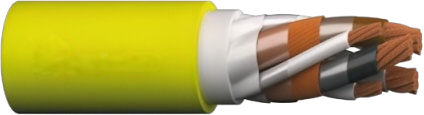
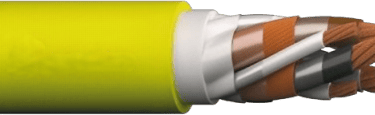
Class 5 copper conductors providing superior flexibility and fatigue resistance for the continuous movement characteristic of mining site equipment. Bare (not tinned) copper was specified, as the mining environment didn't require corrosion protection beyond the outer sheath and insulation system.
Waterproof EPR insulation system formulated specifically for mining environments with enhanced moisture resistance and thermal cycling tolerance.
Concentric protective earth conductor arrangement enhancing grounding performance and operational safety.
Durable CM/CPE outer sheath providing superior abrasion resistance and moisture protection compared to standard materials.
The cable upgrade involved replacing approximately 2 kilometers of primary power distribution cable throughout the mining site, plus numerous shorter cable runs serving individual equipment. Total cable investment: approximately AUD $145,000.
Results: From Crisis Management to Planned Operations
Following cable system upgrade to purpose-engineered mining-grade 1KV cables:
Cable Reliability Performance: Over a 48-month assessment period, the operation recorded zero power cable failures. The cable system performed reliably without the intermittent failures that had characterized the previous system.
Operational Efficiency: Equipment availability improved as cable-related failures were eliminated. Material processing operated at planned rates without the disruptions that cable failures had created. Production schedules became predictable.
Maintenance Transformation: Reactive emergency cable maintenance was replaced with planned, scheduled maintenance. Maintenance personnel could focus on equipment maintenance rather than emergency cable replacement.
Financial Impact: The operation prevented approximately AUD $800,000-1,200,000 in production losses over the 48-month period that would have resulted from cable failures comparable to the historical pattern. The cable investment achieved complete payback within approximately 4-5 months through prevented failure costs.
Safety Improvement: Elimination of emergency maintenance work under time pressure reduced the safety risks that had accompanied the previous operational approach.
Real Australian Case Study 2: NSW Tunnel Development Project—Temporary Power System Reliability
Operational Context: Major Tunnel Development Project
A New South Wales infrastructure project required approximately 6 kilometers of tunnel development through granite rock for transportation infrastructure. The project involved drilling rigs, ventilation systems, temporary power distribution, and supporting equipment. Tunnel development required 18-24 months from start to completion.
The project required temporary power distribution serving drilling rigs, ventilation systems, and lighting. Initial installation used standard industrial power cables—a common approach for temporary infrastructure. The assumption was that temporary systems needn't match the specifications of permanent installations.
The Challenge: Temporary Infrastructure Requiring Extended Reliability
Tunnel development projects typically proceed regardless of temporary power system issues—there are no alternatives if the primary power system fails. Cable failures create complete project stoppages because there's no way to proceed without reliable drilling power.
Within approximately 10 months of tunnel development, the temporary power system began experiencing problems. Cables showed visible moisture damage. Insulation resistance measurements indicated declining electrical performance. Cable sheath inspection revealed visible wear patterns where cables contacted tunnel walls and support equipment.
By month 14, a complete cable failure occurred in one of the primary power circuits serving drilling equipment. The failure required emergency response and cable replacement, disrupting tunnel advancement for approximately 16 hours. The schedule delay cascaded through the project, affecting subsequent phases and project completion timeline.
Post-failure analysis revealed that standard industrial cables were fundamentally inadequate for tunnel environment conditions: continuous moisture exposure, mechanical stress from drilling vibration and temporary support systems, and the challenge of providing flexible power distribution in confined spaces.
Engineering Response: Premium Cable Specification for Extended Temporary Operation
The project director commissioned engineering assessment to specify cables capable of reliable performance through the remainder of tunnel development. The assessment emphasized:
Environmental durability in high-moisture tunnel environment with continuous water infiltration from natural water tables and drilling operations.
Mechanical robustness for vibration stress from drilling equipment and temporary support system interaction.
Flexibility for routing through confined tunnel spaces and accommodating temporary support systems.
Long-term reliability for multi-year operation despite being initially planned as temporary infrastructure.
The assessment led to specification of purpose-engineered 1KV power cables featuring:
Class 5 copper conductors providing flexibility for routing in confined tunnel spaces and fatigue resistance for vibration exposure.
Waterproof EPR insulation specifically engineered for high-moisture tunnel environments.
Concentric protective earth design enhancing grounding safety in wet tunnel environment.
CM/CPE outer sheathing with superior moisture protection and durability against mechanical stress from tunnel wall contact and drilling vibration.
The project upgraded tunnel power distribution to the specified cables. Approximately 4,500 meters of cable was installed throughout the tunnel system.
Measured Outcomes: Project Schedule Achievement Through Cable Reliability
Following upgrade to purpose-engineered cable specification:
Project Reliability: The upgraded tunnel power system operated without cable-related failures through the remainder of tunnel development. Tunnel advancement proceeded on planned schedule without power system interruptions that would have created delays.
Schedule Compliance: The project achieved planned completion dates. For a major infrastructure project, this schedule compliance represented substantial financial and operational value—delays in tunnel projects create cascading downstream delays affecting the entire construction program.
Operational Confidence: Project personnel developed confidence in power system reliability, enabling focused attention on tunnel advancement rather than contingency planning for power system failures.
Knowledge Transfer: Data from successful tunnel project performance influenced subsequent project specifications. Subsequent tunnel and mining projects adopted equivalent power cable specifications based on the successful performance from this project.
Understanding Mining-Grade Power Cable Engineering
Class 5 Copper Conductors: Flexibility Through Fine Stranding
Standard industrial power cables typically use Class 1 or Class 2 conductors—relatively rigid copper strands adequate for fixed installation. These conductors use 8-16 individual copper wires per conductor bundle, each wire relatively thick.
Mining power cables use Class 5 conductors with 50-70+ individual copper wires per conductor bundle, each wire significantly thinner. The engineering advantage appears small on specifications but proves decisive in mining performance.
When cables flex—which happens repeatedly in mining operations as equipment moves, cables are repositioned, and temporary systems are reconfigured—the conductor strands experience cyclic stress. With thick strands in standard cables, each flex cycle concentrates stress on individual strands. Over time, individual strands develop fatigue cracks. As more strands crack, the remaining conductors must carry increasing current, heating rises, and eventual failure occurs.
With fine strands in Class 5 design, the same total stress distributes across many more load paths. No single strand experiences the concentrated stress of thick-strand designs. The result is 5-10 times improvement in fatigue life—meaning cables survive the continuous flexing of mining operations rather than failing within months.
Waterproof EPR Insulation: Engineering for Moisture Environments
Standard industrial insulation uses basic PVC or rubber formulated for temperature-controlled factory environments. This insulation performs adequately when protected from moisture and operated within predictable temperature ranges.
Mining-grade EPR (Ethylene Propylene Rubber) insulation uses advanced formulations specifically engineered for harsh mining environments:
Moisture Resistance: Mining-grade insulation resists moisture infiltration more effectively than standard materials. The formulation prevents progressive water saturation that leads to insulation failure. In the high-moisture environments characteristic of Australian underground mining and tunnel operations, this moisture resistance directly determines cable service life.
Temperature Tolerance: Standard insulation becomes brittle at cool temperatures. Australian underground mines can be surprisingly cool (sometimes 10-15°C), where standard rubber becomes rigid. Mining-grade EPR maintains flexibility across the full operational temperature range, preventing the cracking that develops when standard insulation is forced to flex at low temperature.
Chemical Resistance: Underground mining environments expose insulation to coal dust, mineral compounds, and water mixing to create acidic conditions. Mining-grade insulation resists this chemical attack. Standard materials degrade when exposed to the same chemical environment.
Mechanical Stress Tolerance: Mining-grade insulation accommodates repeated flexing without developing the cracks that lead to electrical failure. Standard insulation cracks when subjected to the continuous movement stress of mining operations.
Concentric Protective Earth Design: Enhanced Safety and Reliability
Standard power cables include protective earth conductors running separately through the cable structure. Mining power cables employ concentric protective earth arrangement—the protective earth conductor is wound concentrically around the main conductors.
This design provides multiple engineering advantages: improved grounding performance with shorter earth circuit paths, enhanced operational safety from ground faults, and improved cable balance and structural integrity. For mining applications where ground faults create serious safety hazards, concentric earth design directly contributes to personnel safety.
CM/CPE Outer Sheath: Engineered for Abrasion and Moisture
Standard industrial cables use basic rubber or PVC outer sheaths adequate for factory protection. Mining environments demand superior abrasion and moisture protection. CM/CPE (Chlorinated polyethylene) materials provide:
Superior Abrasion Resistance: CM/CPE maintains integrity against continuous contact with sharp rock surfaces, rough ground, equipment edges, and cable support structures. Where standard rubber shows visible wear within 6-8 months of mining operation, CM/CPE sheaths remain intact for 3-4+ years in the same environment. This abrasion resistance is the critical factor determining outer sheath service life.
Moisture Protection: CM/CPE resists moisture infiltration more effectively than standard materials. The material doesn't absorb moisture readily, preventing the water-induced swelling and degradation that occurs in standard sheaths. In continuous moisture exposure characteristic of mining and tunnel environments, this moisture resistance determines whether the cable remains electrically safe.
Chemical Durability: Mining chemical environments degrade standard sheaths. CM/CPE resists coal dust, mineral compounds, and acid conditions that would damage standard materials. This chemical resistance maintains sheath integrity throughout the cable's operational life.
Mechanical Impact Tolerance: Mining environments create mechanical impacts and crushing loads that damage standard sheaths. CM/CPE maintains structural integrity despite mechanical stress, preventing the sheath cracking that leads to moisture infiltration.
Application Context: Mining, Tunnelling, and Quarry Operations
Underground Mining Systems
Australian underground coal mines, metalliferous operations, and hard-rock mining facilities depend on reliable 1KV power distribution for pumping systems, ventilation, mobile equipment, and fixed underground infrastructure. The combination of moisture exposure, mechanical stress from equipment movement, and the need for consistent power quality makes specialized cable specification essential.
Underground mining power systems cannot tolerate the failure frequency characteristic of standard cables. Production cannot be deferred while cable failures are addressed. Personnel safety depends on reliable power for ventilation and safety systems.
Tunnel Construction and Development
Tunnel boring operations—whether for mining expansion, transportation infrastructure, or utility installation—require robust power distribution in extremely harsh environments. Drilling rigs operate continuously, creating vibration and mechanical stress. Water infiltration from natural water tables and drilling operations creates moisture-saturated environments. The confined tunnel space limits cable routing flexibility.
Tunnel projects operate on strict schedules. Power cable failure creates complete project stoppage, generating schedule delays measured in days rather than hours. This operational consequence makes cable reliability a project-critical factor.
Quarry and Open-Cut Mining Operations
Open-cut mining operations employ mobile crushers, conveyor systems, and material handling equipment requiring reliable power distribution across wide areas. Equipment is repositioned as mining layouts change. Cables drag across sharp surfaces and rough ground. Material movements create abrasion and crushing forces.
Quarry and open-cut mining depends on continuous material processing to meet production targets. Cable failures disrupt material handling chains, backing up processing and reducing operational efficiency. Material processing downtime creates production losses measured in thousands of tonnes of unprocessed material per day.
Pumping and Drilling Equipment
Mining operations depend on reliable power for pumping systems handling water management and material transfer. Drilling rigs require consistent electrical power for operation and control systems. Equipment may be mobile or fixed, subject to moisture exposure, and require flexible power routing.
These applications demand power cables with reliability matching the criticality of the equipment they serve.
Extending Mining Cable Service Life Through Proper Installation and Maintenance
Installation Best Practices
Proper cable installation directly impacts field performance. Even excellent cables fail prematurely if installed incorrectly:
Observe Bending Radius Requirements. Cables have minimum bending radius specifications—the tightest radius through which the cable can be bent without internal damage. Mining site cable routing must accommodate these radius requirements through gradual curves rather than sharp angles. Installation planning should identify required bending radius and design support systems accordingly.
Avoid Sharp Edge Contact. Cable routing should protect cables from sharp rock edges, rough equipment corners, and pointed support structures. Where cables must cross sharp edges, temporary or permanent edge protection should be installed to distribute abrasion stress over broader area.
Maintain Appropriate Support. Cables shouldn't sag excessively—sagging creates cable contact with ground and equipment that leads to abrasion damage. Cable support should prevent sagging while avoiding the excessive tension that accelerates conductor fatigue.
Plan for Environmental Exposure. Know where cables will experience moisture exposure, mechanical stress, and thermal cycling. Design cable routing and support systems to minimize stress in high-exposure areas.
Routine Maintenance Extending Cable Life
Proper maintenance identifies developing problems before they become serious failures:
Monthly Visual Inspection: Walk cable routes monthly, visually inspecting for sheath damage, signs of abrasion, moisture exposure, or mechanical stress. Early detection of wear patterns allows corrective action before failure.
Quarterly Detailed Assessment: Conduct more thorough inspection of high-stress areas—particularly points where cables contact equipment, support structures, or rough surfaces. Identify and address developing problems.
Annual Comprehensive Testing: Perform insulation resistance testing to assess moisture infiltration. Inspect sheath integrity comprehensively. Document findings to track degradation patterns. This annual assessment informs replacement planning and identifies problematic cable routing that requires modification.
Environmental Management: Where possible, manage the cable environment to reduce stress. Install edge protection where cables cross sharp surfaces. Improve drainage to prevent water pooling. Adjust support systems to reduce mechanical stress. These environmental controls extend cable service life significantly.
Financial Analysis: Total Cost of Ownership
While purpose-engineered mining power cables cost 30-40% more than standard industrial alternatives, the total cost of ownership strongly justifies the investment:
Service Life Extension. Mining-grade cables achieve 4-6 year service life in harsh mining conditions compared to 12-18 months for standard cables. Over a 10-year period, this service life advantage reduces total cable costs by 60-75% compared to standard cable replacement frequency.
Failure Prevention Value. A single major cable failure costing AUD $150,000-300,000 in production losses and emergency response exceeds the annual cost difference between standard and mining-grade cables many times. Prevention of even one or two failures annually justifies the cable cost difference.
Operational Reliability Enabling Higher Utilization. Mining-grade cables enable mining operations to schedule equipment operation with confidence. Equipment can be positioned and operated without uncertainty about power system reliability. This operational confidence translates to higher equipment utilization and improved production efficiency.
Reduced Maintenance Overhead. Emergency cable replacement under time pressure consumes significant labor resources and creates safety risks. Elimination of emergency replacements through improved cable reliability frees maintenance personnel for planned maintenance activities and reduces overall maintenance overhead.
For typical Australian mining operations, total cost of ownership analysis demonstrates that purpose-engineered cable specifications deliver 2-4 times return on incremental cable investment through prevented failure costs alone.
Compliance and Standards Framework
Purpose-engineered mining power cables meet stringent international standards for flexible cables in demanding applications:
Compliance with DIN VDE 0250-812 general requirements ensures adherence to recognized international standards for cable design and performance.
Conductor specifications comply with DIN EN 60228 and IEC 60228, establishing appropriate conductor sizing, stranding, and electrical properties.
Electrical parameters meet DIN VDE 0298-4 requirements, establishing proper insulation thickness and electrical safety characteristics.
Chemical behavior compliance with DIN EN 60811-404 demonstrates cable resistance to environmental degradation from moisture, chemicals, and temperature exposure.
Fire performance certification to DIN EN 60332-1-2 ensures appropriate flame retardancy characteristics necessary for mining safety.
These compliance certifications demonstrate that cables have undergone rigorous testing validating suitability for demanding mining and tunnelling applications.
Practical Selection Framework for Australian Mining Operations
Application Assessment. Identify whether your application involves stationary equipment or mobile/flexible installation. Determine whether equipment is indoors in controlled environment or outdoors/underground in harsh conditions. Assess whether equipment will experience continuous operation or intermittent duty.
Environmental Exposure Quantification. Measure moisture exposure in your operation—is water present? Underground mining and tunnel operations typically have high moisture exposure. Assess temperature range your cables will experience. Identify chemical exposure from coal dust, mineral compounds, or other environmental factors. Evaluate mechanical stress from abrasion and impact.
Equipment and Operational Requirements. Determine your equipment's power requirements (voltage, current capacity). Identify whether cables will move during operation or be static after installation. Assess cable routing constraints—will cables need to bend sharply? Will cables require frequent repositioning?
Service Life Expectations. Determine how long you reasonably expect cables to operate before replacement. Mining operations with high failure frequency from standard cables might reasonably expect 3-5 year replacement intervals. Tunnel projects typically expect 2-3 year service life for temporary systems.
Total Cost of Ownership Analysis. Calculate your operation's cost of cable failure—production loss during emergency replacement, labor costs, schedule impact. Compare this cost against the annual cable cost difference between standard and mining-grade specifications. This analysis typically demonstrates strong economic justification for upgraded specifications.
Expert Summary
Australian mining operations—whether underground coal mines, open-cut quarries, tunnel development projects, or heavy equipment installations—depend on electrical power distribution systems that standard industrial cables cannot reliably provide. The distinction between standard and mining-grade power cables appears subtle on specification sheets but proves decisive in real operational performance: Class 5 conductors deliver 5-10 times better fatigue resistance for continuous equipment movement; waterproof EPR insulation maintains integrity despite moisture exposure that degrades standard materials; and durable CM/CPE outer sheaths resist the abrasion and mechanical stress that destroy standard sheaths within months of mining operation.
The engineering reality that standard industrial power cables fail prematurely in mining environments is consistently demonstrated across Australian mining operations. Yet many mining companies continue specifying standard cables, often unaware that specialized mining cable specifications exist. The result is predictable: cables fail approximately every 6-12 months, requiring emergency replacement, creating production losses, and disrupting operational schedules.
Real-world case studies from major Australian mining operations demonstrate quantified benefits from cable specification upgrade: service life extensions from 12-18 months to 48-60 months (300-400% improvement), failure rates reduced by 95% or more, production losses from cable failures essentially eliminated, and operational reliability enabling mining operations to achieve production targets and meet supply chain commitments with confidence.
From a financial perspective, the case for purpose-engineered mining power cables is overwhelming. While initial cable cost is 30-40% higher than standard alternatives, total cost of ownership analysis demonstrates 60-75% reduction in amortized annual cable costs through extended service life. More compelling, the prevention of even single major cable failure ($150,000-300,000 consequence) typically exceeds the annual cable cost difference between standard and mining-grade specifications. For operations experiencing cable failures annually, the economic justification is unambiguous.
The clear trend across professionally-managed Australian mining operations is systematic adoption of purpose-engineered power cables based on technical assessment of application requirements rather than cost minimization. Mining operations achieving consistent production targets, reliable equipment operation, and sustained operational efficiency are increasingly those employing specialized cable specifications designed for Australian mining conditions. Operations continuing standard cable specifications in mining applications are increasingly viewed as accepting unnecessary operational risk and incurring preventable costs.
For Australian mining operations currently experiencing cable-related operational challenges—whether acute failures creating equipment downtime or chronic performance problems requiring frequent cable replacement—the evidence strongly supports commissioning detailed technical assessment of power cable specifications. This investment (typically AUD $3,000-10,000) is recovered within weeks or months through prevented failures. The result is more predictable operations, elimination of emergency maintenance events, and measurable financial improvement through extended cable service life and elimination of replacement costs.
Next Steps: Transforming Mining Power System Performance
If your mining or tunnelling operation is currently managing cable-related challenges, consider these action steps:
Conduct Cable Performance Audit: Document recent cable failures, performance problems, or maintenance events. Analyze failure modes and frequency. Assess whether failures are recurring in specific locations or equipment. This analysis reveals whether specialized cable specifications address your specific challenges.
Commission Technical Assessment: Engage qualified engineers familiar with mining applications to evaluate your power cable requirements. Assessment should examine application characteristics (mobile vs. stationary, environmental exposure, mechanical stress), equipment requirements, and operational consequences of failure.
Evaluate Total Cost of Ownership: Calculate genuine economic comparison including cable cost, expected service life, annual replacement frequency, emergency maintenance labor, and production impact. This analysis typically demonstrates strong financial justification for specification upgrade.
Assess Cable Routing and Support Infrastructure: Professional evaluation of existing cable routing, support systems, and connection points ensures the infrastructure is adequate for upgraded cable specifications. Sometimes infrastructure modifications are necessary to realize cable upgrade benefits.
Develop Implementation Plan: If upgrade is justified, develop phased implementation approach. Consider upgrading critical power circuits first, expanding to complete system replacement based on performance results and budget availability.
The investment in appropriate power cable specification, combined with proper installation and routine maintenance, often becomes the highest-return infrastructure improvement Australian mining operations make—delivering reliability benefits cascading across entire mining operations and enabling achievement of production targets with confidence.
Technical Resources for Further Investigation
Australian mining operations undertaking power cable specification should consult:
Relevant international standards (DIN VDE 0250-812, DIN EN 60228, DIN VDE 0298-4) establishing requirements for cable design and performance.
Equipment manufacturer specifications providing cable recommendations for powered equipment.
Australian mining safety regulations addressing electrical systems and power distribution requirements.
Cable supplier technical documentation providing detailed specifications and application guidance.
Industry best practices from mining engineering associations and professional publications.
Professional cable engineering consultants experienced in mining applications.
How to Reach Us
Get in Touch
SiteMap
Product Catalogue
Festoon Cable
Shore Power Cable




Scan to add us on WeChat