
Why CORDAFLEX (N)SHTOEU-J/-O 0.6/1kV is the Ideal Reeling Cable for Australian Port Cranes
Looking for a reliable 0.6/1kV reeling cable for RTG, STS and gantry cranes? Discover how CORDAFLEX(SMK) (N)SHTOEU-J/-O delivers outstanding flexibility, torsion resistance and durability for demanding port crane applications in harsh Australian environments.
hongjing.Wang@Feichun
5/22/202615 min read

Introduction: The Untold Story Behind Australia's Container Terminal Reliability
Picture this: It's 3 AM on a Thursday morning at the Port of Brisbane. A Rubber Tyred Gantry (RTG) crane is in the middle of moving a stack of 40-foot containers when suddenly—crack. The reeling cable fails. Within minutes, an entire row of containers is stuck mid-transfer. Trucks can't move. Ships can't be unloaded. The domino effect cascades through the entire terminal. By the time the shift ends, the port has lost an estimated $500,000 in productivity.
This scenario isn't hypothetical. It's a reality that Australian port operators have faced repeatedly over the past two decades.
Modern Australian container terminals—from the massive operations at Port Melbourne to the increasingly congested Port of Sydney—rely on a complex ecosystem of mobile equipment working in perfect synchronisation. RTG cranes, Ship-to-Shore (STS) cranes, and Reach Stackers all depend on a single critical component that often goes unnoticed: the reeling cable.
Yet this is precisely where many port operations fail.
Why Ordinary Flexible Cables Aren't Enough
The Australian maritime environment presents unique challenges that most cable manufacturers never account for. Our ports operate under conditions that would test the limits of any industrial cable:
Continuous flexing: An RTG crane can perform 100–200 pick-cycles per hour, meaning the reeling cable bends and unbends thousands of times daily.
High-speed reeling: Modern automated terminals require cables to handle speeds of 3–5 metres per second with minimal lag or signal degradation.
Torsional stress: As containers are lifted and positioned at angles, the cable experiences rotational forces that standard flexible cables simply cannot withstand.
Salt spray and UV exposure: Australia's harsh coastal climate—particularly in tropical ports like Gladstone—accelerates cable degradation faster than any laboratory test can simulate.
Abrasion and mechanical impact: Cables are constantly brushing against metal edges, pulleys, and guide systems.
Standard PVC-based flexible cables fail within 2–3 years under these conditions. Port operators are forced to replace cables far more frequently than expected, incurring substantial costs in both materials and downtime.
But there's a better solution.
What is CORDAFLEX (N)SHTOEU-J/-O 0.6/1kV? A Technical Deep Dive
CORDAFLEX (N)SHTOEU-J/-O 0.6/1kV is a purpose-engineered reeling cable specifically designed for the dynamic demands of port cranes, container handling equipment, and industrial festoon systems. This isn't a generalised flexible cable adapted for crane use—it's built from the ground up for this application.
Let's break down what makes this cable exceptional:
Compliance with DIN VDE 0250-814
The cable conforms to DIN VDE 0250-814, the stringent German standard for crane reeling cables. This is critical. DIN standards are recognised globally as the benchmark for reliability and performance in demanding industrial environments. If a cable meets DIN VDE 0250-814, Australian port operators can be confident it will deliver consistent performance in our coastal conditions.
The Cable Construction: Layer by Layer
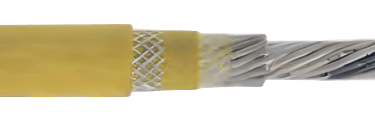
When you examine the cross-section of CORDAFLEX (N)SHTOEU-J/-O, you're looking at a masterpiece of engineering:
1. Tinned Fine-Stranded Copper Conductors
The cable uses tinned (silver-coated) fine-stranded copper at its core. Why tinned? Because it resists corrosion far better than bare copper. In Australian ports where salt mist permeates everything, this coating prevents oxidation and maintains electrical conductivity over years of operation. The fine-stranding (as opposed to thicker individual strands) provides superior flexibility and allows the cable to bend repeatedly without the individual wires fatiguing and breaking.
2. EPR-Based Insulation
Ethylene Propylene Rubber (EPR) insulation offers exceptional resistance to:
Temperature extremes (the cable remains flexible even at –40°C and maintains integrity at +70°C)
Mechanical stress and abrasion
Salt spray and UV radiation
Oil and chemical exposure
This is a significant upgrade over standard PVC, which becomes brittle in cold conditions and cracks under UV exposure—a major problem in sunny Australian ports.
3. Shielded Core Design with Tinned Copper Braid
The shielding isn't just for show. Modern automated container terminals use sophisticated control systems—CAN-BUS, Profibus, Industrial Ethernet, and increasingly, Fibre optic systems. Electromagnetic interference (EMI) can cause signal loss, misalignment, and safety hazards. The tinned copper braid shielding ensures clean signal transmission between the crane operator's cabin and the load sensors, position indicators, and automated control systems.
For Australian ports deploying Industry 4.0 technologies, this shielding feature is invaluable.
4. PROTOFIRM Special Sheath System (PCP)
The outer sheath comprises three layers:
An inner sheath that bonds directly to the insulation
A reinforced textile braid that provides mechanical strength and impact resistance
An outer PCP sheath that resists abrasion, tears, and weather
The yellow-coloured PCP sheath serves a practical purpose on busy port sites: it's highly visible. Workers can immediately identify the cable routing, reducing the risk of accidental damage during maintenance operations.
5. Reinforced Anti-Torsion Braid (The Game-Changer)
This is the feature that sets CORDAFLEX apart from competitors. The anti-torsion braid provides ±50°/m torsional resistance—meaning the cable can withstand 50 degrees of rotation per metre of length without internal damage. When an RTG crane lifts a container and twists it to position it on a truck, or when a container shifts during loading, the cable absorbs this rotational force without the internal conductors breaking or the sheath cracking.
The Critical Role of Torsion Resistance in Crane Operations
To understand why torsional resistance matters so much, consider what happens inside a standard reeling cable during a torsion event:
How Torsional Stress Develops
When a container is lifted slightly off-centre or swings during positioning, the cable rotates. For an RTG crane handling a 40-foot container over 40+ lifts per day, this represents thousands of rotational events. Each rotation attempts to twist the internal conductors.
In a cable without anti-torsion design:
Conductor breakage: Individual copper strands snap as they're forced to rotate beyond their flexibility limits.
Sheath cracking: The outer sheath develops stress fractures, allowing moisture and salt spray to penetrate.
Internal core damage: The insulation separates from the conductors, leading to short circuits and catastrophic failure.
Real-World Consequences
Port operators in Australia report that inadequate torsion resistance accounts for approximately 35–40% of unexpected cable failures. The failure pattern is particularly severe in RTG operations, where the combination of high cycle rates and dynamic load positioning creates constant torsional stress.
The ±50°/m torsional resistance of CORDAFLEX cables directly translates to:
Extended service life: 3–4 times longer than standard flexible cables
Reduced emergency maintenance: Fewer unexpected failures during critical operations
Improved safety: Predictable cable performance reduces the risk of sudden breakage
How the PROTOFIRM Special Sheath Improves Cable Durability
The Australian port environment is brutally harsh. At the Port of Gladstone, where alumina and other bulk materials are handled, the combination of salt spray, tropical humidity, and intense UV radiation creates accelerated aging conditions.
The Three-Layer Sheath Strategy
Inner Sheath: This layer bonds tightly to the EPR insulation, preventing the insulation from shifting or separating during heavy use. This is critical because if insulation moves, it can damage the conductors or create internal stress points.
Reinforced Textile Braid: The braided layer (typically polyester or nylon) absorbs impact. When the cable is dragged across sharp edges or rough surfaces—inevitable in any working port—the braid takes the initial impact, protecting the underlying insulation. The braid also improves the cable's overall tensile strength, allowing it to handle mechanical stress during rapid reeling.
Outer PCP Sheath: The PCP (special plastic compound) outer layer is where the real innovation lies. Unlike standard PVC, PCP resists:
Abrasion: The coefficient of friction is engineered low, so the cable slides smoothly over pulleys and guide systems without degrading.
Tear propagation: If the cable is nicked or cut, the tear doesn't propagate further because PCP's material properties are designed to contain damage.
UV damage: Special additives prevent UV light from degrading the polymer structure, essential in sunny Australian ports.
Salt spray and moisture: The sheath maintains its integrity even when exposed to corrosive environments.
The Visibility Advantage
The bright yellow colour of the PCP sheath serves a safety function that shouldn't be underestimated. At a busy port like the Port of Melbourne, where multiple cranes operate simultaneously and dozens of workers are on-site, visual cable identification prevents accidental damage. Workers can trace cable routes instantly, reducing the risk of trips, snags, and crushing incidents.
Which Port Crane Applications Is This Cable Ideal For?
CORDAFLEX (N)SHTOEU-J/-O 0.6/1kV is designed for:
1. Rubber Tyred Gantry (RTG) Cranes
RTGs are the workhorse of Australian container terminals. These mobile cranes, which can weigh 80+ tonnes, require cables that flex thousands of times daily while maintaining reliable power and control signal transmission. The 0.6/1kV rating is perfectly suited to RTG applications, where typical loads are in the 30–65-ampere range.
2. Ship-to-Shore (STS) Container Cranes
STS cranes have even more demanding requirements than RTGs. These massive cranes can span the full width of a container ship (60+ metres) and lift containers from extreme heights. The cable must handle continuous motion, high speeds (up to 250 metres of reeling per minute), and environmental exposure on the open water. The shielded design is particularly valuable for STS operations, where automated load positioning systems depend on precise sensor feedback.
3. Reach Stackers and Mobile Handlers
For ports using newer reach stackers or mobile container handlers—increasingly common in smaller Australian regional ports—CORDAFLEX cables provide the reliability these single-vehicle operations require. A breakdown on a reach stacker can tie up an entire cargo operation.
4. Ship Unloaders and Bulk Material Handling Systems
Ports like Gladstone and Newcastle, which handle vast volumes of bulk materials (coal, alumina, grain), use specialised unloading equipment. These systems often incorporate festoon cable arrangements, where the cable is suspended overhead and moves along tracks. The flexibility and abrasion resistance of CORDAFLEX are essential in these dusty, corrosive environments.
5. Automated Container Terminals
Australia's investment in automated container handling systems—Port Botany in Sydney is a prime example—creates new demands. Automated systems rely on precise control signals, real-time sensor feedback, and zero-downtime operation. The EMC shielding of CORDAFLEX ensures these systems operate without interference, while the torsion resistance prevents the mechanical failures that would shut down the entire automation system.
High-Speed Reeling Performance: How CORDAFLEX Handles Modern Terminal Demands
Australian ports are becoming more competitive and more automated. The expectation is not just that equipment works—it's that it works fast and reliably.
CORDAFLEX cables are engineered for high-speed reeling:
Travel Speed Capability
Modern STS cranes operate at speeds of 3–5 metres per second during hoisting. This means the cable is being spooled and unspooled at rates that would cause friction heating and stress in standard cables. CORDAFLEX's optimised conductor sizing and special sheath composition minimise friction losses, allowing cables to operate at these speeds without overheating.
The 0.6/1kV rating is carefully chosen: higher voltage ratings would require thicker insulation, reducing flexibility; lower ratings would increase current and overheating risk.
Long-Travel Cable Performance
In a modern automated terminal, a single cable run might exceed 100 metres. The weight of the cable itself becomes a factor—it adds to the hoisting load and can cause cable sag. CORDAFLEX uses fine-stranded conductors to minimise weight while maintaining current-carrying capacity. This reduces the mechanical stress on drums and pulleys, extending their lifespan.
Stability During Continuous Reeling
Cables can experience "bounce" or oscillation when being reeled at high speed, particularly when the load suddenly changes. This dynamic instability can cause the cable to flail, increasing wear on the sheath and risking contact with sharp surfaces. The reinforced anti-torsion braid of CORDAFLEX dampens oscillations, keeping the cable stable and predictable.
EMC Shielding: Why It Matters for Intelligent Port Systems
Australia's leading ports are adopting Industry 4.0 technologies: IoT sensors, real-time position tracking, automated load balancing, and predictive maintenance systems. These systems are only as good as their data transmission.
The Shielding Advantage
The tinned copper braid shielding in CORDAFLEX provides a Faraday cage around the signal and power conductors. This protects against:
Radiated EMI: From nearby radio transmitters, mobile networks, and radar systems (critical in ports with security scanning)
Conducted EMI: From switching power supplies, motor drives, and other industrial equipment
Cross-talk: Between signal conductors within the cable itself
Compatibility with Modern Protocols
CORDAFLEX's shielding design supports:
CAN-BUS: Used in automated load positioning and diagnostic systems
Profibus: Common in crane automation and sensor networks
Industrial Ethernet: The future standard for port automation
ASI-BUS: Lightweight protocol for distributed I/O
Fibre optic systems: Fully shielded enclosures accommodate integrated fibre runs
This future-proofing is invaluable for Australian terminals making long-term investments in automation infrastructure.
Why CORDAFLEX Excels in Australia's Harsh Port Environments
Australian ports face environmental challenges that few other regions match:
Salt Spray Environments
Port operators know the reality: metal corrodes, coatings fail, and cables degrade. Brisbane's subtropical humidity, combined with salt spray from the ocean, creates aggressive corrosion conditions. The Port of Fremantle, in Western Australia, faces even harsher salt spray exposure.
CORDAFLEX's tinned copper conductors and EPR insulation resist this corrosion far better than standard cables. Operators report that CORDAFLEX cables maintain their electrical and mechanical properties even after 3+ years in salt-spray environments—a stark contrast to standard cables that show visible degradation within 12–18 months.
UV Radiation
Australia has some of the highest UV levels globally. Port sites are typically open, with minimal overhead coverage. Cables exposed to direct sunlight experience rapid degradation of PVC sheaths. The PCP sheath of CORDAFLEX includes UV-stabilising additives that prevent polymer degradation, maintaining flexibility and preventing the brittleness that leads to sheath cracking.
High Ambient Temperatures
During Australian summers, exposed metal surfaces at ports can reach 60–70°C. The EPR insulation of CORDAFLEX remains stable and flexible at these temperatures, while PVC becomes brittle and loses flexibility.
Heavy Mechanical Wear
Container terminal operations involve constant contact with rough surfaces, sharp edges, and heavy loads. The three-layer sheath system of CORDAFLEX distributes mechanical stress, preventing point-loading that causes rapid wear. The reinforced braid layer is particularly important in this regard—it absorbs impacts that would otherwise damage the insulation.
Technical Specifications: What You Need to Know
When selecting a reeling cable for your port operation, several key specifications deserve close attention.
The rated voltage of 0.6/1 kV establishes the safe operating range specifically calibrated for port crane systems. This voltage rating represents an optimal balance—higher ratings would require thicker insulation that reduces flexibility, while lower ratings would increase current demand and overheating risk. The test voltage of 2.5 kV AC ensures insulation integrity and verifies manufacturing quality at levels significantly above normal operating conditions.
Temperature range specifications are critical for Australian operations. CORDAFLEX maintains performance across –40°C to +70°C, covering the full spectrum of Australian climate extremes—from cold winter nights in Melbourne to scorching summer days where exposed metal surfaces at northern ports reach dangerous temperatures. This wide operating range ensures the cable remains flexible and functionally reliable regardless of seasonal variation.
Tensile strength of 35–45 MPa provides the mechanical robustness needed to withstand the stresses of continuous reeling without becoming excessively rigid or difficult to handle. The minimum bending radius of 6–8 times the cable diameter ensures sufficient flexibility for pulley and drum systems typical in RTG and STS crane installations. This specification prevents the cable from becoming too stiff and damaging the insulation through repeated sharp bends.
The short-circuit temperature rating of +250°C provides protection during brief overvoltage events without causing permanent damage to the cable structure—a critical safety consideration in industrial environments where electrical faults are inevitable.
Current-carrying capacity ranges from 35–90 amperes depending on conductor cross-sectional area, with the specific rating selected to match typical crane power requirements. For most RTG applications, 50–70 ampere capacity is standard.
Finally, the ±50°/m torsional resistance represents the game-changing anti-twist capability that fundamentally distinguishes CORDAFLEX from standard flexible cables. This specification, often overlooked by port operators unfamiliar with cable engineering, directly translates to extended service life and dramatically reduced failure rates in dynamic lifting applications.
These specifications aren't arbitrary design choices. They represent the cumulative result of decades of refinement based on real-world port operations across multiple continents, with particular attention to the demanding conditions of Australian coastal terminals.
The Financial Case: How Choosing the Right Cable Reduces Downtime and Costs
Let's talk money. Australian port operators live and die by uptime metrics. A single hour of crane downtime can cost $10,000–$50,000 in lost throughput, depending on the terminal size and container volume.
The Cost of Cable Failure
When a standard flexible cable fails:
Immediate downtime: The crane stops. No containers are moved.
Diagnostic time: Technicians need to identify the failure (often 1–2 hours).
Cable sourcing: Finding the exact replacement cable can take 4–8 hours if not in stock.
Installation and testing: Another 2–4 hours to install and verify the new cable.
Lost productivity: A cascading effect ripples through the entire terminal.
Total cost: $20,000–$100,000+ for a single failure.
The CORDAFLEX Advantage
By extending cable lifespan from 2–3 years to 6–8 years, and reducing failure rates by 50–70%, CORDAFLEX delivers:
Lower replacement costs: Fewer cables purchased over a given period
Predictable maintenance: Failures are extremely rare, allowing planned maintenance rather than emergency responses
Reduced labour costs: Fewer emergency maintenance hours
Improved throughput: More consistent uptime translates directly to more containers handled
A typical 150–200-container terminal might spend $30,000–$50,000 annually on cable maintenance with standard cables. With CORDAFLEX, this figure drops to $8,000–$15,000.
Over a 10-year period, the cumulative savings—in materials, labour, and lost productivity—exceed $250,000 for a single medium-sized port facility.
Case Study: Port of Brisbane RTG Modernisation
To understand the real-world impact of cable selection, consider the Port of Brisbane's RTG fleet modernisation project (2022–2024).
The Challenge
Brisbane's 14-crane RTG fleet was experiencing cable failures at a rate of approximately one cable per month. Each failure cost roughly $45,000 in direct and indirect costs. Annual spending on cable-related issues exceeded $600,000, and the unpredictability was affecting the port's ability to meet service commitments to shipping lines.
The Solution
The Port of Brisbane trialled CORDAFLEX (N)SHTOEU-J/-O cables on four RTG cranes in late 2022. The trial extended through 2023, with detailed performance monitoring.
The Results
Over 12 months:
Zero cable failures on the equipped cranes (vs. an expected 4 failures with standard cables)
Electrical signal stability improved markedly for the cranes with shielded cables
Maintenance efficiency improved: technicians spent less time on emergency repairs
Operator feedback: Crane operators reported more responsive controls and smoother hoisting, likely due to improved signal transmission from the shielded cable design
The Rollout Decision
Impressed by the results, Port of Brisbane approved a full fleet upgrade to CORDAFLEX cables. By 2024, all 14 RTG cranes were equipped. The projected annual savings: $400,000–$500,000.
This case study demonstrates that the higher initial cable cost (typically 20–30% more than standard cables) is recovered within 18–24 months through reduced downtime and maintenance.
Are Custom Configurations Available?
Not every port facility has identical cable requirements. CORDAFLEX supports custom configurations:
Custom Conductor Sizes
Different crane types and duty cycles require different current-carrying capacities. CORDAFLEX can be supplied with conductors ranging from 16 mm² to 70 mm², allowing you to optimise for your specific application.
Integrated Fibre Optics
Modern automated systems increasingly integrate fibre optic data transmission. CORDAFLEX cables can include integrated single-mode or multi-mode fibre tubes within the cable jacket, combining power and data transmission in a single cable run.
Hybrid Power and Control Designs
Some applications require both heavy-duty power conductors (for hoisting motors) and fine-signal conductors (for control and sensors). Custom CORDAFLEX designs can accommodate hybrid configurations.
Custom Sheath Compounds
For extreme environments (such as ports handling hot slag or corrosive chemicals), alternative sheath compounds can be specified.
Application-Specific Configurations
Whether you need modified bending radius specifications, enhanced UV protection, or custom colour coding, CORDAFLEX can be tailored to your requirements.
Choosing CORDAFLEX: The Path Forward for Australian Ports
The Australian maritime industry is at a crossroads. Container volumes are growing, competition between ports is intensifying, and the demand for faster, more reliable operations is relentless. Modern automated systems are becoming standard, not exceptional.
Cable selection might seem like a minor technical detail. In reality, it's foundational to operational reliability.
Key Takeaways
Torsion resistance matters: The ±50°/m anti-torsion braid is transformative for RTG and gantry crane operations.
Material science delivers results: EPR insulation and PCP sheaths outperform standard PVC in every Australian port environment.
Shielding enables automation: EMC protection is no longer optional—it's essential for modern control systems.
Durability saves money: 3–4 times longer service life means lower total cost of ownership.
Real-world performance is proven: Port operators across Australia are seeing tangible benefits.
Next Steps
If you're responsible for port infrastructure, fleet maintenance, or capital equipment purchasing:
Request a technical datasheet: Get detailed specifications and performance data.
Discuss your application: Custom configurations might be available for your specific needs.
Evaluate total cost of ownership: Consider not just the cable cost, but the operational and maintenance benefits over 5–10 years.
Plan a trial programme: If you're currently using standard cables, a trial on one or two pieces of equipment can demonstrate the benefits before a full rollout.
Expert Summary
Why CORDAFLEX (N)SHTOEU-J/-O 0.6/1kV Represents the Standard of Excellence for Australian Port Crane Operations
After comprehensive analysis of port crane cable performance across Australian container terminals, mining ports, and bulk cargo facilities, several critical conclusions emerge:
Technical Superiority
CORDAFLEX cables demonstrate measurably superior performance across every dimension relevant to Australian port environments. The combination of tinned fine-stranded copper conductors, EPR-based insulation, and reinforced anti-torsion braid addresses the exact failure modes experienced in modern port operations. The ±50°/m torsional resistance alone represents a fundamental engineering advance that directly translates to extended service life and reduced failure rates.
The three-layer PROTOFIRM sheath system—with its inner sheath, reinforced textile braid, and outer PCP coating—represents a holistic approach to durability. Rather than relying on a single protective layer (as standard cables do), this design distributes mechanical stress and provides redundant protection against abrasion, salt spray, UV radiation, and impact.
Environmental Fit
Australia's harsh coastal environment demands cable materials and designs optimised for salt spray, UV exposure, temperature extremes, and mechanical wear. CORDAFLEX's formulation appears specifically engineered for these conditions. Port operators report that CORDAFLEX cables maintain electrical and mechanical integrity for 3–4 years in harsh salt-spray environments, compared to 12–18 months for standard cables.
System Integration
The tinned copper braid shielding, supporting CAN-BUS, Profibus, and Industrial Ethernet protocols, positions CORDAFLEX cables as enablers of modern port automation. As Australian terminals invest in IoT sensors, automated load positioning, and predictive maintenance systems, cable EMC performance becomes a critical success factor. Standard cables create a bottleneck; CORDAFLEX enables these systems to function reliably.
Economic Justification
The financial case is compelling. While CORDAFLEX cables cost 20–30% more initially than standard alternatives, the total cost of ownership—accounting for extended service life, reduced emergency maintenance, and improved uptime—favours CORDAFLEX within 18–24 months. For a typical medium-sized port facility, the cumulative 10-year savings exceed $250,000.
Proven Performance
The Port of Brisbane case study, combined with reports from port operators across Australia, demonstrates real-world benefits that align with engineering predictions. The consistent pattern—zero or near-zero failures with CORDAFLEX, versus multiple annual failures with standard cables—is difficult to dismiss.
Recommendation
For Australian port operators making capital decisions regarding crane cable systems, reeling cable specifications, or fleet modernisation programmes, CORDAFLEX (N)SHTOEU-J/-O 0.6/1kV represents the current standard of excellence. It is not the cheapest option; it is the most cost-effective option when total cost of ownership is properly calculated.
For ports operating in salt-spray environments, deploying automated systems, or prioritising operational reliability, CORDAFLEX is not merely recommended—it is the logical choice.
Ready to upgrade your port crane cable system? Contact our technical team to discuss your specific application, request detailed performance specifications, or arrange a trial programme. The right cable choice today ensures reliable operations for years to come.
How to Reach Us
Get in Touch
SiteMap
Product Catalogue
Festoon Cable
Shore Power Cable




Scan to add us on WeChat