
Why Melbourne Port Automation Needs Specialised Crane Cables
Melbourne Port automation is pushing crane speeds higher. Discover why specialised reeling cables outlast standard cable—and how FeiChun compares on price and lead time.
hongjing.Wang@Feichun
6/11/202611 min read
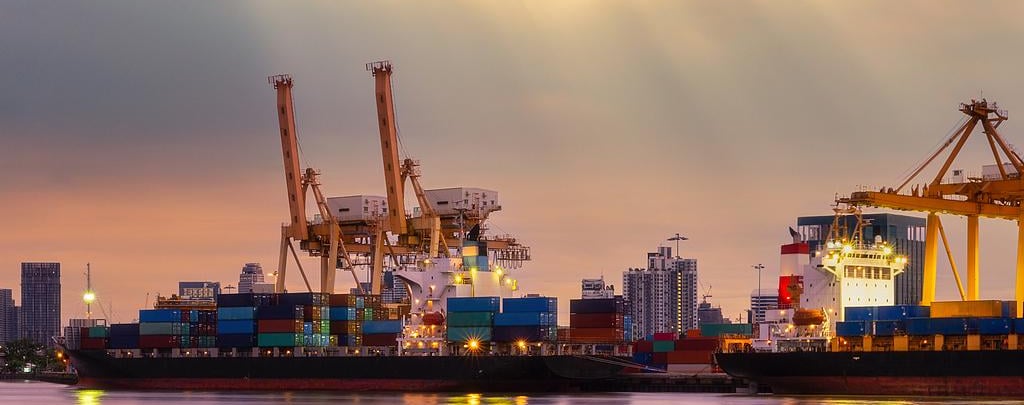
Melbourne is Australia's largest container port. In 2024, container throughput reached around 3.4 million TEU, and the terminals that handle that volume keep getting faster and more automated. Across the wharves, ship-to-shore (STS) cranes, rubber-tyred gantry (RTG) cranes, rail-mounted gantry (RMG) cranes and automated stacking systems are all working harder, moving quicker and running longer shifts than ever before.
There's a catch that doesn't always make it into the planning conversations, though. As crane operating speeds and duty cycles climb, the humble cable feeding power and data to all that machinery becomes one of the biggest single factors in whether a terminal keeps running or grinds to a halt. A cable failure on a busy STS crane isn't a minor inconvenience. It's a stopped crane, a queued vessel, and a knock-on cost that adds up fast.
So here's the blunt version: specialised crane cables are no longer a nice-to-have. For modern automated ports, they're essential kit for keeping operations safe and uninterrupted.
This article walks through why standard industrial cables struggle in port applications, what Melbourne's marine environment throws at them, the features that actually matter when you're specifying, and how to choose the right cable for the job.
Melbourne Port's automation trend is changing cable requirements
The growth of automated container handling
Container handling has shifted a long way from the days of an operator manually nudging a crane along. Today's terminals lean on a stack of automated and semi-automated equipment:
Automated STS cranes loading and unloading vessels at high cycle rates
RTG automation for stacking and shuffling containers in the yard
RMG systems running on rails with precise, repeatable positioning
Automated stacking cranes working high-density storage blocks around the clock
AGV-supported logistics moving boxes between the quay and the stack with minimal human input
Each of these relies on a continuous, reliable supply of power and, increasingly, data. And the link that delivers it is the reeling or festoon cable that pays in and out as the machine moves.
More motion means more cable stress
Automation isn't just "the same work, done by a computer." It usually means more work, done faster. In practice that translates to:
Longer travel distances as yards expand and cranes cover more ground
Higher lifting heights with taller stacks and bigger vessels
Faster trolley speeds to lift cycle rates
Longer operating hours, often pushing towards genuine 24/7 running
Here's the key point worth sitting with: every increase in automation translates directly into more bending cycles, more tensile loading and more torsional stress on the cables. The cable that comfortably handled a slower, lower-duty crane five years ago may simply be outmatched by today's demands. The mechanical workload has gone up, even if nothing about the cable's job description has changed on paper.
Why standard industrial cables often fail in port applications
It's tempting to think a tough-looking industrial cable will do the job. After all, it's rated for the voltage, it's got a decent jacket, and it's cheaper. The problem is that port reeling and festoon duty is a very particular kind of punishment, and general-purpose cables aren't built for it.
Repeated flexing fatigue
A reeling cable on a busy crane can go through millions of bending cycles over its life. It's in near-constant movement, winding on and off a drum, flexing back and forth, carrying dynamic mechanical loads the whole time. A standard cable's conductors and insulation simply weren't designed for that kind of relentless cycling.
When a non-specialised cable is pushed into this duty, the failure modes are predictable:
Conductor breakage as individual copper strands fatigue and snap
Insulation cracking where the material can't tolerate the repeated bending
Signal interruption in control and data cores, which in an automated terminal can stop a machine just as effectively as a power fault
Specialised reeling cables address this with finely stranded flexible conductors (typically Class 5 or finer to IEC 60228), short lay-lengths in the stranding for resilience, and purpose-built sheath compounds. It's the difference between a cable that's allowed to flex and one that's engineered to flex.
High-speed reeling challenges
Modern motorised cable reels can run at serious speeds. Heavy-duty and extra-heavy-duty reeling cables in this category are designed for travel speeds well past 200 m/min, with some extra-heavy-duty designs rated up to 240 m/min horizontally and built to cope with vertical spreader applications on top of that.
At those speeds, the cable isn't just moving fast. It's accelerating and decelerating constantly, with the tension on it fluctuating through every cycle. The reel drum system and the motorised reel are doing their job of keeping the cable under control, but the cable itself has to absorb all that dynamic loading without the conductors shifting, the sheath abrading through, or the core structure breaking down.
A general-purpose cable thrown at a high-speed reel tends to fail early and unpredictably, which is the worst kind of failure in a terminal that's trying to run to a tight vessel schedule.
Torsional stress during crane operation
Bending isn't the only enemy. Crane movement also twists the cable. Trolley movement, crane rotation and any misalignment in the guidance system all introduce torsional forces, and twisting is particularly brutal on a cable's internal structure.
Without a proper anti-torsion design, the result is internal conductor fatigue and premature failure, often well before the cable would have worn out from bending alone. This is why purpose-built reeling cables for the heavier duties include an embedded anti-torsion braid (commonly a wide-meshed braid of polyester or polyamide threads) vulcanised or laid between the inner and outer sheaths. That braid is what lets the cable absorb the twist instead of passing it straight through to the copper.
Melbourne's marine environment creates additional challenges
Even a well-chosen reeling cable has to survive where it lives, and a Melbourne wharf is not a gentle place for any material. The mechanical duty is only half the story. The environment is the other half.
UV exposure
Port cranes work outdoors, exposed to the sun day in and day out. Continuous solar radiation degrades cable jackets that aren't formulated to resist it, leading to surface cracking and eventual jacket failure. UV resistance isn't an optional extra here. It's a baseline requirement, and quality reeling cables specify it explicitly.
Salt-laden air and moisture
Melbourne sits on the coast, and salt-laden air comes with the territory. Salt and persistent moisture accelerate corrosion and attack cable jackets over time. A cable jacket that's chemically resistant to this kind of degradation will hold up far longer than one that simply looks tough on day one. Moisture resistance also matters for the inevitable wet-weather operation and washdowns.
Temperature variations
Melbourne is famous for four seasons in one day, and cables feel it. Summer heat softens jacket materials, while colder snaps stiffen them, and the constant cycling between the two ages the material faster than a stable climate would. There's a real practical consequence here: temperature drops affect cable jacket rigidity, and a cable that's gone stiff in the cold is more prone to damage when the reel demands it flex.
Good reeling cables are specified with a flexing temperature range that comfortably brackets local conditions. Many rubber and PUR reeling designs in this class handle flexing from around -25°C up to +80°C, with low-temperature compounds available down to -50°C for genuinely cold applications. For Melbourne, the priority is making sure the flexing range (not just the fixed range) covers the coldest mornings you'll realistically see.
Oil and chemical exposure
Terminals are working industrial environments. Hydraulic systems, maintenance areas and the crane machinery itself all mean cables come into contact with oils and greases. A cable that isn't oil-resistant will swell, soften and degrade where it's exposed. Oil resistance (often tested to standards such as EN 60811-2-1) is a standard feature on proper reeling cables for exactly this reason, and it's worth confirming it's on the spec sheet rather than assuming.
Key features required in crane cables for port automation
When you boil it all down, a crane cable for an automated Melbourne terminal needs to tick a specific set of boxes. The starting point is high flex life, since the cable has to withstand millions of bending cycles without the conductors fatiguing or the insulation cracking. Closely tied to that is a small bending radius, which lets the cable suit compact reeling systems and the tight drum geometries common on modern reels. Torsion resistance is essential too, because the cable needs to absorb the twisting that comes with crane and trolley motion rather than passing it through to the copper, and high tensile strength is what allows it to handle the dynamic pulling forces generated by high-speed reeling.
On the environmental side, UV resistance keeps the jacket intact through continuous outdoor, sun-exposed operation, while oil resistance lets the cable tolerate contact with hydraulic fluids and machinery oils without swelling or softening. Ozone resistance supports a long service life in an outdoor electrical environment, moisture resistance is what allows the cable to cope with a coastal, salt-laden marine setting, and high-speed reeling capability ensures it can keep pace with modern automated cranes running at speed.
No single feature is sufficient on its own. It's the combination that defines a genuine port-grade reeling cable, and it's precisely that combination that standard industrial cable can't deliver.
Cable requirements for different port equipment
Not every machine needs the same cable. Matching the cable to the equipment is where good specification really pays off.
Ship-to-shore (STS) cranes
STS cranes are the headline act, and they're demanding. They need:
Long travel lengths along the wharf
High-speed reeling to keep pace with loading and unloading
Heavy tensile loads from the sheer scale of the cable runs and movement
Recommended: purpose-built reeling cables and drum reeling cables, typically the heavy-duty or extra-heavy-duty rubber or PUR families designed for high travel speeds and high tensile capacity. For the main high-voltage power supply on container cranes, resilient rubber reeling cables rated from 3.6/6 kV up through 12/20 kV are the usual choice.
RTG cranes
RTGs move more or less continuously across the yard and need a flexible, reliable power feed that keeps up with that constant gantry movement. The priorities are:
Continuous gantry movement without cable fatigue
Flexible power supply that tolerates the duty cycle
Recommended: festoon cables and reeling cables suited to the RTG's specific guidance and feed arrangement.
RMG cranes
RMGs run on rails and trade brute force for precision. Here the emphasis shifts towards control and signalling:
Precise positioning demands
Reliable control signals that don't drop out
Recommended: hybrid power and control cables that carry both the energy and the control cores in a single, coordinated reeling design.
Automated stacking cranes
Automated stacking cranes are high-duty-cycle machines that also lean heavily on data. They need:
High duty cycle endurance for round-the-clock operation
Data transmission alongside power
Recommended: hybrid power-plus-fibre-optic cable systems. Many heavy-duty reeling cables are available with integrated fibre optic elements (commonly 6, 12, 18 or 24 fibres, in multi-mode 50/125 µm or 62.5/125 µm, or single-mode 9/125 µm), which lets a single cable handle both the power and the high-bandwidth data the automation depends on.
Common crane cable brands used in Australian ports
If you're specifying or buying crane cable in Australia, you'll come across a handful of established names. It's worth knowing the landscape.
Prysmian is a global cable major with strong port-focused solutions and worldwide support behind it.
Nexans has a long-standing presence in Australia, including local manufacturing history, which has made it a familiar name on specifications.
LAPP is well regarded for flexible industrial cables and weather-resistant designs.
TKD is widely specified for reeling and festoon applications across industrial projects.
These are capable products, and they're capable for good reasons. But they're not the only options, and for many Australian buyers the procurement reality, the lead times and the pricing matter just as much as the brand on the drum.
Looking for an alternative to Prysmian, Nexans, LAPP or TKD?
Flexible crane cable solutions from FeiChun
If you're evaluating suppliers for a Melbourne port project, FeiChun is worth a serious look as a technically comparable alternative to the major brands.
Equivalent performance for port applications
FeiChun crane cables are designed for the full range of demanding port duties, including:
High-speed reeling systems
Festoon systems
RTG cranes
STS cranes
Stacker reclaimers
Bulk handling equipment
The range spans basic, heavy-duty and extra-heavy-duty reeling cables in PVC, PUR and rubber constructions, with power, control, composite power-plus-control and power-plus-fibre-optic versions. That breadth means there's usually a cable that maps directly onto your equipment's requirements rather than forcing a compromise.
Faster lead times
This is where the conversation often gets practical. Many global cable brands come with long production schedules and international sourcing arrangements that can leave a project waiting. FeiChun's advantages here are straightforward:
Shorter manufacturing lead times
Faster project response
Emergency replacement capability when a cable fails and a crane is down
For a terminal, the difference between a cable that arrives in weeks versus months can be the difference between a planned changeover and an extended outage.
More competitive pricing
Buyers usually start looking at alternatives for a reason, and that reason is often the budget. Rising project costs and tighter capital put pressure on every line item. FeiChun's pitch is comparable technical performance at a lower procurement cost, which translates to better overall project value, not just a cheaper drum.
Flexible order lengths
This point tends to resonate strongly with Australian customers, and for good reason. Unlike some standard stocked cable programs that lock you into fixed drum lengths, FeiChun can supply:
Custom cable lengths
Project-specific production runs
Reduced cable waste
Easier replacement planning
A practical example: whether your project needs 300 metres, 800 metres or several kilometres of crane cable, production lengths can be matched to the actual installation rather than rounding up to the nearest stocked drum and binning the offcut. On a big project, that waste reduction adds up.
OEM and replacement applications
FeiChun cables are suitable as technically comparable alternatives for:
Prysmian crane cables
Nexans crane cables
LAPP crane cables
TKD crane cables
For OEM builds and replacement programs alike, that gives you a path to maintain performance while improving lead time and cost, without locking yourself to a single source.
How to select the right crane cable for Melbourne port projects
When you're ready to specify, run through this checklist. Each item shapes the cable you should choose, and skipping any of them is where mismatches creep in:
✓ Reeling speed — what travel speed does the reel actually run at?
✓ Travel distance — how far does the machine move, and how much cable does that demand?
✓ Tensile load — what dynamic pulling forces will the cable see?
✓ Bending radius — what's the tightest radius the cable must tolerate on the drum and guidance gear?
✓ UV resistance — confirmed for continuous outdoor exposure?
✓ Oil resistance — confirmed for the hydraulic and machinery environment?
✓ Environmental conditions — does the flexing temperature range cover Melbourne's coldest mornings, and is the jacket suited to salt-laden coastal air?
✓ Power and data requirements — power only, or hybrid power-plus-control-plus-fibre?
✓ Installation method — random winding, monospiral, level wind, festoon or another arrangement?
Getting these right up front is far cheaper than discovering a mismatch after the cable's been installed and a crane is sitting idle.
A quick note on installation and handling, because even the right cable can be undermined by poor practice. Reeling cables need proper strain relief (a moving reel cable should never run without it), correct winding direction on the drum, and at least two full windings retained on the reel for a force-fit tension relief. Compliance with the minimum bending radius is one of the single biggest levers on cable service life. None of this is exotic, but all of it matters.
The bottom line
Melbourne Port's automation drive is pushing crane speeds and operating cycles higher, and that trend isn't reversing. Standard industrial cables often simply can't withstand the combination of relentless flexing, high-speed reeling, torsional stress and marine exposure that comes with the territory. The result, when the wrong cable is fitted, is premature failure, unplanned downtime and a productivity hit no terminal can afford.
Specialised crane cables, properly matched to the equipment and the environment, improve reliability, reduce downtime and extend service life. And when you're evaluating suppliers, it's worth weighing not just the technical performance but also the lead time, the pricing and the supply flexibility, because in a live terminal those things directly affect the bottom line.
Looking for a cost-effective alternative to the major crane cable brands for your Melbourne port project? FeiChun offers high-flex reeling, festoon and crane cable solutions with competitive pricing, flexible lengths and shorter lead times for demanding port automation applications. Get in touch to discuss your equipment, your duty cycle and your project timeline.
How to Reach Us
Get in Touch
SiteMap
Product Catalogue
Festoon Cable
Shore Power Cable




Scan to add us on WeChat