Why PROTOLON (SB-SAM) (N)TSCGEWOEU 6–20KV Cables Perform Better in High-Stress Australian Mining Applications
Learn why PROTOLON (SB-SAM) (N)TSCGEWOEU 6–20KV mining trailing cables are designed for extreme mechanical stress in Australian open-cut mining operations. Engineered for excavators and material handling systems exposed to abrasion, dragging, torsion, and harsh outdoor environments.
5/13/202615 min read
Why Australian Open-Cut Mines Are Moving to PROTOLON (SB-SAM) (N)TSCGEWOEU 6-20KV: The Complete Guide to Heavy-Duty Mining Trailing Cables
Open-cut mining across Australia represents some of the world's most demanding power cable operating environments. From the massive iron ore operations scattered across the Pilbara region of Western Australia to Queensland's extensive coal mining complexes, from copper and gold mining in remote outback locations to quarrying operations across New South Wales, mining equipment operates under relentless mechanical and environmental stress that separates adequate cable performance from genuine reliability.
The question that separates successful mining operations from those struggling with chronic cable failures isn't whether cables fail—they always do eventually. The question is whether they fail predictably, after careful consideration of equipment lifecycle, or whether they fail unpredictably, disrupting production schedules and creating emergency response situations.
The PROTOLON (SB-SAM) (N)TSCGEWOEU 6-20KV medium voltage trailing cable has become the specification of choice across Australian mining operations that have experienced the financial and operational pain of premature cable failures. This cable addresses the specific failure mechanisms that destroy standard cables in harsh open-cut mining—mechanisms that standard industrial cable engineering simply doesn't acknowledge, let alone solve.
The Hidden Crisis in Australian Mining Cable Management
Australian mining operations of virtually every type experience the same frustrating reality: trailing cables fail far more frequently than equipment manufacturers' specifications would suggest. A cable rated for 15KV operating under 12KV conditions should theoretically sustain operation for years. In practice, Australian open-cut mining cables often fail within 18-36 months—not from electrical breakdown, but from mechanical degradation that progresses silently until catastrophic failure occurs.
This failure pattern reflects a fundamental mismatch between standard industrial cable engineering and the actual operating environment in open-cut mining. Standard cables are engineered for controlled industrial environments where they're routed along fixed paths, protected from weather, and handled by trained personnel who understand cable requirements. Open-cut mining cables operate in fundamentally different conditions: they're dragged across rough, rocky terrain; exposed to intense sun, temperature extremes, and moisture; subjected to unpredictable mechanical stress from equipment movement; and handled by equipment operators whose primary focus is production, not cable preservation.
The financial impact of this mismatch runs deeper than cable replacement costs. Every cable failure creates an operational crisis. Equipment stops. Production halts. Crews are mobilised to isolate the failed cable safely, remove it, and install replacement. During these emergency responses, mining operations lose not just equipment utilisation but also production momentum. Downstream processing systems designed for continuous feed encounter supply disruptions. Equipment operators and maintenance crews experience the stress of managing unexpected emergencies. Contractual production commitments face jeopardy.
A study of Australian mining operations conducted by equipment manufacturers found that cable failures represent the single largest source of unplanned equipment downtime—exceeding mechanical failures, hydraulic system failures, and electrical component failures combined. This finding shocked some operators, but experienced mining professionals recognised it immediately: cables fail frequently because standard cables simply aren't engineered for mining's actual operating environment.
Understanding How Open-Cut Mining Destroys Standard Cables
Cable failures in open-cut mining result from multiple simultaneous stress mechanisms operating together. Understanding these mechanisms explains why standard cables fail prematurely and how proper cable engineering prevents failure.
Abrasion and Dragging Damage
Excavator trailing cables are dragged across rough ground thousands of times annually. Rocky terrain, sharp edges of mining benches, and contact with equipment all subject cable sheaths to continuous abrasion. Standard industrial cable sheaths, designed for protection in controlled environments, gradually wear through with repeated contact. Once the outer sheath develops cracks or thin points, water infiltrates, eventually reaching internal insulation layers and triggering electrical failures.
In Australian open-cut mines, this process accelerates due to the intensity of sun exposure. UV radiation degrades standard rubber compounds, making them more brittle and prone to cracking under mechanical stress. A cable sheath that might sustain abrasion for several years in temperate industrial environments fails within months under Australian sun exposure combined with mechanical stress.
Torsional Stress and Twisting Damage
Mining equipment movement introduces rotational forces that twist cables. Excavator bucket rotation, dragline boom movement, and equipment tracking all create torsional stress. Standard cables lack specific protection against twisting—the internal conductor layers simply rotate relative to each other as torsional stress is applied. This internal rotation gradually stresses the insulation, eventually causing internal failures that announce themselves only when catastrophic electrical breakdown occurs.
Moisture Infiltration and Internal Degradation
Once cable sheaths develop cracks or thin spots from abrasion, water enters. Australian open-cut mining environments expose cables to significant moisture—rainfall when it occurs (which can be intense), dust storms that carry moisture, and condensation from temperature cycling. Water inside cables initiates multiple degradation mechanisms: conductor corrosion, insulation breakdown, and electrical tracking that progressively worsens until failure.
Thermal Cycling and Environmental Stress
Open-cut mining cables experience extreme temperature cycling. Surface cables in Australian mining may experience 40-50°C temperature swings daily—baking under intense sun at midday and cooling significantly after sunset. This thermal cycling stresses materials through differential expansion and contraction. Standard rubber compounds gradually lose elasticity under thermal cycling, becoming more brittle and susceptible to cracking.
Australian coastal mining operations face additional salt spray exposure, which corrodes conductors and degrades rubber compounds. Remote inland operations experience intense UV radiation from high-altitude exposure. Each regional mining environment presents unique environmental stressors that accelerate cable degradation beyond what standard industrial specifications address.
Mechanical Impact and Crushing Stress
Equipment movement creates mechanical impact stress on cables. Excavator buckets can strike cables. Dragline movement can pinch cables against structures. Mobile equipment can run over cables. Standard cables, lacking reinforcement against impact, sustain permanent damage from these events—damage that might not cause immediate failure but creates weak points where subsequent stress concentrates, eventually triggering failure.
Real-World Performance: Pilbara Iron Ore Mining Operation
A major iron ore mining operation in Western Australia's Pilbara region operates one of Australia's largest open-cut extraction sites. The operation extracts approximately 90 million tonnes of ore annually, utilising an equipment fleet including twelve large excavators deployed across multiple mining benches, plus additional draglines, bucket wheel excavators, and mobile crushing equipment.
The operation's previous cable specification used standard medium voltage trailing cable rated for mining applications. Over a five-year period, the operation experienced an average of 2.4 cable failures annually per major excavator. With twelve excavators, this meant approximately 30 cable failures annually—roughly one failure every two weeks on average.
Each cable failure triggered a characteristic sequence: unplanned shutdown, crew mobilisation, cable removal, replacement cable installation, testing, and return to service. At an average of 16 hours crew time per failure, the annual crew labour devoted to cable failure response exceeded 480 hours. When combined with production loss from equipment downtime and the value of lost production during equipment shutdown, each cable failure cost the operation approximately AUD $1.8 million.
The operation's five-year cable failure cost reached AUD $270 million—a figure that seemed impossibly high until operations analysis confirmed the calculation. This staggering cost motivated the operation to systematically evaluate alternative cable specifications used successfully at comparable mining operations worldwide.
They identified PROTOLON (SB-SAM) (N)TSCGEWOEU cables as a specification providing documented superior performance in harsh mining environments. They invested approximately AUD $480,000 in upgrading four excavators to the new cable specification, including the cables themselves and installation labour.
Over the subsequent five years, those four excavators experienced only three cable failures—an average of 0.15 failures annually per excavator, compared to 2.4 failures under the previous specification. The five-year cost impact proved dramatic: prevented failures saved the operation approximately AUD $810,000, providing a return on investment exceeding 1,700% in just five years.
Based on this trial's success, the operation upgraded their entire excavator fleet to PROTOLON (SB-SAM) (N)TSCGEWOEU specification. Over the subsequent decade, cable failure rates have remained consistently low across all equipment. The operation now plans major cable replacements as predictable maintenance events scheduled during planned downtime, rather than managing them as emergency responses.
Queensland Coal Mining: Dragline Application
A large underground coal mining operation in Queensland's Bowen Basin operates three draglines in open-cut coal extraction. Draglines represent extreme trailing cable applications—the equipment operates almost continuously during production cycles, bucket movement introduces unpredictable stress patterns, and cables are subjected to significant mechanical stress from boom movement and bucket rotation.
The operation's previous cable specification resulted in average cable replacement intervals of 1.6 years per dragline. Dragline cable replacement is particularly disruptive because draglines operate in fixed positions, and cable replacement requires complete equipment shutdown extending for multiple days. The operation typically scheduled replacement during planned maintenance shutdowns, but unexpected failures forced emergency replacements approximately once annually per dragline.
The financial impact extended beyond replacement costs. Emergency dragline shutdowns disrupted the entire coal extraction operation—if the dragline stops, no coal is extracted, regardless of how efficiently other equipment performs. The coal processing plant downstream depends on continuous or near-continuous feed. Dragline failures during peak production periods created cascading disruptions affecting the entire mining operation.
The operation invested in upgrading all three draglines to PROTOLON (SB-SAM) (N)TSCGEWOEU specification. The transition cost approximately AUD $450,000 for cables, installation labour, and testing. In the five years following the upgrade, the three draglines experienced only four cable failures total—an average of 0.27 failures per dragline annually, compared to 1.6 failures under the previous specification.
More significantly, all four failures during the upgrade period were scheduled replacements occurring during planned maintenance windows, not emergency failures. This enabled the operation to plan dragline maintenance proactively, minimising production impact. The operation's maintenance manager stated that the dragline equipment has become far more predictable from a scheduling perspective—they can now plan major maintenance windows knowing that dragline cables will likely sustain operation through the planned cycle.
New South Wales Hard-Rock Mining: Excavator and Material Handling Systems
A large hard-rock mining operation in New South Wales operates multiple open-cut mining sites. The operation runs excavators for ore extraction plus extensive material handling systems including bucket wheel excavators, stackers, reclaimers, and conveyors. The combination of equipment types meant the operation managed cable inventories across multiple voltage ratings and application types.
The operation historically experienced cable failures across their equipment fleet at rates consistent with industry averages: approximately 2.0 failures annually per major equipment piece. With 24 major pieces of trailing-cable-equipped equipment across multiple sites, this meant approximately 48 cable failures annually—approximately one every week.
Managing these failures consumed significant operational resources. The operation maintained spare cables at multiple sites, pre-positioned replacement equipment, and dedicated teams trained in cable replacement procedures. Despite these preparations, failures frequently occurred at inconvenient times, creating scheduling conflicts and operational disruptions.
The operation systematically upgraded their cable specifications across major equipment categories, prioritising initial upgrades to production-critical equipment in ore extraction. They invested approximately AUD $320,000 in the initial upgrade phase covering the excavators and primary bucket wheel equipment.
In the three years following initial upgrade, cable failure rates on upgraded equipment dropped to approximately 0.3 failures annually per piece—a 85% improvement. The operation continued systematic upgrades across other equipment categories. Over a five-year period, they upgraded approximately 20 of their 24 major equipment pieces to PROTOLON (SB-SAM) (N)TSCGEWOEU specification.
The operational impact extended beyond failure rate reduction. The operation reduced their spare cable inventory by approximately 40% because the upgraded equipment required replacement far less frequently. Maintenance team training shifted from frequent emergency response procedures to more selective, planned maintenance. Equipment scheduling became more predictable because cable failures no longer created unexpected scheduling pressures.
Western Australia Gold Mining: Multi-Equipment Mining Operation
A gold mining operation in Western Australia operates multiple mining sites. The operation's challenge involved particularly harsh environmental conditions: intense UV exposure from high-altitude locations, significant temperature extremes from inland Australian climate, and mechanical stress from large-scale open-cut extraction equipment.
This operation previously experienced cable failures accelerated by environmental stress. Standard cable sheaths, adequate for temperate industrial environments, degraded rapidly under the combination of mechanical stress and environmental exposure. The operation experienced approximately 3.2 cable failures annually per excavator and 2.8 failures annually per dragline—rates higher than operations in more temperate regions.
The operation invested in upgrading to PROTOLON (SB-SAM) (N)TSCGEWOEU specification. Beyond mechanical performance advantages, this cable's enhanced resistance to UV exposure and thermal cycling provided specific benefits for their high-stress environmental conditions.
Following the upgrade, failure rates dropped to 0.4 failures annually per excavator and 0.6 failures annually per dragline. The improvement exceeded the reduction observed in other mining regions, suggesting that the cable's environmental resistance properties provided particular benefit in the operation's harsh conditions.
Understanding PROTOLON (SB-SAM) (N)TSCGEWOEU Cable Construction and Performance
The PROTOLON (SB-SAM) (N)TSCGEWOEU cable's superior performance in harsh Australian mining environments stems from deliberate engineering addressing the specific failure mechanisms destroying standard cables.
Conductor Design and Selection
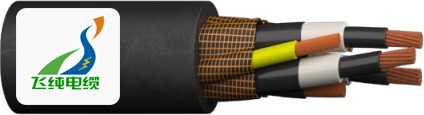
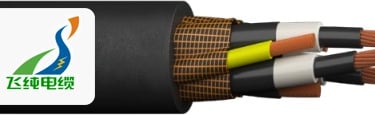
The cable features finely stranded Class 5 and FS (fire-resistant) copper conductors tinned for corrosion resistance. The finely stranded design provides two critical advantages. First, it maximises flexibility—the conductor can bend repeatedly without fatigue damage accumulating. In trailing applications where cables bend and straighten thousands of times annually, conductor fatigue represents a significant failure mechanism in cables with fewer, larger strands.
Second, the finely stranded design distributes torsional stress more evenly. Cables with larger strands tend to twist preferentially when subjected to rotational force; the fine strands distribute torsional load across the conductor, reducing stress concentrations that would otherwise trigger insulation damage.
The tinning of copper conductors provides active corrosion resistance. In mining environments where moisture infiltration inevitably occurs, bare copper corrodes, progressively weakening the conductor. Tinned conductors resist this corrosion, maintaining conductivity and mechanical strength even when exposed to moisture for extended periods.
Insulation System Design
The cable uses semi-conductive EPR (ethylene propylene rubber) insulation surrounding each phase core. This system provides excellent electrical stability under medium voltage stresses up to 20KV, but the choice reflects more than electrical performance. EPR insulation resists mechanical damage more effectively than standard rubber compounds, maintaining integrity even when the cable sustains impact or abrasion stress.
The semi-conductive layers surrounding and inner to the insulation system serve dual functions. Electrically, they provide stress grading that distributes voltage stress evenly across the insulation thickness. Mechanically, they provide additional material between the conductive core and the outer sheath, creating structural redundancy. If the outer sheath sustains damage, these semi-conductive layers provide limited additional protection, buying time before internal insulation damage progresses to failure.
Earth Conductor and Structural Design
The cable incorporates split earth conductors positioned symmetrically in the interstices (gaps) between the three phase cores. This design creates a symmetrical overall cable structure that resists twisting stress more effectively than asymmetrical designs. When torsional force is applied to symmetrically-designed cables, the stress distributes evenly; asymmetrical designs twist preferentially, concentrating stress at weak points.
The split earth design also improves electrical performance. The symmetrical current path distribution provides superior electromagnetic balance, reducing voltage unbalance that can degrade equipment performance.
Reinforcement and Outer Sheath Protection
The cable incorporates tear-resistant reinforcing tape applied around the assembled conductors before the outer sheath. This reinforcement layer acts as a secondary mechanical protection mechanism. If the outer sheath sustains damage from abrasion or impact, the reinforcing tape provides limited additional protection. This design philosophy recognises that sheath damage will inevitably occur in harsh mining environments—the reinforcement acknowledges this reality and provides additional layers of protection.
The outer sheath uses polychloroprene (PCP) rubber with specially formulated compounds designed for mechanical durability and environmental resistance. The PCP rubber compound actively resists abrasion, tearing, and mechanical wear that degrades standard rubber sheaths. The compound also provides superior resistance to UV exposure—critical for Australian mining where sun intensity exceeds global averages. The formula maintains flexibility under thermal cycling, resisting the brittleness that compromises standard rubber compounds in temperature-extreme environments.
Polyester Braiding and Torsional Resistance
The cable incorporates polyester braiding applied over the assembled conductors before the outer sheath. This braiding layer serves multiple functions. Mechanically, it provides additional structural rigidity that resists twisting. For a cable experiencing torsional stress, the braiding constrains conductor movement, reducing internal rotation that stresses insulation.
Structurally, the braiding provides resistance to impact damage. Mobile equipment impacts applied to the cable distribute across the braiding layer rather than concentrating on the outer sheath, reducing the energy that penetrates to internal components. This impact resistance proves particularly valuable in mining environments where equipment contact with cables occurs regularly.
Performance Specifications Supporting Australian Mining Applications
The PROTOLON (SB-SAM) (N)TSCGEWOEU cable achieves voltage ratings from 6KV to 20KV, accommodating modern mining equipment's diverse power requirements. Smaller mining operations typically operate equipment at 6KV or 10KV, while larger operations with greater power demands use 12KV, 15KV, or 20KV systems. The cable's range spans all these standards.
The cable achieves these voltage ratings while maintaining the flexibility necessary for trailing applications. This represents critical engineering balance—higher voltage typically requires thicker insulation, reducing flexibility. The PROTOLON (SB-SAM) (N)TSCGEWOEU design achieves both properties through optimised insulation layer selection and compound formulation, avoiding excessive material bulk that would compromise handling characteristics.
The cable's torsional resistance specification of ±100°/metre means the cable can handle a complete rotation every metre of length without sustaining damage. For equipment like draglines and bucket wheels where boom movement introduces significant rotational forces, this torsional rating provides meaningful protection. Standard cables lacking specific torsional resistance often sustain internal insulation damage at torsional stress levels well below this specification.
The tensile strength specification reaches 20 N/mm² static—providing adequate mechanical margin for cable handling during installation. Open-cut mining cable installation often involves pulling cables through rough terrain over extended distances. The tensile strength specification ensures the cable won't rupture during normal installation procedures, even when routed through difficult terrain or across sharp edges.
The bending radius specification accommodates tight curves inevitable in mining equipment routing. For a 45mm diameter cable typical of 12KV applications, the flexible operation bending radius of 10xD means the cable can bend around a 450mm radius during operation. This flexibility prevents impractical reeling requirements while maintaining cable structural integrity.
Environmental Performance in Australian Conditions
The cable's specified operating temperature range of -40°C to +80°C reflects actual Australian mining conditions accurately. Surface mining in arid regions experiences temperature swings from cool predawn hours (potentially near freezing in winter across high-elevation mines) to afternoon heat exceeding 50°C. Underground mining sections experience more moderate temperatures, but exposed cable sections experience the full thermal range.
More critically, the daily thermal cycling—repeated warming and cooling—stresses cable materials severely. The PROTOLON (SB-SAM) (N)TSCGEWOEU cable's PCP rubber sheath resists thermal cycling damage that degrades standard rubber compounds. This resistance means the cable maintains flexibility and integrity throughout operational lives spanning five or more years, despite accumulating thousands of thermal cycles.
The cable exhibits exceptional resistance to UV exposure—critical for Australian open-cut mining where the sun's intensity (elevated due to Australia's geographical position and atmospheric conditions) accelerates polymer degradation beyond global averages. Standard rubber compounds develop brittle surfaces within months of Australian sun exposure; the PROTOLON (SB-SAM) (N)TSCGEWOEU sheath maintains flexibility even after years of direct sun exposure.
The cable resists ozone exposure, important for high-altitude Australian mining operations where ozone concentrations exceed sea-level values. The PCP rubber compound actively resists ozone degradation that compromises standard rubber sheaths operating at elevation.
The cable demonstrates excellent sea water resistance, important for coastal Australian mining operations where salt spray environments would degrade standard rubber compounds. The PCP compound maintains integrity in saline environments where standard compounds degrade progressively.
Cost-Benefit Economics of Specification Decisions
The PROTOLON (SB-SAM) (N)TSCGEWOEU cable costs approximately 20-30% more than standard mining trailing cable alternatives. For large-diameter cables used in 15KV-20KV applications, this premium amounts to AUD $18,000-$28,000 per cable. For mining operations running extensive cable inventory across multiple pieces of equipment, the total specification upgrade investment can reach AUD $300,000-$600,000.
These costs appear substantial until compared against the cost of cable failures. Real-world performance data from Australian mining operations consistently shows the PROTOLON (SB-SAM) (N)TSCGEWOEU cable prevents 2-4 cable failures annually compared to standard specifications. At typical failure costs of AUD $1.5-3.5 million per failure (accounting for labour, production loss, schedule disruption, and downstream processing impact), the specification upgrade pays back within 3-8 months through prevented losses alone.
Beyond direct financial return on investment, the specification provides intangible operational benefits: improved production schedule predictability, reduced emergency response burden on maintenance teams, and improved ability to plan maintenance around operational schedules rather than managing unexpected failures.
Practical Implementation: Installation and Maintenance
The PROTOLON (SB-SAM) (N)TSCGEWOEU cable requires proper installation practices to realise its superior performance. Australian mining operations achieving best results typically implement several practices. First, they maintain proper cable routing, avoiding unnecessary sharp bends and ensuring adequate protective guides at equipment entry points.
Second, they minimise twisting by ensuring reels align properly with equipment movement patterns. Third, they conduct routine visual inspections of cables in service, monitoring for sheath degradation, moisture infiltration signs, or mechanical damage. Fourth, they replace damaged cable sections proactively rather than attempting repairs or extending cable life beyond safe operating limits.
Fifth, they maintain detailed installation and performance documentation enabling predictive maintenance planning that removes cables approaching typical end-of-life before unexpected failures occur. Mining operations implementing these practices consistently achieve cable service life exceeding specifications—the superior PROTOLON (SB-SAM) (N)TSCGEWOEU construction enables extended life only when combined with responsible cable management.
Making the Specification Selection Decision
For Australian mining operations evaluating cable specifications, the decision to upgrade to PROTOLON (SB-SAM) (N)TSCGEWOEU cables depends primarily on equipment criticality and expected cable replacement frequency. Equipment in production-critical paths—excavators in ore extraction, draglines in primary mining, bucket wheels in bulk material movement—warrant investment in premium cable specifications.
Operations experiencing regular cable failures should calculate true failure costs, not just direct replacement expenses. When failure costs reach AUD $1-3 million per incident, the PROTOLON (SB-SAM) (N)TSCGEWOEU specification becomes cost-neutral within months.
Conservative mining operators with minimal tolerance for equipment downtime typically select premium specifications. Operations with greater flexibility in scheduling might accept higher failure frequencies in exchange for lower cable costs. For most Australian open-cut mining operations, however, the economic case for PROTOLON (SB-SAM) (N)TSCGEWOEU specification proves compelling.
Integration with Modern Mining Operations
Contemporary Australian mining operations employ sophisticated equipment monitoring, production scheduling optimisation, and fleet management systems. These systems depend on reliable equipment availability. Unexpected cable failures disrupt these sophisticated frameworks that optimise equipment utilisation minute-by-minute.
The PROTOLON (SB-SAM) (N)TSCGEWOEU cable's improved reliability supports modern mining operations' drive toward predictable, schedule-dependent production. When cable failures become rare rather than routine, maintenance planning shifts from crisis management to predictive maintenance, enabling advance scheduling of replacements during planned downtime.
This operational shift delivers benefits beyond direct cable cost savings. Maintenance teams can plan work in advance, acquiring materials and scheduling labour efficiently. Production teams can coordinate maintenance windows with operational schedules, minimising production impact. Procurement teams can establish stable supply chains rather than managing emergency sourcing for unexpected failures.
Expert Summary
The PROTOLON (SB-SAM) (N)TSCGEWOEU 6-20KV medium voltage trailing cable represents the current generation of best-practice cable engineering for Australian open-cut mining applications. Real-world performance data from Pilbara iron ore mining, Queensland coal operations, New South Wales hard-rock mining, and Western Australian gold mining operations demonstrates that this cable specification delivers measurable improvements in service life, operational reliability, and cost-effectiveness compared to standard alternatives.
The cable's engineering specifically addresses failure mechanisms that destroy standard cables in harsh open-cut mining environments: abrasion from dragging across rough surfaces, twisting stress from equipment movement and boom dynamics, moisture infiltration through compromised sheaths, environmental degradation from UV exposure and thermal cycling, and mechanical impact stress from equipment contact. Rather than managing these failure mechanisms through frequent replacement, the PROTOLON (SB-SAM) (N)TSCGEWOEU cable prevents them through deliberate design addressing each failure pathway.
The financial case for specification upgrade proves compelling for most Australian mining operations experiencing regular cable failures. Cable failures that previously occurred every 18-30 months under standard specifications drop to rare events under PROTOLON (SB-SAM) (N)TSCGEWOEU specification—typically occurring less frequently than once every three to four years, and often prevented entirely across equipment categories.
For mining operations seeking to improve operational reliability, reduce unplanned maintenance burden, and optimise long-term equipment operating costs, upgrading to PROTOLON (SB-SAM) (N)TSCGEWOEU trailing cable specification represents rational infrastructure investment. The cable doesn't merely extend service life; it eliminates a chronic operational failure point, allowing mining managers to transition from reactive crisis management to proactive maintenance planning. In an industry where operational reliability directly translates to financial performance and production schedule adherence, this cable specification delivers genuine value measurable in both operational outcomes and financial results. For Australian mining professionals, the PROTOLON (SB-SAM) (N)TSCGEWOEU cable represents proven performance backed by decade-long operational experience across Australia's most demanding mining environments.
How to Reach Us
Get in Touch
SiteMap
Product Catalogue
Festoon Cable
Shore Power Cable


Scan to add us on WeChat