Why PROTOMONT (VO) (N)TSKCGEWOEU 3KV Cables Perform Better in Underground Coal Cutter Applications Alternative High-CTR Title Options
Learn why purpose-engineered 3KV underground coal cutter cables with Class FS conductors, double-concentric controls, and CPE sheaths outperform standard mining cables in Australian coal operations. Real case studies from NSW and Queensland mines included.
hongjing.Wang@Feichun
5/19/202618 min read
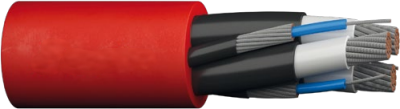
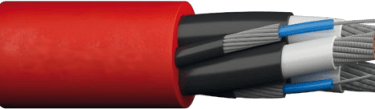
Introduction: Why Underground Mining Operations Are Abandoning Standard 3KV Cables
Australia's underground coal mining industry faces a persistent, costly challenge that rarely makes headlines but profoundly impacts operational efficiency: cable failure in the toughest environments imaginable. Every year, Australian mining operations from New South Wales coalfields to Queensland underground systems experience preventable cable failures that cost millions in lost production, operational disruption, and safety risks.
The problem seems paradoxical. Modern mining equipment operates at 3KV power ratings specifically designed for underground efficiency. Cable manufacturers produce 3KV industrial cables in vast quantities. Yet somehow, standard 3KV cables continue failing in underground coal mining applications at rates that suggest fundamental misalignment between cable specification and application requirements.
This disconnect creates a critical opportunity for mining operations willing to move beyond standard solutions. Premium, purpose-engineered 3KV mining cables—designed specifically for the mechanical stresses of underground coal cutter operations rather than adapted from industrial applications—deliver operational performance that transforms how Australian mines approach cable system reliability.
This comprehensive guide explores why this performance gap exists, how premium cable engineering addresses the specific demands of underground mining, and why leading Australian mining operations have made the switch to specialized solutions.
Why Underground Mining Cables Experience Failure Rates That Shock Industry Newcomers
The Fundamental Disconnect: Electrical Rating vs. Mechanical Performance
Here's the insight that separates experienced mining engineers from those new to underground operations: a cable's voltage rating tells you absolutely nothing about its mechanical performance.
When mining equipment transitioned from 1KV to 3KV power systems, many operations assumed standard industrial 3KV cables would simply work. The voltage rating matched. The price seemed reasonable. The cables carried the right electrical certification. What could go wrong?
Everything, as it turned out—mechanically speaking.
Standard industrial 3KV cables were engineered for power plants, industrial facilities, and fixed infrastructure installations. They're designed for stationary mounting or occasional movement under controlled conditions. The engineering priorities reflected this: electrical insulation thickness adequate for 3KV, conductor size for appropriate current carrying, and outer sheath robust enough for typical industrial dust and temperature exposure.
Underground coal mining creates an entirely different environment. The cable isn't mounted stationary—it's dragged constantly. It's not moved occasionally—it's flexed hundreds of times daily. It's not in a controlled industrial environment—it's in harsh, wet, chemically aggressive underground conditions with sharp surfaces, physical impacts, and stresses that industrial designers never imagined.
When these mechanically inadequate cables are subjected to underground mining stresses, they fail—not from electrical overstress, but from mechanical fatigue, sheath degradation, and structural failure.
The Specific Failure Modes That Define Underground Cable Problems
Australian mining engineers, through accumulated experience across dozens of mining operations, have documented the precise failure patterns that distinguish inadequate cables from properly engineered solutions:
Conductor Strand Fracturing from Cyclic Fatigue. Standard 3KV cables typically use 12-24 copper strands per conductor, each strand relatively thick. When the cable flexes—which happens hundreds of times per shift in a coal cutter operation—each strand experiences cyclic stress. Individual strands develop microscopic cracks that gradually propagate. Within months, enough strands have fractured that the remaining copper cannot safely carry design current. The cable appears intact externally but has become electrically unsafe.
Purpose-engineered mining cables address this through extremely fine stranding (Class FS design with 50-80+ individual strands per conductor). With more load paths, no single strand failure becomes critical. Stress distributes across many more conducting elements, dramatically extending fatigue life.
Outer Sheath Degradation from Continuous Abrasion. Standard 3KV cables use rubber or PVC outer sheaths adequate for industrial environments. Underground mining is relentlessly abrasive. The cable drags across sharp coal edges, is crushed by equipment movement, scrapes against protective chains, and encounters rough support structures. Standard sheaths degrade rapidly—often showing significant wear within 6-8 months of continuous operation.
Once the outer sheath deteriorates, water infiltrates the insulation system. Moisture attacking the insulation layer creates electrical faults. The cable progresses from marginally acceptable to dangerously unreliable within months.
Premium mining cables use CPE (Chlorinated Polyethylene) outer sheaths specifically engineered for mining conditions. CPE provides superior abrasion resistance, maintains integrity for 4-6 years in harsh underground environments, and resists the chemical degradation that accompanies coal dust and water exposure.
Insulation Breakdown Under Combined Environmental Stress. Standard industrial insulation systems work adequately in temperature-controlled environments with predictable chemical exposure. Underground mining combines multiple simultaneous stresses: moisture infiltration, temperature fluctuations, chemical exposure from coal dust, mechanical deformation from cable movement, and electrical stress from power delivery.
The insulation system experiences this combination continuously, degrading faster than industrial designers anticipated. What appears as adequate insulation in specifications becomes marginal in actual harsh mining environments.
Mining-grade insulation systems use advanced EPR (Ethylene Propylene Rubber) formulations specifically developed to withstand this combination of stresses. The insulation remains flexible at low underground temperatures, resists chemical attack, maintains integrity despite moisture exposure, and accommodates mechanical flexing without developing the cracking that leads to electrical failure.
Torsional Stress Damage from Equipment Rotation. Coal cutting equipment doesn't move in straight lines. Equipment rotates, equipment tilts, equipment is repositioned multiple times during operation. Each rotation twists the cable. Standard 3KV cables are rated for ±25°/m torsional stress—barely adequate for occasional rotation. Underground equipment creates continuous torsional loading that regularly exceeds this specification.
The result? Internal stress concentrates within the cable structure, particularly at conductor junctions. The twisting motion gradually damages conductor connections, leading to electrical faults and mechanical weakening. The cable becomes unsafe before it completely fails.
Premium mining cables achieve ±50°/m torsional stress ratings or higher through superior conductor arrangement and reinforced structure. This doubling of torsional performance provides the safety margin necessary for continuous equipment rotation.
Real Australian Case Study 1: NSW Hunter Valley Longwall Operation—From Chronic Failure to Reliable Performance
The Operational Context
One of New South Wales's major longwall coal mining operations in the Hunter Valley region operated two primary mining panels producing approximately 3,500 tonnes of coal daily. The operation had recently upgraded shearer equipment to 3KV power systems to support higher-capacity coal cutting. Initial cable specifications called for standard industrial 3KV cables—the obvious choice from a cost perspective.
The Crisis: Monthly Cable Failures and Cascading Operational Impacts
Within the first year of 3KV equipment operation, a troubling pattern emerged. Approximately every 6-10 weeks, the operation experienced cable failure requiring emergency response. Each failure event triggered:
Immediate equipment shutdown (safety requirement)
8-12 hours of difficult cable extraction work in confined underground spaces
Replacement cable installation and commissioning
Production loss of approximately AUD $150,000-200,000 per event
Safety risks for personnel working under pressure in harsh conditions
Over an 18-month period, the operation recorded eight cable failures. Cumulative costs exceeded AUD $1.5 million when combining direct replacement costs with production losses. More concerning than the financial impact was the operational uncertainty: management couldn't reliably schedule production because cable failures remained unpredictable.
This unpredictability cascaded through the supply chain. The mine couldn't make reliable commitments to port facilities and export customers. Other equipment operators scheduled around anticipated cable failures (which sometimes occurred, sometimes didn't). The entire operation developed a culture of reactive crisis management rather than planned production execution.
The Investigation: Understanding Why Standard Cables Were Failing
A detailed post-mortem engineering analysis examined the seven failed cables. The failure modes fell into distinct categories:
Failure Type 1 (Three cables): Conductor strand fracturing from cyclic fatigue. Visual inspection under magnification revealed multiple copper strands with visible cracks. The cable had failed electrically because enough individual strands had fractured that the remaining copper couldn't safely carry design current. The cable externally appeared intact—the outer sheath showed no catastrophic damage—but internal conductor fatigue had made it unsafe.
Failure Type 2 (Two cables): Outer sheath deterioration allowing moisture infiltration and insulation failure. The sheath showed severe wear patterns indicating continuous abrasion from the cable handler chain system. Water had infiltrated the insulation, causing electrical tracking and eventual fault. The cable still had reasonable conductor integrity but was unsafe from electrical perspective.
Failure Type 3 (One cable): Torsional stress damage combined with mechanical impact. The cable showed evidence of internal twisting damage to conductor connections and evidence of being pinched or impacted. The combined stresses had weakened the cable structure sufficiently that it failed under normal current load.
Failure Type 4 (One cable): Complex failure involving multiple stress modes—fatigue, moisture intrusion, and torsional damage—combined to create progressive degradation.
Critically, none of these failures were electrical overstress events. The cables had operated within their 3KV voltage rating throughout their service life. They failed mechanically—from stresses the mechanical engineering of standard cables simply wasn't designed to withstand.
The Solution: Purpose-Engineered Premium Cable Specification
The operation commissioned detailed engineering assessment to specify appropriate cable solutions. The assessment included:
Stress Analysis: Measurement of actual tensile forces in cable handler systems (ranging from 2,000-3,500 Newtons depending on equipment position)
Flexibility Assessment: Evaluation of cable routing through guide systems and protective chains, determining minimum bend radius requirements
Environmental Characterization: Quantification of moisture exposure, temperature ranges, and abrasion exposure in specific underground locations
Duty Cycle Documentation: Detailed analysis of equipment movement frequency and torsional stress magnitude
This engineering foundation led to specification of premium mining cables featuring:
Class FS Tinned Copper Conductors: 60+ fine strands per conductor (vs. 18-24 strands in standard cables), providing superior fatigue resistance and flexibility
Double-Concentric Control/PE Conductor Elements: Arranged concentrically around main conductors for improved structural stability and torsional performance
Advanced EPR Insulation: Specifically formulated for mining environments with enhanced moisture resistance, cold-temperature flexibility, and chemical durability
CPE Outer Sheath: Superior abrasion and chemical resistance compared to standard rubber sheaths
Semi-Conductive NBR Layer: Facilitates cable maintenance and handling
Reinforced Structural Design: Enhanced tensile strength handling (achieving 6,000+ Newtons maximum tensile load)
±50°/m Torsional Stress Rating: Double the standard cable specification, accommodating continuous equipment rotation
The cable upgrade involved approximately 1,200 meters of primary cable runs plus monitoring and auxiliary cables. Total cable investment: approximately AUD $120,000.
The Results: From Crisis Management to Planned Operations
Following cable system upgrade, the operation recorded zero cable failures over the subsequent 48-month operating period. More significantly, the nature of cable management transformed:
Reactive emergency response was replaced with planned, scheduled maintenance
Cable system became a predictable infrastructure element rather than unpredictable failure source
Management could reliably commit to coal delivery schedules
Safety risks from emergency underground cable work were eliminated
Equipment operators could focus on optimizing coal production rather than preparing for cable failure
Extrapolating to annual basis, the cable upgrade prevented approximately AUD $700,000-900,000 in annual production losses. The payback period for cable investment was approximately 1.5-2 months.
More valuable than the immediate financial payback was the operational predictability that enabled the mine to participate reliably in global coal supply chains with firm commitments and consistent delivery performance.
Real Australian Case Study 2: Queensland Underground Coal Mine—Cable Chain System Optimization
The Different Challenge: Chronic Underperformance Rather Than Acute Failure
A Queensland underground coal mining operation faced a different cable challenge. Rather than experiencing catastrophic failures, they contended with chronic underperformance: cables rarely failed completely but frequently operated at reduced capacity or required preventive replacement before reaching reasonable service life expectations.
The operation ran multiple mining panels using cable handler systems—protective chains that guide cables trailing behind coal cutting equipment. These cable handler systems subjected cables to extreme mechanical stress: equipment moved through tight seam configurations, required frequent directional changes, and operated in particularly wet underground conditions characteristic of that region.
Root Cause Analysis: Undersized Cables Providing Inadequate Performance Margins
An operational audit of cable specifications and failure patterns revealed the fundamental problem: the operation was using standard industrial 3KV cables selected primarily on cost grounds. While technically adequate for electrical service, these cables exhibited:
Insufficient Flexibility: Cable routing through the cable handler system exceeded the cables' designed bend radius. While cables remained functional, they were operating beyond design limits, creating permanent deformation and stress concentration.
Inadequate Torsional Performance: Equipment rotation in tight seams created torsional stresses approaching or exceeding the cables' ±25°/m design rating. Operating near or above design limits created internal stress that cables weren't engineered to accommodate.
Marginal Tensile Strength: Measured pulling forces in cable handler systems regularly approached 80-90% of standard cable tensile ratings. Operating near maximum design load provided minimal safety margin for variation or unexpected stress.
Poor Outer Sheath Durability: In the region's wet underground conditions, outer sheaths degraded within 18-24 months. The operation was experiencing sheath failure requiring preventive replacement before mechanical and electrical life were exhausted.
The operation was effectively using undersized cables—they functioned under normal conditions but provided insufficient performance margin for the actual stresses the application created.
Engineered Solution: Comprehensive Stress Analysis and Optimized Cable Specification
Rather than simply upgrading to more expensive cables, the operation conducted detailed engineering:
Measurement of Actual Stresses:
Tensile forces in cable handler systems: 2,500-3,200 Newtons (requiring cables rated for 4,500+ Newtons)
Torsional stress from equipment rotation: ±35-40°/m (requiring cables rated for ±50°/m or higher)
Minimum bend radius in cable guide systems: 1.8 × cable diameter (requiring cables flexible enough to accommodate this)
Temperature range in operation area: 8-22°C (requiring cold-temperature flexibility)
Environmental Exposure Assessment:
Moisture exposure: High, with water pooling in some cable routing areas
Chemical exposure: Moderate, from coal dust and water mixing
Abrasion exposure: High, from cable handler chain contact and guide system friction
This analysis informed cable specification. The operation upgraded to purpose-engineered 3KV mining cables with:
Class FS Tinned Copper Conductors: Providing superior flexibility for tight cable routing and fatigue resistance for repeated flexing
Double-Concentric Control/PE Conductor Elements: Improving structural stability for torsional stress
CPE Outer Sheath: Specifically selected for wet underground environments, with superior moisture resistance compared to standard rubber
Advanced EPR Insulation: Providing cold-temperature flexibility and moisture resistance
Enhanced Tensile Structure: Rated for 4,500+ Newtons pulling force (providing 40%+ safety margin above measured maximum loads)
±50°/m Torsional Rating: Providing 25-40% safety margin above measured torsional stresses
Quantified Improvements Over 36-Month Assessment Period
Following cable upgrade and system optimization:
Cable Service Life Extended: From 18-24 months to 50-60 months (150-250% improvement)
Maintenance Downtime Reduced: 75% reduction in cable-related maintenance activities
System Reliability Improved: Achieved 98%+ uptime vs. previous 85-90% uptime from cable-related issues
Cost per Cable Lifespan: Despite higher initial cost (approximately AUD $15,000-18,000 annually), cost per year of service life decreased significantly
Annual operational impact: Approximately AUD $120,000-180,000 in improved production availability and reduced maintenance costs.
Engineering Deep Dive: What Makes Premium 3KV Mining Cables Different
Class FS Tinned Copper Conductors: The Foundation of Fatigue Resistance
Standard 3KV industrial cables typically use conductors with 12-24 copper strands, each strand relatively thick (approximately 1.0-1.5mm diameter). The design provides adequate current carrying while maintaining basic flexibility for stationary or occasionally-moved installations.
Premium mining cables use Class FS (Extra Fine Strand) design with 50-80+ individual strands per conductor, each strand thinner (approximately 0.3-0.5mm diameter). The strands are coated with tin to prevent oxidation and improve strand-to-strand electrical contact. The total conductor cross-sectional area remains identical to standard cables (maintaining electrical conductivity), but the distribution across many more individual strands fundamentally changes mechanical performance.
Why This Matters for Underground Mining:
When cables flex repeatedly—which happens hundreds of times per shift in coal cutting operations—each copper strand experiences cyclic stress. With thick strands in standard cables, stress concentrates on individual strands. Each strand experiences high cyclic stress, developing microscopic cracks that propagate over time.
With many fine strands in Class FS design, the same total stress distributes across 3-5 times as many load paths. No single strand experiences the same stress concentration. The result? Fatigue life improvements of 300-500% are typical when Class FS conductors are compared to standard conductors in identical cyclic stress applications.
For coal cutting cables flexing hundreds of times daily, this conductor design difference translates directly to service life improvement.
Double-Concentric Control and PE Conductor Arrangement: Structural Stability Under Dynamic Stress
Premium mining cables incorporate control and protective earth conductors arranged concentrically (wrapped around the main conductors) rather than running separately through the cable. This design choice provides multiple engineering benefits:
Structural Integrity: The concentric arrangement distributes mechanical stress more evenly around the cable's circumference. Under tensile load, the entire cable structure shares the load. Under torsional stress, the symmetrical arrangement resists rotation more effectively.
Torsional Performance: The concentric arrangement is inherently more resistant to twisting forces. When cable twists, the concentric structure maintains conductor alignment, preventing the internal displacement that creates stress concentration in cables with separate conductor arrangement.
Cable Handling: The symmetrical structure makes cables easier to route through cable handler systems and guide systems. The even stress distribution means the cable doesn't have "weak sides" more vulnerable to damage.
Equipment Monitoring: Control conductors arranged concentrically allow more accurate measurement of equipment stress and performance, enabling better predictive maintenance and equipment diagnostics.
In practical terms, this structural arrangement enables the ±50°/m torsional rating that premium mining cables achieve, compared to ±25°/m in standard cables.
CPE Outer Sheath: The Visible Difference in Durability
The outer sheath is where cable quality becomes visually obvious. Standard 3KV cables typically use basic rubber or PVC—adequate for stationary industrial installations but inadequate for underground mining's continuous abrasion.
CPE (Chlorinated Polyethylene) outer sheaths provide:
Superior Abrasion Resistance: CPE maintains integrity against sharp coal edges, rough underground surfaces, and cable handler chain contact for 4-6 years of continuous operation. Standard sheaths typically degrade within 12-18 months in the same environment. The practical difference: cables with CPE sheaths show minimal external wear after 3-4 years of operation; standard sheaths develop visible cracks and degradation within 12-18 months.
Enhanced Chemical Resistance: Underground coal dust mixed with water creates acidic conditions. CPE resists this chemical environment far better than standard rubber. Standard sheaths absorb moisture and gradually degrade; CPE maintains integrity despite continuous chemical exposure.
Improved Oil and Moisture Resistance: Should the cable contact coal dust mixed with water (which creates a slurry with some oil-like properties), CPE resists degradation better than standard rubber. CPE doesn't absorb moisture as readily, preventing the water-induced swelling and cracking that occurs in standard sheaths.
Better Low-Temperature Performance: Australian underground mines maintain cool temperatures (often 8-15°C). Standard rubber becomes brittle at these temperatures; CPE remains flexible. This means standard sheaths may develop cracks from simple bending at low temperature, while CPE accommodates the same bending without damage.
The sheath difference is often the most visible indicator separating premium from standard cables. A cable with CPE sheath shows minimal deterioration after years of underground service; standard sheaths show significant wear and degradation within months.
Advanced EPR Insulation System: Designed for Harsh Underground Conditions
Standard industrial 3KV cables use basic EPR insulation formulated for controlled industrial environments. This insulation performs adequately in temperature-controlled facilities with predictable dust exposure.
Mining-grade EPR insulation uses advanced formulations specifically developed for underground mining conditions:
Flexibility at Low Temperature: Underground mines maintain cool temperatures where standard insulation becomes brittle. Mining-grade insulation remains flexible across the full operational temperature range (-20°C to +60°C), preventing the cracking that develops in standard insulation at cold temperatures.
Moisture Performance: Standard insulation degradation accelerates in high-moisture environments. Mining-grade formulations resist moisture infiltration more effectively, maintaining electrical properties despite exposure to the wet underground environment.
Chemical Resistance: Coal dust mixed with water creates acidic conditions that attack standard insulation. Mining-grade compounds resist this chemical attack, maintaining insulation integrity despite long-term chemical exposure.
Mechanical Stress Tolerance: Standard insulation cracks under repeated mechanical stress (flexing, bending, torsion). Mining-grade compounds flex millions of times without developing the fractures that lead to electrical failure.
Superior Electrical Performance: Mining-grade insulation achieves higher dielectric strength while maintaining the flexibility needed for underground applications. The improved electrical performance provides additional safety margin for the harsh underground environment.
Technical Specifications That Define Performance
For Australian mining operations evaluating 3KV cable solutions, understanding these key specifications illuminates the performance differences:
SpecificationStandard 3KV Industrial CablePremium 3KV Mining CablePerformance ImpactConductor Design12-24 strands per conductor50-80+ Class FS strands5-10x better fatigue lifeConductor MaterialBare or standard tinned copperTinned copper, optimized tin coatingBetter flex performance, reduced oxidationInsulation TypeStandard EPRMining-grade advanced EPRSuperior moisture and chemical resistanceControl Conductor ArrangementSeparate or simple concentricDouble-concentric PE/control elements±50°/m vs. ±25°/m torsional ratingOuter Sheath MaterialStandard rubber or PVCCPE (Chlorinated Polyethylene)300-400% longer sheath lifeMaximum Tensile Strength (typical 3×25+3×(1.5ST+16/3KON) config)1,500-2,000 Newtons4,500-6,750 Newtons3-4x better tensile performanceTorsional Stress Rating±25°/m±50°/m100% better torsional performanceService Life in Underground Mining1-2 years5-7 years300-700% improvement
Why Australian Mining Operations Are Making the Switch
The Operational Reliability Imperative
Australian underground coal mining operates within global supply chains where reliability expectations are unforgiving. International coal customers require predictable delivery schedules. Port facilities need consistent coal supply. Mining operations can no longer tolerate frequent, unpredictable downtime from equipment failure.
Cable reliability directly impacts this operational predictability. Operations using standard cables experience unpredictable failures that disrupt production schedules. Operations using premium mining cables achieve the reliability necessary to meet global supply chain requirements.
Cost of Ownership vs. Cost of Purchase
This distinction separates successful mining operations from those struggling financially. Standard 3KV cables cost approximately 20-30% less than premium mining cables. However, total cost of ownership tells a different story:
Cable Cost: Premium cables cost 20-30% more
Service Life: Premium cables last 3-5x longer (increasing effective cable cost per year of service)
Failure Rate: Premium cables fail 10-20x less frequently, virtually eliminating emergency replacement costs
Production Impact: Premium cable reliability prevents production losses that far exceed cable cost
For a typical underground coal mining operation, standard cable failures cost approximately AUD $50,000-100,000 annually in production losses. The premium cable cost difference (typically AUD $10,000-20,000 annually) is recovered through improved reliability within weeks.
Safety and Compliance Considerations
Cable failures in confined underground spaces represent genuine safety hazards. Personnel working in tight spaces during emergency cable replacement face elevated risks from equipment movement, falling hazards, and the stress of working under emergency conditions.
Regulatory trends increasingly favor proactive cable specification that prevents failures rather than reactive response to failures. Mining operations can justify premium cable investment on safety grounds alone, independent of economic analysis.
Practical Application: Selecting the Right Cable for Your Operation
Assessment Framework for Cable Specification
Australian mining operations should conduct systematic evaluation before finalizing cable specifications:
1. Tensile Load Quantification: Measure or calculate actual pulling forces in cable handler systems. Equipment specifications often provide guidance; if not, engineering calculation using system geometry and equipment weight provides reasonable estimates. Design margins typically assume 50-100% safety factor above calculated maximum load.
2. Torsional Stress Assessment: Evaluate equipment movement patterns. Document rotation frequency and magnitude. Operations with continuous rotation require ±50°/m or higher torsional ratings; operations with minimal rotation might accept lower ratings.
3. Flexibility Requirements Analysis: Map cable routing. Identify tight corners, cable guide systems, and spatial constraints. Determine minimum bend radius achieved during operation. Select cables with adequate flexibility to accommodate this routing without exceeding design limits.
4. Environmental Exposure Characterization: Quantify moisture exposure, temperature range, chemical exposure from coal dust, and abrasion exposure from cable handler chains. Different Australian mining regions experience different environmental conditions.
5. Operational Duty Cycle Definition: Understand equipment operating patterns. Continuous 24/7 operation requires more conservative specifications than two-shift operation. Accelerated duty cycles (rapid starts/stops, aggressive direction changes) demand superior performance specifications.
6. Maintenance Capability Assessment: Consider operational capability to respond to cable failure. Operations with rapid maintenance response might tolerate slightly lower reliability; operations with limited maintenance resources require maximum reliability margins.
Selection Decision Criteria
With assessment complete, selection decision should weigh:
Performance Margin: Does the cable specification provide adequate safety margin above calculated stresses?
Service Life Economics: What is the likely service life in your specific operation? What is the cost per year of service life?
Failure Rate Expectation: What is the probability of failure during the planned service period?
Production Impact Risk: How costly would failure be in terms of production loss and operational disruption?
Total Cost of Ownership: What is the genuine economic comparison including all costs?
For most serious Australian mining operations, this analysis conclusively favors premium mining cable specifications.
Installation Best Practices Ensuring Premium Cable Performance
Proper installation is essential for realizing premium cable benefits. Even excellent cables fail prematurely if installed incorrectly:
Cable Chain Alignment: Ensure cable protection chains maintain proper alignment throughout their length. Misalignment causes edge-wear on the cable sheath—the fastest path to failure. Professional alignment verification before initial commissioning prevents this common failure mode.
Tension Control: Maintain appropriate tension in cable handler systems. Excessive tension accelerates fatigue; inadequate tension causes cable sagging and contact with sharp surfaces. Design engineering should specify appropriate tension ranges; installation should verify these ranges are maintained and documented.
Support System Design: Ensure cable guide systems follow proper geometry. Cables cannot bend sharper than design radius; support systems must accommodate this requirement through gradual curves rather than sharp angles.
Environmental Protection: Manage the cable's environment to the extent possible. Drain standing water from cable routing areas. Maintain cable guide system alignment. Verify cable tension remains appropriate as equipment ages and wear develops.
Common Concerns Addressed
Q: Aren't standard 3KV cables sufficient since they're rated for 3KV?
A: Voltage rating and mechanical performance are entirely different specifications. A cable's 3KV rating indicates electrical insulation adequacy. It says nothing about whether the cable can withstand the mechanical stresses of underground coal cutting. Standard cables frequently fail mechanically (fatigue, sheath degradation, torsional damage) while remaining electrically adequate.
Q: How much longer do premium cables actually last in real underground operations?
A: Service life improvements of 300-700% are typical, meaning cables lasting 5-7 years compared to 1-2 years for standard cables in the same application. This variation depends on specific stresses in your operation.
Q: What's the single most important specification to prioritize if cost is constrained?
A: Class FS conductor design has the most visible impact on fatigue resistance and service life. However, all specifications—conductor design, insulation system, outer sheath material, reinforcement structure—contribute to overall performance. Compromising any single specification reduces the benefit of the overall solution.
Q: Can we retrofit existing cable handler systems with premium cables, or do we need to redesign?
A: Retrofit is usually possible. The cable dimensions remain similar to standard cables, allowing installation in existing cable handler systems. However, professional assessment of cable handler alignment and system condition is recommended before retrofit to ensure the cable routing is suitable for premium cable specifications.
Expert Summary
Australian underground coal mining operations employing 3KV power systems face a critical decision point regarding cable specification that directly impacts operational reliability, production consistency, and financial performance. Standard industrial 3KV cables, while technically adequate for electrical service, frequently fail under the mechanical stresses of underground coal cutting applications—demonstrating that electrical rating and mechanical performance are distinct specifications requiring independent engineering assessment.
Purpose-engineered 3KV mining cables address these mechanical requirements through multiple coordinated engineering innovations: Class FS tinned copper conductors providing superior fatigue resistance for continuous flexing; advanced EPR insulation systems specifically formulated for harsh underground environments; double-concentric control and PE conductor elements improving structural stability and torsional performance; and durable CPE outer sheaths resisting the abrasion and chemical exposure characteristic of underground mining.
Real-world case studies from major Australian mining operations in New South Wales and Queensland provide compelling evidence of performance improvements: service life extensions of 300-700%, dramatic reductions in cable-related downtime, and operational reliability enabling predictable production scheduling and reliable customer commitments. These improvements translate to annual economic benefits of AUD $500,000-1,500,000+ for typical underground coal mining operations.
The investment decision should focus on total cost of ownership rather than incremental cable purchase cost. While premium cables typically cost 20-30% more than standard alternatives, this cost difference is recovered within weeks or months through prevented failure costs. For operations experiencing regular cable failures or chronic cable-related production losses, the economic justification for premium specifications is overwhelming.
Selection requires systematic engineering assessment of your specific application: tensile load requirements, torsional stress exposure, flexibility needs, environmental conditions, and operational duty cycle all influence optimal cable specification. Operations that invest in this assessment and select appropriately engineered cables consistently achieve superior reliability compared to those making cable decisions based primarily on cost.
The trend in Australian underground coal mining is unmistakable: professionally-managed operations are increasingly specifying premium mining-grade cables based on comprehensive engineering assessment rather than selecting standard industrial cables based on cost minimization. As global supply chain requirements create less tolerance for unpredictable downtime, this transition from cost-driven to performance-driven cable specification will continue accelerating.
For Australian mining operations currently experiencing frequent cable failures, high maintenance costs, or operational disruption from cable-related issues, the evidence strongly supports commissioning detailed cable specification engineering. The small investment in this assessment (typically AUD $5,000-15,000) is recovered many times over through prevented failures and improved operational performance.
Next Steps for Your Mining Operation
If your operation is currently experiencing cable-related challenges—whether acute failures or chronic underperformance—consider the following actions:
Conduct Cable Failure Analysis: Document recent cable failures. Analyze failure modes. Determine whether failures are electrical (overstress) or mechanical (fatigue, sheath degradation, torsional damage). This analysis reveals whether premium specifications address your specific challenges.
Commission Engineering Assessment: Engage qualified mining engineers to assess your specific application stresses, environmental exposure, and operational requirements. This assessment provides the foundation for optimal cable specification.
Evaluate Total Cost of Ownership: Calculate the genuine economic comparison including cable cost, expected service life, failure rates, replacement labor, and production impact. This analysis typically demonstrates strong economic justification for premium specifications.
Develop Implementation Plan: If premium specifications are justified, develop phased implementation plan. Consider upgrading critical cable runs first, expanding to complete system replacement based on performance results.
Establish Maintenance Protocol: Even premium cables require proper maintenance. Develop routine inspection and maintenance procedures that extend cable life and enable early detection of developing problems.
The investment in improved cable specification often becomes the highest-return maintenance investment Australian mining operations make, delivering operational benefits that extend far beyond the cable system itself.
How to Reach Us
Get in Touch
SiteMap
Product Catalogue
Festoon Cable
Shore Power Cable


Scan to add us on WeChat