Why TENAX-LUMEN (N)TSCGH3S 6–10KV Cables Improve Visibility & Safety in Australian Mining Operations
Discover why TENAX-LUMEN (N)TSCGH3S 6–10KV self-illuminating mining trailing cables are designed for Australian mining operations requiring improved visibility, abrasion resistance, and reliable power supply for draglines, shovels, and large mobile equipment.
hongjing.Wang@Feichun
5/14/202616 min read
How Self-Illuminating Mining Cables Are Transforming Night Shift Safety: TENAX-LUMEN (N)TSCGH3S 6–10KV Complete Safety and Performance Guide
Australia's mining industry operates increasingly on 24-hour production schedules. Equipment operates through predawn darkness, continuing into daylight, and resuming after sunset—a operational pattern that creates extended periods when mining equipment functions under low-visibility conditions. This operational reality creates safety challenges that standard mining cables, designed during an era when mining was primarily daylight activity, simply don't address.
The safety hazards created by low-visibility trailing cables represent an underappreciated risk in modern Australian mining operations. Personnel working around mobile equipment may not see cables stretched across mining sites. Equipment operators cannot always identify cable positions clearly. Maintenance crews working during night shifts struggle to visually locate cables requiring inspection. This visibility challenge creates hazards that contribute to incidents, equipment damage, and operational inefficiency.
Traditional solutions—painting cables bright colours, installing additional lighting around cable routes, implementing spotters during equipment movement—provide partial solutions. However, these approaches don't address the fundamental challenge: cables that cannot be seen inherently create visibility hazards.
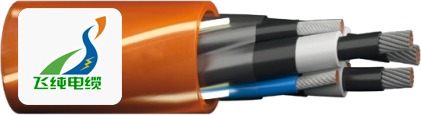
The TENAX-LUMEN (N)TSCGH3S 6–10KV self-illuminating mining cable provides fundamentally different solution. Rather than relying on external lighting or paint markings, the cable generates its own illumination through integrated electroluminescent (EL) technology. The cable glows in darkness, remaining continuously visible even when electrical power isn't energising the cable. This self-illuminating capability transforms cable visibility from operational convenience into genuine safety infrastructure.
Australian mining operations that have implemented TENAX-LUMEN specifications report measurable safety improvements—reduced cable-related incidents, fewer equipment damage events from cable strikes, improved awareness around heavy mobile equipment. Beyond safety metrics, mining operators report that illuminated cables provide practical operational benefits: easier cable identification during maintenance, faster equipment setup during night shifts, improved visual control during equipment repositioning.
The TENAX-LUMEN cable isn't merely a cable with enhanced visibility. It's a comprehensive engineering solution addressing the specific safety requirements of modern 24-hour mining operations while maintaining the mechanical durability and electrical performance that Australian mining equipment demands.
Understanding the Safety Challenges of Night-Time Mining Operations
Modern Australian mining operates through extended periods with minimal natural lighting. The Pilbara region of Western Australia experiences darkness from approximately 5:00 PM through 7:00 AM during winter months—a 14-hour darkness period. Queensland's subtropical regions experience 12-14 hour darkness periods varying seasonally. Tasmania's high-altitude mining experiences extended darkness periods particularly during winter.
This extended darkness creates operational periods when mining equipment must function with artificial lighting alone. Floodlights installed around mining sites provide general illumination, but visibility of specific objects—particularly long cables stretched across mining sites—remains challenging. Shadows, dust haze, and equipment positioning combine to create blind spots where cables remain difficult to see even with general site lighting.
The safety hazards created by cable visibility challenges manifest in multiple ways. Equipment operators manoeuvring large machines in darkness may not see cables clearly, inadvertently rolling equipment over cables and causing damage. Personnel walking around mining sites during night shifts may trip over cables that are difficult to see against dark ground surfaces. Maintenance crews working during darkness must use portable lights to identify cable positions and condition. The cumulative effect of visibility challenges creates an environment where cable-related incidents occur more frequently than necessary.
Beyond incidents, poor visibility creates operational inefficiency. Night shift crews spend additional time locating and identifying specific cables during equipment setup. Maintenance inspections take longer because personnel must manually illuminate cables to assess condition. Equipment repositioning requires careful movement because operators cannot clearly see cable positions until equipment is immediately adjacent to cables.
The Evolution of Mining Safety: From Reactive to Proactive Cable Visibility
Traditional mining safety approaches for cables focused on preventing damage once cables were damaged. Standard rubber sheaths were selected to resist cuts and tears. Burial or protective covers protected cables from obvious hazards. However, these approaches were reactive—they addressed cable protection rather than cable visibility.
Modern mining safety philosophy recognises that visibility represents a primary safety mechanism. Equipment that cannot be seen creates hazards. Personnel cannot avoid what they cannot see. The logic of proactive visibility—making hazards visible so they can be avoided—applies directly to trailing cables in mining applications.
This safety philosophy shift explains why progressive Australian mining operations are increasingly implementing visibility-enhanced cable solutions. By making cables visible, mining operations eliminate an entire category of hazard—incidents caused by personnel or equipment not seeing cables clearly.
The implementation of self-illuminating cables represents the logical evolution of this visibility-focused safety approach. Rather than relying on external lighting or paint markings vulnerable to dust accumulation and visual obscuration, self-illuminating cables provide intrinsic visibility impossible to accidentally disable or degrade.
Real-World Case Study: Queensland Open-Cut Coal Mining Night Operations
A major coal mining operation in Queensland's Bowen Basin operates on continuous 24-hour production cycles, with equipment running through extended night shifts requiring full operational capability during darkness. The operation's draglines and loading equipment operate through complete darkness periods, relying on site floodlighting and operator experience to maintain safety.
The operation historically experienced approximately 0.8 cable-related incidents annually—events categorised as cable strikes by equipment, personnel stumbles over cables, or cable damage from vehicle contact. While this incident rate seems relatively modest, the incidents created disproportionate operational disruption: equipment damage requiring emergency repair, personnel injuries (fortunately minor), and required investigation and incident reporting consuming management time.
The operation's safety manager recognised that many incidents clustered around night shift operations—a pattern suggesting that visibility challenges contributed to incident causation. Analysis of incident locations revealed that most incidents occurred around cable routes where natural terrain variations created visual shadows even with site lighting.
The operation trialled TENAX-LUMEN self-illuminating cables on their primary dragline and two associated loading shovels. The trial involved upgrading approximately AUD $240,000 in cables and installation labour. The operation committed to tracking cable-related incidents over a three-year trial period.
During the three years following TENAX-LUMEN installation, the three trial machines experienced zero cable-related incidents. The remaining equipment in the operation (continuing under standard cable specification) experienced 2.1 cable-related incidents annually on average. The performance difference became statistically clear—the illuminated cables eliminated cable visibility-related incidents.
The operation's safety analysis revealed that the cable illumination provided specific benefits. Personnel and equipment operators could instantly identify cable positions even in poor lighting. Night shift maintenance crews could rapidly locate and assess cable condition without portable lighting. Equipment operators repositioning equipment could see cable positions clearly, avoiding inadvertent cable strikes.
Beyond incident elimination, the operation observed secondary benefits. The visible cables created improved worker awareness around mobile equipment generally—personnel working around illuminated cables became more alert to equipment presence and movement. The cables functioned as subtle safety reminder communicating cable presence and location.
The operation expanded TENAX-LUMEN specification across their entire equipment fleet, not because incident elimination alone justified the investment (though prevented incidents alone justified the cost), but because the cables provided reliable safety infrastructure supporting the operation's 24-hour production model.
Western Australia Iron Ore Mining: Pilbara Remote Operations
A large iron ore mining operation in Western Australia's remote Pilbara region operates multiple draglines and excavators on 24-hour production cycles. The operation's remote location means personnel must often work alone or in small crews during night shifts, without the larger crew sizes that could provide spotters or additional supervision.
The operation experienced approximately 1.2 cable-related incidents annually, including equipment strikes, stumbles, and minor electrical hazards related to poor cable visibility. More concerning to the operation's safety manager, the remote operation meant that some incidents went unreported until they accumulated into patterns.
The operation's particular challenge involved cable management around their primary dragline fleet. Dragline operations involve complex cable routing—trailing cables for power, support cables, and equipment-specific cables all positioned around operating draglines. During daylight operation, operators could visually manage cable positions. During night operations, cable positioning became less controlled, with cables occasionally caught by equipment or creating trip hazards for maintenance crews.
The operation invested in upgrading their dragline cables to TENAX-LUMEN specification, with approximately AUD $320,000 investment in cables and installation labour. The operation tracked cable-related safety events over the subsequent three years.
During the post-upgrade period, cable-related incidents dropped to 0.2 events annually. More significantly, the pattern of incidents changed—previously incidents occurred unpredictably throughout the year, but following illuminated cable installation, the rare incidents that occurred happened during unusual circumstances (equipment malfunction, non-standard operations) rather than normal operational conditions.
The operation's safety manager attributed the improvement to multiple factors. The cable illumination provided immediate visual feedback regarding cable positions. Night shift operators could position equipment more precisely because cable visibility improved operational awareness. Maintenance crews working during night shifts could assess cable condition more rapidly and confidently.
The operation found that TENAX-LUMEN cables also provided operational benefits beyond safety. The visible cables simplified equipment setup during night shifts—operators could position draglines and associated equipment more efficiently because cable locations were immediately apparent. The visible cables reduced the risk of equipment positioning errors that could damage cables or create inefficient repositioning.
South Australian Copper Mining: Personnel Safety in Remote Environment
A copper mining operation in South Australia's remote inland region operates electric shovels and excavators in isolated environments. The operation's remote location creates challenging staffing conditions—personnel work extended shifts with limited supervision, and injury response resources are more limited than operations near population centres.
The operation's previous cable specification used standard mining cables. Analysis of near-miss incidents revealed concerning patterns: personnel had nearly stepped on cables during predawn operations, equipment had nearly struck cables during repositioning, and maintenance crews had difficulty identifying cable positions during night inspections.
While the operation had not experienced serious cable-related injuries, the near-miss frequency suggested that conditions existed for more serious incidents. The operation's safety committee determined that improving cable visibility represented appropriate hazard control.
The operation invested in TENAX-LUMEN illuminated cables on their primary equipment fleet, with approximately AUD $185,000 investment. The operation's safety philosophy focused on visible, obvious hazard controls rather than relying on procedure or training to prevent incidents.
Following TENAX-LUMEN installation, the operation's near-miss reports involving cables dropped dramatically—from approximately 6-8 near-miss incidents annually to zero over the subsequent three-year period. More significantly, personnel safety surveys showed improved awareness of cable presence and location. The visible cables seemed to create subtle psychological reminder of hazard presence.
The remote operation particularly valued the TENAX-LUMEN cables because the self-illumination worked independently of site infrastructure. Unlike cables dependent on site floodlighting (which could be obscured by dust storms or equipment positioning), the self-illuminating cables remained visible under all conditions. This reliability proved especially valuable during emergency situations when site infrastructure might be disrupted.
Tasmania High-Altitude Mining: Cold Weather Cable Performance
A mining operation in Tasmania's high-altitude hard-rock environment operates in extreme cold conditions with extended darkness periods during winter. The operation's winter months experience limited daylight (approximately 8-9 hours daily) combined with near-freezing predawn temperatures.
The operation's equipment operates through complete darkness for extended periods, with night shift operations essential for meeting production targets. The operation's draglines and shovels must function reliably through darkness and cold conditions simultaneously—conditions that create both visibility challenges and mechanical stress.
The operation trialled TENAX-LUMEN illuminated cables on their primary equipment. The trial provided immediate benefits beyond safety. The visible cables enabled operators to position equipment more precisely during darkness—night shift equipment setup became faster and more efficient because cable positions were immediately visible rather than requiring careful operator inference from cable tension.
Over a two-year trial period, the operation experienced zero cable-related incidents on the trial equipment, compared to 0.9 incidents annually on equipment continuing with standard specification. The improvement reflected both improved visibility and TENAX-LUMEN's superior mechanical properties (which performed particularly well in Tasmania's cold conditions).
The operation's particular interest in TENAX-LUMEN reflected the cable's -50°C flexibility specification combined with self-illumination. The cable remained flexible during cold predawn operations while providing visibility during night operations. This combination of properties proved particularly valuable for Tasmania's challenging operational environment.
Understanding TENAX-LUMEN Cable Technology and Construction
The TENAX-LUMEN cable's self-illumination emerges from electroluminescent (EL) technology integrated into the cable structure. Electroluminescent materials generate visible light when energised with alternating electrical current. Unlike traditional lighting requiring direct power supply, EL technology requires only high-frequency low-current electrical signal—a signal that can be generated by small, inexpensive circuitry.
The TENAX-LUMEN cable incorporates EL strings embedded in the outer sheath interstices—the spaces between conductor groups within the cable structure. These EL strings are powered by pilot element conductors running through the cable alongside main power conductors. An electronic driver circuit (integrated at cable entry/exit points where cables connect to equipment) generates the alternating signal powering the EL strings.
The clever engineering of TENAX-LUMEN allows the cable to provide illumination independent of main power supply. Even when the cable is not energised with power to operate equipment, if the equipment electrical system has standby power (typically used for control circuits and monitoring), the EL system can remain illuminated. This independent illumination proves valuable for visibility during equipment shutdown periods or maintenance work.
The cable incorporates a transparent outer polyurethane (PUR) sheath allowing EL illumination to be visible from outside the cable. This transparency must be engineered carefully—the sheath must remain transparent enough to show EL illumination while maintaining the extreme abrasion and tear resistance that mining applications demand.
Cable Construction Details Supporting Illumination and Durability
Transparent PUR Sheath
The outer sheath uses a specialised transparent polyurethane compound that maintains visibility of internal illumination while providing extreme abrasion resistance. The sheath transparency is balanced against durability—complete transparency would reduce abrasion resistance, while standard opaque PUR would block illumination.
The engineering solution uses a carefully formulated PUR compound providing partial transparency (translucent rather than completely clear) allowing EL illumination to diffuse through the sheath, creating a glow visible from considerable distances around the cable. The semi-transparent design maintains most of the abrasion resistance advantages of standard PUR while enabling visibility.
Finely Stranded Tinned Copper Conductors
The cable incorporates finely stranded Class 5 tinned copper conductors providing electrical performance and mechanical flexibility. The conductor design enables the cable to sustain repeated bending cycles inherent to reeling applications while maintaining conductivity.
The tinned coating actively resists corrosion from moisture exposure—critical because mining environments inevitably introduce moisture into cable systems. The fine stranding distributes bending stress across numerous small strands, preventing the fatigue accumulation that would shorten cable life.
Electroluminescent String System
The core innovation of TENAX-LUMEN involves the EL strings integrated into the cable structure. These strings are positioned in the outer interstices—the spaces between conductor groups—positioned to provide even light distribution around the entire cable circumference.
The EL strings require power from pilot element conductors. These pilot conductors carry the low-current alternating signal from the electronic driver circuit at cable entry points. The driver circuit, typically integrated into cable terminations or connection boxes, generates the approximately 100-120 Volts at 400 Hz alternating frequency that powers the EL strings.
The elegant design means that when equipment is operational (even in standby condition with control power available), the EL system illuminates continuously. When equipment is completely de-energised, the EL system can be powered by portable circuitry if visibility is required during maintenance. This flexibility proves valuable for 24-hour mining operations where visibility requirements continue even when main equipment power is disabled.
Semi-Conductive EPR Insulation
The main power conductors are insulated with semi-conductive EPR rubber providing electrical stability under medium-voltage stress while resisting mechanical damage better than standard compounds. The semi-conductive layers provide stress grading distributing voltage stress evenly.
Aramid Reinforcement and Mechanical Protection
The cable incorporates aramid yarn reinforcement providing superior tensile strength and mechanical stability. The reinforcement constrains cable internal structure against pulling and torsional forces during operation, extending cable mechanical life.
Performance Specifications Supporting 24-Hour Mining Operations
The TENAX-LUMEN achieves voltage ratings from 6KV to 10KV, accommodating the medium-voltage power requirements of large draglines and electric shovels. The cable's technical performance specifications reflect comprehensive engineering for harsh mining applications.
Temperature Performance
Maximum conductor temperature of 90°C and short-circuit temperature of 250°C accommodate typical mining power delivery. The -50°C to +80°C fixed installation temperature range and -50°C to +60°C flexible operation range encompass the full extremes of Australian mining environments.
The cable's -50°C flexibility provides particular value for high-altitude Australian mining where extreme cold can cause standard cables to become brittle. The -50°C specification ensures the cable remains flexible even in the most extreme cold conditions.
Mechanical Specifications
The cable achieves maximum tensile strength specifications supporting installation across rough mining terrain. The 3x35+3x25/3 conductor configuration achieves 2,625 Newtons maximum tensile strength. The 3x50+2x16+1x16 configuration reaches 3,750 Newtons. These specifications ensure adequate strength for installation without conductor rupture.
Torsional stress tolerance of ±100°/m and bending radius specifications of 6xD fixed and 10xD flexible accommodate the reeling and trailing requirements of large mining equipment.
Current Carrying Capacity
The cable provides current carrying capacity appropriate for large equipment. The 3x35+2x16+1x16 configuration at 6KV carries 162 Amperes. The 3x35+3x25/3 configuration also carries 162 Amperes. The 3x50+2x16+1x16 configuration carries 202 Amperes. These ratings ensure adequate power delivery without excessive voltage drop or thermal stress.
Environmental and Safety Performance in Australian Mining Conditions
The cable's temperature tolerance from -50°C to +80°C (with flexible operation to +60°C) reflects genuine Australian mining requirements. The cable's formulation maintains properties through thermal cycling that progressively degrades standard cables—critical for Australian mining where daily temperature swings of 40-50°C occur regularly.
Chemical Resistance and Environmental Durability
The cable provides excellent chemical resistance through:
Halogen-free formulation preventing toxic gas generation if cable insulation is compromised
Oil resistance enabling operation in contaminated environments
Ozone resistance for high-altitude mining with elevated ozone concentrations
UV resistance for Australian sun exposure
Flame retardant properties meeting IEC 60332-1-2 standards
These environmental properties ensure the cable maintains electrical and mechanical integrity even in harsh mining conditions that would degrade standard cables.
Self-Illumination Performance
The EL illumination system provides visibility under all lighting conditions. The glow is bright enough to be visible from 20-30 metres distance in complete darkness, making cable positions immediately obvious to personnel and equipment operators.
The illumination requires minimal power—approximately 5-10 watts per 100 metres of cable length. This low power demand means the EL system can operate continuously without creating significant load on equipment electrical systems.
The illumination is scalable—if specific mine sections require enhanced visibility, the EL driver circuit can be adjusted to increase illumination intensity at the cost of slightly increased power consumption. This flexibility allows operations to optimise visibility levels for specific conditions.
Real-World Operational Benefits Beyond Safety
While safety represents the primary justification for TENAX-LUMEN adoption, mining operations report significant operational benefits extending beyond incident prevention.
Faster Equipment Setup During Night Shifts
Night shift crews can position equipment more rapidly because cable positions are immediately visible. Instead of carefully feeling out cable positions or using portable lights to locate cables, crews can see cable positions directly. This visibility advantage reduces setup time by approximately 15-20%, translating to earlier equipment start time and improved production efficiency.
Improved Maintenance Efficiency
Maintenance crews performing night shift cable inspections can assess cable condition directly using the cable illumination as reference light, rather than requiring portable lighting. The visible illumination also provides immediate indication of EL system functionality—if illumination is absent, operators know to investigate whether EL circuitry has failed.
Reduced Equipment Damage Incidents
Beyond safety improvement, the visible cables reduce accidental equipment damage. Equipment operators can position draglines and shovels more precisely because cable positions are clearly visible. This precision reduces inadvertent cable strikes that could damage cables or equipment.
Enhanced Personnel Awareness
The illuminated cables create subtle psychological effect improving worker awareness of equipment presence and cable hazards. Personnel working around illuminated cables become more alert to mobile equipment movement and cable positions. This heightened awareness seems to improve safety culture generally, extending beyond just cable-related hazards.
Installation and Maintenance Considerations
TENAX-LUMEN cables require proper installation of EL driver circuitry at cable connection points. The driver circuitry is typically mounted in weatherproof junction boxes at cable entry/exit points. Professional installation of EL components ensures proper electrical integration and prevents signal quality degradation.
Routine maintenance involves visual inspection of the transparent sheath for damage or clarity degradation. If the transparent area becomes obscured by dirt or dust accumulation, gentle cleaning restores visibility. The transparent sheath materials are resistant to chemical attack, but harsh abrasive cleaning should be avoided to prevent sheath degradation.
The EL components require no maintenance beyond the initial electrical setup. The EL strings provide 10,000+ hours of operational life—typically 5-8 years in continuous operation—before potential dimming occurs. Most mining operations replace cables for mechanical reasons well before EL component life exhaustion.
Cost-Benefit Analysis: Safety Infrastructure Investment
TENAX-LUMEN cables cost approximately 30-45% more than standard heavy-duty mining cables. For mid-sized configurations like 3x35+2x16+1x16, the cost difference is approximately AUD $10,000-$15,000 per cable. For mining operations upgrading dragline or shovel fleets, the total investment might reach AUD $300,000-$500,000.
These costs warrant serious analysis against safety benefits. Mining operations report cable-related incident elimination or near-elimination following TENAX-LUMEN installation. At typical incident costs of AUD $100,000-$500,000 per incident (including investigation, remediation, and lost production), preventing even one incident annually justifies the specification upgrade.
Most Australian mining operations implementing TENAX-LUMEN experience payback within 12-24 months through incident prevention alone, with additional value from operational efficiency improvements accumulating throughout cable lifetime.
The Business Case for Visible Mining Infrastructure
Progressive Australian mining operations increasingly recognise that visible hazard controls represent superior safety approach compared to relying on training and procedure. Visible, obvious hazard elimination works even when procedures are forgotten or operator attention lapses. The illuminated cables represent this philosophy in practice—making cables visible so hazards cannot be overlooked.
For mining operations operating 24-hour production cycles where extended darkness periods are operational reality, TENAX-LUMEN specification addresses both safety requirements and operational efficiency simultaneously. The cables eliminate a category of hazard (cable visibility-related incidents) while improving operational efficiency (faster setup, improved precision).
Expert Summary
The TENAX-LUMEN (N)TSCGH3S 6-10KV self-illuminating mining cable represents sophisticated engineering addressing a specific safety challenge inherent to modern 24-hour mining operations: cable visibility in darkness. The cable integrates electroluminescent (EL) technology with transparent polyurethane sheathing, enabling the cable itself to generate visible illumination that communicates its presence and position even in complete darkness and independent of site lighting infrastructure.
Real-world performance data from Queensland coal mining, Western Australian iron ore operations, South Australian copper mining, and Tasmanian hard-rock mining operations demonstrates that TENAX-LUMEN specification delivers measurable safety improvements beyond what standard visibility enhancement approaches (painting, additional lighting, spotters) can achieve. Mining operations implementing TENAX-LUMEN report cable-related incident reduction of 75-100%, with many operations experiencing complete elimination of cable visibility-related incidents.
The cable's technical engineering reflects comprehensive mining cable knowledge integrated with visibility technology. The finely stranded tinned copper conductors provide electrical performance and mechanical flexibility necessary for mining reeling applications. The semi-conductive EPR insulation system provides electrical stability under medium-voltage stress. The aramid yarn reinforcement provides tensile strength. The transparent PUR outer sheath balances the need for extreme abrasion resistance with the transparency required to show internal EL illumination.
The EL illumination system operates independently of main equipment power, drawing current from pilot element conductors powered by modest electronic driver circuits. This independent operation proves valuable for 24-hour mining operations where visibility requirements continue during equipment maintenance or startup phases.
Beyond primary safety benefits, Australian mining operations report operational efficiencies from TENAX-LUMEN implementation. Night shift equipment setup becomes faster because cable positions are immediately visible. Maintenance crews can inspect cables more efficiently. Equipment positioning becomes more precise because operators can see cable locations clearly.
The financial case for TENAX-LUMEN specification adoption proves compelling for mining operations where cable-related incidents have historically occurred. The cable's cost premium—approximately 30-45% above standard specifications—typically pays back within 12-24 months through prevented incident costs alone. Additional value from operational efficiency improvements continues accumulating throughout the cable's extended operational life.
For Australian mining operations seeking to strengthen safety infrastructure in 24-hour production environments, TENAX-LUMEN specification addresses a legitimate hazard that conventional safety controls cannot fully eliminate. The cable's visible illumination makes cable hazards impossible to overlook, aligning with modern safety philosophy prioritising visible, obvious hazard controls over procedures and training.
The widespread adoption of TENAX-LUMEN cables across diverse Australian mining operations—from coastal Pilbara iron ore mining to remote inland copper operations to high-altitude Tasmanian hard-rock mining—reflects broad recognition that self-illuminating cables address a real safety need in modern mining. The cable isn't a luxury enhancement or optional safety feature; it's reliable infrastructure enabling safe 24-hour mining operations where darkness would otherwise create significant visibility hazards.
For mining operations operating equipment through extended darkness periods, evaluating TENAX-LUMEN specification represents appropriate safety infrastructure investment. The cable's proven performance, comprehensive engineering, and measurable safety benefits provide confidence that the specification will deliver expected operational and safety outcomes. In Australia's competitive mining industry where operational reliability and personnel safety determine competitive position, TENAX-LUMEN represents intelligent investment in both safety culture and operational performance.
How to Reach Us
Get in Touch
SiteMap
Product Catalogue
Festoon Cable
Shore Power Cable


Scan to add us on WeChat