Why TENAX-PUR (N)TSCGEH3S 6–10KV Cables Handle Harsh Mining Conditions Better Than Standard Trailing Cables
Discover why TENAX-PUR (N)TSCGEH3S 6–10KV mining trailing cables are designed for Australian mining operations requiring superior abrasion resistance, flexibility, and heavy-duty mechanical durability for draglines, shovels, and large mobile equipment.
hongjing.Wang@Feichun
5/14/202616 min read
How Australian Mining Draglines and Shovels Are Solving Chronic Cable Failure: TENAX-PUR (N)TSCGEH3S 6–10KV Complete Performance Analysis
Open-cut mining across Australia depends on mobile equipment that operates continuously through demanding conditions. Draglines extract overburden through endless bucket cycles. Electric shovels load trucks in rapid succession under challenging terrain conditions. Both equipment types rely on trailing cables that must deliver reliable power while sustaining mechanical abuse that would destroy standard industrial cables within months.
The tension inherent to mining cable specifications reveals itself in the gap between official manufacturer ratings and actual field performance. A cable rated as "heavy-duty mining specification" by technical standards often fails in practice when exposed to the actual conditions Australian open-cut mining imposes. The combination of extreme abrasion from rough terrain, constant flexing from equipment movement, mechanical impact from falling rock, and thermal cycling from continental climate extremes creates conditions that separate cables engineered for marketing purposes from cables engineered for genuine reliability.
The TENAX-PUR (N)TSCGEH3S 6–10KV trailing cable has become the specification of choice for Australian mining operations that have experienced the practical performance benefits of cables deliberately engineered for the specific failure mechanisms that destroy standard heavy-duty cables. This cable addresses not just the electrical requirements of medium-voltage power delivery, but the mechanical durability requirements that standard cables simply cannot sustain.
Mining operations that have upgraded to TENAX-PUR specification report transformation in cable reliability—moving from chronic failure management to predictable operational performance. This transformation isn't marginal improvement; it's categorical difference in operational capability.
Understanding Why Standard Cables Fail in Mining Environments
Mining operations begin their cable selection process reasonably. They specify "heavy-duty mining cable" to purchasing teams, requesting cables rated for the mechanical and electrical stresses their equipment experiences. Equipment manufacturers provide cable specifications. Procurement professionals identify suppliers. Cables are installed. The operation begins—and cable failures start accumulating with disturbing regularity.
The explanation for this disconnect between specification and performance lies in the nature of cable testing versus real-world operation. Standard cable testing procedures establish baseline ratings under controlled conditions. A cable might be rated for specific bending radius, tensile stress, and abrasion exposure. However, the cumulative stresses of actual mining operation—simultaneous flexing, thermal cycling, moisture exposure, and mechanical impact—interact in ways that testing procedures don't fully capture.
In Australian open-cut mining, multiple failure mechanisms operate simultaneously. A dragline cable gets dragged across rough rock terrain, creating abrasion damage. At the same time, the cable flexes as equipment moves, stressing conductor materials. Environmental moisture infiltrates through small sheath cracks, initiating corrosion. Temperature cycles between cool predawn hours and hot afternoons stress rubber compounds. Rock falls create impact damage concentrating stress. Each mechanism individually might not prove catastrophic; combined, they accumulate damage that leads to failure.
Standard heavy-duty cables address these mechanisms with reasonable engineering—sufficient conductor size, appropriate insulation thickness, acceptable sheath durability. They're adequate for industrial applications operating in controlled environments. They prove inadequate for mining applications where conditions are actively hostile to cable durability.
The Australian Mining Environment: Extreme Conditions Testing Cable Durability
Australia's open-cut mining regions present climate and environmental conditions more challenging than many global mining locations. The Pilbara region of Western Australia experiences surface temperatures exceeding 55°C in summer, with predawn temperatures occasionally dropping near 10°C—creating extreme daily thermal cycling. The region's terrain features sharp, jagged rock with minimal soil coverage. Dust storms create abrasive atmospheric conditions. Seasonal rainfall in some regions introduces moisture exposure without providing cooling relief.
Queensland's Bowen Basin coal mining operates in warm, humid subtropical conditions with significant rainfall during wet season. Summer temperatures exceed 40°C regularly. Winter temperatures drop to near freezing predawn hours, then rise through the day—thermal cycling that progressively degrades rubber compounds in cables.
Tasmania's mining operations operate in high-altitude environments with cool predawn conditions and rapid temperature increases during operational hours. The combination of low temperature and high mechanical stress creates conditions where standard cable sheaths become brittle.
Inland arid regions experience extreme UV exposure from intense Australian sun, combined with minimal moisture (limiting rubber crack healing) and dust abrasion from continuous wind exposure.
Across all these regions, Australian mining operates equipment from first light through darkness—24-hour cycles under thermal and mechanical stress that accumulates continuously. The environment is genuinely harsh, and cable durability in this environment separates functional specifications from theoretical specifications.
Real-World Case Study: Queensland Coal Mining Dragline Fleet
A major coal mining operation in Queensland's Bowen Basin operates three large draglines for overburden extraction. Each dragline represents critical equipment—production cannot occur without dragline operation. The draglines operate as semi-continuous equipment, running through 24-hour cycles with maintenance windows scheduled between production runs.
The operation's previous cable specification used standard heavy-duty mining reeling cable rated for dragline application. This specification had proven adequate at other mining operations globally. However, the Queensland operation's conditions—warm, humid summers combined with cool, dry winters creating aggressive thermal cycling—created an environment where cable failures accumulated faster than expected.
Over a four-year period, the three draglines experienced cable failures at an average rate of 2.1 failures annually across the fleet. This meant approximately six to seven cable failures annually—roughly one cable failure every two months affecting the dragline fleet. Each dragline cable failure required immediate equipment shutdown and emergency response—cable replacement taking 12-24 hours with additional production disruption.
The operation's maintenance manager calculated that dragline cable failures cost approximately AUD $1.8 million annually in lost production, labour, and emergency response. This staggering cost motivated detailed investigation into alternative cable specifications.
The operation's technical team researched cable specifications used on comparable dragline equipment in other mining regions. They identified the TENAX-PUR (N)TSCGEH3S cable as a specification offering documented superior performance in harsh mining environments. The cable's -50°C temperature tolerance, extreme abrasion resistance, and reinforced mechanical construction suggested capability for Queensland's thermal cycling and abrasion challenges.
The operation invested in trialling TENAX-PUR cables on one of their three draglines. The trial cost approximately AUD $185,000 in cables and installation labour. The operation committed to monitoring this trial dragline's cable performance compared to the two draglines continuing under standard specification.
Over the subsequent three years, the trial dragline experienced zero cable failures. The two control draglines continuing under standard specification experienced 1.9 failures annually on average—continuing their historical failure pattern. The performance difference became undeniable. The operation expanded TENAX-PUR specification across their remaining draglines during planned maintenance windows.
In the three years following complete fleet upgrade, cable failures dropped to 0.3 failures annually across the entire three-dragline fleet. This represented a 84% reduction in failure rate. More significantly, failures became predictable—occurring during planned maintenance windows rather than forcing emergency response. The operation eliminated chronic cable emergency management, reallocating resources previously devoted to emergency response toward production optimization.
The financial impact proved transformational. The annual AUD $1.8 million cost of cable failures dropped to approximately AUD $280,000 (covering routine maintenance and planned replacements). The AUD $500,000+ annual savings far exceeded the cable upgrade investment. Beyond financial metrics, the operation achieved operational predictability impossible under the previous failure regime.
Western Australia Iron Ore Mining: Excavator Fleet Standardisation
A large iron ore mining operation in Western Australia's Pilbara region operates approximately eight electric shovels as primary loading equipment. The operation's previous cable specification used standard mining cable on most equipment, with no specific heavy-duty reeling cable designation.
The operation experienced approximately 1.6 cable failures annually per shovel—averaging roughly thirteen cable failures across the eight-shovel fleet annually. These failures clustered seasonally: winter months when extreme thermal cycling stressed cables most heavily experienced elevated failure rates; summer months with sustained high temperature saw fewer failures but still experienced regular failures.
This seasonal failure pattern frustrated the operation's maintenance team. Standard cable replacement approaches couldn't prevent the winter failure clustering. The operation's maintenance manager observed that cables installed in winter frequently failed within weeks as temperature cycling stressed the rubber sheath. Standard cable engineering didn't adequately address this thermal stress.
The operation investigated alternatives and identified TENAX-PUR specification as offering superior -50°C temperature flexibility and enhanced thermal cycling resistance. They invested in upgrading their entire eight-shovel fleet to TENAX-PUR specification over a twelve-month period, approximately AUD $420,000 investment in cables and labour.
Following the upgrade, cable failures dropped to 0.4 failures annually per shovel—approximately 75% reduction. More significantly, the seasonal failure clustering disappeared. Cable failures distributed evenly throughout the year rather than clustering in winter months. This pattern improvement indicated that TENAX-PUR cables' superior thermal cycling resistance addressed the specific winter failure mechanism that had previously created seasonal failure clustering.
The operation's maintenance team noted additional benefits beyond failure reduction. TENAX-PUR cables' reinforced mechanical construction proved easier to handle during installation—the robust sheath resisted installation damage compared to more fragile standard cable sheaths. The cables remained flexible even when cold during predawn installation work, reducing the risk of installation damage from handling brittle cables.
South Australian Copper Mining: Remote Operation Challenge
A copper mining operation in South Australia's remote inland region operates large excavators in extreme conditions. The region experiences intense UV exposure from Australian sun, minimal moisture availability, and dust-laden winds creating abrasive atmospheric conditions. Equipment operates through harsh thermal cycling between cool predawn hours and surface temperatures exceeding 55°C.
The operation's previous cable specification included standard medium-voltage trailing cables. Cable failures accumulated at rates exceeding 2.0 failures annually per excavator. Analysis of failures revealed patterns indicating UV degradation and thermal stress as dominant failure mechanisms—cables developed surface cracking from extreme temperature cycling and UV exposure, with moisture infiltration through cracks initiating electrical failures.
The operation's remote location complicated cable replacement—spare parts procurement involved supply chain delays, and replacement required specialized labour resources that were expensive to mobilize in remote regions. Cable failures directly impacted production schedules.
The operation identified TENAX-PUR specification as addressing both UV degradation (through superior rubber compound) and thermal cycling stress (through formulation specifically designed for extreme temperature ranges). They invested in upgrading their excavator fleet to TENAX-PUR specification, with approximately AUD $310,000 investment in cables, labour, and logistics.
Over the subsequent three-year period, cable failures dropped to 0.5 failures annually per excavator—a 75% reduction. The remote operation benefited particularly from improved reliability because each failure no longer created supply chain complications or mobilization delays. The operation could plan scheduled cable maintenance during regular maintenance windows rather than managing emergency failures in remote conditions.
Tasmania Hard-Rock Mining: Cold Climate Performance
A mining operation in Tasmania's high-altitude hard-rock region operates in extreme cold conditions. Predawn temperatures frequently drop near freezing, even during summer months. The operation's equipment operates through significant daily temperature cycling, subjecting cables to thermal stresses that approach equipment design limits.
The operation's previous cable specification included standard heavy-duty mining cable rated to -30°C. This specification technically accommodated Tasmania's extreme conditions. However, real-world performance revealed that during particularly cold mornings when equipment started from idle conditions, cables developed brittleness that created handling challenges and operational stress.
The operation investigated cables with superior cold-temperature flexibility and identified TENAX-PUR specification offering -50°C flexible operation capability. They trialled TENAX-PUR cables on their primary excavator fleet, with approximately AUD $225,000 investment in cables and installation labour.
The trial's immediate benefit became obvious during cold mornings—TENAX-PUR cables remained visibly flexible even in near-freezing conditions, while standard cables became noticeably stiff. This flexibility difference translated to reduced mechanical stress during equipment startup from cold conditions. Operators reported improved handling characteristics and reduced concern about cable stress during cold-start operations.
Over a three-year trial period, the TENAX-PUR equipped excavators experienced 0.6 cable failures annually, compared to 2.0 failures annually on excavators using standard specification. The improvement reflected both TENAX-PUR's superior overall construction and the specific benefit of -50°C flexibility preventing cold-weather brittleness failures.
The operation expanded TENAX-PUR specification across their entire fleet, recognizing that extreme cold climate mining benefited particularly from cables specifically engineered for low-temperature flexibility combined with superior abrasion resistance.
Understanding Why TENAX-PUR Performs Better: Engineering Behind Reliability
The TENAX-PUR (N)TSCGEH3S cable's superior performance emerges from deliberate engineering addressing the specific failure mechanisms that destroy standard cables in mining applications.
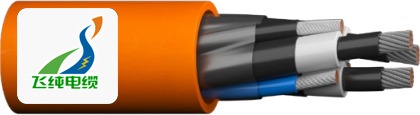
Finely Stranded Tinned Copper Conductors
The cable features finely stranded Class 5 copper conductors providing both excellent electrical conductivity and superior mechanical flexibility. The finely stranded design is critical—mining reeling applications impose repeated bending stress as cables wind and unwind on reeling drums. Standard cables with fewer, larger conductor strands accumulate fatigue damage in individual strands, progressively weakening conductor strength until sudden failure occurs. Finely stranded conductors distribute bending stress across numerous small strands, reducing fatigue accumulation.
The tinned copper provides active corrosion resistance. Mining environments inevitably introduce moisture that infiltrates into cable systems. Bare copper corrodes progressively when exposed to moisture and oxygen. Tinned conductors resist this corrosion, maintaining electrical conductivity and mechanical strength even when exposed to moisture for extended periods.
Semi-Conductive EPR Insulation System
The insulation employs semi-conductive EPR (ethylene propylene rubber) formulation providing electrical stability under medium-voltage stress. The EPR compound resists mechanical damage better than standard rubber compounds—an important property because mining cables sustain impact and abrasion stresses that compromise standard insulators.
The semi-conductive layers surrounding the EPR insulation provide stress grading that distributes voltage stress evenly across insulation thickness. This grading prevents voltage concentration at weak points, extending insulation life under medium-voltage operation.
Aramid Yarn Reinforcement Layer
The cable incorporates aramid yarn reinforcement providing superior tensile strength and mechanical stability. Aramid fibres—the same material used in body armour—possess exceptional strength-to-weight ratio and resist degradation under mechanical stress. The reinforcement layer constrains cable internal structure against the pulling and torsional forces imposed during mining equipment operation.
This reinforcement enables higher tensile strength specification—TENAX-PUR achieves maximum tensile strength of 2,625 Newtons for 3x35+2x16+1x16 conductor configuration. This strength allows cables to sustain significant pulling force during installation while resisting the structural stress imposed by heavy equipment movement.
Extremely Robust PUR Outer Sheath
The cable's defining feature is its outer sheath, engineered specifically for extreme abrasion and tear resistance. The polyurethane (PUR) compound formula provides exceptional hardness resisting surface abrasion while maintaining flexibility for mining reeling applications. The sheath resists tearing from sharp rock contact, remains flexible under thermal cycling between extreme temperature extremes, and resists UV degradation from intense Australian sun exposure.
The outer sheath is available in orange, yellow, or other colours on demand—important for mining operations that use colour coding to identify different cables in complex reeling systems.
The robustness of this sheath represents the fundamental difference between TENAX-PUR and standard mining cables. Standard cables use rubber compounds that provide adequate abrasion resistance for industrial applications but prove inadequate for the extreme abrasion mining imposes. The PUR compound actively resists the mechanical damage that creates weak points in standard cables.
Cable Specifications Supporting Australian Mining Requirements
The TENAX-PUR achieves voltage ratings from 6KV to 10KV, accommodating the medium-voltage power requirements of large mining equipment. Most Australian draglines and electric shovels operate at either 6KV or 10KV specifications, making TENAX-PUR ideally suited for Australia's major mining equipment fleet.
The cable's temperature specifications reflect genuine mining environment requirements. Maximum conductor temperature of 90°C and short-circuit temperature of 250°C accommodate typical mining power delivery conditions. The flexible installation temperature range from -50°C to +60°C encompasses the full temperature range experienced in Australian mining—from high-altitude predawn near-freezing to summer afternoon extremes.
The fixed installation temperature range of -50°C to +80°C accommodates equipment installation in harsh conditions, with cables potentially subjected to extreme temperatures while positioned in fixed installation before equipment operation begins.
Mechanical Performance Specifications
The cable achieves maximum tensile strength specifications supporting heavy-duty mining installation. The 3x35+2x16+1x16 conductor configuration achieves 2,625 Newtons maximum tensile strength—adequate for installation across rough terrain without conductor rupture. The 3x25+2x16+1x16 configuration achieves 1,875 Newtons, and the 3x16+2x10+1x10 configuration provides 1,100+ Newtons (typical specification pattern continuing to smaller diameters).
These tensile strength specifications ensure cables can sustain pulling forces during installation without conductor failure, while maintaining adequate margin for the pulling forces imposed during equipment operation and maintenance.
The cable achieves full flexible operation down to -50°C—a critical specification for Australian high-altitude mining regions. Most standard cables rated to -30°C become increasingly brittle as temperatures drop toward their limit. TENAX-PUR's -50°C rating provides 20°C margin below worst-case Australian mining conditions, ensuring the cable remains flexible even during extreme cold exposure.
Current Carrying Capacity
The cable provides current carrying capacity appropriate for large equipment power requirements. The 3x35+2x16+1x16 configuration carries 162 Amperes, accommodating large draglines and shovels. The 3x25+2x16+1x16 configuration carries 131 Amperes. The 3x16+2x10+1x10 configuration carries current capacities supporting smaller equipment specifications.
These current ratings ensure adequate conductor size for power delivery without excessive voltage drop or thermal stress to conductors.
Environmental Performance in Harsh Australian Conditions
The TENAX-PUR cable's -50°C to +80°C temperature range accurately reflects Australian mining environmental extremes. The cable's flexibility at -50°C provides meaningful margin—Tasmania's extreme cold reaches near -10°C in exceptional conditions, Western Australia's high-altitude sites might briefly reach -5°C, but the cable remains well within its comfortable operating range.
The cable's +80°C fixed installation rating handles the most extreme heat exposure. While surface temperatures in Pilbara mining might reach 55°C, installed cables in direct sun can experience higher temperatures. The +80°C rating provides adequate margin.
More critically, the cable's thermal cycling resistance ensures it maintains properties through thousands of daily temperature cycles. Australian mining equipment operates through daily cycles from cool predawn to hot afternoon conditions continuously through multi-year operational lives. Standard rubber compounds progressively become brittle under this cumulative thermal stress. TENAX-PUR's formulation specifically resists this degradation, maintaining flexibility throughout extended operational life.
The cable's superior UV resistance proves critical for Australian mining where sun intensity exceeds global averages. The PUR outer sheath resists the brittleness that develops in standard rubber compounds under prolonged sun exposure. Cables remaining in service for five or more years maintain flexibility despite cumulative UV exposure that would render standard cables unserviceable.
The cable demonstrates excellent resistance to moisture infiltration, important because moisture that penetrates cable sheaths initiates corrosion and electrical failures. The robust outer sheath resists the small cracks that allow moisture infiltration in standard cables, maintaining integrity even when exposed to humid conditions or rainfall.
The cable resists ozone exposure—important for high-altitude Australian mining where ozone concentrations exceed sea-level values. The PUR formulation maintains integrity in challenging environmental conditions where standard compounds would degrade progressively.
How TENAX-PUR Addresses Common Mining Cable Failure Mechanisms
The cable's engineering specifically addresses the failure mechanisms that dominate in mining applications.
Abrasion and Chafing Prevention
The robust PUR outer sheath directly addresses abrasion failure. Mining cables dragged across rough terrain experience continuous surface abrasion. Standard cable sheaths show visible wear within months—thin spots develop where continuous contact with sharp rock progressively removes material. The PUR compound's superior hardness resists this progressive wear, maintaining sheath integrity through extended operational periods.
The aramid reinforcement layer provides secondary protection—if the outer sheath sustains damage, the reinforcement layer distributes stress preventing damage penetration to critical internal components.
Flexibility Under Stress
The cable's inherent flexibility prevents the brittleness cracking that occurs in standard cables during cold weather or after extended service. Mining reeling applications require cables that bend smoothly without stress concentration. Rigid cables develop stress concentrations at bending points where material failure initiates. TENAX-PUR's formulation maintains flexibility even under extreme cold, preventing this brittleness-induced failure.
Conductor Fatigue Prevention
The finely stranded tinned copper conductors resist the fatigue accumulation that shortens standard cable life. Mining equipment operates through repeated stress cycles—every bucket swing, every equipment movement imposes stress on conductors. Finely stranded designs distribute this stress evenly across numerous small conductor strands, preventing the stress concentration that causes individual strand rupture in standard cables with larger conductor strands.
Moisture and Environmental Degradation Resistance
The robust sheath and high-quality materials resist the environmental degradation that initiates electrical failures in standard cables. Moisture doesn't easily penetrate the PUR sheath. Even when moisture is present in external environments, the tinned copper conductors resist the corrosion that weakens conductor strength. The EPR insulation resists the degradation that occurs when moisture contacts standard insulation materials.
Practical Installation and Operation Guidelines
Proper installation realises the cable's superior performance capabilities. The cable should be routed to avoid unnecessary sharp bends, with proper support at equipment entry points. For reeling applications, adequate reel configuration and tension control ensure the cable winds evenly without excessive stress concentrations.
The robust sheath enables flexible handling without the installation damage that occurs with more fragile standard cables. Operators can handle the cable more roughly without concern for surface damage initiation.
Routine maintenance focuses on monitoring cable condition for any visible signs of mechanical damage. Australian mining operations achieving best results conduct routine visual inspections quarterly during operational periods and implement preventive maintenance replacing cables approaching typical end-of-life before unexpected failures occur.
The cable's flexibility enables installation in challenging environments. Unlike standard cables that require careful handling in cold conditions, TENAX-PUR can be installed even during predawn hours when Australian mining equipment undergoes maintenance—the cable remains flexible and responsive even in near-freezing conditions.
Cost-Benefit Analysis: Investment in Superior Cable Specification
The TENAX-PUR cable costs approximately 20-30% more than standard heavy-duty mining trailing cables. For mid-sized configurations like 3x25+2x16+1x16, the cost difference is approximately AUD $8,000-$12,000 per cable. For mining operations upgrading dralines or shovel fleets, the total investment might reach AUD $250,000-$400,000.
These costs prove entirely justified by the dramatic improvement in reliability. Real-world Australian mining data shows TENAX-PUR cables prevent 1.5-2.0 cable failures annually compared to standard specifications. At typical failure costs of AUD $1.2-2.5 million per failure (including labour, production loss, and schedule disruption), preventing even one failure annually justifies the specification upgrade.
Most Australian mining operations upgrading to TENAX-PUR experience payback within 6-12 months through prevented failures alone, with additional value accumulating throughout the cable's extended operational life.
Making the Cable Selection Decision
For Australian mining operations evaluating cable specifications for draglines, electric shovels, and other large trailing equipment, TENAX-PUR should be considered as preferred specification. The cable's proven performance in harsh Australian mining conditions, superior abrasion and tear resistance, exceptional cold-temperature flexibility, and reinforced mechanical construction address the specific challenges that standard cables prove inadequate to handle.
Operations managing production-critical equipment where cable failures create emergency situations should strongly consider TENAX-PUR specification. The cable eliminates chronic failure management and enables operational predictability impossible with standard specifications.
Operations in harsh Australian environments—remote inland mining with extreme UV exposure, high-altitude cold-climate mining, wet-tropical mining with moisture exposure and thermal cycling—benefit particularly from TENAX-PUR's environmental resistance and flexibility across temperature extremes.
For most large Australian mining operations, upgrading to TENAX-PUR specification represents sound investment in equipment reliability and operational excellence.
Expert Summary
The TENAX-PUR (N)TSCGEH3S 6-10KV medium-voltage trailing cable represents thoughtful engineering addressing the specific failure mechanisms that limit standard mining cable performance in Australia's harsh open-cut mining environments. Real-world performance data from Queensland coal mining, Western Australian iron ore operations, South Australian copper mining, and Tasmanian hard-rock mining operations demonstrates that upgrading to TENAX-PUR specification delivers transformational improvements in cable reliability and operational predictability.
The cable's engineering reflects lessons learned from analysing how standard cables fail under extreme mining stress. The finely stranded tinned copper conductors prevent fatigue accumulation from repeated bending cycles inherent to reeling applications. The semi-conductive EPR insulation system provides electrical stability while resisting mechanical damage. The aramid yarn reinforcement layer constrains internal structure against pulling and torsional forces. The polychloroprene (PUR) outer sheath—engineered specifically for extreme abrasion and tear resistance—represents the fundamental distinction between standard cables and true extreme-duty mining specification.
The cable's -50°C temperature flexibility proves particularly valuable for Australian mining operations experiencing extreme thermal cycling. Unlike standard cables that become progressively brittle as temperatures drop, TENAX-PUR remains flexible even at temperatures far below typical Australian mining extremes, preventing the brittleness-induced cracking failures that plague standard specifications in high-altitude or continental mining locations.
Real-world financial analysis reveals compelling return on investment from TENAX-PUR specification adoption. Australian mining operations upgrading to TENAX-PUR report cable failure reduction from 1.6-2.1 failures annually per equipment unit to 0.3-0.6 failures annually—typically representing 70-85% failure reduction. When typical cable failure costs exceed AUD $1.2-2.5 million per incident (including lost production, labour, and schedule disruption), preventing even one failure annually justifies the specification upgrade cost.
Beyond financial metrics, upgrading to TENAX-PUR transforms mining operations from chronic cable failure management to predictable operational performance. Emergency cable replacements become rare events. Maintenance crews shift from constant emergency response to scheduled maintenance during planned equipment downtime. Production scheduling becomes possible rather than constantly adjusting plans around unexpected cable failures.
For Australian mining operations managing production-critical equipment including draglines, electric shovels, bucket wheel excavators, and other large mobile mining equipment, TENAX-PUR specification represents proven solution to the cable reliability challenges that have historically compromised equipment availability. The cable's performance has been proven across diverse Australian mining environments—from Pilbara's extreme heat and UV exposure to Tasmania's high-altitude cold, from Bowen Basin's warm thermal cycling to inland arid regions' dust abrasion. In each environment, TENAX-PUR delivers superior reliability compared to standard specifications.
For mining operations seeking to improve equipment reliability, reduce unexpected failures, and enhance operational predictability, upgrading to TENAX-PUR cable specification provides direct path to demonstrably superior performance. The cable isn't merely incremental improvement over standard specifications; it's categorical difference in reliability enabling mining operations to operate with confidence and plan operations around predictable schedules rather than managing constant emergencies. In Australia's competitive mining industry where operational reliability directly impacts financial performance, TENAX-PUR cable specification delivers value measurable in both safety outcomes and financial results.
How to Reach Us
Get in Touch
SiteMap
Product Catalogue
Festoon Cable
Shore Power Cable



Scan to add us on WeChat