Why the SAS (N)TSCGEWOEU 6/35 KV Mining Reeling and Trailing Cable is Ideal for Shovels and Draglines in Extreme Environments
Discover why the SAS (N)TSCGEWOEU 6/35 KV Mining Reeling and Trailing Cable delivers reliable power for shovels and draglines in extreme cold, tough environments. terrains.
hongjing.Wang@Feichun
10/20/202510 min read
Introduction: Powering the Giants of Mining Operations
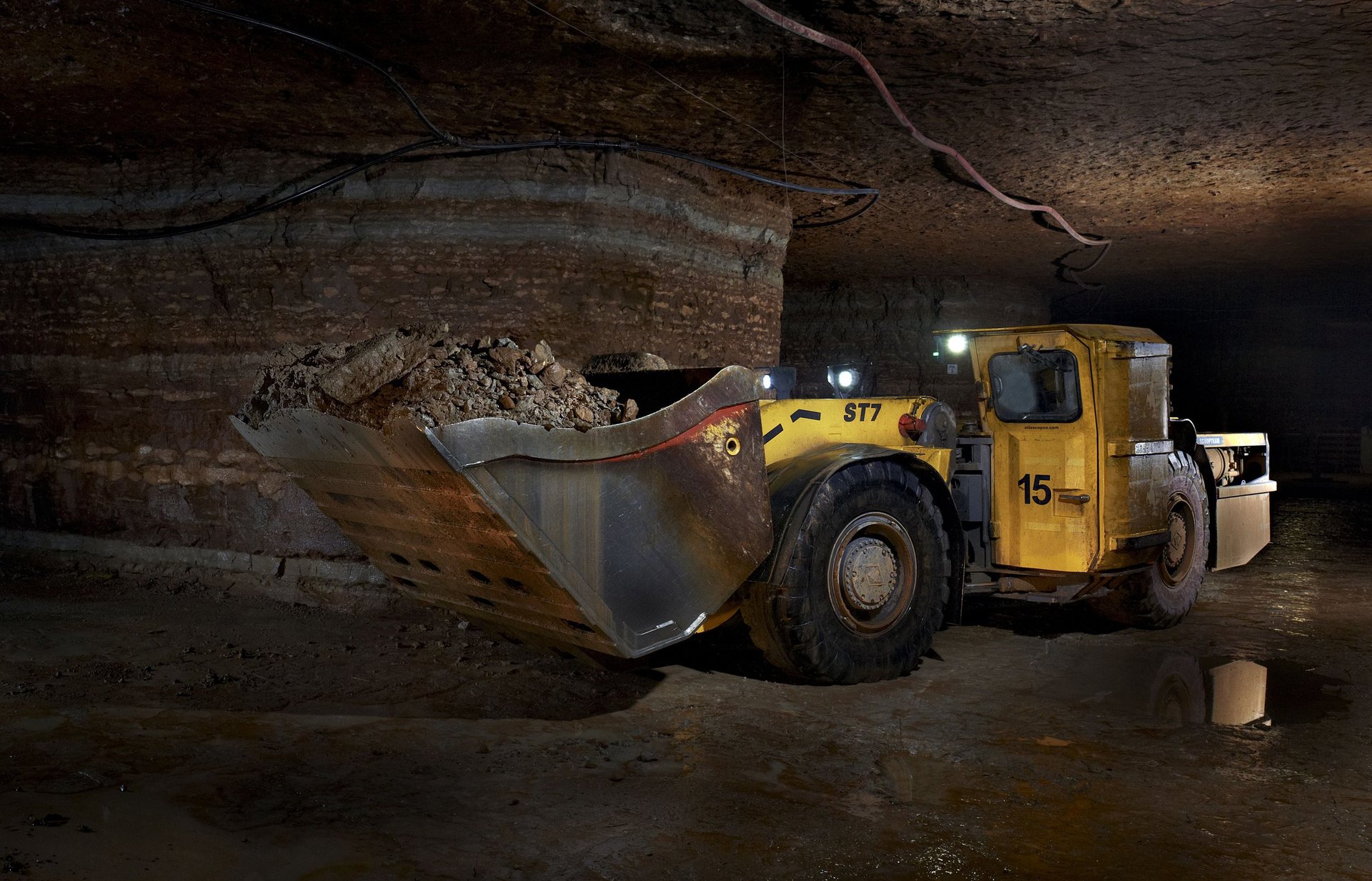
Modern mining operations depend on massive machinery to extract valuable resources efficiently from the earth. Electric shovels and draglines represent the backbone of large-scale mining, capable of moving hundreds of tons of material per cycle. These colossal machines require uninterrupted, reliable electrical power to maintain productivity and prevent costly operational delays.
The challenge lies in delivering stable power to equipment that constantly moves, often across harsh terrain and in extreme environmental conditions. This is where specialized mining reeling and trailing cables become essential infrastructure components. Among the most demanding applications, power supply cables for shovels and draglines must withstand mechanical stress, extreme temperatures, chemical exposure, and continuous flexing while maintaining electrical integrity.
The SAS (N)TSCGEWOEU 6/35 KV cable represents a purpose-engineered solution designed specifically for these rigorous demands. This heavy-duty trailing cable for mines combines advanced materials technology with robust construction to deliver dependable performance where conventional cables would fail. Understanding its design, capabilities, and application advantages is crucial for mining operators seeking to maximize equipment uptime and operational safety.
What is SAS (N)TSCGEWOEU 6/35 KV Cable?
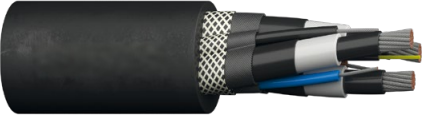
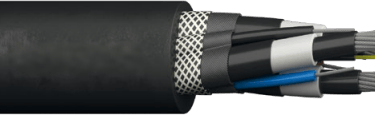
The model designation SAS (N)TSCGEWOEU provides important technical information about the cable's construction and intended use. The "SAS" prefix indicates a specialized design incorporating an aramid central element for enhanced mechanical strength. The "(N)" designation refers to the protective earth conductor configuration, while "TSCGEWOEU" describes the cable's construction layers: tinned copper conductors (T), semi-conductive screening (SC), EPR insulation with rubber compounds (GE), protective sheathing (WO), and outer covering (EU).
This flexible mining cable operates within a voltage range of 6 kV to 35 kV, making it suitable for medium to high voltage power distribution systems common in large mining equipment. The voltage class covers multiple configurations including 6/10 kV, 8.7/15 kV, 12/20 kV, 14/25 kV, 18/30 kV, and 20/35 kV, providing flexibility for different power system requirements.
Specifically engineered for reeling and trailing applications, this cable accommodates the repetitive movement and mechanical stress inherent in mobile mining operations. The construction prioritizes both electrical performance and mechanical durability, recognizing that mining reeling and trailing cables must function as both power conductors and mechanical components capable of withstanding harsh treatment.
Key Features and Technical Highlights
The SAS (N)TSCGEWOEU 6/35 KV cable incorporates several critical design features that distinguish it from standard power cables:
Superior Flexibility and Movement Tolerance: The cable utilizes finely stranded class 5 tinned copper conductors that provide exceptional flexibility while maintaining excellent electrical conductivity. This construction allows for smooth reeling and trailing operations without conductor fatigue. The cable can handle torsional stress up to ±100°/m, essential for applications where cable twisting occurs during equipment operation.
Exceptional Cold Temperature Performance: One of the most remarkable characteristics of this cold-resistant mining cable is its operational capability down to -50°C ambient temperature. This extreme cold tolerance makes it uniquely suitable for mining operations in arctic and subarctic regions where conventional cables become brittle and prone to failure. The special rubber compounds maintain flexibility and mechanical integrity even when exposed to prolonged freezing conditions.
Abrasion and Tear Resistance: The outer sheath utilizes specialized EPR rubber compounds designed for extreme mechanical durability. This heavy-duty trailing cable for mines resists damage from rocks, debris, and continuous dragging across rough surfaces. The robust sheathing prevents penetration from sharp objects and withstands the punishing conditions of trailing operations behind mobile equipment.
Chemical and Environmental Resistance: Mining environments expose cables to various chemical hazards including oils, fuels, acids, and bases. The cable construction provides excellent resistance to these substances, along with protection against UV radiation and ozone degradation. This comprehensive environmental resistance extends service life significantly compared to cables designed for less demanding applications.
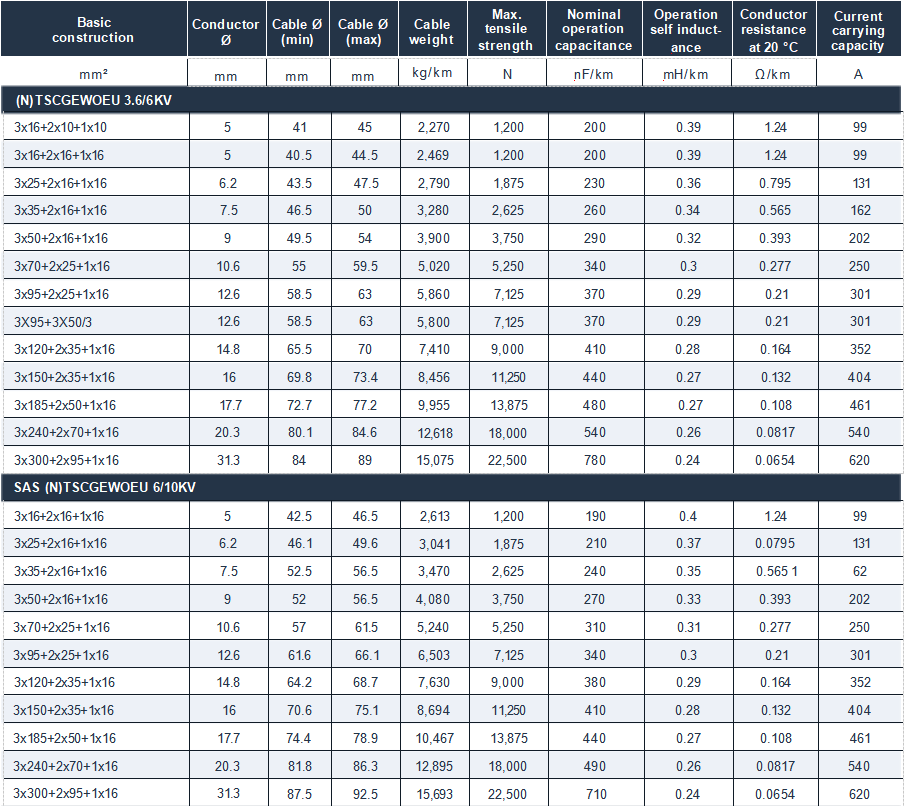
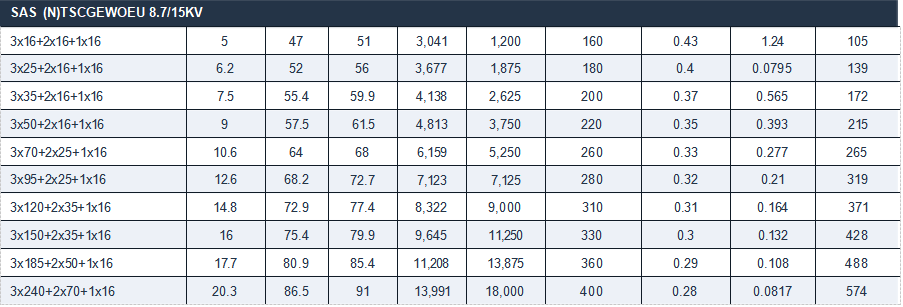
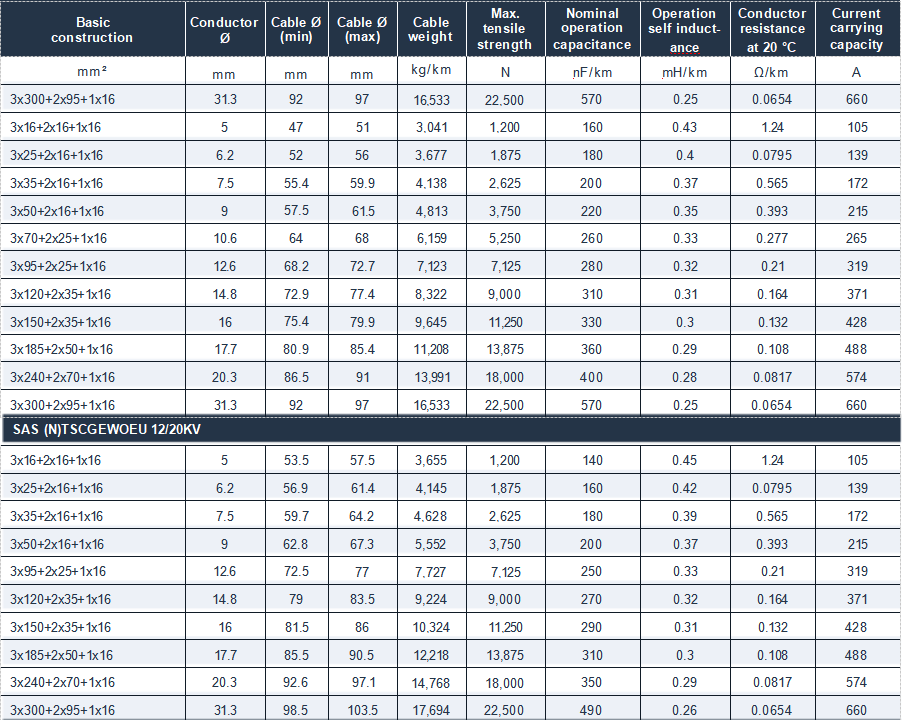
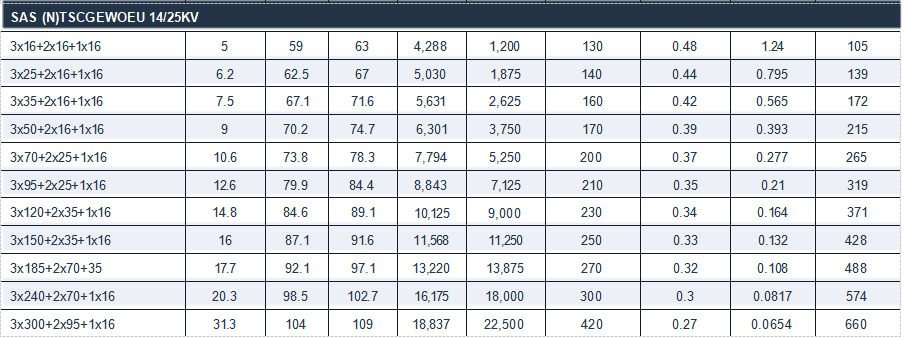
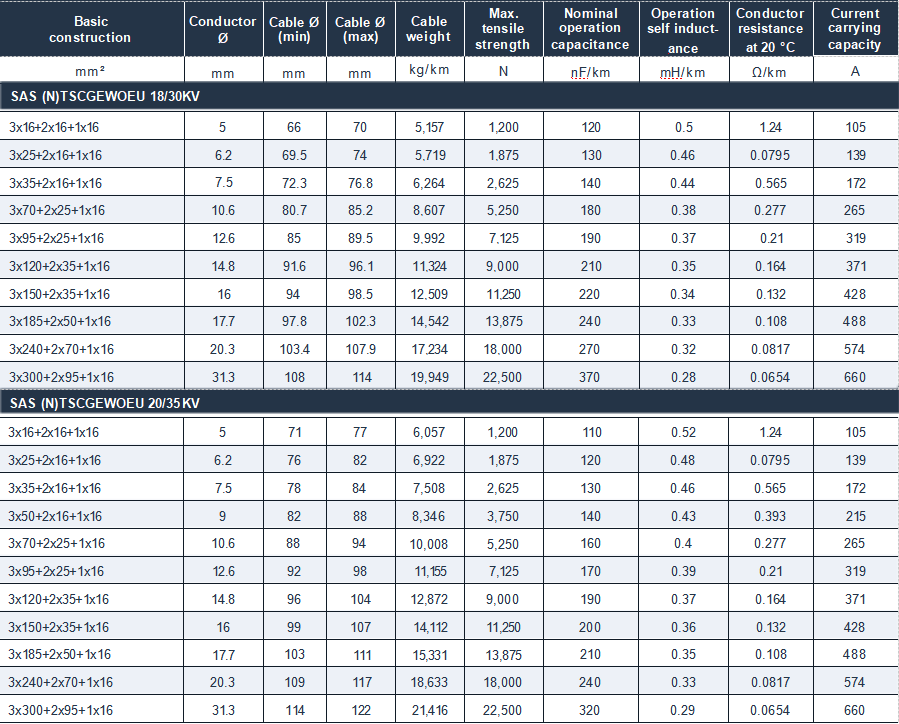
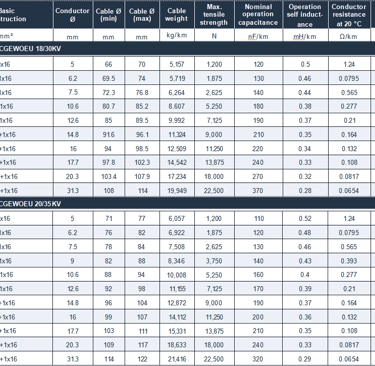
Optimized Current Capacity: The finely stranded copper conductors maximize current-carrying capacity while maintaining flexibility. Cross-sectional areas range from 16 mm² to 300 mm² depending on configuration, with current ratings from 99A to 660A. This range accommodates various power requirements for different sizes of mining equipment.
Mechanical Strength Design: The cable incorporates an aramid central element that provides tremendous tensile strength while remaining flexible. Maximum tensile strength varies by configuration but can reach up to 22,500 N for larger conductor sizes. This structural reinforcement prevents damage during dragging, lifting, or sudden tension events common in mining operations.
Advantages in Mining Environments
The unique construction of this flexible mining cable provides specific operational advantages in challenging mining environments:
Continuous Power Delivery in Mobile Applications: Shovels and draglines require uninterrupted power during operation. The cable's design ensures reliable electrical connection even during continuous movement, preventing power interruptions that would halt production. The flexible construction accommodates the complex movement patterns of mining equipment without compromising conductor integrity.
Extended Service Life in Harsh Conditions: By withstanding extreme temperatures, mechanical abuse, and chemical exposure, the cable delivers significantly longer service life compared to conventional alternatives. This reduces replacement frequency, lowering both material costs and the operational disruptions associated with cable changes.
Reduced Maintenance Requirements: The robust construction minimizes cable damage incidents, reducing maintenance demands on mining operations. Fewer cable failures mean fewer emergency repairs and less unplanned downtime. This reliability is particularly valuable in remote mining locations where replacement cables and repair expertise may not be immediately available.
Safety Enhancement: The flame-retardant design and high-grade insulation materials contribute to safer mining operations. In the event of short circuits or overload conditions, the cable's construction helps contain faults and prevent fire propagation. The reliable grounding system provided by the protective earth conductors enhances personnel safety.
Versatility Across Mining Operations: Whether deployed in open-pit operations where cables face sun exposure and extreme temperature variations, or in underground applications where confined spaces and moisture present challenges, this power supply cable for shovels and draglines adapts to diverse mining environments effectively.
Application Scenarios
The SAS (N)TSCGEWOEU 6/35 KV cable excels in several specific mining applications:
Electric Rope Shovels: These massive excavating machines are the workhorses of many open-pit mining operations. The trailing cable must follow the shovel as it moves around the pit, repeatedly coiling and uncoiling as the machine repositions. The cable handles this continuous flexing while delivering the substantial power required for digging operations, typically in the range of several megawatts.
Dragline Excavators: Draglines represent some of the largest mobile land machines in existence, with working weights exceeding thousands of tons. These giants use a suspended bucket system to remove overburden in mining operations. The mining reeling and trailing cable supplies power through a complex cable management system that must accommodate the dragline's rotation and movement while preventing cable damage.
Blast Hole Drills: Large rotary drills used for creating blast holes require mobile power supply during drilling operations. The cable trails behind the drill as it moves between hole locations, facing abrasion from dragging across rocky surfaces and exposure to drilling dust and debris.
Mobile Crushers and Conveyors: Some mining operations utilize mobile crushing and conveying equipment that requires flexible power connections. The cable accommodates the equipment repositioning while maintaining power continuity for continuous processing operations.
Arctic and Subarctic Mining Operations: In regions such as northern Canada, Russia, Scandinavia, and Alaska, where winter temperatures regularly drop below -40°C, this cold-resistant mining cable provides reliable operation when conventional cables would fail. Coal mining in Siberia, iron ore operations in northern Sweden and Canada, and copper mining in arctic Alaska all benefit from cables designed for extreme cold.
High-Altitude Mining: Mountain mining operations face both cold temperatures and intense UV radiation. The cable's combined resistance to cold and UV degradation makes it suitable for high-altitude copper and gold mining operations in regions like the Andes or Himalayas.
Comparison with Other Mining Cables
Understanding how the SAS (N)TSCGEWOEU 6/35 KV cable compares to alternative designs helps clarify its specific advantages:
SAS vs. Standard TSCGEWOEU Models: The primary distinction lies in the aramid central element present in SAS models. This reinforcement provides superior tensile strength and prevents cable elongation during trailing operations. Standard models without this central element are more suitable for semi-flexible installations with less mechanical stress but are inadequate for the demanding conditions faced by power supply cables for shovels and draglines.
Voltage Range Considerations: While similar cables are available in lower voltage classes (1.8/3 kV, 3.6/6 kV), the 6/35 kV range provides optimal performance for large mining equipment. Lower voltage cables would require larger conductor sizes to carry equivalent power, resulting in reduced flexibility and increased weight. The medium voltage design balances power transmission efficiency with mechanical flexibility.
Cold Performance Comparison: Standard rubber-sheathed mining cables typically maintain flexibility down to -25°C to -30°C. The -50°C rating of this cold-resistant mining cable extends operational capability by 20-25°C, critical for arctic mining applications. This extended range prevents the brittleness and insulation cracking that would occur with conventional cables in extreme cold.
Sheath Material Advantages: The specialized EPR rubber compounds used in the outer sheath provide superior abrasion resistance compared to PVC or standard rubber formulations. While some alternatives use polyurethane (PUR) sheaths for abrasion resistance, rubber compounds offer better cold flexibility and tear resistance for heavy trailing applications.
Mechanical Strength Performance: The permanent tensile strength rating of 20 N/mm² for static conditions and 25 N/mm² for dynamic conditions exceeds many conventional mining cables. This higher strength prevents conductor damage and cable elongation during dragging or when subjected to unexpected tension loads.
Compliance and Safety Standards
The SAS (N)TSCGEWOEU 6/35 KV cable adheres to comprehensive international standards ensuring safe, reliable operation:
European Standards Compliance: Manufacturing follows DIN VDE 0250-813 general requirements for power cables and DIN EN 50525-2-21 for electrical parameters. These standards specify construction requirements, testing procedures, and performance criteria for mining cables. Compliance with DIN VDE 0207-21 ensures appropriate compound formulations, while DIN VDE 0298-3 addresses mechanical parameters critical for flexible applications.
Fire Safety Standards: The cable meets DIN EN 60332-1-2 / IEC 60332-1-2 fire performance requirements, ensuring flame retardancy in accordance with international safety standards. This certification verifies that the cable will not propagate flame along its length, critical for preventing fire spread in mining environments where escape routes may be limited.
Chemical Resistance Testing: Conformance to DIN EN 60811-404 / IEC 60811-404 ensures the cable withstands exposure to oils, acids, bases, and other chemicals common in mining operations. This testing validates long-term performance in chemically aggressive environments.
International Certifications: GOST-R/-K/-B fire certificates for Russian Federation markets demonstrate compliance with additional fire safety requirements for mining applications in major mineral-producing regions.
Electrical Safety Parameters: The cable's maximum conductor temperature of 90°C during normal operation and 250°C during short circuit conditions provides appropriate safety margins. Insulation testing voltages (11 kV to 50 kV depending on voltage class) verify electrical integrity under stress conditions.
Environmental Operating Parameters: Specified ambient temperature ranges for fixed installation (-40°C to +80°C) and flexible operation (-50°C to +60°C) define safe operating boundaries. The cable maintains performance across these wide temperature ranges, ensuring reliability in diverse mining climates.
Common Cable Issues and Solutions
Mining operations frequently encounter specific cable challenges. Understanding how the SAS (N)TSCGEWOEU 6/35 KV cable addresses these issues provides practical insight into its value:
Q: Why do trailing cables fail prematurely in cold weather mining operations?
A: Standard cables use rubber compounds that lose flexibility below -30°C, leading to insulation cracking and conductor damage during movement. The specialized cold-resistant compounds in this flexible mining cable maintain pliability down to -50°C, preventing cold-induced failure. The cable's construction also prevents moisture ingress that would freeze and damage internal layers.
Q: How can we reduce cable damage from dragging across rocky terrain?
A: The reinforced outer sheath utilizes high-grade rubber compounds with exceptional abrasion resistance and tear strength. Unlike softer materials that quickly wear through, this construction withstands continuous dragging across aggressive surfaces. The sheath thickness and compound formulation balance flexibility with protection, reducing penetration damage and extending cable life.
Q: What causes power interruptions in mobile mining equipment cables?
A: Repeated flexing can cause conductor fatigue and eventual breakage in cables not designed for continuous movement. The SAS (N)TSCGEWOEU 6/35 KV cable uses finely stranded class 5 conductors that resist fatigue through many thousands of flex cycles. The aramid central element prevents conductor compression and maintains spacing between cores during bending and twisting movements.
Q: Why do some cables fail when exposed to hydraulic oil or fuel spills?
A: Conventional cable sheaths may swell or degrade when exposed to petroleum products. The specialized rubber compounds used in this heavy-duty trailing cable for mines resist oil, fuel, and other chemicals commonly encountered in mining equipment operations. This chemical resistance prevents sheath degradation that would expose inner cable layers to damage.
Q: How can we prevent cable damage during reeling operations?
A: Proper cable selection is critical. The mining reeling and trailing cable design incorporates appropriate bending radius specifications (6 x D for fixed installation, 10 x D for flexible operation, 20 x D minimum distance for S-type directional changes) that prevent excessive stress during reeling. The cable's construction maintains integrity through repeated coiling and uncoiling cycles that would damage stiffer designs.
Q: What voltage drop should we expect in long trailing cable runs?
A: Conductor resistance values provided in technical specifications (ranging from 1.24 Ω/km for 16 mm² conductors to 0.0654 Ω/km for 300 mm² conductors) enable accurate voltage drop calculations. Selecting appropriate conductor sizes based on load current and cable length ensures voltage remains within acceptable limits. The high-quality copper conductors minimize resistive losses compared to cables using inferior conductor materials.
Conclusion: The Ultimate Mining Cable for Harsh Conditions
The SAS (N)TSCGEWOEU 6/35 KV cable represents a comprehensive engineering solution addressing the unique challenges of powering mobile mining equipment in extreme environments. Its combination of exceptional cold tolerance, mechanical durability, and electrical reliability makes it the optimal choice for power supply cables for shovels and draglines operating under demanding conditions.
The cable's proven performance in arctic mining operations, resistance to mechanical damage from trailing applications, and ability to maintain electrical integrity through thousands of movement cycles translate directly to operational benefits: reduced downtime, lower maintenance costs, enhanced safety, and improved overall equipment effectiveness.
For mining contractors operating in cold regions, equipment manufacturers specifying power supply components, and mine operators seeking to improve reliability of mobile equipment power systems, this cold-resistant mining cable delivers measurable value. The initial investment in appropriately specified cable technology generates returns through extended service life, reduced emergency repairs, and minimized production interruptions.
When selecting cables for critical mining applications, consider not just the initial cost but the total cost of ownership including installation, maintenance, downtime, and replacement expenses. The SAS (N)TSCGEWOEU 6/35 KV cable optimizes this equation by providing exceptional durability and reliability in the environments where mining actually occurs—cold, abrasive, chemically aggressive, and mechanically demanding.
Mining operations represent substantial capital investments requiring maximum uptime to achieve financial targets. The power supply infrastructure supporting mobile equipment directly impacts productivity and safety. Choosing cables engineered specifically for mining applications rather than adapting general-purpose cables ensures this critical infrastructure component performs reliably under real-world conditions.
For operations planning equipment upgrades, expanding into challenging geographic regions, or addressing recurring cable failure issues, exploring customized mining power system solutions based on proven cable designs delivers both immediate and long-term operational advantages.
How to Reach Us
Get in Touch
SiteMap
Product Catalogue
Festoon Cable
Shore Power Cable


Scan to add us on WeChat