
Why Type 210 Cable Is Ideal for Mining Drills in Australia: The Complete 1.1kV Guide
Discover why Type 210 1.1kV mining cables are essential for handheld drills and boring machines in Australian underground mining operations. Learn features, standards, and applications.
hongjing.Wang@Feichun
4/30/20266 min read
Introduction
Mining operations across Australia rely heavily on specialised electrical equipment, and when it comes to handheld drilling and boring machines, cable selection can make the difference between safe operations and costly downtime. The Type 210 cable represents a critical component in portable mining tool setups, engineered specifically for the demanding conditions found in Australian underground mines.
Whether you're operating in Queensland's coal mines or metalliferous operations across the country, understanding your cable specifications isn't just best practice—it's essential for worker safety and equipment longevity. This guide explores why Type 210 cables have become the go-to choice for handheld mining drills across Australia.
What Is Type 210 Cable?
Type 210 is a specialised low-voltage mining cable rated at 1.1/1.1kV, designed and manufactured to comply with AS/NZS 1802 standards—the Australian and New Zealand standard for reeling and trailing cables in mining applications. Unlike heavier-duty cables designed for stationary or mobile equipment, Type 210 prioritises flexibility and operator comfort without compromising on safety or durability.
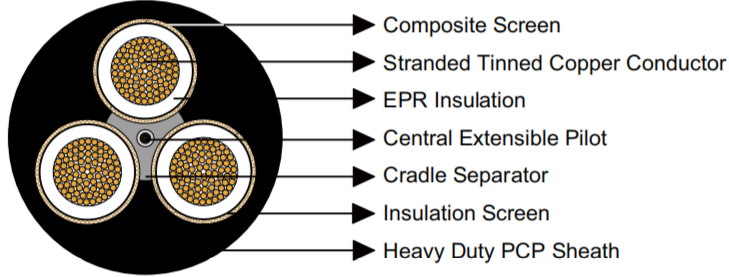
The cable construction incorporates flexible stranded tinned annealed copper conductors, making it ideal for the repetitive flexing and movement inherent in handheld drilling operations. This isn't coincidental design—every element of Type 210 has been engineered with the realities of Australian mining work in mind.
Key Features That Matter for Handheld Mining Tools
Exceptional Flexibility for Operator Comfort
One of the standout characteristics of Type 210 cable is its flexibility. Operators working with handheld boring machines and drills often need to manoeuvre equipment in confined spaces, navigate around mine infrastructure, and respond to changing drilling conditions. The flexible stranded copper conductors allow the cable to bend and flex without becoming brittle or developing internal fractures that could compromise electrical safety.
Superior Abrasion and Oil Resistance
Australian mining environments are notoriously harsh. Cables are dragged across rough rock surfaces, exposed to mineral oils, hydraulic fluids, and the constant wear of portable equipment. The Type 210's heavy-duty PCP (polychloroprene) sheath, with optional CPE or CSP alternatives available, provides robust protection against these environmental stressors. This resistance directly translates to longer cable lifespan and reduced replacement costs.
Lightweight Design for Operator Safety
Fatigue is a genuine safety concern in mining operations. Handheld drilling equipment places demands on operators, and excessive cable weight adds unnecessary strain. Type 210 cable delivers the protection needed at a weight that doesn't compound operator fatigue. With a nominal weight of approximately 83-92 kg per 100 metres (depending on conductor size), it remains manageable for extended drilling operations without causing excessive strain or handling difficulties.
Integrated Central Extensible Pilot Core
The single central extensible pilot conductor serves multiple functions. It provides circuit integrity monitoring, allowing operators and supervisory systems to detect cable damage or faults before they become safety hazards. This pilot core is specifically engineered with restricted extensibility to maintain its monitoring function even under the repeated flexing and movement typical of handheld tool operations.
Semiconductive Insulation Screen
Type 210 incorporates a semiconductive elastomer insulation screen around each core. This design feature serves a critical safety function by ensuring uniform electrical stress distribution, reducing the risk of premature insulation degradation. For handheld tools operating in the fluctuating electrical conditions of mining sites, this protection is invaluable.
Type 210 Applications Across Australian Mining
Type 210 cables find their primary application in several key areas within Australian mining operations:
Handheld Boring Machines and Drills
The primary application remains portable boring equipment used in underground coal and metalliferous mines. Whether in Queensland's coal seams or South Australian hardrock operations, Type 210 provides the electrical connection for these critical tools.
Portable Drilling in Confined Spaces
Australian underground mining increasingly involves drilling in confined working areas. Type 210's flexibility and compact design make it ideal for these applications where larger, heavier cables would present practical and safety challenges.
Tunnelling and Development Work
As mining operations expand deeper and laterally, development work requires portable drilling equipment. Type 210 cables support this essential infrastructure development without the weight penalty of heavier-duty alternatives.
Exploration and Sample Drilling
Mining companies conducting exploration work benefit from Type 210's portability and ease of deployment. Moving drilling equipment between exploration sites becomes more practical with lighter, flexible cable options.
How Type 210 Compares to Other Mining Cable Options
Understanding where Type 210 fits within the broader cable ecosystem helps operators make informed choices. Type 209 cables, for instance, operate at similar voltages but are engineered for stationary or semi-mobile applications. Type 209 cables typically offer heavier-duty construction suitable for gate-end boxes and feeder applications, whereas Type 210 prioritises the flexibility and portability essential for handheld equipment.
The critical distinction lies in application specificity. Type 210 has been engineered from the ground up for handheld tools, while Type 209 serves broader general-purpose mining applications. Using the right cable for the right application isn't about finding the "toughest" option—it's about matching the cable's characteristics to the actual demands of your operation.
When Should You Choose Type 210 Cable?
Type 210 cable represents the optimal choice when several conditions align:
Low-Voltage Applications (1.1kV or Below)
If your handheld equipment operates at 1.1/1.1kV, Type 210 matches your electrical requirements precisely. Using undersized or oversized voltage-rated cables introduces unnecessary risk and cost.
High Mobility Requirements
Operations requiring frequent movement of drilling equipment between locations benefit from Type 210's lightweight, flexible design. The ease of deployment and reduced operator fatigue contribute to both safety and productivity.
Operator-Handled Equipment
Any application where a single operator or small team must handle and manoeuvre drilling equipment demands the weight and flexibility advantages Type 210 provides.
Regulatory Compliance in Australian Mining
Australian mining regulations under AS/NZS 1802 specifically recognise Type 210 for these applications. Specifying Type 210 for appropriate handheld mining tools demonstrates commitment to regulatory compliance and best-practice safety standards.
Specifications and Construction Details
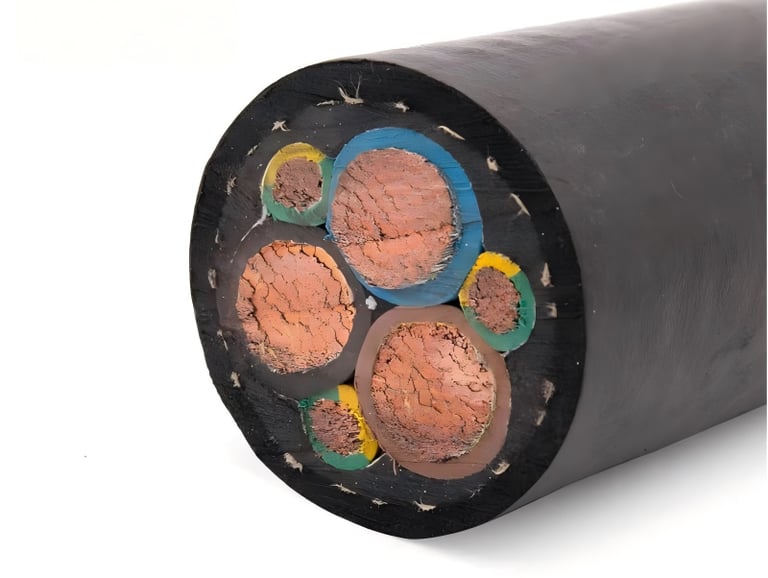
Type 210 cables feature flexible stranded tinned annealed copper conductors, typically supplied in three-core configurations for standard drilling equipment. The insulation comprises EPR (ethylene propylene rubber), providing thermal stability and flexibility. The composite screen combines tinned annealed copper braiding interwoven with polyester yarn, delivering both electrical safety and mechanical protection.
Available conductor sizes include 1.5mm² and 2.5mm², with nominal overall diameters ranging from approximately 23.7mm to 25.1mm respectively. The heavy-duty PCP sheath provides the primary environmental protection, though alternative sheath materials can be specified for particular applications or environments.
Installation and Safety Considerations for Australian Operations
Proper installation of Type 210 cables in mining environments requires attention to several factors. The cable's flexibility should never be misinterpreted as allowing unlimited bending—minimum bending radii should be observed during installation and operation. Australian mining standards recommend maintaining bending radii of approximately 4-6 times the cable's overall diameter during fixed bends and up to 10 times for permanent repeated reeling applications.
Cable routing should avoid sharp edges, excessive tension, and locations where the cable might be crushed or abraded. In underground mining environments, securing cables appropriately prevents them from becoming tripping hazards while ensuring they remain accessible for inspection and maintenance.
Maintenance and Longevity
Type 210 cables, like all mining electrical equipment, benefit from regular inspection and maintenance. Visual checks for external damage, careful handling during deployment, and proper storage on drums help maximise cable lifespan. In Australian mining environments where operational demands are intense, proactive cable management reduces unexpected failures and associated safety risks.
Regular inspection should focus on identifying abrasion damage, compression marks from improper handling, or signs of chemical degradation. Early identification of cable wear allows for planned replacement rather than emergency repairs that might compromise operational safety.
Sourcing Type 210 Cables in Australia
Mining companies and equipment operators across Australia can source Type 210 cables through established mining cable suppliers who maintain stocks specifically for Australian mining applications. Suppliers familiar with AS/NZS 1802 standards and Australian mining conditions understand the specific requirements these applications demand.
When sourcing, confirming compliance with relevant Australian standards, verifying construction specifications, and establishing relationships with suppliers who understand mining operations help ensure you receive cables appropriate for your specific applications.
Expert Summary
Type 210 cables represent a purpose-built solution for handheld mining drills and boring machines operating at 1.1kV in Australian underground mining environments. The cable's lightweight flexibility, combined with robust environmental protection and regulatory compliance with AS/NZS 1802 standards, makes it an essential component for portable mining equipment operations across Queensland, New South Wales, Western Australia, and other mining regions.
The cable's design reflects deep understanding of Australian mining challenges—the harsh underground environments, the demands of portable equipment, and the critical importance of operator safety. Rather than specifying oversized or inappropriate cables, matching Type 210's capabilities to handheld drilling applications delivers optimal safety, performance, and cost-effectiveness.
For mining operations seeking reliable electrical connections for handheld drilling equipment, Type 210 cables offer proven performance and regulatory compliance. Consulting with experienced mining cable suppliers regarding your specific application requirements ensures you select cables that meet your operational demands while adhering to Australian safety standards. Proper installation, regular maintenance, and proactive cable management further enhance the safety and longevity benefits Type 210 cables provide in demanding Australian mining operations.
Additional Resources: For detailed technical specifications, installation guidelines, or to discuss your specific mining cable requirements, contact established mining equipment suppliers in your region who specialise in AS/NZS 1802 compliant cables for Australian operations.
How to Reach Us
Get in Touch
SiteMap
Product Catalogue
Festoon Cable
Shore Power Cable




Scan to add us on WeChat