YMvK vs YMz1K: Key Differences in Fire Safety, Halogen-Free Design, and CPR Classes for Low-Voltage Cables
Learn the difference between YMvK and YMz1K fire-safe low-voltage cables, including halogen-free vs PVC design, CPR fire classes (Dca, Cca, B2ca), smoke and toxicity behaviour, and typical applications, so you can choose the right option in the YMvK vs YMz1K debate for your next electrical installation.
hongjing.Wang@Feichun
12/2/20259 min read
Introduction: YMvK and YMz1K Low-Voltage Cables
In the Netherlands and across Europe, YMvK and YMz1K cables represent two of the most widely deployed low-voltage power distribution solutions for fixed building installations. Both cable types serve fundamental roles in delivering electricity safely to residential, commercial, and industrial environments, yet they diverge significantly in their fire-safety characteristics, material composition, and regulatory compliance profiles.
The growing emphasis on fire safety in modern construction has elevated the importance of cable selection beyond traditional considerations of current-carrying capacity and mechanical durability. Today's electrical designers must evaluate how cables perform under fire conditions, particularly regarding smoke generation, toxic gas emission, and flame propagation. The Construction Products Regulation (CPR) has standardized these fire-performance requirements across the European Union, creating clear classifications that guide cable specification.
Understanding the difference between YMvK and YMz1K fire-safe low-voltage cables has become essential for engineers, contractors, and building owners who must balance safety obligations, regulatory compliance, and project economics. This comprehensive comparison examines the YMvK vs YMz1K debate through the lens of material science, fire behavior, CPR classification, and practical application guidance.

What Is YMvK Cable?
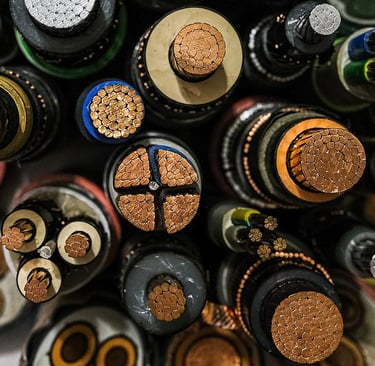
YMvK designates a copper-conductor low-voltage power cable with PVC (polyvinyl chloride) insulation on individual conductors and a PVC outer sheath. The nomenclature follows Dutch cable designation conventions: "Y" indicates a copper conductor, "M" denotes single-core assembly in a multicore construction, "v" refers to PVC insulation, and "K" signifies a copper conductor (Koper in Dutch).
These cables typically carry a voltage rating of 0.6/1 kV, making them suitable for distribution networks operating at standard low-voltage levels. The PVC insulation and sheath provide robust mechanical protection against abrasion, moisture ingress, and physical impact during installation and service life. This mechanical resilience, combined with cost-effectiveness, has made YMvK cables the default choice for countless fixed installations over several decades.
Standard YMvK cables generally achieve a CPR fire-performance class of Dca-s2,d2,a2, which represents adequate fire behavior for many conventional building applications. The "Dca" classification indicates limited flame propagation under the EN 50399 vertical cable ladder test, while "s2" denotes moderate smoke production, "d2" allows for some flaming droplets or particles, and "a2" indicates low acidity and conductivity of combustion gases.
Common applications include power distribution in residential dwellings, office buildings, retail spaces, and light industrial facilities where fire-safety regulations do not mandate enhanced smoke or toxicity performance. The cable's proven track record and widespread availability have established it as a reliable workhorse for general-purpose low-voltage installations.
What Is YMz1K Cable?
YMz1K represents the halogen-free evolution of the YMvK design philosophy. The critical difference lies in the "z1" designation, which indicates the use of halogen-free, low smoke zero halogen (LSZH) compounds for both conductor insulation and outer sheath. These specialized thermoplastic or thermosetting materials eliminate chlorine, fluorine, bromine, and other halogen elements entirely from the cable construction.
The absence of halogens fundamentally alters the cable's fire behavior. When exposed to flame or elevated temperatures, YMz1K cables produce dramatically less smoke compared to PVC-based alternatives. More importantly, the combustion products contain virtually no corrosive halogen acids (such as hydrochloric acid from PVC), which can damage electronic equipment, corrode structural elements, and pose severe health risks to building occupants during evacuation.
YMz1K cables are manufactured to achieve higher CPR classifications, commonly Cca-s1b,d1,a1 or even B2ca-s1a,d1,a1 depending on construction details and manufacturer specifications. The "Cca" or "B2ca" ratings indicate superior resistance to flame propagation, "s1" confirms minimal smoke production, "d1" means no flaming droplets, and "a1" certifies negligible acidity and conductivity of combustion gases.
The voltage rating and basic electrical characteristics remain comparable to YMvK at 0.6/1 kV, ensuring that YMz1K serves as a direct functional replacement in applications where enhanced fire safety justifies the incremental cost premium. The halogen-free construction has become increasingly specified in safety-critical environments where human life protection and equipment preservation take precedence.
Key Differences Between YMvK and YMz1K
The YMvK vs YMz1K comparison centers on three fundamental distinctions: material composition, fire-reaction behavior, and CPR classification hierarchy.
Material Composition
YMvK employs conventional PVC compounds throughout its construction. These materials offer excellent electrical insulation properties, good mechanical toughness, and moisture resistance at an economical price point. However, PVC contains approximately 57% chlorine by weight, which becomes a liability under fire conditions.
YMz1K utilizes specially formulated halogen-free compounds, typically polyolefin-based materials such as cross-linked polyethylene (XLPE) or ethylene-vinyl acetate (EVA) copolymers with mineral fillers. These materials achieve comparable mechanical and electrical performance while eliminating halogen content entirely.
Fire Reaction and Smoke Characteristics
When PVC burns, it releases dense black smoke laden with hydrochloric acid gas and other toxic compounds. This smoke severely reduces visibility during evacuation, irritates respiratory systems, and creates a corrosive environment that can destroy sensitive electronic equipment even in areas not directly affected by flames. The acidity of PVC combustion products can also compromise structural steel and reinforced concrete over time.
YMz1K's halogen-free materials generate significantly less smoke upon exposure to fire, and the smoke produced is lighter in color and substantially less toxic. The absence of corrosive halogen acids protects critical infrastructure systems such as fire-detection networks, emergency lighting, communication equipment, and building automation systems. This characteristic proves invaluable in data centers, control rooms, and other environments where equipment continuity is essential even during fire incidents.
CPR Classification Hierarchy
The Construction Products Regulation establishes a performance ladder ranging from Eur (no performance determined) through Classes F, E, D, C, and B to Class Aca (highest performance). Within each class, additional parameters for smoke (s1, s1a, s1b, s2, s3), flaming droplets (d0, d1, d2), and acidity/conductivity (a1, a2, a3) provide further differentiation.
YMvK typically occupies the Dca-s2,d2,a2 position, which satisfies basic fire-safety requirements for general building stock. YMz1K cables commonly achieve Cca-s1b,d1,a1 or B2ca-s1a,d1,a1 classifications, placing them significantly higher on the performance spectrum and qualifying them for use in buildings with stringent fire-safety mandates.
Fire Safety and CPR Classes Explained
The CPR framework, implemented through harmonized standard EN 50575, creates a uniform approach to cable fire classification across all EU member states. This regulatory alignment ensures that cables tested to these standards meet consistent performance criteria regardless of where they are manufactured or installed.
Class Dca represents the minimum acceptable fire performance for many general applications. Cables in this class demonstrate controlled flame spread under standardized vertical mounting test conditions but may produce moderate smoke and potentially corrosive combustion products.
Class Cca requires superior flame-propagation resistance and is increasingly mandated for public buildings, commercial premises, and multi-unit residential structures. Cables meeting Cca standards combined with s1 smoke ratings ensure that escape routes remain navigable during fire incidents.
Class B2ca approaches the highest levels of fire safety available in power cables, with flame-spread characteristics that approach those of non-combustible materials. This classification is typically required in critical infrastructure applications, mass-transit systems, high-rise buildings, and locations where evacuation challenges demand maximum available protection.
The smoke density parameter proves particularly crucial for life safety. An s1-rated cable produces minimal optical obscuration during combustion, preserving visibility for evacuees and firefighters. The s2 rating permits moderate smoke levels that may significantly impair visibility in enclosed spaces. In high-occupancy buildings such as hospitals, schools, theaters, and shopping centers, s1 performance can mean the difference between successful evacuation and tragedy.
Acidity and conductivity ratings address equipment damage and secondary hazards. The a1 classification ensures that combustion gases will not create conductive paths that could cause electrical faults or generate corrosive environments that damage fire-suppression systems, emergency power equipment, and communications infrastructure.
Mechanical and Electrical Performance
Despite their material differences, YMvK and YMz1K cables exhibit remarkably similar electrical and mechanical characteristics under normal operating conditions. Both types typically offer identical voltage ratings of 0.6/1 kV for distribution at standard low-voltage levels, and current-carrying capacities remain comparable when comparing equivalent conductor cross-sections.
The copper conductor construction remains identical, with options ranging from 1.5 mm² for final circuits to 240 mm² or larger for main distribution feeders. Conductor classes (typically Class 1 solid or Class 2 stranded) follow the same options in both cable types, allowing engineers to select the appropriate conductor construction based on installation method and flexibility requirements.
Installation methods show no significant divergence between the two cable families. Both YMvK and YMz1K can be installed in cable trays, conduits, directly buried (with appropriate rating), clipped to surfaces, and in cable ducts. The bending radius requirements and pulling tensions remain within comparable ranges, though specific halogen-free sheath compounds may exhibit slightly different handling characteristics in extreme cold conditions.
One subtle distinction involves sheath flexibility. Some halogen-free compounds, particularly those heavily loaded with mineral flame retardants, can feel somewhat stiffer than PVC equivalents. However, modern LSZH formulations have largely eliminated this characteristic, and most installers report no meaningful handling differences between contemporary YMvK and YMz1K products.
Temperature ratings also align closely, with both cable types typically rated for conductor operating temperatures of 70°C under continuous load and 160°C under short-circuit conditions, though specific manufacturer specifications should always be consulted for precise values.
Typical Applications for YMvK vs YMz1K
YMvK applications continue to dominate in conventional residential construction, agricultural installations, light industrial facilities, and commercial buildings without enhanced fire-safety mandates. In detached housing, small apartment buildings, warehouses, and similar structures where occupant density remains low and evacuation paths are straightforward, the cost-effectiveness of YMvK makes it an appropriate choice.
Outdoor applications, particularly in buried installation or areas with significant moisture exposure, often favor YMvK due to the proven durability of PVC in harsh environmental conditions. While halogen-free materials have advanced considerably, PVC retains advantages in certain aggressive chemical environments and situations involving prolonged UV exposure.
YMz1K specification becomes standard in hospitals, schools, care facilities, public assembly spaces, and high-rise residential towers. These environments share common characteristics: high occupant densities, populations including vulnerable individuals with limited mobility, complex escape routes, and extended evacuation times. The reduced smoke and toxicity of halogen-free cables directly address these life-safety challenges.
Underground transportation systems represent another key application area. Metro stations, railway tunnels, and airport terminals typically mandate halogen-free cables to protect passengers during fire incidents in enclosed spaces with limited ventilation and escape options.
Data centers and telecommunications facilities increasingly specify YMz1K to protect critical electronic infrastructure. Even if a fire remains localized, the corrosive smoke from PVC cables can propagate throughout ventilation systems and damage equipment in areas far removed from the fire source. Halogen-free cables minimize this risk, reducing potential business interruption and equipment replacement costs.
Historical buildings, museums, and archives also benefit from halogen-free installations. The low acidity of YMz1K combustion products helps preserve irreplaceable collections and architectural elements in the unlikely event of fire.
How to Choose Between YMvK and YMz1K
Selecting between these cable types requires systematic evaluation of multiple decision factors:
Regulatory requirements should always form the starting point. Many jurisdictions now mandate minimum CPR classifications for specific building categories. European national building codes increasingly require Cca or B2ca performance in public buildings, making YMz1K the only compliant option regardless of other considerations.
Building occupancy and use directly influences appropriate safety levels. Healthcare facilities, educational institutions, and any building housing vulnerable populations should default to halogen-free specification even where regulations might permit alternatives.
Evacuation complexity must be assessed realistically. Buildings with simple, direct escape routes to open air may function adequately with Dca-class cables. Structures with complex circulation patterns, limited exits, or underground levels benefit substantially from the enhanced visibility and reduced toxicity that halogen-free cables provide.
Equipment value and criticality warrant consideration. In environments where electronic systems represent substantial capital investment or provide mission-critical functions, the incremental cost of halogen-free cables represents prudent risk management against corrosive damage.
Lifecycle economics should incorporate potential losses beyond initial installation costs. Insurance premiums, business-interruption risk, equipment-replacement scenarios, and building-restoration expenses all factor into total cost of ownership. For many commercial and institutional applications, these considerations favor halogen-free specification despite higher upfront material costs.
Design philosophy matters as well. Specifying YMz1K throughout a project, even in areas where YMvK might be technically acceptable, simplifies material management, reduces specification complexity, prevents installation errors, and establishes a consistent safety standard across the facility.
Frequently Asked Questions
Is YMz1K always safer than YMvK in a fire?
YMz1K demonstrates superior fire-safety characteristics in virtually all scenarios, producing less smoke, eliminating corrosive halogen acids, and typically achieving higher CPR classifications. However, "safer" depends on context. In a simple single-story structure with direct exits, the practical safety difference may be minimal. In complex, high-occupancy, or equipment-intensive environments, YMz1K provides substantially enhanced protection for both human occupants and property.
Can YMvK and YMz1K be mixed in the same installation?
From a purely electrical and mechanical perspective, mixing these cable types presents no technical barriers provided each cable is appropriately rated for its specific circuit. However, mixed specification complicates material management, increases error risk during installation, and creates inconsistent fire-safety performance across the facility. Best practice suggests maintaining uniform cable specification within fire compartments or entire buildings to ensure predictable behavior during fire incidents.
How do halogen-free materials affect cable price and lifecycle cost?
YMz1K typically commands a premium of 15-40% over equivalent YMvK products, depending on cross-section, market conditions, and order volumes. This initial cost differential narrows when considering potential insurance benefits, reduced corrosive-damage risk, enhanced regulatory compliance, and improved building resale value. For critical applications, the lifecycle cost equation often favors halogen-free specification despite higher material acquisition costs.
The YMvK vs YMz1K decision ultimately reflects broader priorities in electrical design: balancing cost efficiency with enhanced safety, meeting minimum regulatory standards versus exceeding them, and accepting conventional solutions versus embracing evolving best practices. As building codes continue to tighten fire-safety requirements and awareness of smoke toxicity grows, the trajectory clearly favors increased adoption of halogen-free low-voltage cables for an ever-wider range of applications. Understanding the detailed differences between these cable families empowers designers, installers, and building owners to make informed decisions that appropriately address the specific risks and requirements of each unique installation environment.
How to Reach Us
Get in Touch
SiteMap
Product Catalogue
Festoon Cable
Shore Power Cable


Scan to add us on WeChat