High-Speed Vertical Reeling Cable Guide: D12YST11YU11Y Solutions for Port Container Cranes and Spreader Systems
Detailed engineering guide to the D12YST11YU11Y cable. Learn how this halogen-free polyurethane vertical reeling cable powers container crane spreader systems in Australian port operations.
hongjing.Wang@Feichun
7/21/202611 min read
1. Introduction
D12YST11YU11Y is a flexible low-voltage PUR-HF reeling cable designed for vertical reeling operation in spreader systems, where high tensile load, torsion resistance, and reliable performance are essential. Across major Australian container terminals—from Port Botany and Port Melbourne to the Port of Brisbane and Fremantle—container handling equipment operates under non-stop, high-throughput demands. Ship-to-shore gantry cranes and yard stackers move hundreds of TEUs every shift, placing relentless mechanical stress on every moving component.
Among the various electrical lines installed on a container crane, the spreader reel cable operates under some of the most aggressive physical conditions found in modern material handling. Suspended vertically beneath the trolley, the cable must rapidly pay out and wind back in during high-speed hoisting, absorbing continuous dynamic tension, severe vibration, and significant wind loading. Standard flexible cables quickly succumb to corkscrewing, conductor fatigue, or outer sheath tearing when subjected to these dynamic vertical loads.
The D12YST11YU11Y cable—engineered within the polyurethane halogen-free (PUR-HF) dynamic cable family and supplied for demanding port operations by specialists such as Feichun Cable—is purpose-built to overcome these exact failure modes. Designed for low-voltage power distribution, multi-channel control signals, and data transmission up to 0.6/1 kV, this cable features integrated strain relief elements and anti-torsional reinforcement. This structural combination ensures uninterrupted performance across Australia’s harsh maritime and industrial environments.
2. Deciphering the D12YST11YU11Y Designation
Navigating European and international cable designations requires careful technical evaluation, particularly when procuring specialized trailing and reeling cables for port infrastructure. The designation D12YST11YU11Y represents a product family code for a heavy-duty vertical reeling cable engineered specifically for spreader mechanisms.
Because exact letter-by-letter decoding can vary slightly depending on individual manufacturer standards, technical specialists and port electrical engineers should focus on the cable's verified material construction and performance ratings rather than over-interpreting the letter code.
The designation highlights several key structural characteristics. The double 11Y references denote the dual-sheath construction using premium polyurethane compounds. Polyurethane delivers exceptional mechanical toughness, tear strength, and chemical resistance. The ST segment identifies the specialized central aramid strain element and structural reinforcement layer embedded within the cable lay-up.
This cable variant is categorized as a halogen-free polyurethane (PUR-HF) reeling cable family. In technical procurement, it is critical to note that the prefix "D12" in this product family code does not indicate a 12 kV medium-voltage rating. Based on verified engineering parameters, the D12YST11YU11Y designation specifies a low-voltage 0.6/1 kV rated cable built specifically for crane spreader control and power circuits. Relying on verified engineering datasheets rather than speculative code decoding ensures compliance with Australian electrical standards and site operating parameters.
3. Application Scope and Crane Operating Environments
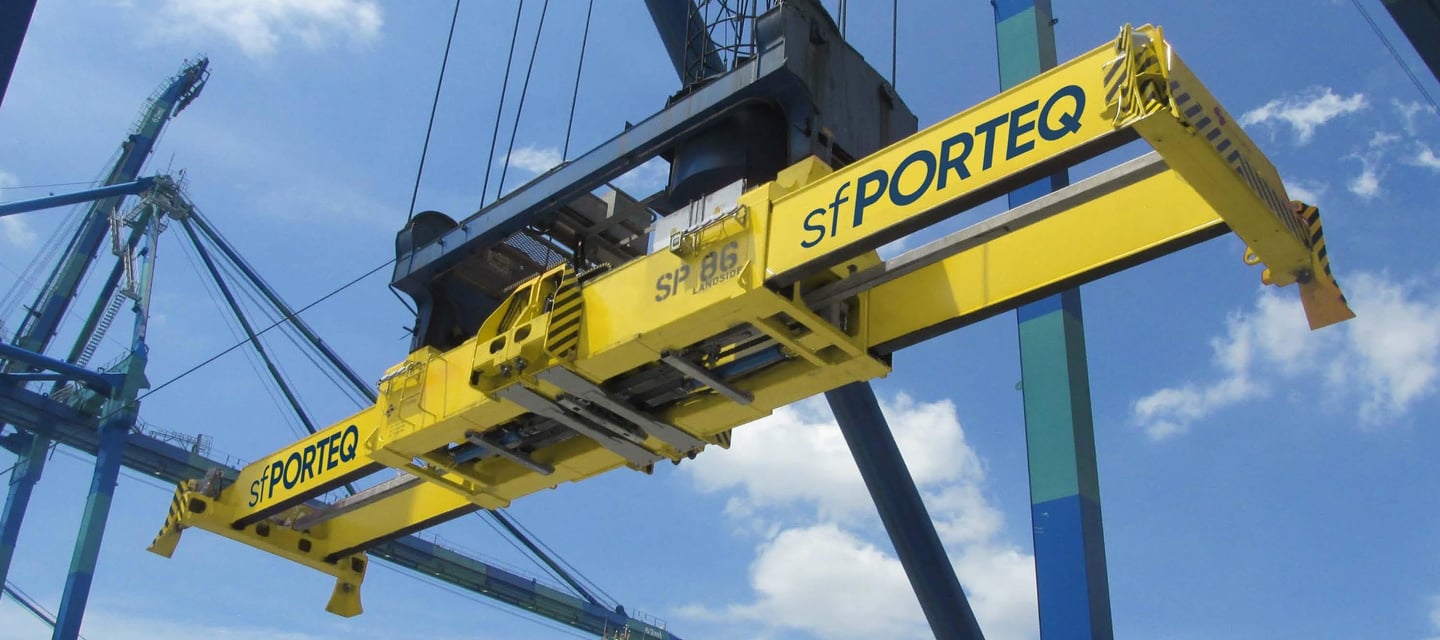
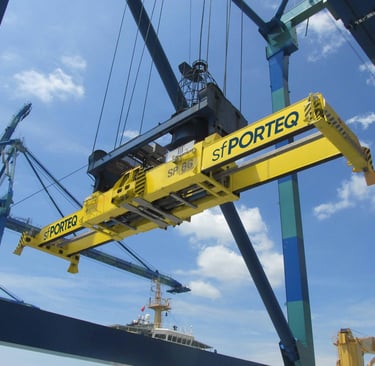
The D12YST11YU11Y cable is specifically designed for vertical reeling duty on container crane spreader systems. The spreader mechanism—the telescoping frame that locks onto shipping containers—is hoisted and lowered continuously at high speeds. This creates a vertical hanging cable column that undergoes rapid acceleration, deceleration, and exposure to gusting crosswinds.
This cable family is deployed across three primary container crane configurations used in Australian ports and intermodal freight hubs:
First, Ship-to-Shore (STS) quay cranes. These massive cranes feature high lift heights and rapid trolley speeds, requiring spreader cables that can handle extreme vertical payout distances, continuous ocean spray, high UV exposure, and intense hoisting acceleration.
Second, Rubber Tyred Gantry (RTG) cranes. Operating in container storage yards, RTGs experience constant stop-and-go cycles, diesel-electric generator power fluctuations, exposure to yard dust, and localized mechanical vibration.
Third, Rail Mounted Gantry (RMG) cranes and Automated Stacking Cranes (ASCs). Automated container yards rely on predictable, high-precision cable retraction to prevent misaligned winding or slack-cable trips that could trigger automated emergency shutoffs.
In these crane applications, the D12YST11YU11Y cable serves as the primary power, control, and communication link between the crane trolley machinery room and the moving spreader head. It carries motor power for spreader extension, twistlock actuation signals, sensor telemetry, and camera communication feeds across a continuously moving interface.
4. Comprehensive Cable Construction Details
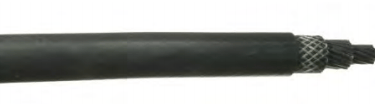
The ability of the D12YST11YU11Y cable to resist structural deformation during rapid vertical acceleration stems directly from its specialized internal architecture. Every component is optimized to maintain geometric stability under dynamic loads.
Flexible Copper Conductors
The cable features plain electrolytic copper conductors stranded to Class 5 flexibility specifications in accordance with DIN EN 60228 and DIN VDE 0295 standards. Class 5 fine stranding provides the optimal balance between high flex fatigue resistance and electrical conductivity, ensuring the conductors survive millions of bending cycles without work-hardening or breaking.
Polyester-Based Halogen-Free Insulation
The individual conductors are insulated with a high-grade, halogen-free compound formulated from a polyester base. This insulation exhibits excellent dielectric strength alongside superior mechanical toughness. The polyester material allows for a reduced wall thickness while maintaining thermal endurance, helping keep overall cable weight and diameter to a minimum.
Core Identification and Lay-up Geometry
The insulated cores are finished in white with clear black printed numbers, conforming to standard core identification conventions similar to HD 308. The lay-up design incorporates a high-tensile central aramid strain relief element. The insulated cores are laid up in concentric layers around this central core using a short length of lay. A short lay length improves flexural behavior and prevents core migration during high-speed vertical movement.
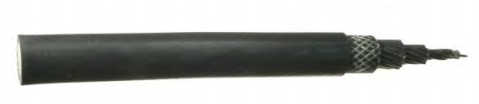
Polyurethane Inner Sheath
An inner sheath made of flame-retardant, halogen-free polyurethane (PUR) is pressure-extruded over the laid-up cores. This inner jacket locks the core assembly into position, filling interstice gaps and buffering the insulated cores against internal friction during tight flexing.
Reinforced Anti-Torsion Braid
Directly over the inner sheath sits a open-braid reinforcement layer. This high-tensile braid binds the inner structure to the outer jacket, acting as an anti-torsion shield that prevents axial twisting forces from transferring directly into the copper conductors.
Polyurethane Outer Sheath
The exterior protective layer consists of an opaque, flame-retardant, halogen-free black polyurethane outer sheath. Feichun Cable formulates this outer PUR compound to provide exceptional resistance to mechanical abrasion, tear propagation, severe weather, ozone, and oil contact.
5. Why the Construction Fits Spreader Systems
Spreader reeling applications present some of the most challenging mechanical dynamics in the cable industry. Unlike horizontal reels where the cable is supported by a cable tray or the ground as it pays out, a vertical spreader cable hangs unsupported beneath the reel hub.
As the spreader hoists upwards at high speeds, the cable experiences extreme tensile spikes during sudden braking or acceleration. Without specialized structural support, the weight of a long suspended cable pulls directly on the copper conductors, causing them to stretch, neck down, and eventually break internally. Furthermore, high-speed vertical payout induces axial rotation—known as corkscrewing—which quickly destroys standard flexible cables.
The D12YST11YU11Y design solves these failure modes through its central aramid strain element and reinforced polyurethane construction. Aramid fibers deliver immense tensile strength at a fraction of the weight of steel, bearing the vertical hanging load and dynamic acceleration forces. This ensures the copper conductors remain completely stress-free during high-speed hoisting.
In addition, the embedded open braid reinforcement locks the inner and outer sheaths together, creating a unified structural assembly that resists torsional movement up to plus or minus fifty degrees per meter. Combined with the low friction and high tear resistance of the PUR outer sheath, this cable remains geometrically balanced and free from corkscrewing, even during rapid, multi-shift container handling cycles.
6. Electrical Performance Specifications
The D12YST11YU11Y cable is engineered for low-voltage power, control, and signal circuits across port crane installations. Its electrical design parameters align with international industrial standards:
Nominal Rated Voltage: 0.6/1 kV (600/1000 Volts AC), making it ideal for standard Australian 415V three-phase auxiliary drives, 240V control loops, and low-voltage sensor networks.
Maximum Permissible AC Operating Voltage: 0.7/1.2 kV AC.
Maximum Permissible DC Operating Voltage: 0.9/1.8 kV DC.
High-Voltage AC Test Rating: Every manufactured production length undergoes factory testing at 4 kV AC for 5 minutes to verify insulation integrity.
Current-Carrying Capacity: Sized strictly in accordance with DIN VDE 0298-4 standards.
When engineering spreader reel systems, appropriate derating factors must be applied based on ambient operating temperatures and the number of layers wound on the reel drum during operation. Because spreader reels frequently retain multiple cable layers on the drum during shallow container lifts, thermal management must be accounted for during conductor cross-section selection.
7. Mechanical Performance and Dynamic Ratings
The mechanical specifications of the D12YST11YU11Y cable reflect its heavy-duty vertical reeling design:
Maximum Tensile Load: High tensile load capability achieved through the integrated central aramid support element and reinforced structural braiding. Permissible pulling force varies by core count, reaching up to 4,250 Newtons on large multicore control configurations.
Torsional Tolerance: Rated to endure torsional stresses up to plus or minus 50 degrees per meter (±50 °/m), preventing internal core twisting during rapid vertical movement.
Minimum Bending Radius: Rated at 6 times the outer cable diameter (6 x D) for free-moving reeling operations, validated by flexing tests in accordance with HD 22.2 part 3.1 standards.
S-Type Directional Changes: When routing through complex crane sheaves or S-bend guide fairleads, the minimum recommended distance between directional changes is 20 times the outer cable diameter (20 x D).
Vertical Reeling Speed: Engineered for vertical payout and rewind speeds up to 180 meters per minute (180 m/min).
Detailed physical properties across core count and cross-sectional options include:
24 cores of 2.5 mm²: maximum conductor diameter of 2.0 mm, outer diameter range of 23.8 to 25.2 mm, minimum bending radius of 151 mm, approximate weight of 980 kg/km, maximum tensile force of 3,000 N, conductor resistance at 20 °C of 7.98 Ohms/km, current rating of 30 A, short-circuit current of 0.36 kA.
30 cores of 2.5 mm²: maximum conductor diameter of 2.0 mm, outer diameter range of 25.8 to 27.4 mm, minimum bending radius of 164 mm, approximate weight of 1,290 kg/km, maximum tensile force of 3,375 N, conductor resistance at 20 °C of 7.98 Ohms/km, current rating of 30 A, short-circuit current of 0.36 kA.
36 cores of 2.5 mm²: maximum conductor diameter of 2.0 mm, outer diameter range of 30.2 to 32.2 mm, minimum bending radius of 193 mm, approximate weight of 1,530 kg/km, maximum tensile force of 3,750 N, conductor resistance at 20 °C of 7.98 Ohms/km, current rating of 30 A, short-circuit current of 0.36 kA.
42 cores of 2.5 mm²: maximum conductor diameter of 2.0 mm, outer diameter range of 34.1 to 36.5 mm, minimum bending radius of 219 mm, approximate weight of 1,940 kg/km, maximum tensile force of 4,125 N, conductor resistance at 20 °C of 7.98 Ohms/km, current rating of 30 A, short-circuit current of 0.36 kA.
44 cores of 2.5 mm²: maximum conductor diameter of 2.0 mm, outer diameter range of 36.1 to 38.5 mm, minimum bending radius of 231 mm, approximate weight of 2,080 kg/km, maximum tensile force of 4,250 N, conductor resistance at 20 °C of 7.98 Ohms/km, current rating of 30 A, short-circuit current of 0.36 kA.
9 groups of (5 x 2.5 mm²): maximum conductor diameter of 2.0 mm, outer diameter range of 38.8 to 41.2 mm, minimum bending radius of 247 mm, approximate weight of 2,150 kg/km, maximum tensile force of 3,810 N, conductor resistance at 20 °C of 7.98 Ohms/km, current rating of 30 A, short-circuit current of 0.36 kA.
8 groups of (6 x 2.5 mm²): maximum conductor diameter of 2.0 mm, outer diameter range of 42.7 to 45.1 mm, minimum bending radius of 271 mm, approximate weight of 2,620 kg/km, maximum tensile force of 4,000 N, conductor resistance at 20 °C of 7.98 Ohms/km, current rating of 30 A, short-circuit current of 0.36 kA.
14 groups of (4 x 2.5 mm²): maximum conductor diameter of 2.0 mm, outer diameter range of 40.0 to 42.4 mm, minimum bending radius of 254 mm, approximate weight of 2,410 kg/km, maximum tensile force of 4,000 N, conductor resistance at 20 °C of 7.98 Ohms/km, current rating of 30 A, short-circuit current of 0.36 kA.
8. Thermal, Chemical, and Environmental Performance in Australian Conditions
Australia presents severe weather demands for port equipment. Operating environments range from extreme summer heatwaves in northern tropical ports like Darwin and Dampier to high winds, salt fog, and heavy downpours in southern terminals like Geelong, Adelaide, and Fremantle.
Thermal Rating
The cable is rated for a maximum continuous conductor operating temperature of 90 °C, with a short-circuit thermal threshold of 250 °C. For fixed installations, the operating temperature range spans from -50 °C to +80 °C. For fully flexible dynamic reeling service, the operating range spans -40 °C to +80 °C.
This wide thermal window ensures that during hot summer shifts—where dark cable sheaths absorb intense solar radiation on the crane frame—the polyurethane compound retains its structural integrity without softening or stretching. Conversely, in cold southern winter mornings, the cable remains supple without cracking under dynamic bending.
Flame Retardancy and Halogen-Free Safety
The PUR inner and outer sheaths are halogen-free and flame retardant, compliant with IEC 60332-1 fire resistance testing. In the event of an electrical fault or external fire, the cable produces low smoke densities without emitting toxic or corrosive halogen gases, protecting nearby port infrastructure and operating personnel.
Chemical and Oil Resistance
Port environments frequently expose electrical infrastructure to hydraulic fluids, synthetic lubricants, and diesel exhaust residue. The D12YST11YU11Y outer sheath is engineered for high oil resistance in accordance with EN 60811-404 standards.
Water Resistance and Submersion Rating
In addition to salt spray and heavy rain, crane cables near the quay can face accidental water immersion. This cable construction is rated for permanent use in water down to a diving depth of 50 meters (excluding drinking water applications). This water resistance prevents moisture ingress into the internal lay-up, preserving insulation resistance even in high-humidity marine conditions.
9. Container Crane Cable Routing and Maintenance Best Practices
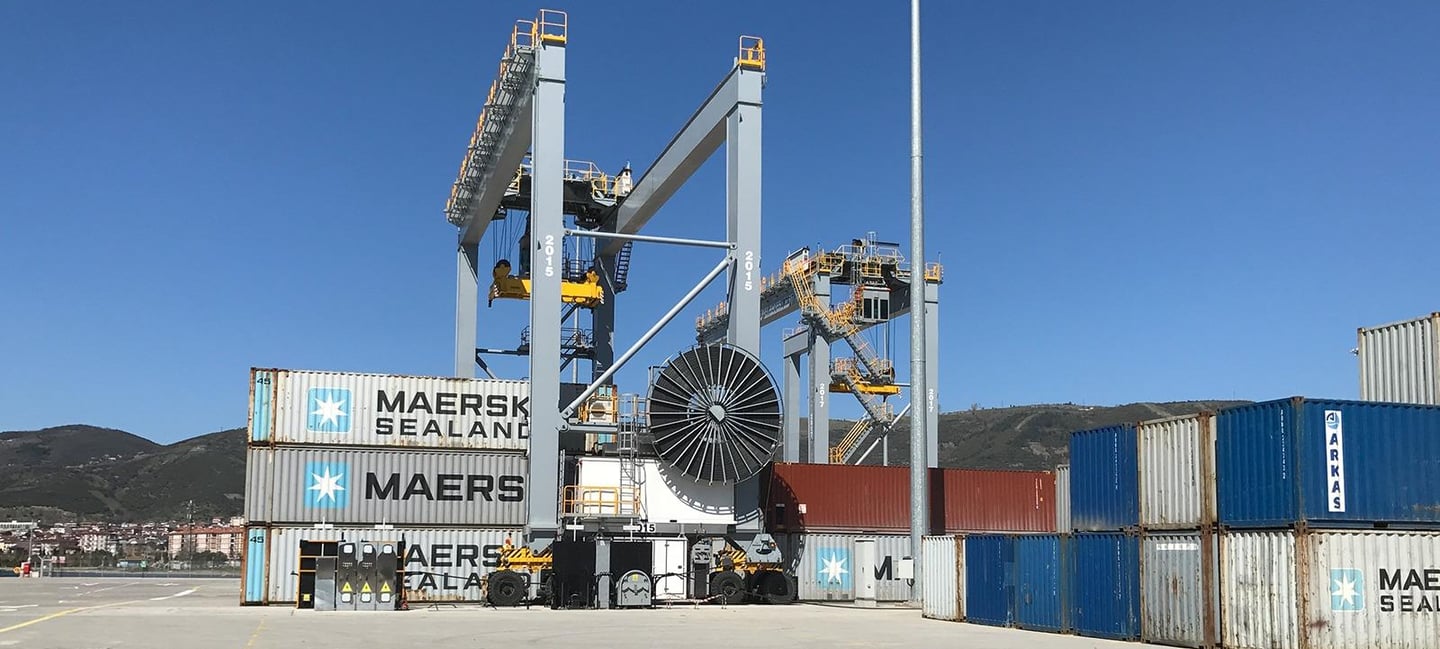
Achieving maximum operational life from a vertical spreader cable requires proper routing and reel alignment along the entire crane structure. A typical cable path spans three main operational zones:
Crane Machinery Room: The cable originates at the junction box or main control panel inside the machinery house on the upper trolley framework.
Vertical Cable Reel: The cable feeds onto a specialized motor-driven or spring-assisted vertical reel drum mounted on the trolley frame.
Spreader Head: The cable descends vertically through guide fairleads down to the connection box on the active spreader frame.
To maintain reliable signal and power transmission, port maintenance teams should adhere to three key practices:
First, maintain correct reel alignment. The vertical reel drum must align with the guide sheaves to prevent the cable from scrubbing against drum flanges during high-speed winding.
Second, avoid S-bend compression. Where S-type directional changes are required along the trolley routing, ensure the distance between reverse bends meets or exceeds the minimum 20 x D threshold. Short distances between reverse bends induce severe internal stress that accelerates sheath fatigue.
Third, inspect tension settings regularly. The torque applied by the reel motor must maintain sufficient tension to keep the suspended cable taut in crosswinds without exceeding the cable's maximum permissible pulling force. Feichun Cable provides detailed mechanical load guidance to help port technicians calibrate reel torque settings accurately.
10. Cable Selection Checklist for Engineering Procurement
When specifying replacement vertical reeling cables or configuring new container crane builds, engineering teams should evaluate the following technical parameters:
Operating Voltage: Verify system requirements against the 0.6/1 kV rating.
Core Configuration: Select the required core count and conductor cross-section (e.g., 24x2.5, 36x2.5, or grouped control layouts) based on motor loads and control channels.
Dimensional Limits: Check maximum outer diameter specifications to ensure compatibility with reel drum width and guide sheave grooves.
Hanging Distance and Tensile Load: Calculate the total weight of the suspended vertical cable length and ensure peak acceleration forces remain well within the cable's tensile rating.
Bending Radius: Verify that the reel drum hub diameter meets or exceeds the 6 x D minimum bending radius requirement.
Torsional Tolerances: Ensure the cable is rated for at least ±50 °/m torsional stress to prevent corkscrewing during high-speed operation.
Travel Speed Capability: Confirm that the cable specification supports vertical reeling speeds up to 180 m/min for fast hoisting cycles.
Environmental Exposure: Confirm halogen-free, flame retardant, oil-resistant, and water-submersion ratings for marine port environments.
11. Closing Recommendations
The D12YST11YU11Y cable is a specialized PUR-HF vertical reeling cable engineered to withstand the demanding mechanical stress, high travel speeds, and dynamic loads of container crane spreader systems. Featuring a central aramid strain relief element, anti-torsion braiding, a 0.6/1 kV electrical rating, 180 m/min speed capability, and exceptional resistance to heat, oil, and water, it offers an effective solution for maintaining high terminal uptime.
To maximize service life, always ensure final cable selection aligns with your crane's specific reel geometry, vertical hanging length, and dynamic duty cycle. For detailed technical datasheets, custom core configurations, and procurement support across Australia and international markets, contact the engineering specialists at Feichun Cable.
How to Reach Us
Get in Touch
SiteMap
Product Catalogue
Festoon Cable
Shore Power Cable
Scan to add us on WeChat