Mastering Heavy-Duty Dynamic Reeling: An Essential Engineering Guide to (N)SHTÖU Cable Construction, Specifications, and Harsh-Environment Applications
Explore the (N)SHTÖU cable structure, standards, and reeling performance. Learn how this heavy-duty rubber reeling cable is built for cranes, ports, and harsh industrial applications.
hongjing.Wang@Feichun
7/24/202613 min read
Introduction
In the demanding world of industrial material handling, heavy lifting, and bulk resource extraction, electrical infrastructure faces structural challenges that conventional fixed cabling was never built to withstand. When heavy machinery operates through continuous linear or rotational motion, the cables supplying power and control signals are subjected to aggressive mechanical stresses. Tensile forces, multidirectional bending, severe twisting, and relentless surface abrasion are everyday operating conditions.
Among the specialized solutions engineered for these dynamic operating environments, the (N)SHTÖU cable stands out as a global benchmark for durability. Recognized across international engineering sectors as a premier heavy-duty rubber reeling cable, this design is purpose-built to survive high-frequency mechanical flexing, continuous winding, and aggressive unwinding without suffering conductor fatigue or outer sheath rupture.
Whether integrated into overhead container gantry cranes at busy shipping terminals, massive stacker-reclaimers at bulk material handling facilities, or long-travel power chain systems in modern factory setups, (N)SHTÖU dynamic cabling provides reliable power delivery under tough operational demands. Modern industrial operators across Australia and surrounding regional markets rely heavily on high-spec cable variants—such as those engineered by Feichun—to minimize unplanned downtime, lower total cost of ownership, and maintain continuous productivity in challenging working environments.
This comprehensive technical guide breaks down the full engineering profile of the (N)SHTÖU cable design. We will examine its naming standards, structural layers, electrical and environmental ratings, mechanical performance features, and practical applications across Australian industries.
What (N)SHTÖU Means
To fully appreciate the engineering behind this dynamic cable, it helps to decode its technical designation. The letter combination in (N)SHTÖU follows established German DIN VDE standardization practices, where each character denotes a specific material property, structural element, or intended application scope.
N Prefix: The letter N indicates that the basic design aligns with national German VDE standard specifications. When enclosed in parentheses as (N), it signifies a high-performance cable manufactured in close accordance with the standard's core parameters, tailored specifically for heavy-duty dynamic service.
S Designation: Indicates a heavy-duty design intended for intense mechanical loading, typically found in tough industrial installations.
H Designation: Highlights suitability for reeling and reel-operated drum equipment, confirming structural resistance against tensile pulling and rotational forces.
T Designation: Signifies integrated anti-torsion features, such as structural textile braids or internal reinforcement, which prevent corkscrewing and axial deformation under dynamic movement.
Ö Designation: Confirms that the outer sheath compound is oil-resistant, protecting the internal components from degradation caused by industrial lubricants, hydraulics, and hydrocarbon exposure.
U Designation: Denotes robust flame-retardant properties, ensuring the cable resists ignition and prevents flame propagation along its path in the event of an electrical fault or thermal stress.
Across global technical catalogues, you may encounter minor spelling and typographical variations, including NSHTÖU, NSHTOEU, or (N)SHTÖU. Despite these minor differences in manufacturer notation, the underlying product category remains identical: a heavy-duty rubber flexible cable built to withstand continuous tensile and torsional loading in dynamic systems.
Standard Background
The engineering foundation of the (N)SHTÖU cable is rooted in standard VDE regulatory frameworks. Understanding these standards gives specifying engineers and site electricians complete confidence in the product's safety, longevity, and cross-compatibility.
The primary design standard governing this family is DIN VDE 0250-814, which defines the constructional requirements, testing protocols, and mechanical performance limits for flexible, rubber-insulated reeling cables.
For the electrical conductors inside, manufacturing aligns with BS EN 60228 (which superseded BS 6360) and IEC 60228 Class 5, as well as the matching German standard DIN VDE 0295 Class 5. This ensures fine-stranded copper construction that provides high flexibility while holding up under continuous bending.
Core identification in multi-conductor power configurations typically adheres to color conventions specified in DIN VDE 0293-1 and HD 308 S2. This standardization helps simplify site installations, maintenance checks, and field repairs.
In addition, quality dynamic cables meet severe environmental resistance criteria, such as oil resistance testing according to BS EN/IEC 60811-2-1, ensuring consistent performance in demanding industrial and outdoor applications.
Cable Construction
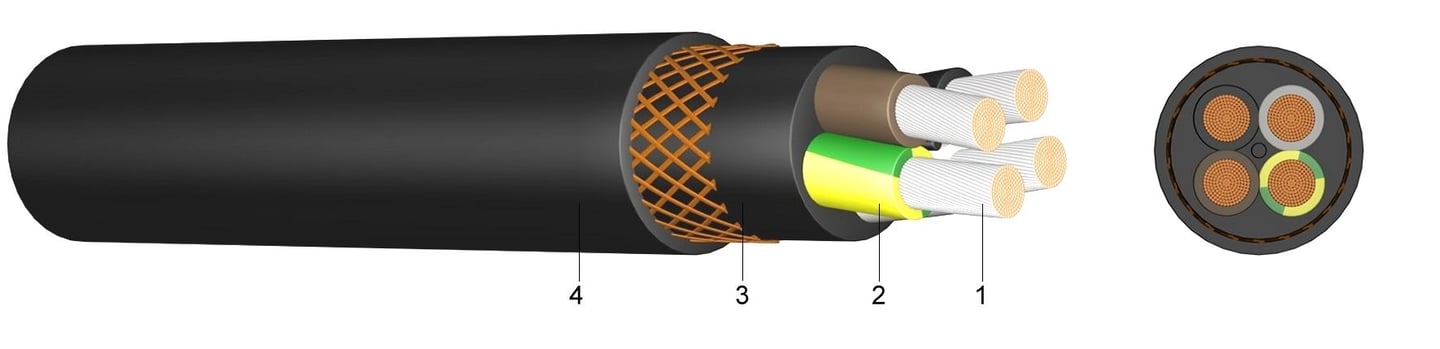
The impressive durability of the (N)SHTÖU flexible cable comes from its multi-layered composite construction. Every layer—from the central conductors to the outer jacket—serves a defined role in managing mechanical stress and environmental exposure.
Conductor
At the core of the cable are Class 5 flexible conductors, made from high-purity tinned copper strands. Using tinned copper instead of plain bare copper offers crucial advantages for dynamic reeling applications:
High resistance to copper oxidation and chemical corrosion, especially in hot, humid, or coastal environments.
Smooth sliding movement between individual wire strands during tight bending, minimizing friction and internal fatigue.
Strong tin-to-copper bonding that preserves electrical conductivity throughout the cable's operational life.
This fine-stranded Class 5 structure provides the fundamental flexibility required for continuous spooling, bending, and traveling across sheaves.
Insulation
Each conductor is enclosed in a thick layer of high-grade rubber compound Type 3GI3, formulated to VDE 0207 Part 20 specifications. In technical discussions, this elastomeric compound is referred to as an EPR-based (Ethylene Propylene Rubber) formulation.
Type 3GI3 insulation offers high dielectric strength, excellent thermal stability under continuous current loads, and superior resistance to mechanical compression. Its elastic memory allows it to flex repeatedly without cracking, hardening, or separating from the copper conductor.
Filler and Bedding
The internal spaces between the insulated main cores are packed with specialized filler materials. Premium constructions feature Ethylene Propylene Rubber (EPR) fillers supported by a strong textile polyester core strand.
Over the insulated core assembly, a inner bedding layer is applied using rubber compound Type GM1b, in line with VDE 0207 Part 21 standards.
This composite bedding serves two vital functions:
It binds the individual cores into a tight, circular bundle, preventing geometric distortion during high-speed winding.
It acts as a mechanical cushion, absorbing compression forces from outer layers when the cable is wound tightly under tension onto small-diameter reels.
Reinforcement and Braiding
Directly over the inner bedding sits a key feature of the (N)SHTÖU design: a high-tensile polyester textile braid or synthetic anti-torsion mesh.
Unlike simple fillers or standard tapes, this embedded braided structure works as an internal anti-torsion system. When a cable is wound onto a drum or guided through complex roller sets, it experiences rotational forces that try to twist its internal cores.
Without dynamic anti-torsion reinforcement, these twisting forces accumulate over time, leading to outer jacket buckling, core displacement, and eventual conductor failure—a condition often known in the field as "corkscrewing".
The embedded polyester braid absorbs these rotational shear stresses, preserving structural balance and keeping the internal conductors properly aligned during continuous dynamic motion.
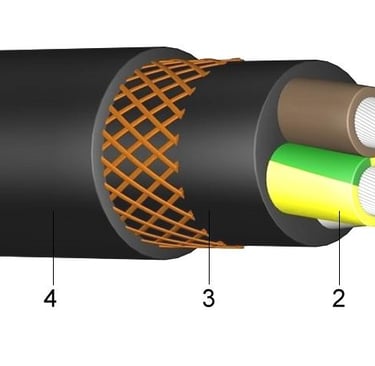
Outer Sheath
The outermost protective layer consists of a heavy-duty rubber compound Type 5GM3, compliant with VDE 0207 Part 21. In demanding industrial variants, such as those manufactured by Feichun, this sheath is formulated using polychloroprene (PCP) or specialized chloroprene-based rubber compounds.
The black outer sheath provides strong defense against harsh external conditions:
Outstanding abrasion resistance to endure continuous drag over concrete, steel grating, gravel, and unpaved ground.
High resistance to mineral oils, hydraulic fluids, grease, and chemical splashes commonly found around industrial machinery.
Strong UV and ozone resistance, preventing surface cracking, hardening, and degradation caused by direct sunlight.
Flame-retardant properties to support fire safety compliance across mining and industrial facilities.
Electrical and Mechanical Specifications
To ensure correct application and safe power distribution, engineers must evaluate the cable's main electrical and mechanical performance limits.
Electrical Ratings
Rated Operating Voltage (Uo/U): 600 / 1000 Volts AC (0.6/1 kV).
Alternating Current Test Voltage: Typically tested at 2.5 kV to 3.5 kV for 5 minutes, depending on the core count and cross-sectional area, ensuring high insulation integrity before site installation.
Thermal Operating Ranges
The elastomeric compounds used in (N)SHTÖU cabling provide reliable performance across wide temperature swings:
Fixed / Static Installation: -40°C to +60°C. (In select industrial-grade designs, maximum static conductor temperatures can reach up to +90°C during continuous operation).
Flexing / Dynamic Motion: -25°C to +60°C. (Premium formulations can maintain dynamic flexibility down to -30°C or even -40°C in specialized cold-climate environments).
Minimum Bending Radii
Maintaining correct bending radii is crucial for preventing mechanical strain on internal conductors and insulation layers:
Fixed Installation: Minimum 4 times the overall cable diameter (4 x D).
Flexing / Reeling Operation: Minimum 5 times the overall cable diameter (5 x D).
Note: For high-speed reeling applications, complex pulley arrangements, or reverse S-bends, cable manufacturers generally recommend increasing the operational bend radius to 8–10 times the overall diameter to maximize service life.
Core Identification and Size Configurations
To support a wide range of industrial control and power supply applications, (N)SHTÖU cables are produced in both grounded (protective earth conductor included) and ungrounded configurations, following standardized color schemes.
Standard Core Identification Schemas
The two primary core coding options are designated by the suffix -J (with green/yellow earth) or -O (without green/yellow earth):
NSHTÖU-J (With Earth Conductor)
4-Core Variant: Green/Yellow (Earth), Black, Grey, Brown.
5-Core Variant: Green/Yellow (Earth), Black, Blue, Brown, Grey.
NSHTÖU-O (Without Earth Conductor)
4-Core Variant: Grey, Brown, Black, Blue.
5-Core Variant: Grey, Brown, Black, Blue, Black.
For high-density control cables featuring 7 cores up to 45 cores, cores are generally numbered sequentially in white on a black insulation background, accompanied by a dedicated green/yellow earth wire in the outer layer.
Dimension and Weight Profiles
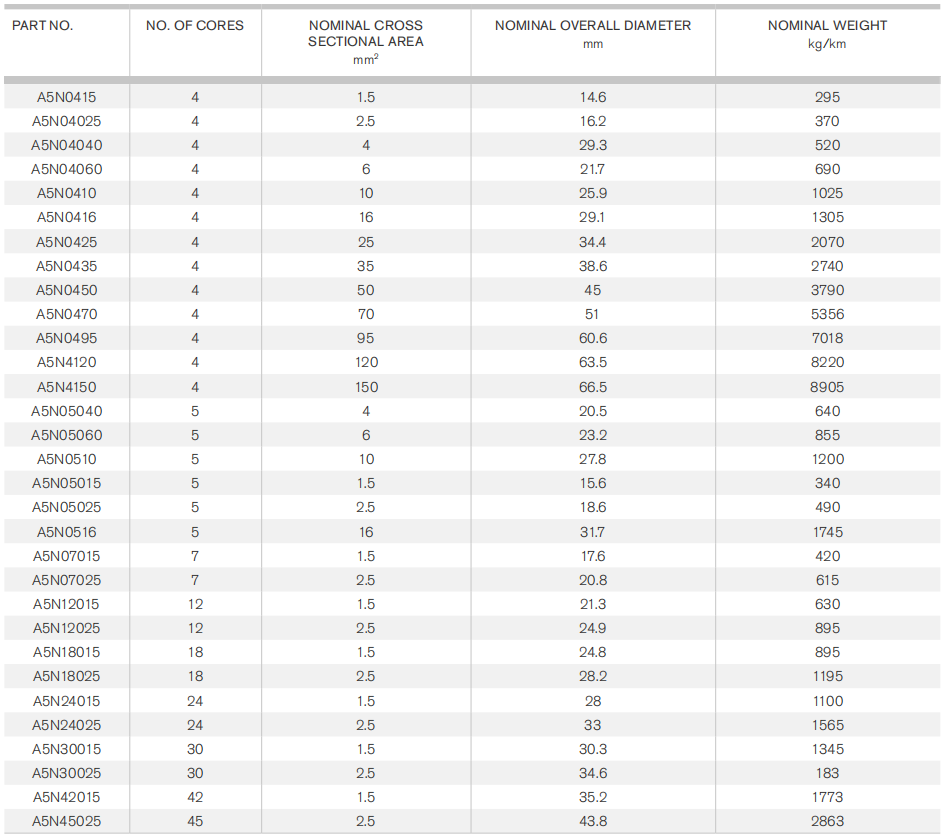
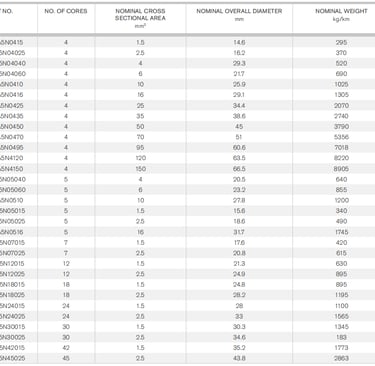
The (N)SHTÖU product series covers a broad spectrum of conductor sizes and core counts to handle various current loads and control needs. The dimensions and weights outlined below illustrate the physical profiles across standard multi-core sizes:
4-Core Power Cable Configurations
4 x 1.5 mm²: Nominal overall diameter around 14.6 mm, nominal weight approximately 295 kg/km.
4 x 2.5 mm²: Nominal overall diameter around 16.2 mm, nominal weight approximately 370 kg/km.
4 x 4.0 mm²: Nominal overall diameter around 29.3 mm, nominal weight approximately 520 kg/km.
4 x 6.0 mm²: Nominal overall diameter around 21.7 mm, nominal weight approximately 690 kg/km.
4 x 10 mm²: Nominal overall diameter around 25.9 mm, nominal weight approximately 1025 kg/km.
4 x 16 mm²: Nominal overall diameter around 29.1 mm, nominal weight approximately 1305 kg/km.
4 x 25 mm²: Nominal overall diameter around 34.4 mm, nominal weight approximately 2070 kg/km.
4 x 35 mm²: Nominal overall diameter around 38.6 mm, nominal weight approximately 2740 kg/km.
4 x 50 mm²: Nominal overall diameter around 45.0 mm, nominal weight approximately 3790 kg/km.
4 x 70 mm²: Nominal overall diameter around 51.0 mm, nominal weight approximately 5356 kg/km.
4 x 95 mm²: Nominal overall diameter around 60.6 mm, nominal weight approximately 7018 kg/km.
4 x 120 mm²: Nominal overall diameter around 63.5 mm, nominal weight approximately 8220 kg/km.
4 x 150 mm²: Nominal overall diameter around 66.5 mm, nominal weight approximately 8905 kg/km.
5-Core Power and Control Configurations
5 x 1.5 mm²: Nominal overall diameter around 15.6 mm, nominal weight approximately 340 kg/km.
5 x 2.5 mm²: Nominal overall diameter around 18.6 mm, nominal weight approximately 490 kg/km.
5 x 4.0 mm²: Nominal overall diameter around 20.5 mm, nominal weight approximately 640 kg/km.
5 x 6.0 mm²: Nominal overall diameter around 23.2 mm, nominal weight approximately 855 kg/km.
5 x 10 mm²: Nominal overall diameter around 27.8 mm, nominal weight approximately 1200 kg/km.
5 x 16 mm²: Nominal overall diameter around 31.7 mm, nominal weight approximately 1745 kg/km.
High-Core Multi-Control Configurations
7 x 1.5 mm²: Nominal overall diameter around 17.6 mm, nominal weight approximately 420 kg/km.
7 x 2.5 mm²: Nominal overall diameter around 20.8 mm, nominal weight approximately 615 kg/km.
12 x 1.5 mm²: Nominal overall diameter around 21.3 mm, nominal weight approximately 630 kg/km.
12 x 2.5 mm²: Nominal overall diameter around 24.9 mm, nominal weight approximately 895 kg/km.
18 x 1.5 mm²: Nominal overall diameter around 24.8 mm, nominal weight approximately 895 kg/km.
18 x 2.5 mm²: Nominal overall diameter around 28.2 mm, nominal weight approximately 1195 kg/km.
24 x 1.5 mm²: Nominal overall diameter around 28.0 mm, nominal weight approximately 1100 kg/km.
24 x 2.5 mm²: Nominal overall diameter around 33.0 mm, nominal weight approximately 1565 kg/km.
30 x 1.5 mm²: Nominal overall diameter around 30.3 mm, nominal weight approximately 1345 kg/km.
30 x 2.5 mm²: Nominal overall diameter around 34.6 mm, nominal weight approximately 1830 kg/km.
42 x 1.5 mm²: Nominal overall diameter around 35.2 mm, nominal weight approximately 1773 kg/km.
45 x 2.5 mm²: Nominal overall diameter around 43.8 mm, nominal weight approximately 2863 kg/km.
Reeling Performance and Mechanical Features
The key difference between standard flexible power cable and true heavy-duty (N)SHTÖU cable lies in its ability to handle demanding dynamic conditions. When operated on motor-driven drums, spring-operated reels, or roller guide systems, cables experience complex mechanical stresses.
Torsional Resistance and Anti-Twist Architecture
When a cable is pulled off a reel or passed around dynamic guide sheaves, it is subjected to rotational torque. If unmanaged, this torque forces the internal cores to twist out of lay, creating localized stress points that can split the outer sheath or snap internal copper strands.
The integrated polyester anti-torsion braid in (N)SHTÖU acts as a structural sheath, absorbing axial torque and distributing tensile forces evenly across the cable. This keeps the core bundle stable, allowing smooth, continuous operation through high-speed spooling cycles.
Dynamic Tensile Load Capacity
During acceleration and braking on automatic cable reels, the cable experiences sudden tensile surges. The combination of Class 5 tinned copper conductors, compressed rubber bedding (GM1b), and high-tensile internal braiding allows (N)SHTÖU to handle operational tensile stresses up to 15 N/mm² of total copper cross-section during dynamic motion. For static applications, allowable pulling tension can be significantly higher.
Superior Abrasion and Environmental Shielding
In real-world field operations, dynamic cables frequently rub against steel drum flanges, guide rollers, dynamic power chain tracks, and rough ground surfaces. The heavy-duty 5GM3 outer rubber sheath provides outstanding resistance to tears, cuts, and surface abrasion, ensuring long service life even under continuous physical friction.
Tailored Suitability for the Australian Operating Environment
Industrial operations across Australia face environmental conditions that can severely shorten the lifespan of standard dynamic cables. From extreme solar exposure to abrasive dusty soils and coastal marine air, cables used on Australian sites require exceptional build quality.
Here is how the structural features of (N)SHTÖU cables—including high-spec options supplied by Feichun—directly match key Australian industrial environments:
Port Infrastructure and Coastal Marine Terminals
Major shipping ports in Western Australia, Queensland, and New South Wales operate container gantry cranes, ship-to-shore loaders, and bulk unloading equipment around the clock. These installations face constant salt spray, high humidity, and relentless ocean winds.
The Problem: Saltwater exposure rapidly corrodes bare copper conductors through tiny pinholes in the outer sheath, causing internal electrical failure.
The Solution: The tinned copper conductors in (N)SHTÖU resist salt-air oxidation. Paired with an oil- and water-resistant 5GM3 polychloroprene sheath, the cable maintains full insulation integrity in coastal marine environments.
Open-Cut Mining, Bulk Handling, and Iron Ore Operations
From the Pilbara region down to the Hunter Valley, mining facilities rely on heavy stackers, reclaimers, and long conveyor systems operating in hot, dusty conditions.
The Problem: Abrasive mineral dust (such as iron ore and coal fines) can get trapped inside roller trains and dynamic reels, wearing down standard cable sheaths like sandpaper.
The Solution: The high-density 5GM3 rubber jacket offers exceptional abrasion resistance, preventing surface wear from fine mineral dust. Meanwhile, the internal anti-torsion braiding stabilizes the cable over long travel distances on motor-driven drums.
Extreme Solar Radiation and Outdoor Thermal Conditions
In inland Australian industrial zones, ambient summer air temperatures regularly exceed +40°C, while direct sunlight can drive cable surface temperatures much higher.
The Problem: Standard PVC and lower-grade rubber sheaths can degrade under intense UV exposure, leading to surface cracking, hardening, and water ingress.
The Solution: Specially formulated UV-stabilized rubber outer sheaths resist degradation caused by solar radiation and extreme thermal cycling. This keeps the jacket flexible and prevents sun-cracking over years of outdoor service.
Primary Application Areas
Thanks to its balanced mechanical and electrical design, (N)SHTÖU cable is widely used across dynamic industrial sectors:
Hoists and Overhead Cranes: Used for power and control supply on gantry cranes, overhead traveling cranes, and portal hoists operating with dynamic cable reels.
Bulk Material Handling: Powers boom stackers, bucket-wheel reclaimers, ship loaders, and tripper cars across bulk handling ports and rail loading terminals.
Conveyor Systems and Mobile Trippers: Serves as a main trailing cable for movable distribution trippers along heavy conveyor lines.
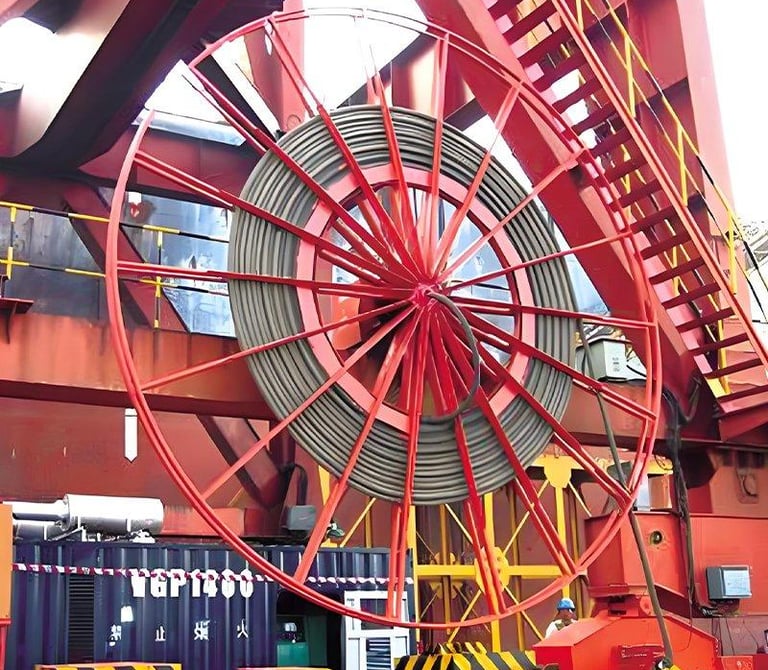
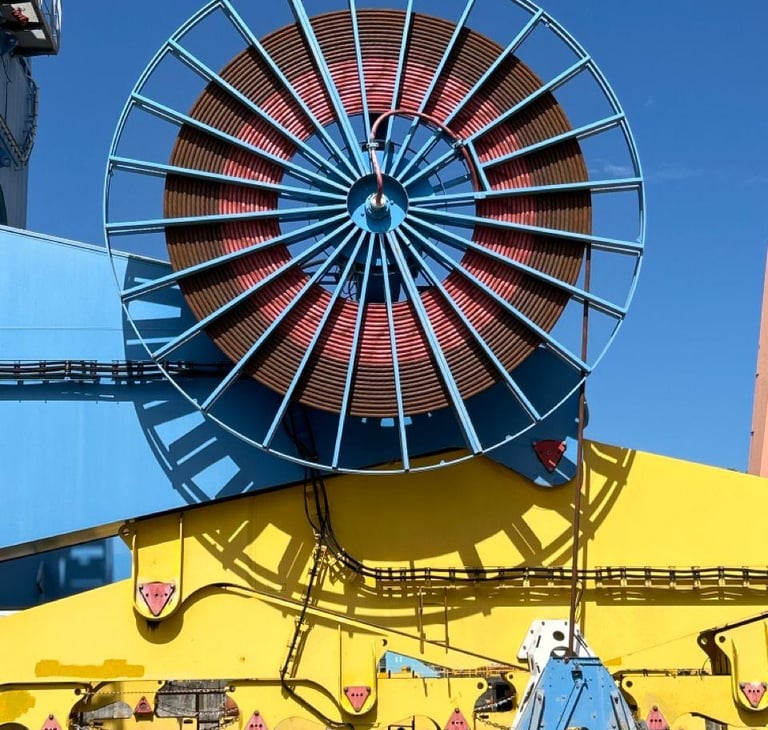
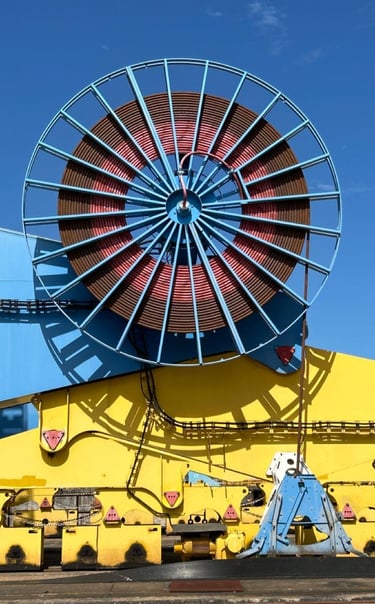
Dynamic Cable Reels and Drum Systems: Functions smoothly on spring-loaded or motorized cable drums, vertical lift reels, and automated spooling systems.
Power Chains and Festoons: Suitable for heavy-duty flexible energy chains and roller festoon systems where high acceleration and repeated flexing occur.
Mobile Construction and Industrial Plant: Supplies reliable power to mobile crushed-stone sorters, asphalt plants, tunneling machines, and heavy mobile machinery.
Engineering Selection Guide: How to Choose the Right Cable
Selecting the optimal (N)SHTÖU heavy-duty rubber cable for your site requires evaluating several technical factors. Below is a step-by-step checklist to guide your decision-making:
1. Evaluate Total Mechanical Stress Profiles
Identify whether your application involves simple linear spooling, vertical suspension, or multi-directional bending over sheaves. For high vertical lifts or fast horizontal travel, verify that the cable's dynamic tensile load limits match your equipment's acceleration force.
2. Confirm Reel Dimensions and Operating Speeds
Check that your drum diameter meets or exceeds the minimum bending radius requirements (at least 5 x overall cable diameter for dynamic reeling, or larger for high-speed systems). Confirm that maximum reel travel speeds align with the manufacturer's rated operational speeds (typically up to 60–120 m/min depending on construction detail).
3. Verify Electrical Load and Voltage Drop
Select a conductor cross-sectional area that comfortably handles the continuous operational current, taking into account ambient temperatures and derating factors for multi-layer drum winding. Remember that cables wound on multi-layer drums lose heat less efficiently, requiring current capacity derating according to VDE standards.
4. Inspect Environmental Factors
Determine if the installation area involves constant oil exposure, chemical splashing, severe UV radiation, or saltwater mist. For aggressive Australian outdoor environments, specify a high-spec UV- and oil-resistant polychloroprene outer sheath.
5. Prioritize Proven Anti-Torsion Protection
When sourcing cable for long-travel reels or complex roller trains, ensure the product features a high-density polyester anti-torsion braid. Choosing cables from proven industrial suppliers—such as Feichun—helps guarantee that the anti-torsion system is properly built to prevent dynamic corkscrewing and premature field failure.
Conclusion
The (N)SHTÖU cable remains an industry standard for dynamic power and control applications. Its success comes down to a well-engineered composite construction: fine-stranded Class 5 tinned copper conductors, robust EPR-type 3GI3 insulation, structural rubber bedding, high-tensile anti-torsion braiding, and a tough 5GM3 rubber outer sheath.
For site engineers, electrical contractors, and plant managers working in challenging Australian environments, choosing the right dynamic cabling is essential for operational reliability. By selecting high-spec (N)SHTÖU solutions designed for intense mechanical stress, heavy UV radiation, and severe climate exposure, facilities can lower operational risk, eliminate premature cable failures, and achieve reliable, long-term performance across all dynamic lifting and reeling equipment.
How to Reach Us
Get in Touch
SiteMap
Product Catalogue
Festoon Cable
Shore Power Cable


Scan to add us on WeChat