
Replacing NSHTÖU Cables Without Redesigning Your Equipment: A Practical Australian Engineering Guide
How to replace NSHTÖU cable without changing existing equipment design. Learn how to match diameter, voltage, core arrangement, and bending radius for cranes, hoists, and reeling systems.
hongjing.Wang@Feichun
7/22/20269 min read
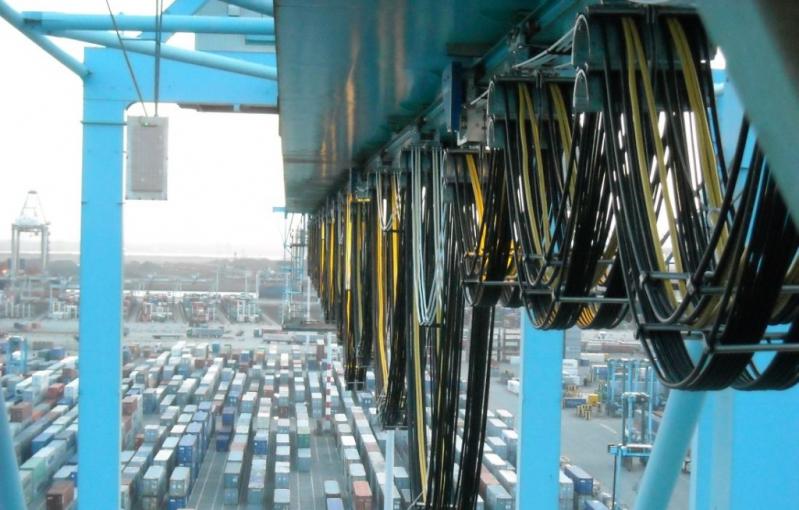
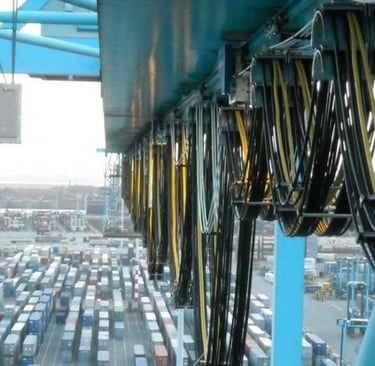
In heavy-duty industrial operations across Australia—from the dusty iron ore mines of the Pilbara and coal terminals in Queensland to busy shipping ports in Fremantle, Sydney, and Melbourne—machinery reliability is non-negotiable. Cranes, hoists, bulk material conveyors, and automated stacker-reclaimers rely heavily on specialized mobile power cables. Among the most widely specified international cable types for dynamic reeling and unreeled motion is the NSHTÖU cable.
When an NSHTÖU cable reaches the end of its operational lifespan or suffers severe mechanical impact on site, maintenance teams face a critical challenge: sourcing and installing a direct replacement without forcing costly mechanical or structural modifications to existing equipment.
An improper cable selection can derail operations. If a replacement cable's outer diameter is just a few millimetres too large, it may not fit properly on the existing winding drum, leading to uneven spooling or structural binding. If the minimum bending radius is compromised, the cable will suffer rapid internal copper fatigue.
This comprehensive guide details how to seamlessly replace an NSHTÖU cable using engineered options like Feichun dynamic reeling cables, keeping your original equipment design intact while ensuring maximum longevity under Australia's tough operating conditions.

What Is NSHTÖU Cable?
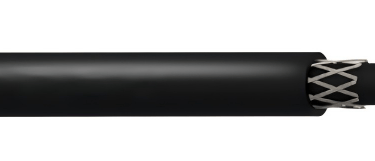
NSHTÖU is a specialized heavy-duty flexible rubber cable specifically engineered for high mechanical stress, dynamic motion, and continuous reeling or unreeling service. Unlike standard fixed-wiring industrial cables, NSHTÖU is built from the ground up to endure repeated flexure, directional changes, torsional twist, and tensile pulling forces.
The designation itself follows the rigorous German VDE harmonized coding system:
N: Standardized cable type according to national or international norms.
S: Heavy-duty flexible cable designed for severe mechanical stress.
HT: High-temperature or high-performance synthetic rubber insulation and bedding.
Ö: Oil-resistant outer sheath.
U: Flame-retardant outer protective jacket.
The cable is oil-resistant and UV-resistant in compliance with BS EN/IEC 60811-2-1 standards. This robust chemical and environmental resilience makes it ideal for dynamic power transmission in both indoor manufacturing plants and harsh outdoor industrial environments.
Comprehensive Cable Construction Breakdown
Understanding the internal layered architecture of the NSHTÖU cable is essential when evaluating a replacement. Each layer plays a specific mechanical or electrical role in ensuring the cable survives continuous motion.
1. Conductor
At the core of the cable are flexible Class 5 tinned copper conductors manufactured in accordance with BS EN 60228 (formerly BS 6360). Using fine, tinned copper strands yields two distinct operational advantages:
Enhanced Flexibility: High strand counts allow individual copper wires to slide smoothly past one another during dynamic bending, preventing wire stiffness and premature conductor fracture.
Corrosion Resistance: Tinned coating protects the individual copper strands from oxidation caused by moisture ingress or chemical reactions with the surrounding rubber compounds, a crucial feature for Australia's humid coastal ports and wet mining pits.
2. Insulation
Each conductor is encased in a high-grade rubber compound Type 3GI3 according to VDE 0207 Part 20. This specialized ethylene-propylene-based rubber compound provides high dielectric strength, excellent thermal stability, and superior elasticity during continuous dynamic flexing.
3. Inner Filler
Surrounding the insulated main cores is an EPR (Ethylene Propylene Rubber) filler Type 3GI3, supported on a tough textile polyester core base. The filler occupies the inner voids between cores, maintaining a perfectly round, stable circular cross-section. This structural roundness prevents local core displacement when the cable is wound onto drums under heavy mechanical tension.
4. Bedding
Over the filled core assembly sits an inner rubber bedding layer made from Rubber Compound Type GM1b according to VDE 0207 Part 21. The bedding serves as a resilient cushion, providing physical separation and mechanical shock absorption between the internal insulated conductors and the outer mechanical protection layers.
5. Mechanical Anti-Torsion Braiding
Positioned over the inner bedding is an anti-torsion open braid made of high-tensile polyester threads. This open textile braid matrix acts as a crucial mechanical reinforcement. As reeling cables experience unwinding and rewinding forces, torsional torque builds up within the cable structure. The integrated polyester braid grips the inner bedding and outer sheath together, neutralizing torsional twist and preventing the formation of localized structural deformities like "corkscrewing" or "birdcaging."
6. Outer Sheath
The final outer protective layer is constructed from heavy-duty Rubber Compound Type 5GM3 according to VDE 0207 Part 21. Finished in a UV-absorbing black colour, this rugged rubber sheath provides superior resistance to surface abrasion, tearing, cutting, oil contamination, and aggressive atmospheric exposure.
Mechanical Performance and Electrical Specifications
To ensure a replacement cable integrates smoothly into your existing system, you must match or exceed key electrical and physical operating thresholds.
Voltage Rating
The NSHTÖU cable carries a standard nominal voltage rating of 600/1000V (0.6/1kV). Any suitable replacement must meet this 1kV rating to guarantee full compatibility with standard industrial motor drives, hoists, and power distribution systems.
Thermal Operating Ranges
The thermal limits of the NSHTÖU cable are specified for two distinct operational states:
Fixed Installation: -40°C to +60°C.
Flexing / Dynamic Service: -25°C to +60°C.
Minimum Bending Radius
Maintaining proper bending limits is critical to preventing internal copper fatigue:
Fixed Installation: Minimum 4 times the overall cable diameter (4 x OD).
Flexing / Dynamic Service: Minimum 5 times the overall cable diameter (5 x OD).
When replacing an NSHTÖU cable on an existing machine, keeping the outer diameter as close as possible to the original specification ensures that the cable stays within these 5 x OD bending constraints across all guide sheaves, rollers, and drum diameters.
Core Color Identification Codes
Maintaining correct core identification is vital during a replacement to ensure safe, straightforward wiring without modifying control cabinets or motor junction boxes. NSHTÖU cables are available in two primary core configurations:
NSHTÖU-J Version (With Green/Yellow Protective Earth Conductor)
4-Core Layout: Green/Yellow, Black, Grey, Brown.
5-Core Layout: Green/Yellow, Black, Blue, Brown, Grey.
Other Core Counts: Custom configurations are available for multi-core control applications.
NSHTÖU-O Version (Without Green/Yellow Protective Earth Conductor)
4-Core Layout: Grey, Brown, Black, Blue.
5-Core Layout: Grey, Brown, Black, Blue, Black.
Primary Industrial Applications in Australia
The NSHTÖU cable is engineered specifically for dynamic mobile equipment where cables are continuously reeled, unreeled, or guided along physical tracks.
Key Australian application environments include:
Heavy Overhead Cranes and Hoists: Operating in steel mills, manufacturing plants, and ship maintenance bays, where cables pay out and wind back onto motor-driven or spring-loaded cable drums.
Port Facilities and Container Terminals: Installed on ship-to-shore (STS) cranes, rail-mounted gantry (RMG) cranes, and rubber-tyred gantry (RTG) cranes operating along coastal berths.
Bulk Material Conveyors and Mining Equipment: Powering mobile stackers, reclaimers, shiploaders, shuttle cars, and continuous conveyors across regional mining pits and export terminals.
Energy Drag Chains and Festoon Systems: Navigating dynamic festoon loops or heavy-duty drag chains on automated machinery.
Marine Hawsers and Towing Lines: Supplying temporary auxiliary power links to docked vessels or floating offshore structures.
Tailoring NSHTÖU Performance to Australia's Harsh Climate
Australia presents some of the most challenging industrial operating environments in the world. Standard European industrial cables often struggle when exposed to extreme regional conditions. Sourcing high-performance replacement alternatives, such as specialized dynamic cables engineered by Feichun, provides tailored solutions for local site hazards:
Extreme Solar Radiation and Heat
In regions like the Pilbara in Western Australia or the Surat Basin in Queensland, summer ambient air temperatures frequently exceed 40°C, while surface metal temperatures on crane drums can top 70°C. Standard rubber compounds age rapidly under these conditions, hardening, cracking, or turning brittle. Premium replacements utilize high-grade, UV-stabilized sheath compounds that prevent solar oxidation and resist thermal degradation.
Abrasive Mining and Quarry Dust
Iron ore dust, coal dust, and crushed aggregate act like sandpaper on moving cable sheaths. As cables pay in and out across rollers and drums, abrasive dust grinds against the outer jacket. Replacement cables built with high-tear 5GM3 or specialized polyurethane outer sheaths provide superior abrasion resistance, ensuring long service life even in dusty open-cut mines.
Coastal Marine Corrosion and Moisture
Coastal marine facilities encounter high humidity, salt spray, and tidal washwater. The fine-stranded, Class 5 tinned copper conductors used in NSHTÖU construction prevent subsurface tarnish and galvanic corrosion, keeping connection terminals safe and low in electrical resistance.
Why Replacement Must Match Existing Machinery Design
The primary goal during an emergency or scheduled cable swap is to restore operational capability without modifying the host machine. Modifying machine hardware—such as replacing a winding drum, re-engineering guide sheaves, or altering structural cable trays—introduces massive expense and extended operational downtime.
Even if an alternative cable shares the exact same 600/1000V electrical rating, slight differences in outer diameter, total weight per metre, or minimum bending radius can cause major mechanical failures:
Drum Capacity Issues: A cable that is just 10% larger in outer diameter takes up significantly more volume on a winding drum. This can prevent the drum from holding the full cable length required for maximum machine travel, triggering limit-switch cut-offs or causing cable spillage over the drum flanges.
Sheave and Roller Binding: Cable guide rollers and directional sheaves are machined with precise groove profiles. An oversized replacement cable will rub against groove sidewalls, accelerating sheath wear and creating dangerous frictional heat.
Weight Mismatches: Heavy cable alternatives increase sag and drag tension, placing extra strain on drive motors, gearboxes, and spring-tensioned reeling systems.
By selecting an exact drop-in replacement that matches original dimensions and mechanical properties, maintenance teams avoid structural redesigns, minimize labor costs, and ensure immediate plug-and-play installation.
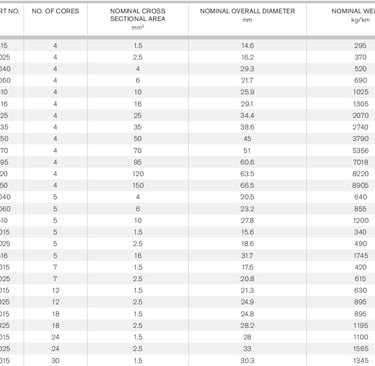
The Four Critical Selection Factors for Drop-In Cable Replacement
When sourcing a replacement cable from engineered brands like Feichun, evaluate these four key parameters to guarantee a flawless fit:
1. Outer Diameter (OD)
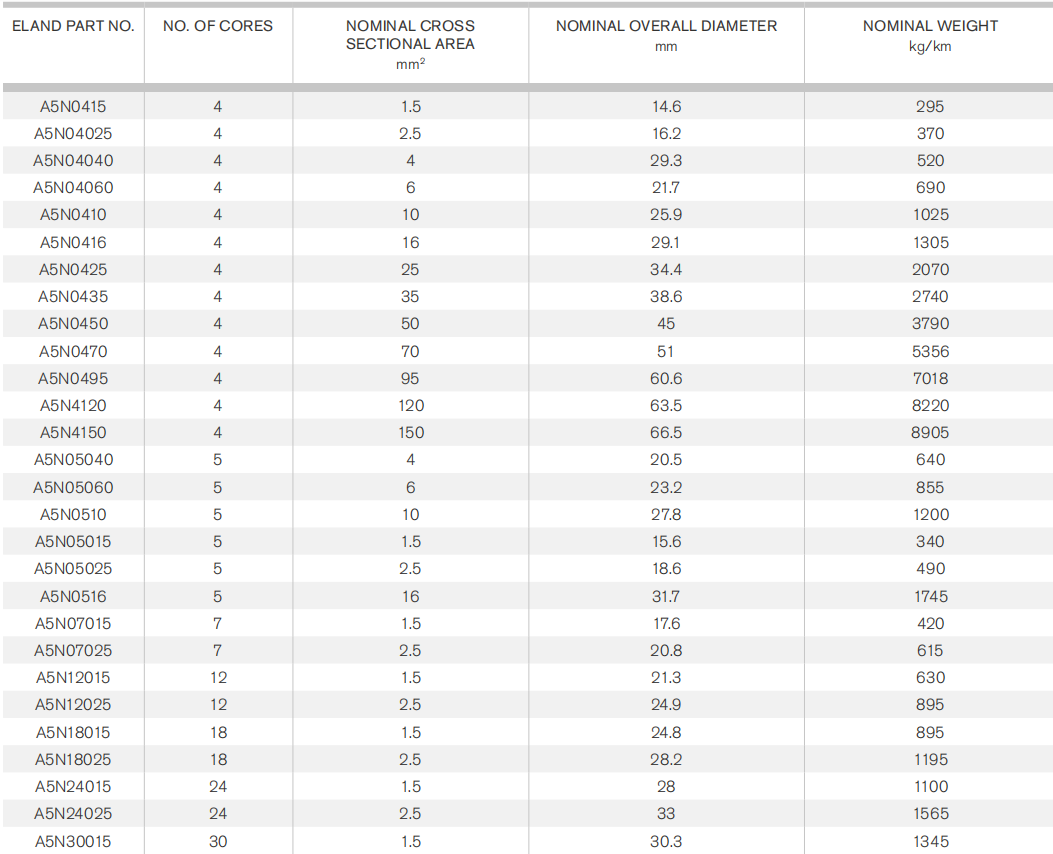
Verify the exact overall outer diameter of the existing cable. The replacement's OD should match the original within a strict millimeter tolerance. Matching the OD ensures:
Perfect fit on multi-layer and monospire reeling drums without binding or uneven layering.
Correct clearance through guide rollers, cable funnels, and dynamic festoon trolleys.
Consistent weight distribution across structural cable support trays.
2. Voltage Rating and Electrical Capacity
Ensure the replacement cable meets the 600/1000V (0.6/1kV) nominal voltage specification. Additionally, double-check that the conductor cross-sectional area (in square millimeters) matches or exceeds the original current-carrying capacity, accounting for ambient temperature derating factors in hot Australian working conditions.
3. Core Count and Layout Configuration
Match the exact conductor core arrangement and color coding (NSHTÖU-J versus NSHTÖU-O). Selecting the correct core setup allows technicians to terminate wires directly into existing junction boxes and slip-ring assemblies without needing to re-label cores or change earth wiring arrangements.
4. Dynamic Minimum Bending Radius
Confirm that the replacement cable matches the original minimum bending radius of 5 times the overall diameter (5 x OD) in flexed service. A flexible cable with a larger bending radius requirement will experience severe mechanical stress when bent around existing machine sheaves, leading to premature conductor breakage.
Common Installation Pitfalls to Avoid
Choosing the wrong replacement cable or mismanaging the installation process can lead to costly mechanical issues:
Forced Drum Modifications
If an oversized cable is installed on an existing reel, the drum may run out of spooling width before the machine reaches the end of its travel path. Maintenance crews are then forced into expensive, time-consuming drum flange modifications or gear ratio adjustments to accommodate the bulkier cable.
Roller Jamming and Sheath Slicing
Installing a cable with an incorrect outer diameter through tightly toleranced guide rollers can cause the cable to jam or ride up on roller edges. This subjects the rubber sheath to extreme side-loading and shearing forces, which can slice through the protective outer layer within a few operating cycles.
Excessive System Tension and Mechanical Fatigue
A cable with higher stiffness or greater weight per metre requires higher pulling force during payout. This added tension stretches internal copper conductors, distorts the core bedding, and places unnecessary mechanical load on the reel drive system.
Complete On-Site Cable Replacement Checklist
Before removing your old NSHTÖU cable, use this step-by-step checklist to verify that your replacement option from suppliers like Feichun will fit seamlessly:
Voltage Verification: Is the replacement rated for 600/1000V (0.6/1kV) service?
Core Count & Size Check: Does the conductor count (e.g., 4-core, 5-core) and cross-sectional area (e.g., 16mm², 25mm², 35mm²) match the original drawing?
Core Color Code Match: Have you confirmed whether the system requires NSHTÖU-J (with Green/Yellow earth) or NSHTÖU-O?
Outer Diameter Measurement: Have you measured the replacement cable's outer diameter to ensure it matches original limits?
Bending Radius Compliance: Does the replacement cable meet or improve upon the 5 x OD dynamic bending radius requirement?
Environmental Resistance Verification: Is the replacement outer sheath fully rated for oil resistance, UV protection, and outdoor weather exposure per BS EN/IEC 60811-2-1?
Temperature Rating Check: Does the cable cover the site's ambient temperature range, particularly for high-temperature Australian summer operation?
Hardware Clearance Inspection: Have you checked guide rollers, sheaves, funnels, and terminal gland sizes against the new cable dimensions?
Competitive Drop-In Replacement Options
When replacing a failed NSHTÖU cable, site managers often explore various market alternatives to minimize lead times and control costs. Quality dynamic reeling cables engineered by manufacturers like Feichun, LAPP, or TKD provide identical structural, electrical, and mechanical properties.
The key to a successful swap is prioritizing dimensional and physical performance over brand name alone. A replacement dynamic reeling cable must deliver:
Flexible Class 5 tinned copper conductors for long fatigue life.
High-grade rubber or synthetic insulation and inner bedding.
Integrated textile anti-torsion braiding to eliminate rotational twist.
Tough, oil-resistant, UV-resistant rubber outer sheathing.
Exact match on outer diameter, weight, and dynamic bending radius.
When these engineering parameters are met, a replacement cable like those manufactured by Feichun will drop directly into existing equipment, delivering long-term reliability without requiring structural machine alterations.
Conclusion
Replacing an NSHTÖU cable does not have to involve complex equipment redesigns, costly downtime, or risky modifications to winding drums and guide hardware. By focusing on the essential core selection factors—outer diameter, 600/1000V voltage rating, core arrangement, and a 5 x OD dynamic bending radius—maintenance and engineering teams can select a direct drop-in replacement with complete confidence.
Choosing a well-engineered replacement cable like Feichun ensures your hoists, cranes, stacker-reclaimers, and material conveyors continue to operate smoothly, efficiently, and safely across Australia's demanding industrial environments.
How to Reach Us
Get in Touch
SiteMap
Product Catalogue
Festoon Cable
Shore Power Cable




Scan to add us on WeChat