Technical Guide to (N)7YRDGOEU-J Cables: High-Flexibility EVA Sheathed Solutions for Australian Spring Cable Reels
Learn about (N)7YRDGOEU-J cable, a flexible EVA-sheathed spring reel cable designed for light-duty reeling applications, wastewater plants, and indoor or outdoor use.
hongjing.Wang@Feichun
7/21/202612 min read
1. Introduction
Industrial sites across Australia face demanding conditions for electrical infrastructure. Whether operating a municipal wastewater facility in Queensland, running automated material handling systems in a Western Australian logistics hub, or managing mobile lifting machinery in coastal Victoria, mechanical stress and environmental exposure take a constant toll on electrical cabling.
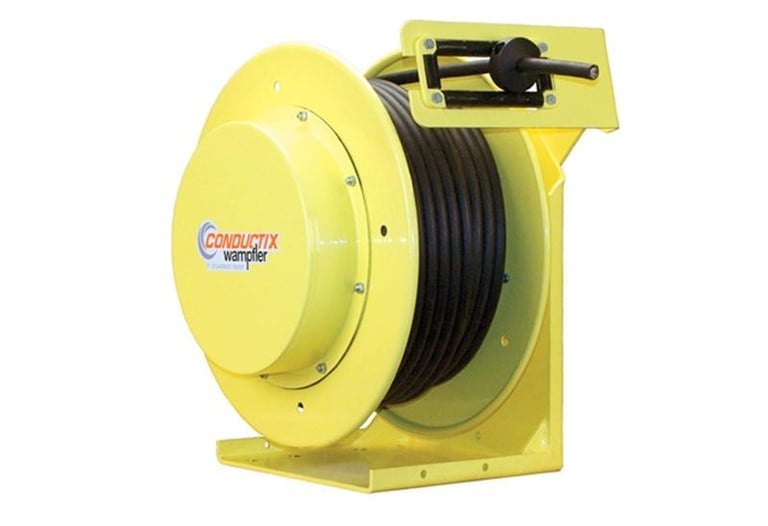
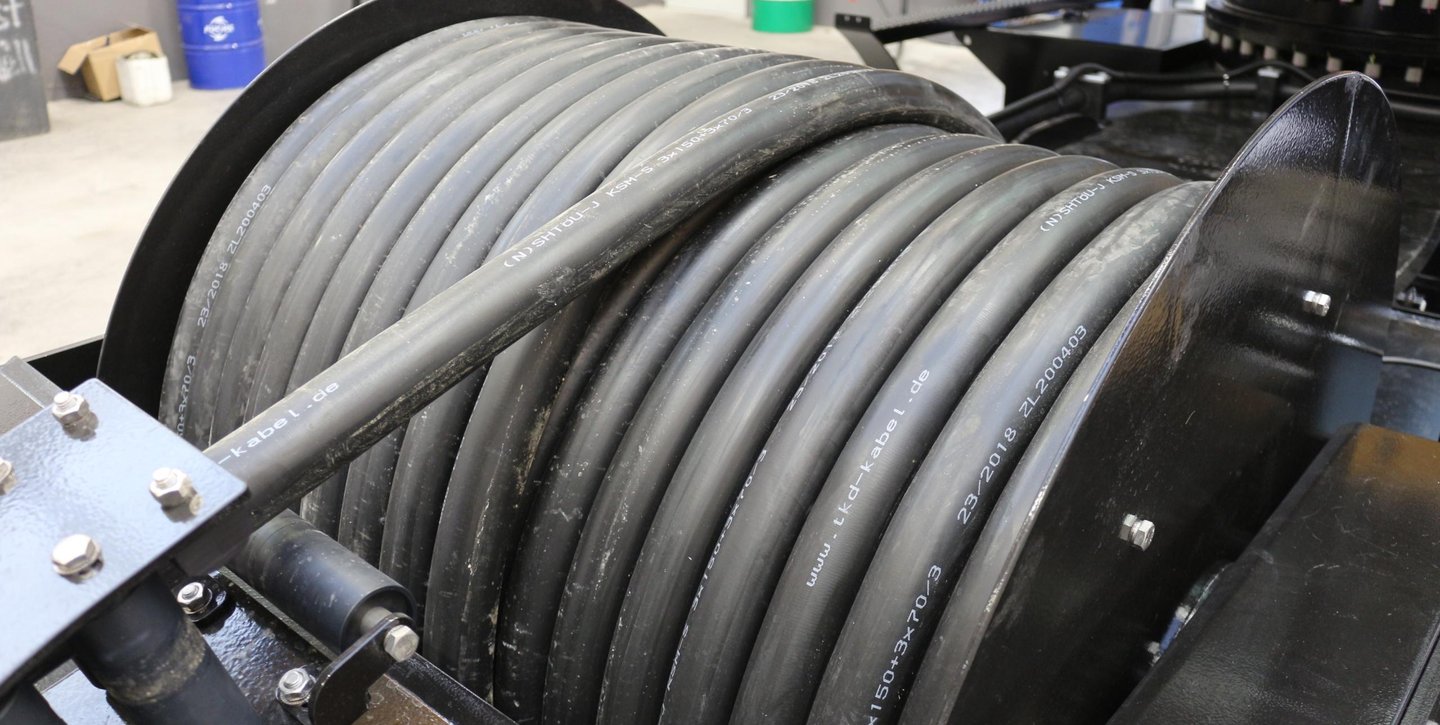
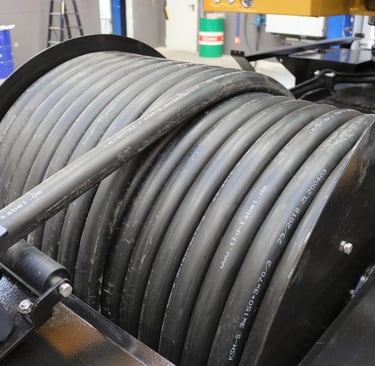
Among flexible reeling cables, the (N)7YRDGOEU-J cable—commonly integrated within the EASYFLEX series and supplied by specialist manufacturers like Feichun Cable—occupies a vital role. Specifically built as a flexible connection cable for spring-operated cable reels, it delivers dependable power and control transmission across repeated reeling, unwinding, and flexing cycles.
Spring cable reels rely on continuous spring tension to retract cable smoothly without manual intervention. Because the cable undergoes constant bending, tensile stress, and friction as it winds onto the drum, off-the-shelf flexible cables fail prematurely under this duty cycle. The (N)7YRDGOEU-J design solves this challenge by combining fine-wire stranded conductors with an ethylene tetrafluoroethylene (ETFE) primary insulation, an ethylene propylene rubber (EPR) inner sheath, and an ethylene vinyl acetate (EVA) outer sheath.
Designed for low-voltage power distribution and control signals up to 0.6/1 kV rating, it performs reliably across indoor processing facilities and demanding outdoor installations across Australia.

2. Deciphering the (N)7YRDGOEU-J Designation
Understanding industrial cable designations helps engineers select the precise specification needed for complex plant environments. The full designation (N)7YRDGOEU-J follows German-style VDE standardized naming conventions, though subtle regional variations exist across global supply chains.
The bracketed prefix (N) indicates that the cable structure is based on established VDE standard principles while incorporating optimized, specialized materials for enhanced performance.
The 7Y code highlights the high-performance core insulation material: Ethylene Tetrafluoroethylene (ETFE). ETFE provides exceptional electrical insulation resistance alongside mechanical toughness, thermal endurance, and resistance to chemical corrosion.
The R designation signifies flexible construction engineered specifically for moving machinery and reeling duty cycles.
The D and G markings signify structural element details, including the tough elastomeric protective layers engineered for dynamic bending resistance.
The OEU portion identifies the robust dual-sheath dynamic layout, combining a resilient rubber-based inner jacket with an advanced outer polymer jacket built for mechanical endurance.
Finally, the -J suffix indicates the inclusion of a dedicated green-and-yellow protective earth conductor within the assembly, ensuring compliance with site grounding safety standards across Australia and international jurisdictions.
Operators may occasionally encounter shortened designation codes in market specifications, such as (N)7YRDGÖU. In technical procurement, using the full, verified standard designation—(N)7YRDGOEU-J—ensures complete compliance with manufacturer engineering sheets and avoids misinterpreting core counts or earth wire configurations.
3. Structural Design and Material Science
The ability of the (N)7YRDGOEU-J cable to withstand millions of dynamic bending cycles stems directly from its layered construction. Every structural layer contributes to mechanical endurance, flexural integrity, and electrical isolation.
Conductors
At the center of the cable are bare electrolytic copper conductors. To achieve maximum dynamic flexibility, these conductors use extra-fine wire stranding categorized under Class FS flexibility standards. Fine stranding prevents conductor fatigue and work-hardening, which occur when thicker copper wires bend repeatedly over small reel drums.
Core Insulation
Each finely stranded copper conductor is jacketed in high-grade ETFE insulation. ETFE delivers higher mechanical toughness than traditional PVC or standard polyethylene. It permits a thinner insulation wall without sacrificing dielectric strength or resistance to mechanical pinch. This keeps overall cable diameter minimal—a critical consideration for spring reels where drum capacity and total weight are tightly constrained.
Core Identification and Lay-up
The insulating cores are color-coded for fast, error-free field termination. Power and control cores feature black insulation stamped with high-contrast white numbering, complemented by the dedicated green-and-yellow protective earth core. The individual cores are laid up in concentric layers with optimized lay-lengths. This balanced lay-up minimizes internal torsional stress when the cable is pulled and retracted under continuous spring tension.
Inner Sheath
Surrounding the core assembly is an inner protective sheath composed of ethylene propylene rubber (EPR). EPR acts as a flexible, cushioning bedding layer that absorbs radial compression and buffers the insulated cores from mechanical friction caused by the outer sheath during tight bending.
Outer Sheath
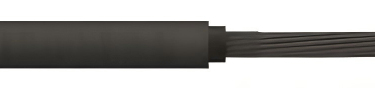
The final protective barrier is a specialized ethylene vinyl acetate (EVA) outer sheath finished in deep black. EVA provides exceptional abrasion resistance, chemical stability, and permanent flexibility across broad temperature shifts. Feichun Cable engineers this outer compound to maintain low surface friction, helping the cable glide smoothly across guide rollers and reel flanges without binding or galling.
4. Engineering Advantages of the EVA Outer Sheath
The choice of Ethylene Vinyl Acetate (EVA) as the outer jacketing compound sets the (N)7YRDGOEU-J cable apart from standard flexible industrial cables.
In spring cable reel service, the outer sheath faces continuous mechanical challenge. As the reel winds and unwinds, the cable jacket rubs against guide rollers, structural fairleads, and adjacent cable wraps on the drum. Conventional outer materials present clear operational trade-offs:
Standard Polyvinyl Chloride (PVC) sheathing is economical but stiffens in cooler weather and degrades under intense ultraviolet exposure. PVC can also exhibit high surface friction, increasing drag on light-duty spring reels and leading to uneven winding.
Standard Polyurethane (PUR) provides extreme cut and abrasion resistance, but its rigidity can create excessive tension on low-torque spring mechanisms, leading to premature spring fatigue or incomplete retraction.
EVA balances these performance demands. It exhibits high elasticity and low bending resistance, allowing spring-driven reels to retract smoothly without binding. EVA also offers outstanding low-temperature flexibility, resisting cracking down to minus thirty-five degrees Celsius during active flexing, and remaining intact down to minus fifty degrees Celsius in static setups.
In addition, EVA demonstrates strong resistance to ozone, weather exposure, and environmental stress cracking. When installed on outdoor infrastructure—such as wastewater clarifiers exposed to continuous sunlight—the black EVA compound resists UV degradation, ensuring long service life without embrittlement or surface micro-cracking.
5. Tailored Applications for Australian Industrial Infrastructure
Australia presents a unique operating environment. Facilities must handle intense heat in northern tropical zones, freezing morning conditions in southern regions, high UV indexes nationwide, and aggressive coastal or industrial atmospheres. The (N)7YRDGOEU-J cable, built with ETFE insulation and an EVA outer sheath, excels across several core Australian industries.
Wastewater Treatment Plants
Wastewater treatment plants (WWTPs) present some of the most aggressive conditions for electrical components. Scraper bridges, rotating clarifiers, dosing equipment, and sludgeway gantries require continuous power and signal feeds across moving spans.
These environments contain hydrogen sulfide gas, moisture, organic acids, and aggressive chemical treatment agents. The EVA outer sheath and ETFE insulation resist chemical corrosion and moisture ingress, preventing insulation breakdown. Furthermore, because scraper bridges run continuously outdoors, the cable's dynamic resistance to constant sunshine, temperature cycling, and light mechanical drag ensures reliable plant operation.
Port Facilities and Material Handling
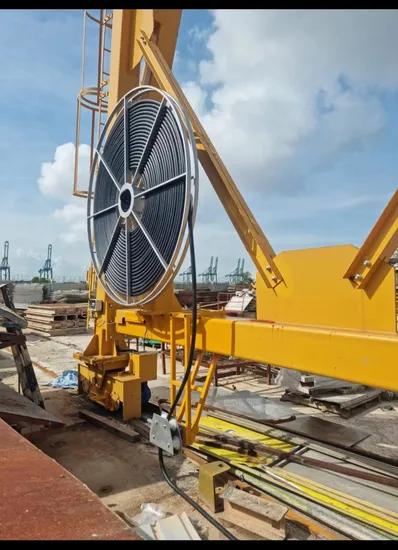
Across ports and logistics hubs, spring cable reels power transfer cars, light-duty gantry hoists, automated guide vehicles, and industrial door operators. The high travel speed capability of up to eighty meters per minute allows fast automated equipment to cycle quickly without over-stretching the cable assembly.
Mining and Industrial Plant Auxiliary Systems
In mining maintenance sheds, mineral processing plants, and manufacturing facilities, spring reels support pendant controllers, mobile tool trolleys, and retractable power drops. The tough construction resists oil splashing, mechanical abrasion, and constant flexing over fairleads. Feichun Cable supplies custom lengths of (N)7YRDGOEU-J tailored for heavy industrial service, helping plant managers minimize unplanned electrical maintenance.
Outdoor Agriculture and Irrigation
Irrigation gantries, automated sorting yards, and grain handling systems require reliable power cabling that copes with harsh sunshine, dry dust, and sudden rain. The wide operational temperature range of -35 °C to +80 °C in dynamic motion guarantees reliable performance through Australian summer heatwaves and winter frosts.
6. Electrical Performance Specifications
The (N)7YRDGOEU-J cable is rated for low-voltage power and control distribution, matching standard industrial supply networks:
The nominal rated voltage is 0.6/1 kV (600/1000 Volts AC), suitable for standard three-phase industrial equipment operating at 415V AC in Australia, as well as single-phase 240V control networks.
The maximum permissible alternating current operating voltage is 0.7/1.2 kV AC.
The maximum permissible direct current operating voltage is 0.9/1.8 kV DC.
To verify dielectric integrity, every manufactured batch undergoes factory testing at an AC test voltage of 3.5 kV held continuously for 5 minutes.
Current carrying capacities follow established DIN VDE 0298-4 standards. Conductors must be sized according to core count, thermal conditions, and whether the cable is operated fully unwound or wound in layers on a spring reel drum. When operated on multi-layer reels, standard derating factors must be applied to prevent thermal buildup inside the inner cable wraps.
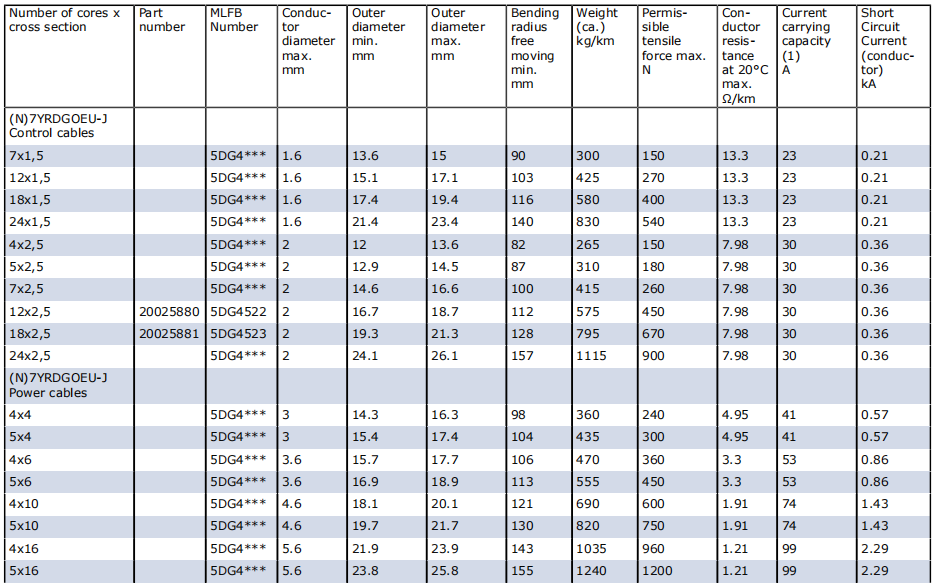
Representative physical dimensions, weights, and electrical properties across popular conductor configurations include:
For control cables:
Seven cores of 1.5 square millimeter conductor: maximum conductor diameter of 1.6 millimeters, outer diameter spanning 13.6 to 15.0 millimeters, minimum bending radius of 90 millimeters, weight of approximately 300 kilograms per kilometer, maximum permissible tensile force of 150 Newtons, maximum conductor resistance at 20 °C of 13.3 Ohms per kilometer, current rating of 23 Amperes, and short-circuit rating of 0.21 Kiloamperes.
Twelve cores of 1.5 square millimeter conductor: maximum conductor diameter of 1.6 millimeters, outer diameter spanning 15.1 to 17.1 millimeters, minimum bending radius of 103 millimeters, weight of approximately 425 kilograms per kilometer, maximum permissible tensile force of 270 Newtons, current rating of 23 Amperes.
Eighteen cores of 1.5 square millimeter conductor: maximum conductor diameter of 1.6 millimeters, outer diameter spanning 17.4 to 19.4 millimeters, minimum bending radius of 116 millimeters, weight of approximately 580 kilograms per kilometer, maximum permissible tensile force of 400 Newtons, current rating of 23 Amperes.
Twenty-four cores of 1.5 square millimeter conductor: maximum conductor diameter of 1.6 millimeters, outer diameter spanning 21.4 to 23.4 millimeters, minimum bending radius of 140 millimeters, weight of approximately 830 kilograms per kilometer, maximum permissible tensile force of 540 Newtons, current rating of 23 Amperes.
Four cores of 2.5 square millimeter conductor: maximum conductor diameter of 2.0 millimeters, outer diameter spanning 12.0 to 13.6 millimeters, minimum bending radius of 82 millimeters, weight of approximately 265 kilograms per kilometer, maximum permissible tensile force of 150 Newtons, maximum conductor resistance at 20 °C of 7.98 Ohms per kilometer, current rating of 30 Amperes, and short-circuit rating of 0.36 Kiloamperes.
Five cores of 2.5 square millimeter conductor: maximum conductor diameter of 2.0 millimeters, outer diameter spanning 12.9 to 14.5 millimeters, minimum bending radius of 87 millimeters, weight of approximately 310 kilograms per kilometer, maximum permissible tensile force of 180 Newtons, current rating of 30 Amperes.
Seven cores of 2.5 square millimeter conductor: maximum conductor diameter of 2.0 millimeters, outer diameter spanning 14.6 to 16.6 millimeters, minimum bending radius of 100 millimeters, weight of approximately 415 kilograms per kilometer, maximum permissible tensile force of 260 Newtons, current rating of 30 Amperes.
Twelve cores of 2.5 square millimeter conductor: maximum conductor diameter of 2.0 millimeters, outer diameter spanning 16.7 to 18.7 millimeters, minimum bending radius of 112 millimeters, weight of approximately 575 kilograms per kilometer, maximum permissible tensile force of 450 Newtons, current rating of 30 Amperes.
Eighteen cores of 2.5 square millimeter conductor: maximum conductor diameter of 2.0 millimeters, outer diameter spanning 19.3 to 21.3 millimeters, minimum bending radius of 128 millimeters, weight of approximately 795 kilograms per kilometer, maximum permissible tensile force of 670 Newtons, current rating of 30 Amperes.
Twenty-four cores of 2.5 square millimeter conductor: maximum conductor diameter of 2.0 millimeters, outer diameter spanning 24.1 to 26.1 millimeters, minimum bending radius of 157 millimeters, weight of approximately 1115 kilograms per kilometer, maximum permissible tensile force of 900 Newtons, current rating of 30 Amperes.
For power cables:
Four cores of 4 square millimeter conductor: maximum conductor diameter of 3.0 millimeters, outer diameter spanning 14.3 to 16.3 millimeters, minimum bending radius of 98 millimeters, weight of approximately 360 kilograms per kilometer, maximum permissible tensile force of 240 Newtons, maximum conductor resistance at 20 °C of 4.95 Ohms per kilometer, current rating of 41 Amperes, and short-circuit rating of 0.57 Kiloamperes.
Five cores of 4 square millimeter conductor: maximum conductor diameter of 3.0 millimeters, outer diameter spanning 15.4 to 17.4 millimeters, minimum bending radius of 104 millimeters, weight of approximately 435 kilograms per kilometer, maximum permissible tensile force of 300 Newtons, current rating of 41 Amperes.
Four cores of 6 square millimeter conductor: maximum conductor diameter of 3.6 millimeters, outer diameter spanning 15.7 to 17.7 millimeters, minimum bending radius of 106 millimeters, weight of approximately 470 kilograms per kilometer, maximum permissible tensile force of 360 Newtons, maximum conductor resistance at 20 °C of 3.3 Ohms per kilometer, current rating of 53 Amperes, and short-circuit rating of 0.86 Kiloamperes.
Five cores of 6 square millimeter conductor: maximum conductor diameter of 3.6 millimeters, outer diameter spanning 16.9 to 18.9 millimeters, minimum bending radius of 113 millimeters, weight of approximately 555 kilograms per kilometer, maximum permissible tensile force of 450 Newtons, current rating of 53 Amperes.
Four cores of 10 square millimeter conductor: maximum conductor diameter of 4.6 millimeters, outer diameter spanning 18.1 to 20.1 millimeters, minimum bending radius of 121 millimeters, weight of approximately 690 kilograms per kilometer, maximum permissible tensile force of 600 Newtons, maximum conductor resistance at 20 °C of 1.91 Ohms per kilometer, current rating of 74 Amperes, and short-circuit rating of 1.43 Kiloamperes.
Five cores of 10 square millimeter conductor: maximum conductor diameter of 4.6 millimeters, outer diameter spanning 19.7 to 21.7 millimeters, minimum bending radius of 130 millimeters, weight of approximately 820 kilograms per kilometer, maximum permissible tensile force of 750 Newtons, current rating of 74 Amperes.
Four cores of 16 square millimeter conductor: maximum conductor diameter of 5.6 millimeters, outer diameter spanning 21.9 to 23.9 millimeters, minimum bending radius of 143 millimeters, weight of approximately 1035 kilograms per kilometer, maximum permissible tensile force of 960 Newtons, maximum conductor resistance at 20 °C of 1.21 Ohms per kilometer, current rating of 99 Amperes, and short-circuit rating of 2.29 Kiloamperes.
Five cores of 16 square millimeter conductor: maximum conductor diameter of 5.6 millimeters, outer diameter spanning 23.8 to 25.8 millimeters, minimum bending radius of 155 millimeters, weight of approximately 1240 kilograms per kilometer, maximum permissible tensile force of 1200 Newtons, current rating of 99 Amperes.
7. Thermal Characteristics
Managing thermal thresholds is vital when configuring reeling systems. Cables wound on drums trap heat within internal wraps, raising core operating temperatures.
The (N)7YRDGOEU-J cable design maintains a maximum conductor operating temperature of 90 °C under full continuous load.
Under short-circuit fault conditions, the copper conductor can withstand instantaneous thermal peaks up to 250 °C without damaging the ETFE insulation or surrounding sheaths.
Environmental operating temperature ranges are divided by movement type:
For fixed installations without motion or vibration, the ambient temperature range extends from -50 °C up to +80 °C.
For fully flexible spring reeling operation, the ambient temperature range spans -35 °C up to +80 °C.
These broad thermal limits allow the cable to withstand direct outdoor exposure during intense Australian summer days—where metal enclosures and cable drums can reach elevated ambient temperatures—while remaining completely flexible during sub-zero winter nights in inland or high-altitude regions.
8. Mechanical Endurance and Reeling Dynamics
Mechanical stresses on spring cable reels differ significantly from those on fixed tray wiring or free-hanging festoon systems. As the reel winds, the cable experiences tensile loading, continuous flexure, and mild axial twisting.
Tensile Strength
The maximum permissible tensile load applied directly to the copper conductors is 15 Newtons per square millimeter of total conductor cross-section. For instance, a cable with five 10 square millimeter conductors can tolerate a maximum pulling force of 750 Newtons during reeling. Exceeding this limit can stretch the copper cores, reducing cross-sectional area and causing hot spots.
Torsional Tolerance
While cables on reels should be installed straight without inherent twisting, operational tracking can introduce axial torque. The (N)7YRDGOEU-J cable tolerates torsional stress up to plus or minus 15 degrees per meter. The counter-directional lay-up of internal cores helps absorb this torque without corkscrewing.
Bending Radius
To ensure long service life without core displacement, the minimum allowable bending radius is 6 times the overall cable outer diameter (6 x D). Maintaining this bending radius on drum centers, sheaves, and guide rollers prevents structural deformation.
Operational Travel Speed
The cable is engineered for horizontal and vertical reeling operation at travel speeds up to 80 meters per minute. This high-speed performance suits fast industrial transfer cars and rapid automated bridge machinery.
Specialized Factory Dynamic Testing
To guarantee operational reliability, prototype samples undergo rigorous dynamic stress testing, including reversed bending tests over small sheaves and extended multi-thousand-cycle reeling tests under continuous tensile load.
9. Engineering Checklist for Procurement and Installation
When specifying (N)7YRDGOEU-J cables for new equipment builds or plant upgrades across Australia, engineering teams should evaluate five key criteria:
First, calculate the dynamic mechanical demand. Ensure that spring reel tension stays well within the 15 Newtons per square millimeter tensile limit across the full payout distance. Verify that the reel drum hub diameter meets or exceeds the minimum bending radius of 6 times the cable outer diameter.
Second, check current capacity and derating factors. Account for maximum ambient summer temperatures in outdoor setups and apply multi-layer winding derating factors per DIN VDE 0298-4 if the cable remains partially wrapped on the drum during full-load power delivery.
Third, confirm environmental suitability. While the EVA sheath offers excellent chemical and UV resistance, verify specific chemical compatibility if the cable will be submerged or continuously splashed with industrial solvents or concentrated oils in specialized processing plants.
Fourth, review physical routing. Ensure guide fairleads, rollers, and sheave wheels feature smooth surfaces that do not pinch the outer EVA jacket. Rollers should rotate freely to prevent severe friction along the outer sheath.
Fifth, partner with reliable suppliers. Working with established specialists like Feichun Cable ensures every manufacturing batch meets tight dimensional tolerances, proper core lay-ups, and thorough factory testing.
10. Conclusion
The (N)7YRDGOEU-J EASYFLEX spring reel cable provides an optimized solution for moving power and control feeds in light-to-medium dynamic applications. Combining fine-wire Class FS conductors, mechanically tough ETFE insulation, an EPR inner cushion, and a flexible, UV-resistant EVA outer sheath, it solves the mechanical fatigue and chemical exposure challenges common to industrial operations.
Whether powering municipal wastewater scraper bridges, operating light material handling hoists, or running automated industrial doors, this cable delivers long-term reliability across Australian weather extremes. For site engineers and procurement staff, specifying exact factory designations and verifying datasheet parameters with trusted suppliers like Feichun Cable ensures long, trouble-free service life across all plant operations.
Recommended Next Steps for Your Site
If you are upgrading existing spring cable reels or designing a new mobile power installation, contact the technical team at Feichun Cable to request detailed datasheets, verify custom length availability, and ensure correct sizing for your specific operating environment.
How to Reach Us
Get in Touch
SiteMap
Product Catalogue
Festoon Cable
Shore Power Cable


Scan to add us on WeChat