Oil and Chemical Resistant Cables for Oil & Gas Terminals and Chemical Ports
Discover oil and chemical resistant cables designed for oil & gas terminals, chemical ports, tank farms, and marine loading equipment with strong oil, abrasion, and dynamic performance.
hongjing.Wang@Feichun
7/7/202615 min read


1. Introduction
Operating a liquid cargo port, tank farm, or chemical terminal presents one of the most punishing industrial environments on earth. Asset managers and electrical engineers balance high-throughput production goals against severe environmental and chemical exposure. In these facilities, electrical infrastructure cannot be treated as a secondary consideration. Power and control cables act as the central nervous system for complex loading, unloading, and distribution networks. When these systems operate at the water’s edge, they face a destructive combination of environmental threats and chemical exposure.
In an oil and gas terminal or chemical port, materials are subjected to a constant barrage of aggressive agents. Beyond the standard outdoor challenges of ultraviolet (UV) radiation and salt-water spray, infrastructure must withstand direct contact with liquid hydrocarbons and chemical commodities. Liquid cargo ports handle a wide array of volatile, corrosive, and solvent-heavy substances. These products routinely find their way onto nearby machinery, concrete pads, and electrical cabling via dripping connections, washdown procedures, and airborne vapours.
Ordinary industrial-grade cables, while sufficient for a standard indoor manufacturing plant or dry warehousing operation, fail early when deployed in marine loading and port crane applications. Standard cable jackets manufactured from standard polyvinly chloride (PVC) or basic polyurethane (PUR) are not formulated to withstand the complex hydrocarbon chains and aggressive solvents found at a chemical terminal.
When an ordinary cable comes into contact with these substances, chemical degradation begins immediately. The jacket compound typically softens, swells, cracks, or loses its inherent mechanical strength. In heavy-duty port applications, such as on a container crane or a liquid cargo loading arm, this degradation accelerates structural failure. Once the outer protective layer is compromised, the cable can no longer support its own weight or withstand the mechanical stress of dynamic motion. The result is premature electrical shorting, compromised safety, and unexpected, costly terminal downtime.
For Australian port operators, the stakes are particularly high. Bulk liquid berths handle millions of tonnes of fuel, chemicals, and liquefied gases annually. A single cable failure on a critical piece of infrastructure can halt shipping schedules, trigger hefty demurrage fees, and create significant environmental and safety risks. To prevent these outcomes, selecting specialized, highly resilient cables engineered for specific chemical and mechanical exposure profiles under the Feichun brand is an operational necessity.
2. Typical Applications in Chemical Ports
Industrial port machinery relies heavily on dynamic cable management systems to power moving structures and transmit critical data. In a chemical port or bulk liquid terminal, these applications require continuous structural movement while exposed to hazardous substances. Understanding where these cables are deployed highlights why specialized construction is required.
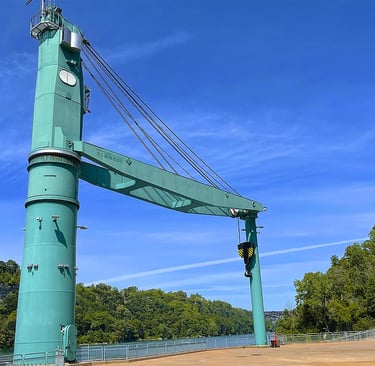
Harbour Cranes and Ship Loading/Unloading Systems: Large-scale bulk handling and container cranes operate continuously along the berth. The cables supplying main power and control signals to these structures are subjected to high tensile loads, high travel speeds, and continuous bending. As these cranes move along the wharf, their cables are exposed to salt-laden wind, marine mist, and airborne chemical vapours rising from the liquid cargo berths below.
Marine Loading Arms: Unlike flexible hoses, marine loading arms are articulated mechanical piping systems used to transfer liquids or gases between the ship and the shore. These systems rely on onboard instrumentation, limit switches, and hydraulic power units. The cables routing along the moving joints of a marine loading arm must flex in multiple axes while remaining in close proximity to potential product leaks, including crude oil, condensate, or aggressive chemical compounds.
Hose Handling Cranes: Positioned on the deck of a vessel or along the jetty, hose handling cranes lift and position heavy flexible transfer hoses. The cables powering these cranes operate directly over the drip trays and containment areas, making regular splash contact with the transferred media unavoidable.
Gantry Cranes and Service Cranes: Rail-mounted or rubber-tyred gantry cranes responsible for infrastructure maintenance and light container movement operate across the entire footprint of the tank farm or terminal. This exposes them to localized industrial emissions and chemical tracking from transport vehicles.
Pipe Handling Equipment: Automated pipe handling and manifold positioning systems utilize localized power and sensor cables. These cables operate in tight configurations where spilled oils, lubricants, and cleaning solvents frequently accumulate.
Reeling and Trailing Systems: Perhaps the most mechanically demanding application in port automation, reeling and trailing systems manage cables on moving equipment via motorized monospiral reels, random winding drums, or heavy-duty festoon systems. During liquid cargo transfer, these cables are rapidly wound and unwound under high tension. The mechanical stress of continuous flexing and tight bending radii occurs while the cable surface is coated in salt spray, oil films, or solvent residue, creating a combined mechanical-chemical attack on the cable jacket.
3. Exposure Risks in Service
Cables deployed in bulk liquid terminals do not experience a single isolated threat; they face a complex matrix of simultaneous chemical, environmental, and mechanical stresses. During standard daily operations, a cable jacket may come into direct contact with or be immersed in:
Crude Oil and Diesel Fuel: Hydrocarbons break down unstable polymers, causing rapid swelling and structural softening.
Hydraulic Oil and Heavy Industrial Lubricants: Essential for port machinery, these oils accumulate on cable surfaces, leading to long-term jacket degradation.
Chemical Vapours and Corrosive Solvents: Emitted during loading, venting, or tank cleaning, these airborne compounds can slowly dissolve or embrittle standard jacketing materials.
In a marine loading environment, this chemical cocktail is superimposed over severe ambient conditions. The cable is continuously exposed to intense UV radiation, which breaks down poorly stabilized polymers through photo-oxidation, leading to surface micro-cracking. Simultaneously, salt-water spray introduces highly corrosive ions into any surface defect, accelerating the degradation of internal components if the jacket is breached.
Crucially, these chemical and environmental challenges do not occur in a static environment. Port automation requires these cables to undergo repeated, high-velocity flexing, twisting, and tensioning. When a cable jacket is softened by diesel fuel or embrittled by chemical vapours, its ability to withstand mechanical strain drops significantly. Micro-cracks caused by chemical exposure quickly propagate into deep fractures under the stress of dynamic reeling. This synergistic degradation mechanism means that standard environmental protection is insufficient; the cable must be engineered from the ground up to resist chemical degradation while maintaining high mechanical flexibility.
4. How Oil and Chemicals Damage Ordinary Cables
To understand why specialized cable engineering is necessary, it is helpful to examine the precise chemical and physical mechanisms that occur when ordinary cables encounter industrial oils and chemicals.
When an ordinary polymer sheath—such as standard PVC or basic polyurethane (PUR)—is exposed to hydrocarbons like crude oil or diesel fuel, the oil molecules penetrate the intermolecular spaces of the polymer matrix. This process disrupts the intermolecular forces holding the polymer chains together, leading to polymer swelling.
As the material absorbs oil, the physical dimensions of the jacket alter, causing it to become spongy, soft, and mechanically weak. This swelling drastically reduces the cable’s tensile strength and tear resistance.
Under the continuous mechanical stress of port operations, such as winding onto a reeling drum or flexing within a cable track, a softened and swollen jacket cannot distribute mechanical loads effectively. The localized stress quickly leads to structural cracking of the sheath. If the cable is exposed to solvents or acidic chemical vapours instead of heavy oils, the opposite physical reaction can occur: the volatile compounds extract plasticisers from the polymer compound, leaving the jacket brittle, rigid, and highly prone to fracturing under minimal bending.
Once the outer sheath develops cracks, the primary barrier protecting the core components is lost. In a marine loading environment, this allows moisture, salt water, and chemical contaminants to penetrate the cable interior. Moisture ingress quickly travels down the interstitial spaces of the cable cores.
When these conductive liquids reach the internal insulation layer—which may also be undergoing chemical degradation—they create low-resistance paths. This leads to insulation damage, dielectric breakdown, phase-to-earth faults, and catastrophic electrical failure. For a port operator, what began as minor surface swelling can quickly escalate into total equipment failure, unscheduled terminal shutdown, and expensive emergency remediation.


5. Oil Resistance Standards and Testing Protocols
To guarantee reliable performance in hazardous port environments, cables must be designed, manufactured, and rigorously tested against recognized international standards. These standards establish objective parameters for evaluating a compound's ability to retain its structural integrity under severe chemical duress.
IEC 60811 and EN 60811
The IEC 60811 series (and its European counterpart EN 60811) represents the global benchmark for testing methods applicable to electric and optical fiber cable materials. Specifically, IEC 60811-404 defines the exact procedures for conducting mineral oil immersion tests on insulation and sheathing compounds.
The test involves immersing prepared dumbbell specimens of the cable jacket material into a specified mineral oil bath at a controlled, elevated temperature for a set duration. Typical test configurations include immersion in IRM 902 or IRM 903 oil at temperatures ranging from 70℃ to 100℃ for periods such as 24 hours, 7 days, or up to 28 days, depending on the severity of the rating required.
Key Evaluation Criteria
A cable material cannot simply be labelled "oil-resistant" based on a visual inspection. It must achieve strict quantitative metrics following the immersion period:
Oil Immersion Time and Temperature: The compound must withstand prolonged exposure without structural breakdown. Higher-grade industrial compounds are tested for extended periods to simulate a realistic multi-year service life in terminal environments.
Tensile Strength Retention: After removal from the oil bath and conditioning, the material is subjected to mechanical pull testing to measure its ultimate tensile strength. Specialized rubber compounds must retain a high percentage of their original, unaged tensile strength (often 70% to 80% or more) to prove that the oil has not destroyed the polymer backbone.
Elongation Retention: Flexibility is critical for reeling cables. The elongation at break is measured alongside tensile strength. If a material becomes brittle or over-softened, its elongation properties will deviate wildly. Standards typically dictate that the variation between the unaged and aged elongation values must remain within narrow, predefined tolerances (e.g., maximum deviation of plus or minus 30%).
ASTM and Market Variations
Depending on the specific region, asset owner requirements, or project specifications, testing according to ASTM standards (such as ASTM D412 for tensile properties or ASTM D471 for fluid resistance) may also be required.
In heavy industrial sectors like oil & gas, compliance with specific VDE regulations (such as VDE 0250 Part 814 for heavy-duty rubber cables or VDE 0250 Part 813 for specialized sheaths) is frequently stipulated to verify that the core insulation and the outer sheath compounds operate safely together under continuous mechanical and chemical loading.
6. Material Selection Analysis
The performance of an industrial cable in a chemical terminal depends heavily on the chemical composition of its outer sheath and insulation layers. No single polymer compound is ideal for every scenario; rather, each material presents unique performance tradeoffs across mechanical, thermal, and chemical axes.
Natural Rubber (NR)
Natural rubber provides exceptional mechanical elasticity, high tensile strength, and excellent tear resistance. However, its molecular structure makes it highly susceptible to hydrocarbon attack. When exposed to crude oil, diesel, or solvents, NR swells rapidly and degrades structurally, making it unsuitable for use as an outer sheath material in severe oil and chemical environments.
Polychloroprene (CR / Neoprene)
Polychloroprene represents a classic, highly reliable workhorse compound for industrial marine environments. It delivers a balanced performance profile, featuring good inherent resistance to mineral oils, greases, and general chemical exposure, alongside excellent weather, ozone, and UV resistance.
Because it withstands both the environmental pressures of salt spray and the chemical pressure of localized oil splashes, CR-based compounds are widely utilized as outer sheathing materials for heavy-duty marine and industrial trailing cables.
Nitrile Butadiene Rubber (NBR)
NBR is widely recognized for its exceptional resistance to petroleum-based oils, mineral oils, diesel fuels, and aliphatic hydrocarbons. The high acrylonitrile content within the compound provides a strong barrier against fluid penetration and swelling.
However, unmodified NBR can exhibit reduced low-temperature flexibility and lower ozone resistance compared to other synthetic rubbers. To combat this, it is frequently blended with other polymers to balance its excellent oil resistance with outdoor durability.
Ethylene Propylene Diene Monomer (EPDM)
EPDM provides outstanding resistance to ozone, sunlight, weathering, and water absorption, making it an exceptional choice for outdoor insulation layers. It also resists polar solvents, acids, and alkalis.
However, EPDM performs poorly when exposed to petroleum products, mineral oils, and hydrocarbons, which cause it to swell and lose strength. Consequently, it is primarily used for internal core insulation (such as EPR formulations) where it is fully protected by a highly oil-resistant outer sheath.
Polyurethane (PUR)
Polyurethane is a high-performance thermoplastic elastomer known for its mechanical strength, exceptional abrasion resistance, high tear propagation resistance, and excellent flex life. It withstands mineral oils, micro-organisms, and outdoor weathering well.
This combination makes PUR an outstanding choice for highly dynamic port applications, such as high-speed reeling drums or automated trailing systems, where the cable jacket must continuously withstand abrasive contact with concrete wharves or metal guide rollers while coated in salt spray and grease.
The Role of Specialized Rubber Formulation
While standard polymer classifications provide a helpful baseline, it is critical to emphasize that a specialized rubber compound is far more important than a simple generic material label. An off-the-shelf, commercial-grade polyurethane or standard rubber jacket can fail rapidly if it lacks the correct additives.
The actual performance profile of a premium industrial cable is determined by its proprietary compounding. By precisely blending base polymers with specific cross-linking agents, plasticisers, antioxidants, and UV stabilizers, Feichun creates a specialized rubber compound engineered for specific industrial environments. This ensures the final jacket achieves a precise balance of oil resistance, low-temperature flexibility, chemical stability, and mechanical durability.
7. Why a Specialized Rubber Compound Matters in Port Infrastructure
In the demanding environment of oil, gas, and chemical terminals, generic cables often fall short. Specifying a cable simply as a "rubber cable" provides no guarantee of performance when the asset is deployed on a chemical terminal berth. True reliability requires an engineered solution where the outer jacket and core insulation are constructed from a specialized rubber compound tailored by Feichun to the exact exposure profile of the terminal.
A specialized rubber compound must resolve competing material requirements. For instance, increasing a compound's density to maximize its oil and solvent resistance can sometimes make the material rigid, reducing its low-temperature flexibility and bending life.
Conversely, prioritizing extreme flexibility can result in a soft, porous jacket that absorbs hydrocarbons like a sponge. An engineered compound resolves these trade-offs, delivering high oil and chemical resistance while retaining excellent abrasion resistance, structural flexibility, and low-temperature performance.
This balancing act becomes critical when cables are deployed in dynamic reeling and trailing systems. As a port crane travels along the wharf, the cable is continuously reeled under tension, bent around sheaves, and exposed to high mechanical forces. If the compound lacks high tear resistance and flex-life stability, the combined action of structural bending and chemical softening will cause rapid cracking.
A specialized rubber compound is designed to distribute these mechanical stresses evenly across its cross-linked molecular network, preventing micro-cracks from forming even when the surface is continually contaminated by aggressive chemical media.


8. Premium Product Examples Engineered for Port Environments
To satisfy these demanding mechanical and chemical criteria, Feichun offers a suite of heavy-duty cables utilizing advanced materials and specialised rubber compounding to match specific terminal applications.
Type 12YRDT11YH PUR Rubber Reeling Cable
Designed specifically for high-stress port machinery, the Feichun Type 12YRDT11YH is engineered for random winding drums and monospiral reels found on automated harbour cranes. Constructed with a premium polyurethane (PUR) outer jacket, its material highlights include exceptional oil resistance, high abrasion resistance, and excellent UV stability.
The underlying PUR formulation allows the cable to withstand continuous dragging across concrete surfaces and regular contact with mineral lubricants without tearing or softening, making the Type 12YRDT11YH an exceptional option for dynamic liquid cargo handling areas.
NSHTÖU Heavy-Duty Rubber Reeling Cable
The Feichun NSHTÖU cable type is a globally recognized, low-voltage power and control rubber cable designed for heavy mechanical stress in outdoor crane and marine conveyor applications. It features an integrated sheath-supporting braid embedded between the inner and outer sheaths, which effectively prevents structural twisting and eliminates the dangerous "corkscrew effect" during continuous reeling and unreeling operations.
Manufactured with a high-grade rubber compound outer sheath (Type 5GM3), the NSHTÖU is fully oil-resistant according to EN 60811-404, flame-retardant according to IEC 60332-1-2, and maintains its flexibility across a wide temperature range from -25℃ to 80℃. This makes the NSHTÖU highly effective for reliable power supply on hose-handling cranes and bulk cargo loading systems.
(N)TSCGEWÖU Medium-Voltage Reeling Cable
For heavy mobile equipment and large-scale port cranes requiring medium-voltage power distribution, the Feichun (N)TSCGEWÖU cable series provides a rugged, highly reliable solution. Engineered to withstand extreme mechanical stresses, abrasion, and trailing operations in tough port environments, the (N)TSCGEWÖU cable utilizes a sophisticated multi-layer construction. It incorporates fine-wired Class 5 tinned copper conductors, an EPR-based internal rubber insulation compound, and semi-conductive rubber layers to manage electrical stress.
The entire assembly of the (N)TSCGEWÖU is protected by a heavy-duty, halogen-free polyurethane (PUR) inner and outer sheath layout with an integrated anti-torsion polyester braid. Capable of handling high tensile loads and managing ambient temperatures from -50℃ in fixed installations up to 80℃ in flexed environments, this (N)TSCGEWÖU medium-voltage cable is built for high-speed container cranes and main terminal feeders operating adjacent to chemical berths.
H07RN-F VG95218T13A Rubber Insulated Cable
The Feichun H07RN-F variant represents a heavy-duty, highly flexible rubber cable rated for 450/750V applications (suitable for up to 1kV in fixed applications), with the capacity to withstand extreme weather, ozone, oils, greases, and mechanical stresses. This specific construction features an advanced Ethylene Propylene Rubber (EPR) core insulation paired with a tough Polychloroprene (PCP) outer sheath.
Certified as water-resistant to the rigorous AD8 standard, the H07RN-F is completely suitable for installation in damp conditions, wet port areas, and buried ducts. Its flame-retardant and oil-resistant characteristics make the H07RN-F a reliable choice for localized control circuits, service cranes, and portable power supplies across tank farms and pump manifolds.
Oil-Resistant Marine Cable, PUR-Sheathed (0.6/1kV)
Engineered by Feichun for lower-voltage power distribution in marine and engine-room-type environments, this cable utilizes a specialized polyurethane jacket to provide a robust barrier against oil penetration, salt-water spray, and localized chemical contamination. Its compact, highly flexible construction allows for tight routing within pipe-handling equipment and localized terminal machinery where space is limited but fluid exposure remains high.
Oil and UV Resistant Marine Data Cable, PUR-Jacketed RS485
Modern chemical ports rely heavily on digital automation, network communication, and real-time sensor feedback. This specialized Feichun data cable is engineered for control and data circuits (such as RS485 communication protocols) operating in wet, chemically active areas. The UV-stabilized, oil-resistant PUR jacket ensures that critical monitoring signals, tank level telemetry, and automated emergency shutdown sequences remain fully functional and uncompromised by oil mist or chemical vapour exposure.
9. Technical Product Data Framework
When evaluating cables for a chemical port project, engineers require specific performance data to ensure compliance with operational parameters. The following structural overview outlines the core engineering values typically specified for these applications:
Jacket Material: Heavy-duty, specialized compounds including Type 5GM3 rubber for the NSHTÖU model, flame-retardant Polychloroprene (PCP) for the H07RN-F model, or advanced Halogen-Free Polyurethane (PUR) for the (N)TSCGEWÖU and Type 12YRDT11YH models.
Conductor Class: Class 5 flexible tinned copper conductors according to VDE 0295 and IEC 60228, providing excellent corrosion resistance and long flex life.
Working Temperature Range: Designed for versatile deployment across extreme environments:
Flexible/Reeling Applications: -25℃ to 80℃ (for rubber and PUR sheaths like NSHTÖU) or -15℃ to 90℃ (for EPR/PCP sheaths like H07RN-F).
Fixed/Static Applications: -50℃ to 80℃ (for PUR sheathed cables like (N)TSCGEWÖU) or -30℃ to 90℃ (for H07RN-F layouts).
Oil Resistance Grade: Tested and fully compliant with international standard EN 60811-404 and IEC 60811-404.
Water Resistance Level: Evaluated up to AD8 Water Resistance submersed ratings (prominently featured on the H07RN-F model), ensuring long-term barrier performance against marine tides and salt water.
Bending Radius Specifications: Optimized to reduce physical strain during installation and operation:
Fixed Installation: 4 to 6 times the overall cable diameter (such as 4x for H07RN-F and 6x for (N)TSCGEWÖU).
Flexible/Reeling Use: 6 to 10 times the overall cable diameter (such as 6x for H07RN-F and 10x for the (N)TSCGEWÖU series).
UV and Ozone Resistance: Complete compound stabilization against solar radiation and atmospheric ozone degradation, preventing surface micro-cracking over extended service lives.
Mechanical Integrity Sizing: Engineered to support structural loads, featuring high tensile load limits and a maximum torsional stress allowance of plus or minus 25 degrees per metre (fully validated on the (N)TSCGEWÖU heavy mobile series).
10. Comprehensive Cable Selection Guidance
Selecting the correct cable for a chemical or liquid cargo terminal requires a systematic analysis of the physical, environmental, and mechanical layout of the application.
Step 1: Analyze the Kinematics and Movement
Begin by classifying how the cable will move during operation. If the equipment features highly dynamic, high-velocity movement accompanied by continuous friction—such as an automated container crane or a high-speed monospiral reeling drum—Type 12YRDT11YH or (N)TSCGEWÖU Polyurethane (PUR) sheathed constructions are highly recommended.
PUR provides the necessary tensile strength and abrasion resistance to withstand continuous rubbing against rollers and guide tracks without tearing. For slower, high-load trailing applications or applications requiring high flexibility under continuous tension, specialized rubber-compound sheaths like the NSHTÖU cable provide the required mechanical cushioning and structural support.
Step 2: Establish the Chemical Exposure Matrix
Identify the specific types of fluids the cable will encounter. For environments characterized by frequent oil splashes, fuel transfers, or exposure to heavy mineral lubricants, compounds featuring high nitrile (NBR) or polychloroprene (CR) concentrations—such as the PCP sheath on the H07RN-F cable—are preferred due to their excellent resistance to hydrocarbon swelling.
If the application is located directly on a marine berth where the cable faces salt spray, intense sunlight, and continuous mechanical flexing simultaneously, look for marine-grade constructions featuring an EPR insulation core and a specialized PCP or PUR outer jacket. This dual-layer approach ensures that even if the outer layer is exposed to oil films, the inner core insulation maintains its electrical properties.
Step 3: Specify the Complete Environmental and Thermal Profile
Ensure the cable's operational temperature rating matches the ambient conditions of the site. For facilities located in regions subject to wide thermal swings, selecting a cable like the (N)TSCGEWÖU that maintains elasticity at low temperatures (down to -25℃ in flexed applications and -50℃ in static setups) prevents the jacket from shattering upon sudden mechanical impacts.
Step 4: Address Total System Protection
It is a common engineering mistake to focus exclusively on the cable jacket while neglecting the termination points. Complete environmental and chemical isolation requires a system-wide approach.
Even the most advanced oil-resistant cable jacket will fail to protect an asset if chemical liquids or salt water migrate into the junction box through compromised connections. Engineers must specify high-quality, oil- and chemical-resistant cable glands and connectors alongside the Feichun cable.
These accessories must feature robust internal sealing elements—typically manufactured from fluoroelastomers like Viton or high-grade NBR—to form a gas-tight, liquid-tight seal around the cable's outer diameter. This prevents chemical vapours and liquid washdowns from penetrating the electrical enclosures, securing the reliability of the entire terminal infrastructure.
How to Reach Us
Get in Touch
SiteMap
Product Catalogue
Festoon Cable
Shore Power Cable


Scan to add us on WeChat